Episode Transcript
[00:00:00] Speaker A: So that's why when I was in Trolls 3 development, I decided to speak up, which, you know, when you're in production and you speak up, you have to make sure you have something to say. And I said, I think that you guys should incorporate trolls who use mobility aids.
So mobility aids, canes, crutches, wheelchairs, you know, things like that.
And the director of Trolls Band Together, Walt Dorn, is an incredible man, and he ate up the idea. And now in every establishing shot for each new Troll Land, there's a troll in the ensemble using a mobility aid.
[00:00:43] Speaker B: I'm Luke Steinfeld.
[00:00:45] Speaker C: And I'm Wyatt Sarkisian.
[00:00:46] Speaker B: We made the 5050 podcast to support you on your filmmaking journey.
[00:00:50] Speaker C: 50% business. 50%, 50% creative.
[00:00:52] Speaker B: Every Tuesday, a new how to.
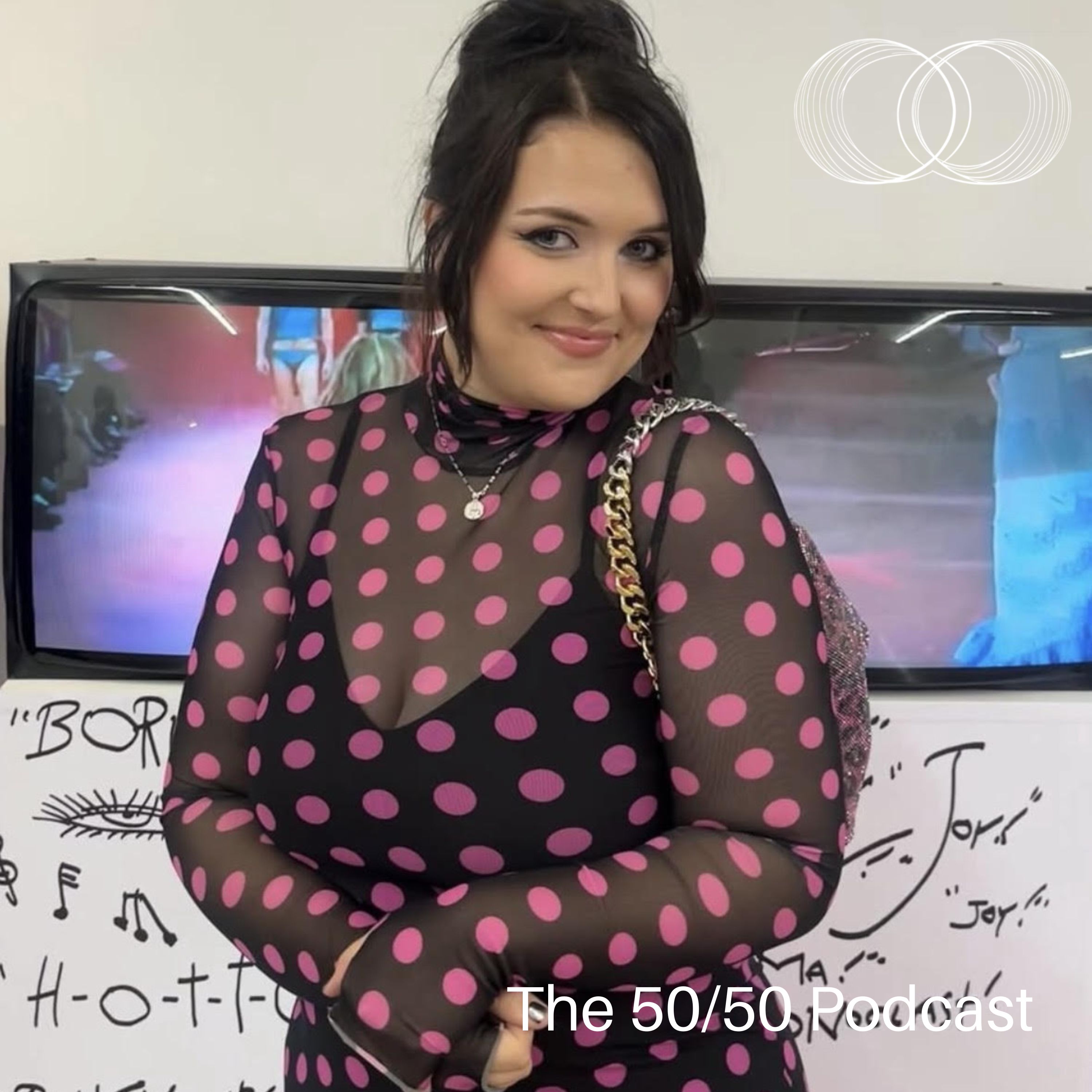
[00:00:54] Speaker C: This week, we talk with Janie Khan. Janie cut her teeth at DreamWorks, then went on to do a successful stint at Nickelodeon Shout Out Plankton, and now works at Netflix Animation.
Now, while her body of work is impressive on its own, what's really impressive is Janie's why.
Yeah. The motivation behind her need to make animated movies, and in this case, her why, happens to be fearlessly advocating for the neurodivergent and disabled communities.
As you listen to the episode, I encourage you to think about what your why is. What fuels you. What are you making movies for? Who are you making movies for?
It's a really special episode this week, everyone. Enjoy.
[00:01:42] Speaker A: I'm so. I can't even feel like. I can't even give feedback at this point because I'm so, like.
[00:01:47] Speaker C: Yeah.
[00:01:48] Speaker A: In it.
[00:01:49] Speaker C: It's. It's hard.
[00:01:49] Speaker A: That's a lie. I could give you back.
[00:01:51] Speaker C: There's always feedback to be given.
[00:01:53] Speaker A: There's always notes.
[00:01:54] Speaker C: There's always. Yeah, but I get it. It's hard to. It's hard to. When you're so deeply entwined with the production and the cuts and everything, it's hard to take your head out of it, you know?
[00:02:04] Speaker A: Yeah, for sure.
[00:02:05] Speaker B: This is. I know I jumped in late here, but this is an animated project, I assume.
[00:02:09] Speaker A: Yeah, yeah.
[00:02:11] Speaker B: But just. Just knowing that, though, like. Like with animation and, like, the amount of time and energy and effort that goes first.
[00:02:20] Speaker C: Studio animation.
[00:02:21] Speaker B: Yeah. Which is the highest level of animation. Of course. It's like.
There are. It is. It's built on notes and rewrites and, you know, notes on certain frames and characters and how they look, doing this or that or the background. Like, every single factor, I feel like, is probably getting notes and then to, like, complete something. I'm sure Feels so great. But then it's like, wait, it's a movie, though, so we need to get notes and do test screenings and all of that, and then, like, go back.
[00:02:51] Speaker C: It's crazy.
[00:02:52] Speaker B: How do you stay fresh, though? Like, how does that. Like, you said you have a little time off, but, like.
[00:02:58] Speaker A: Yeah, I mean, I.
I stay fresh by not watching it as a full cut as often as, like, leadership does. I normally just watch it in scenes, and then it's a full.
If, like, the script needs me to. But, you know, it makes me jealous of live action that sometimes you can just get it in one go. Compared to animation, where we're tooling on every single frame and we can change the dialogue till the last second.
I mean, we were operating, and I do story, edit, and script, and we had one scene where we had, like, six versions of it that was going at once.
[00:03:41] Speaker C: Crazy. Yeah, you can't really have that in. In Live Action.
[00:03:44] Speaker A: It's like, in live action, you shoot. Yeah, you. You get it in one. But it's like, here we. We're able to do such extreme iteration.
[00:03:53] Speaker B: Well, because with.
[00:03:54] Speaker C: It's endless.
[00:03:54] Speaker B: With live action, there's like the. The creativity and parameters, if anything, you know, and it's like you guys really can get not only one more, but, like, as many as you want, you know?
Yeah, obviously, if the.
[00:04:09] Speaker A: If the resources are there and I'm at Netflix. I don't know. Yeah, I'm at Netflix right now. Everybody's been in a great mood since K Pop Demon Hunters.
[00:04:17] Speaker C: I was going to say let's. Let's talk about a K Pop Demon Hunters. The elephant in the Room.
[00:04:22] Speaker A: The elephant in the Room. The K Pop.
[00:04:24] Speaker C: The demon in the Room.
Yeah. I mean, very, very exciting. I'm sure you guys are all pumped about that. But to take it back even more, I wanted to do a little intro for you just so people know who we're talking about and to. Because you're Ally Khan's sister.
Ali did our famous podcast about podcasting, and Ali wrote us the nicest email about you. And not only your success and having worked at multiple studios in the animation sector, but also advocacy and your sort of the. The. I feel like your. Why, to some extent.
[00:05:08] Speaker A: Yes.
[00:05:08] Speaker C: And we definitely want to get into all of that, but I just wanted to thank you for coming on the podcast and being such a good sport. And this is our. I think this is our first, like, sister to. To have come on the podcast.
[00:05:20] Speaker B: We've had a cousin.
[00:05:20] Speaker C: We've had. We've had a Cousin, but no sisters yet. So we're. We're very excited to chat with you, and it's. It's really fun. This is like the point of this podcast. Like, we want people to sort of authentically want to connect us with other people. So we thank Ally and thanks for coming on the show, Janie.
[00:05:38] Speaker A: Yeah, thank you guys for having me. Shout out to Ali.
[00:05:41] Speaker B: Yeah, shout out.
[00:05:41] Speaker A: Since day one.
[00:05:43] Speaker C: Since day one.
[00:05:46] Speaker A: Yeah. I'm excited to chat with you guys and break it all down for sure.
[00:05:51] Speaker C: How did you. Because Ali, I know, took kind of a more corporate route at first in terms of working in management and doing the assistant thing. And we talked about her.
Are you. How did you sort of navigate your introduction into the industry? Sort of in contrast with Allie, it
[00:06:12] Speaker A: was incredible to have her as a role model and somebody who was out there. And after seeing all the trials and tribulations that she went through with doing the management and assistant route, yeah, I knew that that route was not for me.
[00:06:26] Speaker C: You saw it. You saw it in front of yourself.
[00:06:28] Speaker A: I saw it and I said that, you know, I really admired everything that she did. But rather than being someone's assistant, I thought that I would be better suited and thrive better being a production assistant on a film instead of, you know, an individual's assistant.
And so I had a film professor say to me once when we were all interning, getting internships, she was like, you can't just get an internship on a movie set. Like, look at the companies where you. Where do you actually want to work? You can't just intern on the set. And I'm like, that's true.
So I was thinking about where I wanted to work and explore. And I never, like, initially thought about animation. I was always doing live action. But I was always drawn to such stories with big imagination and lots of magic and, you know, all that stuff.
Um, and then I kept the companies that I kept wanting to work for. All, you know, were like, the DreamWorks, the Disney's, things like that.
And I got an internship at DreamWorks when I was in college. I was doing development and current series.
And from there, while I was still in college, I got the taste of the industry and I changed my path and my plan completely. And I realized that in this path that I wanted to do, nobody was going to watch my short film from college. Even, like, everybody decided to. A lot of my film school peers decided to stay at school and spend all their money and work on their thesis films, which was like their ticket. Everybody's like, that's My ticket into the industry.
And then I decided to spend less time on my thesis and. And go out to la. And I was like, I don't think any of these people are going to ever watch my movie, even if it's the best movie ever.
So I pivoted and just went really Hollywood with it and networked so hard and, you know, started a lot of the advocacy stuff that we'll talk about. And.
And then.
[00:08:31] Speaker B: Were you networking. Sorry to jump in. Were you networking in hopes of getting your short scene? Were you networking because you're like, I've done the short film.
[00:08:39] Speaker A: I was networking because I wanted the. I wanted the PA gig. I wanted a PA gig after.
[00:08:43] Speaker B: Yeah.
[00:08:44] Speaker A: Because I was like, I don't think anybody's. Anybody here is going to watch my movie, you know, So I was like, how can I get a job? And I feel like what my film school peers and I were discussing and trying to figure out is like, do you sell your film and, like, be a director and try to, like, go that route of, like, indie art house? I am a director right out of college.
Or do you, like, try to work within the machine?
[00:09:10] Speaker C: Do that? Yeah, for sure.
[00:09:12] Speaker A: I decided to do Machine, and not a lot of my peers did, but I. I went, I. I soaked up everything I could about dreamworks and I loved it.
I ate it up.
And what was.
[00:09:29] Speaker C: What was that time like? Like, can we. Can we discuss, like, co. Yeah. Okay.
[00:09:34] Speaker A: We're talking Pre. Covid.
[00:09:35] Speaker C: Yeah.
[00:09:36] Speaker A: DreamWorks is a beautiful backlot with statues of Shrek and the Kung Fu Panda. And it has a lagoon, like a swamp inspired by Shrek. Like, there's waterfalls, there's a beautiful nature path. There's, you know, most incredible technology you've seen. There was educational resources. They were training me, they were putting time into me. And, you know, I was taught on, like, the classic DreamWorks way to take notes and how to present dailies and how to do all these production skills that I carry with me.
[00:10:13] Speaker C: It's like a very refined process over there. They're like, this is. It reminds me of, from what I've heard of, like, the Pixar campus. It's kind of similar to that.
[00:10:21] Speaker A: Yeah. And very extensive training for production.
[00:10:25] Speaker C: Right.
[00:10:26] Speaker A: And which was so incredibly useful to me. And then my big, you know, moment there was. We had an intern presentation and you. A lot of you could present on whatever you wanted. But I knew that I had about 20 minutes of every executive in DreamWorks TV's attention.
And I'm like, I'm not going to talk about what I learned from my time at DreamWorks. Some people were like, I loved the Firecracker chicken.
Firecracker Chicken is good. DreamWorks definitely has an amazing, like, cafeteria and culinary staff.
[00:11:06] Speaker C: For some reason, I was like, is that a character in an animated.
[00:11:10] Speaker A: No, that's just an incredible lunch. That is a classic at DreamWorks.
[00:11:13] Speaker C: Yeah, I don't remember that in Kung Fu Panda, but.
[00:11:16] Speaker A: I know, but do they.
[00:11:17] Speaker B: I'm sorry, do they have themed food there? Like, do they have the Kung Fu Panda dumplings there?
[00:11:20] Speaker A: Do they serve those on special days? Wow.
[00:11:24] Speaker C: Okay.
[00:11:24] Speaker A: You know, on like a party day?
[00:11:26] Speaker C: I mean, those dumplings.
[00:11:28] Speaker A: Yeah.
[00:11:28] Speaker C: Look better than any other dumpling in
[00:11:30] Speaker B: the other food ever. Maybe ever. So you're. You had 20 minutes. You're in the room.
[00:11:36] Speaker A: 20 minutes. I presented, I pitched them how they can further incorporate American Sign Language and deaf community characters.
[00:11:45] Speaker C: Wow.
[00:11:45] Speaker A: Into their slate. Because that's my passion is like, disability advocacy.
And from that presentation, I made connections with the executives. And then when I got out of college, I connected with them and kept the relationship alive. And I got hired as a PA right out of school.
[00:12:07] Speaker C: So that, that instinct was, I'm going to say something that is different and I'm going to say something that is. That is, I assume it's personal to
[00:12:16] Speaker A: you and I think, say something that you can learn from me.
[00:12:20] Speaker C: Yeah, there we go.
[00:12:21] Speaker A: You have the power.
[00:12:22] Speaker C: Yeah. Because at the end of the day, like, you can teach anybody anything. That's. That's you. And something that you're interested, like, even though these people are in such senior positions, you do have value. Did you, like, did you understand that throughout the program, were you, like, understanding that there is a power dynamic there, but at the same time, like, holding that sense of self? Because I. I feel like something that I think about a lot is, like, that, that, you know, at times when you're in positions that are power dynamic heavy, it's. It's hard to, like, remember yourself and what your interests are and all of that, especially if you're just, like, working so hard to cater to other people.
[00:13:03] Speaker A: You know, I think it helps keep me. Keeps me grounded. And I think that I would encourage anyone. And I know your audience is a lot of, like, film school folks is like. And I think Ally said it too. It's like, find your nest. Find your. What makes you you. And I know that I have the angle of passion for disability advocacy, and that's what makes me different as a production coordinator. Because any other, any other bitch in LA can be A production coordinator. You know, we all can send emails and do admin, but like, what's that thing that I can bring and I can bring this POV and I can bring this perspective? And although I didn't end up professionally integrating the disability advocacy into my career until years later, that was the first moment of me being like, this is what I can bring to the table.
[00:13:52] Speaker C: Yeah, absolutely. That's such like a defining moment. That's such a powerful moment right there.
[00:13:58] Speaker B: The, the, the PA gig out of school, was that a DreamWorks project?
[00:14:05] Speaker A: Yes, that was on Trolls World Tour. Wow.
[00:14:09] Speaker C: Hell yeah.
[00:14:10] Speaker B: So what is, what is Paing look like on an animated project?
[00:14:16] Speaker A: So basically all of production is set up in a. Set up in a similar way. And our job is just to facilitate the process of approvals on each shot pending what department we're in.
So on Trolls, I was originally placed in this department that is super unique called Custom Animation.
So we were doing PR assets and live action integration for the feature. So like when Poppy the Troll went on the Today show, that was the animation that I was being a PA on.
And we take it through the pipeline. I bet you guys are familiar with the animation pipeline. You start in, you know, story and you have art and then you go into camera, layout, previs animation, the rough animation, final animation, character effects. They do clothing and character like hair,
[00:15:10] Speaker C: where we're not that familiar with it. We couldn't off all those steps. But there we are.
[00:15:14] Speaker A: I'm giving you a quick breakdown. You get to see effects, you do the hair, you do the cloth, you get to fx, you do the fire, you do like elements, water, things like that, you get to lighting, you turn the lights on and then you get to image. Finally. It's like a train and you, you have to stop at every step. And at every step there's a different archetype of groups of artists who you manage.
So, you know, like the crowds guys at DreamWorks who they focus on just building out crowd scenes, which we had so many in Trolls because there's a lot of concerts.
[00:15:47] Speaker B: Do they take like concert photography and look at people in the crowd and do that or is it really just about blank page?
[00:15:55] Speaker A: It's. It's pretty much a blank page in an earlier phase called layout, which is like camera and set.
They'll like put the set in 3D and then the crowds guys and they'll populate it with the assets of the people. And then the crowds guys will essentially create animation loops and distribute it with. Amongst the crowd, if that makes sense.
[00:16:16] Speaker B: I'm sure they put themselves in there or their. Their kids. Yeah, for sure.
[00:16:20] Speaker C: So fun.
[00:16:22] Speaker A: And, you know, each stop on the train stop, you have this group of artists and they're all. Some are quiet, like, you know, the effects artists are, you know, more. More nerdy and to themselves because they're like kind of geniuses on the computer. Then you have the story artists who are very loud. Comedians.
[00:16:41] Speaker B: Writers.
[00:16:41] Speaker A: Yeah, writers, totally. You have, you know, you have all these different groups. So as production, you're assigned to a group and you manage that one phase of the process, I've had the opportunity.
[00:16:56] Speaker C: You're basically like admin for that specific.
[00:16:58] Speaker A: You're admin for that department. You're running it. So, like, when I was doing Trolls and I was managing. We were in effects, I was managing the creation and distribution and notes process for all the glitter and all the glitter farts.
That. For sure, that there was. Because there was.
[00:17:18] Speaker C: They're very serious.
[00:17:19] Speaker A: They're very serious.
[00:17:20] Speaker B: That's amazing, though.
[00:17:21] Speaker C: Is it?
[00:17:22] Speaker B: Making such fun movies. Is it fun? Like, are people enjoying themselves
[00:17:29] Speaker A: 60% of the time?
[00:17:30] Speaker B: Yeah.
[00:17:30] Speaker A: 70% of the time. You know, I think.
I really think most of the time people are.
I think that when it gets down to crunch time, it really. Then, you know, then people can get stressed. But.
[00:17:43] Speaker C: Yeah, like any project, like anything. Yeah.
[00:17:47] Speaker A: But phrases that bring me comfort are, we're in professional funny business and it's a cartoon emergency.
[00:17:58] Speaker C: Yeah, that's great. It kind of, like, lightens things a
[00:18:01] Speaker A: little bit, you know, It's a cartoon emergency. I had a deal. I was on spongebob for about two years, and I had to do a lot with Squidward's clarinet.
I'm like, I'm not stressed at all. I'm having a great time. This is a great day.
I'll help Squidward get his clarinet sorted and. And move on.
[00:18:23] Speaker C: Was that on the spongebob movie or was that spongebob? Spongebob tv?
[00:18:28] Speaker A: I was on the. The Plankton movie, which you guys haven't seen. You should check it out for sure.
[00:18:34] Speaker C: We'll link that below.
[00:18:36] Speaker A: Original musical of Plankton's origin story.
[00:18:40] Speaker B: Love that.
[00:18:41] Speaker A: Written by Mr. Lawrence, who is Plankton and has been Plankton forever.
[00:18:47] Speaker C: He's had a lot of time to think about this one.
[00:18:49] Speaker A: He's had a lot of time.
[00:18:51] Speaker C: Sort of lives and breathes the character, you could say.
[00:18:53] Speaker A: Yeah, yeah. But what was interesting, which I'd love to hear what you guys think about it, is with SpongeBob, I learned.
I really like it when characters Arc. And I can get a little.
I wouldn't say bored, but like, you know, because I have this advocacy background. It's like, I want the movie to have power for social change and I want there to be a message behind it and I want there to like, have that quality like, you know, like Inside out has where it's like helping kids figure out their emotions. But with something like spongebob, none of the characters are allowed to arc.
[00:19:30] Speaker C: Right. Because it's kind of that, like, sitcommy thing of where they have to kind of revert back to themselves the next episode. Like A Family Guy. Or like a.
[00:19:39] Speaker A: Like, we spent the whole movie talking about if. If Plankton was going to really keep stealing the Krabby Patty secret formula. And spoiler alert, he has to. He has to.
[00:19:51] Speaker C: He has to. He's stuck in a.
[00:19:53] Speaker A: Never going to learn.
[00:19:54] Speaker C: Yeah.
[00:19:55] Speaker A: So, yeah, it was interesting there.
[00:19:57] Speaker C: I mean, there's the movie, right? One day Plankton decides to not.
And then the creators come in and they're, you know.
[00:20:04] Speaker B: Yeah, cartoon emergency.
[00:20:06] Speaker A: Cartoon emergency.
[00:20:07] Speaker B: Yeah, big time.
[00:20:08] Speaker C: That's. That is super interesting. What's. What's the sort of timeline here? You. You are ping on a DreamWorks film and then you sort of move up.
[00:20:20] Speaker B: That's also like a five year thing, is it? Not
[00:20:25] Speaker A: certain. I came right on the end at Trolls just to do like their thing. So normally they take like, you. You get assigned for like however long your department is. So I was on Trolls, like, honestly, I don't even remember. Could have been eight months.
And then I went to Croods too, did the same thing. And I did a couple Dreamworks.
I know my. You've seen Crudes too?
[00:20:48] Speaker B: I just mean like, yeah.
[00:20:49] Speaker C: Do you like Crudes?
[00:20:50] Speaker B: You've. You've. It seems like once you got in, you like, you were in. You know.
[00:20:56] Speaker A: My big transition, though, was after being in the departments when I was PA As PA and a bunch of them, right. Moving all around the departments. Target acquired story and editorial.
Right in the beginning, I'm like, that's. I fit best with the storyboard artists because they're kooky people like me.
The admin is less like, it's not in. Like, we're not broken down into shots yet. So it's more tracking by sequence instead of by individual shots. So it's a little more flowy between story and editorial.
And then I started being a. I got promoted to be a coordinator and I was in development for DreamWorks feature, like pods where they develop the films. And this film came across that was written by Charlie Kaufman called Orion in the Dark.
And I was like, target acquired.
[00:21:53] Speaker C: Yeah.
[00:21:53] Speaker A: I loved the script.
I loved the movie. At the time, I was working on Trolls 3, as well as Orion, as well as another feature that didn't make it.
And then I started telling people. I started being like, I really want to be the story coordinator for Orion in the Dark.
[00:22:11] Speaker C: Because you align with that story.
[00:22:13] Speaker A: I align with that story that had, like, that hook of the. Like, there was a. Like, an arc. Great character arcs. I'm such a big Charlie Kaufman fan, and it was such a, like, unique and interesting project to me.
And the story coordinator position, there's one on every movie, and it's a very competitive role to get because everybody wants to be the story coordinator.
[00:22:38] Speaker C: And in terms of, like, you. Your identity as an artist and everything, like, are you. Are you thinking about, like, story coordinator being, like, the. That's the thing that I want to be that most aligns with, like, what I actually like or. Because I know you were talking, you were kind of classifying the people. You're like, oh. In storyboarding, like, I. I liked this because it was a little looser, and I got to be around these kooky people and, like, what is story? Like, I. I want to be doing this.
[00:23:04] Speaker A: Yes. I. I got into those rooms, and I'm like, that is the place I want to be. The board artists would do wonderful pitches of their sequences, and the writers were in there, and it was, like, closest to the heartbeat of the film when I felt like the later departments were more creative execution of what the story team had established.
[00:23:24] Speaker C: Right, Right.
[00:23:26] Speaker A: And I started telling people what I wanted. I started being very bold and being like, I'm really interested in the story position for Orion in the Dark.
[00:23:34] Speaker C: Yeah.
[00:23:35] Speaker A: And Covid happened, But then I. I still got it.
[00:23:40] Speaker B: Wow.
[00:23:41] Speaker A: And that was.
I did that movie for, like, two years over the Pandemic, and it was incredibly challenging, but also incredibly fun. And I learned so much.
I had so much fun. That movie kept me moving during the Pandemic.
And it was like, yeah, that one was. Is, like, by far one of my favorite projects I've ever worked on as story coordinator.
[00:24:10] Speaker B: Are you giving Charlie Kaufman notes?
[00:24:14] Speaker A: Wouldn't that be great?
Charlie Kaufman wrote the script and sold it to DreamWorks.
He was not involved after that pretty much at all.
I was. I think, like, the giving notes thing is an interesting thing because I feel like. I think about, like, my film school peers, and I feel like a lot of them sometimes maybe wouldn't be interested in my role because I don't really give notes.
I can give notes, like on a good day, if the moment's right, if I have something good to say. But really my role, you know, is. Is to support the creatives.
But, you know, and there's a trade off because it's like, I'm a creative, I want to make my own films.
[00:25:03] Speaker C: It's a. It's a balance. Exactly. It's like, because eventually, I'm sure you do want to be in that position where you're working with the writer hands on. Right.
[00:25:12] Speaker A: Yeah.
[00:25:12] Speaker C: And you are giving notes, but your main job is to support, you know.
[00:25:17] Speaker A: Yeah. And I learned, I really think I learned that on spongebob, that sometimes I don't have any notes to give. What am I going to tell these SpongeBob guys that they haven't already done?
I'm. I'm 29. The show's been going on for 25 years.
[00:25:34] Speaker C: It's. It's pretty well oiled machine.
[00:25:36] Speaker A: Well oiled machine for sure. Me. Me giving them a note or an idea. What if spongebob did this? Like, I felt like it wouldn't be productive, you know?
[00:25:45] Speaker C: Right.
[00:25:45] Speaker A: So I definitely, like, on that show, I didn't say anything at all, really. And I just enjoyed the, like, opportunity to watch them spitball and to support their improv and spitballing.
[00:25:58] Speaker C: Yeah. You're soaking everything up.
[00:26:00] Speaker B: Are you a big fan of these shows? Like, have you worked on shows that you're like, oh, my God, I love spongebob. And like, I'm freaking out, like, we're doing the plankton thing or you kind of like a little removed. And that makes it interesting in a different way.
[00:26:16] Speaker A: I was such a big spongebob fan as a kid.
[00:26:19] Speaker B: That's cool.
[00:26:20] Speaker A: And I think that's what felt special about that property is like, Orion in the Dark was a movie that Adult Janie wanted to make for sure. Then after Orion, I did a movie at Netflix, and then I went to Nickelodeon. And at Nickelodeon, when I got the Plankton offer, I was like, this is a movie that little Jamie would love to watch. Plankton's the best character. Yeah, it's a musical. Like, I was so excited going into. Into it from that angle.
But, you know, I think with all things, like, as time went on, it, it, you know, it can feel more and more like a job, you know, like, I wasn't as excited and.
But now that I've spent so much time with it, like, when I see spongebob now out in the Open. It's like kind of like a little good luck thing for me.
[00:27:13] Speaker C: Yeah. So.
[00:27:14] Speaker A: Or like. Or sometimes in my head I'll hear, like, hello, darkness. Smile, friend.
[00:27:19] Speaker B: Yeah, yeah. Reaching out to it on the bus.
[00:27:21] Speaker A: And I'm like, there he is, there he is.
[00:27:27] Speaker C: So on. On Orion, what specifically did you align with, like, what was so exciting about that story to you, Charlie? You really felt like you aligned with.
[00:27:36] Speaker A: Well, it was aged up. Like, it was not coming off of, like, trolls and crudes. It's like, those are for little kids.
[00:27:45] Speaker C: Yeah.
[00:27:45] Speaker A: You know, those are like, we. Those, like, Trolls 2 was rated G. And then the crew had to, like, add in stuff last minute to make it pg.
You know, like, Orion was aged up and gritty and, you know, kind of dark, which I was really interested in.
And just like a. Just a huge tonal shift from.
From anything I had I'd done before. And I think because it was written by.
By Charlie Kaufman, it was. The characters were, like, so weird and complex and kind of sad and, you know, the. The concept of Orion is a little kid and the personification of darkness travel around the world together for one night.
And they're with the entities of the. Of the night. And one of the entities is insomnia. And insomnia is, like, kind of reads as, like this, like, narcoleptic, older Jewish New York man who whispers into your ear at night. Hey, remember what you said in fourth grade?
You know, like, there was, like, such a real humor to it.
[00:28:56] Speaker C: Yeah, totally.
[00:28:59] Speaker A: And it was. Yeah, it was. And there also was the. The message was, feel the fear and do it anyway.
Be scared of life, be scared of things, but just continue to do it, do it anyway.
[00:29:12] Speaker B: I love that.
[00:29:12] Speaker C: Yeah, that's amazing.
[00:29:15] Speaker A: I'm a sucker for a message. I gotta say it.
[00:29:18] Speaker C: Yeah.
[00:29:19] Speaker B: Don't all these animated movies, though, have that mess? Like, I feel like that's. So if it's necessary.
[00:29:29] Speaker A: Preschool. If it's preschool content, like, if it's intended for younger than six, there will be enough.
[00:29:36] Speaker C: Yeah, it'll just say it out loud.
[00:29:38] Speaker A: Like, there will be.
[00:29:39] Speaker C: Remember to share.
[00:29:40] Speaker A: The bad guy is bad for a reason.
Because he had a bad day or his friend was mean. You know what I mean? Like, the bad guy is not just bad. That's specifically for under 6.
But when you get to 6 to 11, you don't necessarily have to have that, you know? And. And like in spongebob, in the Plankton movie, there is no lesson, there is no takeaway.
[00:30:04] Speaker B: It's just fun. It's like Pure entertainment.
[00:30:06] Speaker C: It's pure fun or it's very broad. The, the message.
[00:30:11] Speaker A: Yeah. And I think studio to studio, it's like they value different things. Like Nickelodeon definitely valued comedy more than they wanted to teach children about, you know, whatever.
[00:30:26] Speaker C: Sure. Yeah.
[00:30:27] Speaker A: Um, so.
Yeah, it's interesting.
[00:30:32] Speaker C: Yeah, it is. It is interesting because, you know, you, you talk about it earlier. You mentioned, you know, the, the appealing parts of, of each studio to you in a way, like looking or that professor gave you the advice of like, think about it as like a place of work and where you want to work.
[00:30:50] Speaker A: Yeah.
[00:30:51] Speaker C: I feel like Pixar and, and Dreamworks and Nickelodeon, all of their identities. Do you feel like Netflix Animation? I guess because it's, it's earlier is still and it's makes so many things. It's like a little harder to decide the identity on that. And it's also streaming. Right. And it doesn't connect. It connects with this audience in a different way. Like with, with Inside out, you're seeing who's going to that movies. And it's more of a cultural moment in a way.
Sorry, Ted, but like, it is.
[00:31:23] Speaker A: Yeah.
[00:31:23] Speaker C: And. And with Netflix, it's a little like some of these movies kind of just like come. Yeah. Come and go. Or, or maybe it's like K Pop Demon Hunters is different. Definitely.
Maybe because it's a musical. Like, I don't, I don't know. So do you feel like they're such a good question. Yeah. Are they still crafting their identity over there?
[00:31:44] Speaker A: I think so. I think they are. And what we've talked about, like in what I've heard in like all studio meetings is like the central thing in Netflix animation is just like a cool, cunning hero with heart.
Like their main thing that they want in these movies is like a great protagonist, which is so broad.
Which is so broad. And Netflix says that they're very creator focused, so they will bring in filmmakers to bring in their own tastes and their own flavor and their own visual look.
[00:32:18] Speaker C: Right.
[00:32:18] Speaker A: And I, I really think it's interesting with Straight to streaming because it's like it, it has the potential to just come on the page and then have some people watch it, but not really. But then you have something like K Pop Demon Hunters happen where like they were not expecting that at all. Yeah, they were not expecting that at all.
[00:32:38] Speaker C: Yeah.
[00:32:39] Speaker A: You know, it's not like they had the toys ready.
They. I mean, it's a great, it's a great film, but I don't think for some reason they were anticipating the amount of Success that it had.
[00:32:53] Speaker C: Yeah. I mean, I feel like with a lot of. With a lot of Netflix stuff they're not anticipating. I mean, like, Squid Game is similar. Right. They were just kind of making that for a specific audience, and then it. It popped off for everyone. So I. I think Netflix oftentimes, like, because the audience is, you know, approaching 300 million, like, worldwide. Like, it's like, I think they.
[00:33:16] Speaker A: They really cast a wide net.
[00:33:18] Speaker C: Right.
[00:33:18] Speaker A: Throw a lot of money at a lot of different places and are seeing what sticks.
[00:33:23] Speaker C: Yeah. And they're also working with. Are they. Are they more so working with outside studios?
[00:33:31] Speaker A: Yeah. So K Pop Demon Hunters was started at Sony originally, and then Sony sold its Netflix.
Big mistake. Huge.
[00:33:45] Speaker B: What part of the project did they do that? Like, was it complete very early? Early. Okay.
[00:33:50] Speaker A: Early, early, early. Barely even started, I think. I think. Don't quote me on that.
And then they. They sold it to Netflix. And Netflix has, you know, different deals with these different vendors.
Sony's a big one. Like, so the feature I'm on right now, like, we're building it in story and editorial now at Netflix, but when we get to the camera and the layout and the animation and the effects, that'll all be done at Sony.
[00:34:18] Speaker C: Yeah. They also have a deal with them on the live action side, which is, you know, the Sony has a robust theatrical run, and then it goes right onto Netflix after, which is huge.
[00:34:28] Speaker A: Yeah.
[00:34:30] Speaker C: Yeah.
It's a tough thing. And I think, like, what are your thoughts on the difference between theatrical and streaming animation?
[00:34:38] Speaker A: I feel like I would love people to watch things on a big screen. I'm a sucker in that way, especially because of all the detail that, like, is in animation. But what I do love about Netflix and I do love about streaming is kids want to watch things over and over, and that's why K Pop is so successful, is because you have the same kids watching it every day.
And it creates, like, that culture, and it creates like that how much they love it. And if it was in the theaters, I don't think you'd be having the same effect.
[00:35:13] Speaker C: Yeah.
[00:35:13] Speaker A: It's more accessible to everybody.
[00:35:16] Speaker C: Yeah, for sure. I think there's. There's that balance. Right. I mean, we all wish that. We all wish that Netflix put things into theaters, even if it was for, you know, not the whole window, and then it can go right onto streaming, you know?
[00:35:27] Speaker A: Yeah.
[00:35:28] Speaker C: Because I feel like that's how you kind of do get the best of both worlds, like with. With a Minions or with a Moana or, like, all these Things that kind of, you know, do those theatrical runs gross a billion dollars and then hop right onto the streaming service? And then the kids, maybe they learn patience, right? They get to go to the theater once or twice, and then they learn patience.
After. After three months, they're like, oh, it's on. You know, I can watch it every single Saturday for the rest of my life, you know?
[00:35:55] Speaker A: Yeah. Everything.
[00:35:57] Speaker B: Are you. This is. This is kind of a. A curveball. But, like, are you interested in. In child psychology at all?
[00:36:04] Speaker A: For sure. But I think what I'm more interested in is. Is social change.
[00:36:08] Speaker B: Yeah.
[00:36:09] Speaker A: You know, like, I feel like my motivation is using animated films as a way to move social change, put ideas out and push them further.
And this can kind of get into my. Why is.
I'm a huge advocate for people in our industry with different disabilities, whether that be physical or, you know, neurodivergent.
And the.
I, like, I basically had a year off in between spongebob and Netflix, where I'm at right now.
And in that year, I spent time with incredible nonprofits that really helped, like, shape my worldview. One of them was. Is called the Miracle Project. It's here in la, and it is a, like, expressive arts program for neurodivergent adults, teens and kids, where they. We do social skills classes, where we do, you know, like, musical theater classes, we do film classes, things like that.
And I think that I saw the way that these neurodivergent folks who I love so much, connect and resonate and use animated movies to cope and process and communicate, motivates me to make a movie for them. Like, I know that they're my audience. That's why I go back to, like, a film like, Inside out, like, my favorite. That's probably my favorite animated movie of all time. So, so many of my students, neurodiverse teens who, you know, are just trying to figure. It's so hard being a teen.
And, you know, when they didn't have. They didn't have access to certain language that they could share, but they know that anger is red and they know the character, and they can talk about it through that. And they know, you know, so, you know, even with spongebob, it's like they, you know the quotes like neurodivergent folks. My students all the time would quote spongebob to me and use quotes from these movies as a way of communication when they didn't have their own words to say themselves.
[00:38:17] Speaker C: Yeah.
[00:38:18] Speaker A: So that, like, I know I found my audience there. And, like, that's What I want to use animated films for and have these lessons baked into is, like, social skills and how we can be better to each other in the world and how we can be better allies. And then also, like, from a representation angle, like, you know, I was a caregiver for a child with cerebral palsy for many years, and I always wonder, like, you know, would children in the community be more welcoming to him or less surprised or intimidated by his wheelchair if they had seen a wheelchair before on a screen?
You know, so that's why when I was in Trolls 3 development, I decided to speak up, which, you know, when you're in production and you speak up, you have to make sure you have something to say. And I said, I think that you guys should incorporate Trolls who use mobility aids.
So mobility aids, canes, crutches, wheelchairs, you know, things like that.
And the director of Trolls Band Together, Walt Dorn, is an incredible man and he. He ate up the idea. And now in every establishing shot for each new Troll Land, there's a troll in the ensemble using a mobility aid.
[00:39:40] Speaker C: Wow, that's amazing.
[00:39:42] Speaker B: It's amazing.
[00:39:42] Speaker C: What did it take to. What did it take to.
I mean, had you been thinking about it for a long time? Like, what did it take to actually speak up like that?
[00:39:51] Speaker A: I'd been thinking about it, and I had become the lead of the employee resource group at DreamWorks called called My Abilities, which focuses on, like, in office advocacy for employees with disabilities, less so content based. But nobody knew that. Nobody knew what this role was.
So I decided to talk about it. I talk about it all the time. Oh, this is what I'm doing for this, you know, my erg. And then the producer, Gina Shea, who's an incredible, incredible person, reached out to me and said, because I've been talking about it so much, just like, casually, and about how that was my passion, she said, do you have any ideas of how we could be more inclusive in Trolls Band Together?
And that was the best math problem I've ever solved in my life. Because, like, we have existing Trolls. I can't change any characters. I can't make Justin Timberlake's troll a different guy.
But what can I do within this world to simulate a more accessible environment and a more inclusive environment? And I'm like, throw mobility aids in there.
[00:41:00] Speaker C: Yeah.
[00:41:00] Speaker A: And I sent the email of my life and talked about it on a couple calls and.
And then I rolled off the show and then I went on Orion and I didn't talk to any about anybody about it for years.
And Then I went to see Taylor Swift. The Eras tour in the movie theater with my girlfriends and the Trolls band together trailer played before.
[00:41:27] Speaker C: Okay. I was like, where is this going?
[00:41:29] Speaker A: Like, don't worry. It has third shot in Trolls band together close up of my troll using a wheelchair.
[00:41:37] Speaker C: That is amazing.
[00:41:38] Speaker A: Me and my friend, me and Ali, we screamed. We screamed. Seeing that on the big screen, that is amazing.
So it's like that's, that's my goal is I want to be in a place where I can shepherd and champion films that have a disabled lead, that have disabled representation, that have cool disabled creators and filmmakers. And so while I'm in production now, what I want to do is get to a role where like I can be an exec and shepherd and champion these people's stories and put them forward.
[00:42:09] Speaker B: It's, it's incredible how much weight film and TV actually has for and on people. I know we mentioned psychology, but of just like the, the importance of like seeing. Maybe a lonely child sees them on screen and it's like you don't feel as lonely anymore, you know, and they're gonna keep watching it over and over so they can hear spongebob or so they can watch K Pop Demon Hunters, whatever it is. But like, or in your case too, if like they see this troll on screen that looks like them. You know,
[00:42:45] Speaker C: it's, it's so, it's so simple and so powerful and it's such a crazy.
[00:42:49] Speaker B: And that's like this art form too is just so out of control. Because of course the classic is like, oh, we're not, you know, saving lives and doctors doing crazy surgeries or whatever, but you hear stories like this and it's like that is lit like that could save someone's life. Like that is life.
[00:43:09] Speaker C: Absolutely.
[00:43:09] Speaker B: You know.
[00:43:10] Speaker C: Yeah.
[00:43:11] Speaker A: Yeah. It's.
Moments like that are the proudest in my career. Even though they really have nothing to do with my day to day job.
[00:43:20] Speaker C: Yeah.
[00:43:20] Speaker A: You know, where I'm able to contribute my knowledge on something I'm so passionate about and have it end up on screen. And you know, everybody in animation, especially leadership at Dreamworks, you know, they all want to do good. They all want to do. They all were very open and excited about the idea. And it's not a revolutionary idea you know, sticking it, you know, it's not
[00:43:45] Speaker C: like someone needed to say it, you
[00:43:47] Speaker A: know, and someone just needed to see say it.
[00:43:49] Speaker C: Someone internally, you know, like there, there can be letters that come in, but I think to have to have you sort of on the ground internally and you, you've established yourself as someone they can trust and someone they value and someone that, you know, from what I've gathered, when. When you open your mouth to speak, you are, you know, you. You are.
People are going to turn because they're like, oh, Janie has something to say. Like, let's make sure, you know, so.
[00:44:15] Speaker A: So this came into play on my. I can't say too much because it's the show I'm working on currently, but there was a conversation about a character being neurodiverse.
And as you know, I just spent so much time with the Miracle project, and I'm so passionate about autism and autism representation within film.
And so I sent another email. I responded on the thread and I said, chiming in here, saw the words narrow, divergent, and thought I'd hop right in.
[00:44:42] Speaker C: Yeah.
[00:44:43] Speaker A: And although I don't think this character's neurodivergence will be presented on the screen in a clear way or is a part of the story, it's definitely being considered in his design.
So I was talking to the, you know, production designer about sensory needs. You know, this kid's costume, what he's going to wear in the movie is, you know, should be specific to him. He's not going to want to wear certain things because of certain sensories. Maybe he'd have a fidget. He. I think he's going to have headphones during some of the fight scenes.
[00:45:20] Speaker C: Yeah. Just like little.
Yeah. Little signifiers.
[00:45:23] Speaker A: Little small signifiers.
[00:45:26] Speaker C: Yeah.
[00:45:28] Speaker A: Which I think will.
For those who know what they're looking for, they'll see it.
[00:45:33] Speaker C: Totally. And also that's the impact having someone,
[00:45:37] Speaker B: like, having a character call it out. There's no. It's like just showing that, like, someone like that is there just makes it normal naturally, you know?
[00:45:48] Speaker A: Yeah. And it's right.
[00:45:49] Speaker C: Like not having a character.
[00:45:51] Speaker B: Exactly.
[00:45:51] Speaker C: Right.
[00:45:51] Speaker B: Not exactly.
[00:45:52] Speaker C: Not having it. Super. You know, show don't tell. Right.
[00:45:55] Speaker A: Yeah. Show don't tell. Exactly.
And then the other organization I do want to shout out is Deaf West.
Deaf west is like the most incredible organization who does American Sign Language. Like, beautiful theater interpretation.
I worked with them on my year off doing plays. I did a play, American Idiot Downtown, that was in sign language.
And what was just remarkable for me recently was they just did a collaboration with Disney where they signed a couple songs. They did We Don't Talk About Bruno. They did one from Frozen 2 as well as one from Moana 2. And they opened up old scene files. So I'm like, I'm so glad the production coordinator organized those files years ago.
[00:46:47] Speaker C: Exactly. Shout out.
[00:46:48] Speaker A: Shout out.
Opened those up, worked with the animation artists, and had the characters, instead of singing, had them signing.
[00:46:58] Speaker B: Whoa.
[00:46:59] Speaker C: Do you. Are you fluent in ASL?
[00:47:01] Speaker A: Fluent in ASL.
[00:47:02] Speaker C: Amazing.
[00:47:03] Speaker A: Been signing since I was 10.
And to see an organization that I love and adore so much, then work with Disney to create, you know, Disney princesses using sign language in CG animation.
My love. CG was. Was so. Was so incredible, and it makes me so excited for the future because I'm like, one day I'm gonna be there, and I'm gonna make a deaf character, and that deaf character is gonna sign beautifully in cg.
[00:47:37] Speaker C: Hell, yeah.
[00:47:38] Speaker A: Anything to say about it?
[00:47:40] Speaker C: That is so cool. That is so cool. Are there. Are there, like, roles, official roles, that are implemented onto specifically animated films?
Thinking about whether it's disability advocacy or child psychology in general or things like that, like, are there specific people assigned for that?
[00:48:01] Speaker A: Yeah, great question. I think in terms, they're more like studio overhead than on specific features, which. Where, I think is the piece where maybe it could get lost a little? Like, I think if a film had one person specifically working on that film, you know, representation could get better.
I feel like people are looking at it more of a. More of, like, a studio overall thing.
But when you get into the movies for younger kids, the education is way more regulated than it is for the older kids.
[00:48:32] Speaker C: Right, Right.
[00:48:34] Speaker B: I. I was. We went to, like, on Mother's Day, like, a little brunch, and there was, like, all these, like, kids running around, and they all were watching Paw Patrol, and I never really seen the show, but, like, it is so clearly, like, the message forward stuff. And I was just like, this is so important. Like, these kids, this is. They're, like, learning. This is, like, the. Their introduction to a lot of st. And, like.
[00:49:00] Speaker C: And they're so entertained at the same
[00:49:01] Speaker B: time, like, they are.
[00:49:03] Speaker C: They're loving it, too.
[00:49:04] Speaker B: And it's such an important job that I feel like doesn't really get spoken about in the industry that much of, like, making these shows that are for kids, you know, and it's like. It's so important maybe, like, the most people feel. Right.
[00:49:18] Speaker A: Yeah. Some people feel responsibility.
Some people don't.
Some people want to sell toys.
Some people want to teach children lies, you know, it's like a lot of people come at it from different.
Different angles. I am definitely very outspoken in the representation area of it, and I'm hoping that if I keep telling people what I want to see and what I can do that. One day they will say, give me the keys to. To the Netflix castle.
[00:49:53] Speaker C: I love that.
[00:49:54] Speaker A: Janie, you go ahead, create your dream crew.
[00:49:58] Speaker C: I think there's. I totally see that. I totally see that. Yeah.
[00:50:02] Speaker A: And, you know, I don't have a disability. I'm an ally to the community. And I really feel like my goal in my career is to, you know, just uplift incredible disabled filmmakers and tell their stories. And that's. Once I had that aha. Moment of combining, like, my passion of who I am as a person with that angle of my career, I was like, that's what I'm going to do.
[00:50:30] Speaker C: Yeah, motherfucker. I love that. I love that. Do you have any advice for people who are just starting out in the industry or film school people to sort of figure out their why? Because I think the earlier you can find out your why.
I mean, we talk about it all the time on the podcast with. With pitches, with just even live action, whatever it is, to. To find that sort of reason behind why you're telling the story is the thing that's going to sell it eventually.
So I think the thing, you know, why are you doing all this? Why are you involving yourself in specific projects? And what kind of stories do you want to tell are then your why, you know, so, like, how do you have yet any advice?
[00:51:16] Speaker A: Finding your audience. Who do you want to watch your movie?
[00:51:19] Speaker C: Uhhuh.
[00:51:20] Speaker A: Once I realized I wanted Neurodiverse teens to watch my movie and connect with it, I had such a clearer vision of what I wanted to do going forward.
[00:51:32] Speaker C: I love that.
[00:51:33] Speaker A: Yeah. Who's your audience? Is it.
[00:51:35] Speaker C: Yeah.
[00:51:37] Speaker A: Who. Who do you. Who do you want?
[00:51:39] Speaker C: Yeah. And it could. It could have to do with your own identity or, you know, or someone else. Yeah, exactly. You can spend time with all these people and you're fluent in ASL and all these things. Like, you feel so connected to these communities, therefore you want to be making stuff for them also, because not a lot of stuff is made for them. I feel like that's. That's probably a big purpose, but I think that's so. That's so noble. So that's. It's great advice, sort of, you know, finding. Finding your audience.
[00:52:06] Speaker A: I, you know, and I goes back to like when I was in college and we were doing the thesis films and everybody immediately had an idea, and I'm going to do my life story and I'm going to do this gritty movie and whatever. And I was like, I kind of just want to do a two Minute animation about a caterpillar, you know, And I just, I feel like that was because I don't want to tell my story.
I don't have my. I don't want to tell my story. I want to dig into these. You know, there's a filmmaker who I'm really good friends with. Her name is Chrissy Marshall. You guys should check her out. You know, she's like a brilliant director and such a visionary. And she's deaf. And I'm like, it would be my dream to like produce her movie, you know, so like finding the people that inspire you like that the way that like Chrissy inspires me, like I would want to make her shit, you know, and like really digging into your passions because it's like I never thought, you know, I took sign language in high school. Like, I never thought that I'd be able to bring all this like passion that I have for other things into my actual career. And even though on a day to day basis, I, you know, it's not a ton, but I definitely overall, like, that's the, the path I'm, I'm heading towards. And I'm trying to do as much community engagement as I can like along the way to get everybody on the train.
[00:53:39] Speaker C: Yeah. You know, I love that you, you have to be like consistently outspoken with it.
[00:53:44] Speaker B: I was just say you're, you're doing, you're doing the groundwork and you're also at the top, you know, spread the word up there, which is awesome.
[00:53:51] Speaker C: Yeah, yeah, exactly. I'm curious, are there things that people can be doing to better day to day to support these communities that you talk about? The deaf and hard of hearing community and the neurodivergent community.
[00:54:05] Speaker A: Yeah. You think about inclusion and accessibility and things like, you know, what does accessibility mean? It means, okay, everybody needs to have access to the information. The information is clear, the information is able for everybody to understand.
So when you're in your meetings, it's like, do you need to turn captions on should you work to send out a transcript after?
If you have an employee who may be neurodivergent, it's like, what's the best way to communicate with them? Like clear expectations, set deadlines, working to get accommodations. And accommodations are something that a lot of disabled people. It puts a lot of responsibility on them to have to be like, I need this, I need this, I need this.
When a friend of mine called them access requirements, which I'm like, that also is a good way to just be like, yeah, it's not an accommodation. It's not something special you need. It's something. It's a requirement that you need to fully access the space.
[00:55:08] Speaker C: Right.
[00:55:09] Speaker A: You know, and so, you know, checking in. Checking in with your coworkers about how they receive the information, if anything can be clarified with the workflow processes. And then, you know, like, connecting with the employee resource groups that so many of these studios have, like, you know, DreamWorks had. I'm the new head at Netflix because, of course, I am of the. Of the disability one as well. So it's like connecting with these groups that have resources to be like, hey, you have a neurodivergent person on your team. Here's how you can adapt your workflow to set them up for success.
And I also think communication, you know, like, disability isn't a bad word. It's not a. You can say the word disability and you can, you know, and there are ways to be super respectful and being like, you know, like.
Like with my friend Chrissy, she's. She's deaf, and we sign when we're together, but she was coming to my birthday party where there's a lot of hearing girls, and I'm like, what. I'm, you know, before I'm like, hey, we're going to be with hearing girls. What's. Is there any way that I can support you during that? Like, you know, would you like me to, like, help translate if possible, or are you good or whatever? And, you know, I also don't want the responsibility to interpret because that's a lot on my shoulders, you know, but just having open communication about, like, hey, we're walking into this situation. Is there anything I can do to support you as we go in here?
Um, and a lot of the times everybody's like, great, this sounds amazing, but
[00:56:44] Speaker C: it makes them feel loved to, like, you know, check having someone to check in with them. Yeah, it's so easy.
[00:56:51] Speaker A: It's things like, like, confirming someone's pronouns or, you know, like, I. I have friends who are wheelchair users just making sure the restaurant ahead of time, they can go in the front door.
[00:57:01] Speaker C: Totally.
[00:57:02] Speaker A: You know. You know, like, little. Little things like that I think are helpful. And I think just the question of is, what's the best way I can support you right now? It's a question you can ask everybody in your life. Ask your boss that as well, you know?
Yeah, that's what I would say is. Is just open communication. And again, like, disability is not a bad word.
[00:57:24] Speaker C: Yeah. And. And I think also, like, as. As an ally to if you are the person like you be the person in your workplace to stand up for that, you know, because they're most likely is not that person. So just like you, you have to put in the work. Because the other people make a mistake. Yeah. Yes, exactly, exactly. Because it's a mistake in the right direction, you know?
[00:57:48] Speaker A: Yeah, 100%.
And you know, I think a lot about the difference between like equality and equity.
And there's like, you know, equity is, you think about like, there's like a diagram that I always, that I see of like equality. It's like people of different heights are trying to look over a fence, but equality is giving them all the same stepping stool.
So now the tall guy can really see over the short person, can't see at all. The middle height person, sure, they have a great view because that's the height they needed and that's quality. Giving everybody the same.
But equity is giving everybody what they need. So the tall person doesn't get the stepping stool. The short person gets the tallest and the, you know, so it's like giving people what they need instead of giving everybody the same thing.
[00:58:40] Speaker C: Absolutely.
[00:58:41] Speaker A: Does that make sense?
[00:58:42] Speaker C: I love that.
[00:58:42] Speaker B: Yeah, I think I've seen that for sure.
[00:58:44] Speaker C: Makes sense.
[00:58:44] Speaker B: I feel like. Yeah, yeah.
[00:58:46] Speaker A: It's like a diagram of just equality, quality versus equity.
[00:58:49] Speaker C: Yeah.
So we, we try to close each episode with the same question. And I know we've, we've talked about sort of your vision of, of the industry and your sort of dream of what that looks like in terms of equality and equity and all these, you know, things that are so important in representation. But I'm curious, like, what is, what is your dream? What is your dream for yourself? Where do you see yourself, you know, really finding, finding your footing in the next few years and beyond?
[00:59:22] Speaker A: I see myself doing more of these films, being in production, saying in story and editorial, doing what I. Doing what I do.
But there will be the day, because the job that I want does not exist, you know, so there will be a day when I will have a role where I can create these opportunities for the folks that, that want them and need them. And that is, that is what I want to do. And that is what my general purpose is. And I, going into the film industry, I did not think it was that. I thought I'd be satisfied making trolls75 and spongebob82 for the rest of my life. And I love those properties and I love those franchises, but I really think that if we could drive those forward to use those for positive Social change like that, that is my bread and butter and that is what I will continue to do. And although it really has nothing to do with my day to day job right now, I try to do what I can and do those things that I mentioned to you to just keep those thoughts alive and around the studio and be a resource if anybody has any questions about things like that.
And then hopefully one day soon, the job that I want, they will somewhere will give it to me.
[01:00:43] Speaker C: Absolutely.
[01:00:44] Speaker A: Oh, we've never had an inclusion executive just focus on content.
Yeah, there you go.
[01:00:51] Speaker C: For sure.
[01:00:52] Speaker A: You know, you just thought of that.
[01:00:54] Speaker B: That's what you'll say to them.
[01:00:55] Speaker A: Yeah. They'll be like, what?
[01:00:57] Speaker C: Well, that's a pretty good dream. That. That is a pretty good dream.
Really, really exciting to have you on the podcast. And this feels like the one of the more purposeful episodes that we've had and just like figuring out that why I feel like is that main takeaway, you know, and all, all of the really, really tangible stuff that we can all be doing better to support, you know, disabled and neurodivergent people. So thank you so much for coming on the show. It's been such a pleasure to see you sort of doing it within the studio system. It feels very legit. So really, really good work.
[01:01:31] Speaker A: Thanks for having me. If I'm going to shout out a couple orgs, I shout out the Miracle project, Deaf west.
And then a big thing that you guys should look into is the disability Film Project.
It's an incredible organization and nonprofit started by this great filmmaker named Nick, and it is a film Disability film challenge. It is a film challenge and a film festival that disabled filmmakers from around the country create, incorporated, incredible shorts and I'll submit it to.
[01:02:00] Speaker C: That's awesome.
[01:02:02] Speaker A: There's a lot of great ones that came out this year, so I shout out the disability film challenge.
[01:02:06] Speaker C: 5050 is also a festival, so there's definitely a place for collaboration there. So would love to be put in touch with them. That's super, super cool.
[01:02:14] Speaker A: Yeah, definitely. Thank you guys for having me. I appreciate it. My podcast debut.
[01:02:19] Speaker B: Let's go.
[01:02:19] Speaker C: There we go.
[01:02:20] Speaker B: Wow.
[01:02:20] Speaker C: That's always the goal. We love it. It didn't show. It did not show show.
And now it's 5050 after hours.
It's such a important thing to. If you have this job in mind, this future job that doesn't exist. Like, I feel like a lot of us, the ideal job is doing something that doesn't exist. Right.
Like, obviously, I think to be starting to do that job or versions of that job, of that want that you want. Like the, the advocacy part of her job is not in her job description, but she does it because that's the job that she wants one day. You know, she wants that, that dream job, like the content advocacy.
[01:03:13] Speaker B: It's also just.
[01:03:14] Speaker C: That doesn't exist. So it's like, do that and then there will be that job. Either you create that for yourself at the place you work, or that job will exist somewhere else and you'll be the front runner.
[01:03:23] Speaker B: That. Exactly that.
[01:03:25] Speaker A: Of.
[01:03:25] Speaker C: That's exactly what she said it too.
[01:03:27] Speaker B: Of like, and one day someone will come to me and I, I, in my head I'm like, she's not going to need somebody to come to her. You know what I mean? Like, the only person coming to her is going to be that filmmaker being like, I want you to produce this project for me. And look at that. Yes, she's in that role, you know.
[01:03:42] Speaker C: Exactly, exactly. She's, she's made that role for exactly, you know, Exactly.
[01:03:46] Speaker B: It's really cool to see. So that's usually the case too, of like, if you have a role in your head that, like, it is not a current option or opportunity. I mean, we've heard stories, people on the podcast pitching that role to people like at work, you know, at a company, and they're like, oh, that's a great idea. Why don't you come on and do that?
Or the alternative is like, follow your passion and keep making your way. And then one day you're going to be like, holy moly, I'm doing that
[01:04:14] Speaker C: exact thing, you know, for. I was looking at the graduations, photos from the, the dramatic writing at Tisch graduation and Matt Rogers came to speak, who's like Bowen Yang's comedy partner, huge podcaster and guest stars on a ton of TV shows, has a bunch of recurring roles, amazing performer.
And he went to dramatic writing and I went to that program too. And it's like you trained to do a very specific thing in that program.
And I guarantee that when he was there and I think he graduated in 2012, there was not the job of you could be a full time podcaster
[01:04:51] Speaker B: and also guest starring and.
[01:04:52] Speaker C: Yeah, and touring. He's like touring a Christmas album, like a comedy Christmas. Whoa. That he made. Like, that's not a job. That's not one job. It's like an amalgamation of things.
So even to think, you know, even further than Janie's like, job, like, even her thinking of that position, like, what is your version of A job is just your whole person and what you do. Like, someday I feel like that. I just love the idea that you train for one thing and then you just, like, expand that into, like, what all of your interests consist of.
[01:05:26] Speaker B: It's as important as a question or of a question.
A producer came to speak to us back in the day, and he came with his wife. They're like, partners in the whole thing. And. And he was so clear. He was kind of pessimistic about the whole thing, about the industry and, like, how much time and effort goes into this industry and, like, these jobs. But he was like, it's so important to understand what you want your life to look like. Like, what you want your day to look like.
Yeah, but the type of life you want to live is the question. It was like, what's the type of life you want to live? Do you want to be traveling 24 7? Do you want to be bouncing from project to project? Do you want to be in an office? You know, do you want to be.
[01:06:13] Speaker C: Yeah.
[01:06:13] Speaker B: Like. And just having that answer to that question of what's the type of life you want to live? Can also be really.
[01:06:19] Speaker C: And then start.
Start doing things that are even outside of your job description on the weekends. There's always time for that, you know, if. If you.
That's what it takes at the end.
[01:06:30] Speaker B: Maybe he was like, I want to make a Christmas album. I'm going to get there. I'm going to make a podcast. I'm going to write.
[01:06:34] Speaker C: Yeah.
[01:06:35] Speaker B: You know what I mean?
[01:06:35] Speaker C: And exactly.
[01:06:38] Speaker B: He probably didn't do that
[01:06:41] Speaker C: well. He. I mean, the Christmas album was.
He was like, touring that. He was, like, doing it as like a UCB bit in, like, 2017.
And then he was eventually, like, he did he.
[01:06:52] Speaker B: Did he write on snl? He.
[01:06:55] Speaker C: No, no, never. Never has officially worked on snl, although he's done, like, marketing stuff with them. But he was.
I think he was just like kind of an underground UCB performer type guy.
Yeah. Doing a lot of that in that sort of like. Yeah, in that. In that improv sketch scene. And then Los Culturistas happened and, you know, the rest is history and he's been killing it. I. I do believe he. He's done a lot of, like, hosting. Like, he's done, like, Today show hosting. Like, he's just such a multi hyphenate. I admire that guy a lot because I feel like someday I would love to, like, be podcasting and performing and writing and doing, you know, it's possible. It's like what people should, you know,
[01:07:34] Speaker B: send that guy an email.
[01:07:37] Speaker C: Yeah, I should.
[01:07:38] Speaker B: A lot of overlap.
[01:07:40] Speaker C: That's the conclusion.
[01:07:42] Speaker B: That's the conclusion.
[01:07:45] Speaker C: And then we'll get him on the podcast.
[01:07:46] Speaker B: Can you, SpongeBob, laugh us out?
[01:07:53] Speaker A: So bad.
[01:08:00] Speaker B: Did you learn something? I'm like your mom. Did you learn something in this episode? I hope so. Or not. That's okay. Thanks for hanging. Make sure you follow us at the 5050Fest on Instagram and give us five stars, because. Why not? Why not subscribe? Why not? You know why not. Okay, bye.