Episode Transcript
[00:00:00] Speaker A: My community events are these events in which you fill out a form saying who you are, who you want to meet.
I go in, I like stalk everyone. I tag everyone.
And then my brother created an algorithm that matches you for optimal creative collaboration.
[00:00:18] Speaker B: I figured there was some sort of algorithm.
[00:00:20] Speaker A: Yeah. So it's both human and algorithm.
[00:00:22] Speaker B: Yeah, I love that.
[00:00:27] Speaker C: I'm Luke Steinfeld.
[00:00:28] Speaker B: And I'm Wyatt Sarkisian.
[00:00:29] Speaker C: We made the 5050 podcast to support you on your filmmaking journey.
[00:00:33] Speaker B: 50% business, 50% creative.
[00:00:35] Speaker C: Every Tuesday, a new how to.
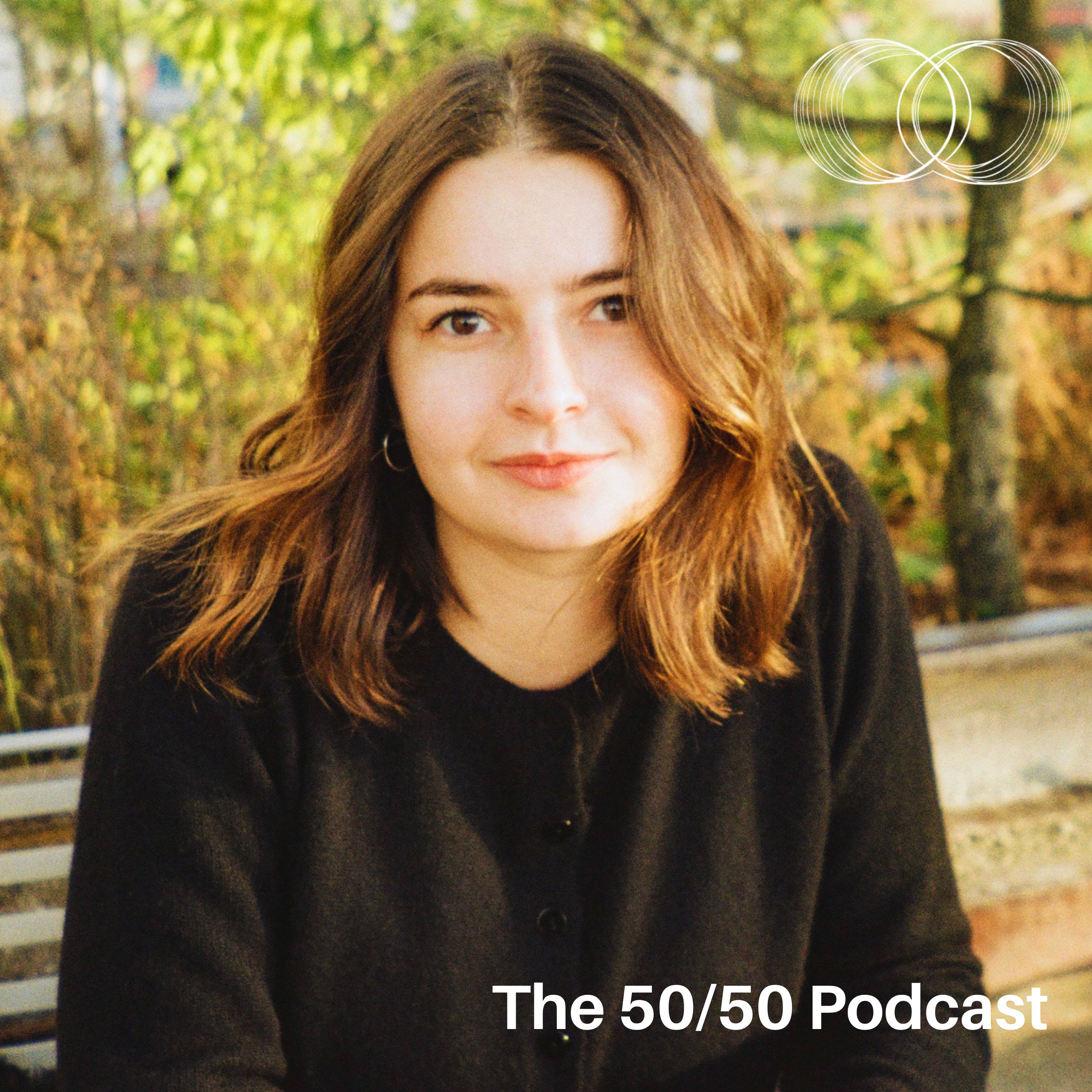
[00:00:37] Speaker B: That was the voice of Talia Lightrake. In recent years, Talia's following has grown to the hundreds of thousands. If there's an open position on an indie set, Heavy Shovel Productions is likely to break that news. Light Rake. Heavy Shovel.
Get it now. If you know Talia, you probably know her in short bursts. One of her superpowers is documenting her process online through social media.
That's why we wanted to bring you, Talia in a different light today. A long form conversation, digging into what truly lights her fire. Light Rake, Heavy Shovel. Enjoy the episode. Oh, and wait, before you go, Tickets for the 5050 Comedy Festival R on sale now. Lincoln, description. Let's go, let's go. 5-3-5050. 5-3-5050 at Brain Dead. Oh yeah, 5050 at Brain Dead, May 3rd. Get the tickets now. Link in our bio.
[00:01:32] Speaker C: Okay, so you're from L. A. I'm from L. A. I want to hear, I want to hear everything because I see you on Instagram.
[00:01:39] Speaker A: I see you like, and scroll.
[00:01:41] Speaker C: Like and scroll. You know, you're, you're educating, doing like incredible, incredible stuff. For real. And like, I feel like there is so much overlap and we've heard so much about you. We told you right before this. But like, I haven't met someone.
Seriously, like all, I guess all of your friends, but like a lot of
[00:01:56] Speaker B: people, literally everybody knows your name.
[00:01:59] Speaker A: It helps that I have kind of a unique name.
[00:02:02] Speaker C: That's.
[00:02:03] Speaker B: Sure.
[00:02:03] Speaker C: Yeah.
[00:02:03] Speaker A: Like Light Rake, you know, stands out. Talia, unless you went to Jewish summer camp. Unique. But I went to Jewish summer camps. There were like seven, 100 of us.
But yeah, I'm from LA and now I live in New York.
[00:02:15] Speaker C: Now you're in New York. Okay. And what are you doing out here this weekend?
[00:02:20] Speaker A: I'm here on a secret project right now. I'm shadowing on a TV show.
[00:02:24] Speaker C: Cool.
[00:02:25] Speaker B: I don't know what to talk about,
[00:02:26] Speaker A: but that's really fun.
And we can get into like, how you work inside the system and how you work outside of the system.
[00:02:33] Speaker C: I would love to. Just so the folks know at home.
[00:02:36] Speaker A: Yeah. You want my background just a little bit about.
[00:02:38] Speaker C: How about, like, what you're. If there. If we were to put a title. A multi hyphenate. Because I know you are one. Like a title of what you're doing right now. And then we can take it back to how you got there.
[00:02:47] Speaker A: Yeah. So I say I'm a director who runs a production company, but I think if you checked in with me at any other point, it would very much be different. Do I talk to you guys?
[00:02:59] Speaker C: Yeah, you can talk to both. Yeah. But it's a conversation.
[00:03:03] Speaker A: I'll keep, like, a conversation.
[00:03:04] Speaker C: Yeah.
[00:03:04] Speaker A: Because I keep wanting to, like, turn out.
[00:03:06] Speaker C: You can if you want to address them, you know, it's like, so if
[00:03:10] Speaker B: you have a film you want.
[00:03:11] Speaker C: Yeah.
[00:03:12] Speaker A: For the filmmakers at home, you know where to find us. Okay.
[00:03:15] Speaker B: Now, yeah, we can keep it to ourselves.
But that was good though.
[00:03:18] Speaker A: Thank you.
So my spiel is that I grew up in la. I was a theater kid. I couldn't sing or else I would have done so much musical theater. But instead I produced the musicals. I was acting. I was the youngest Shakespeare troupe in all of the country. So I was doing Shakespeare at five years old.
[00:03:39] Speaker B: Jesus Christ.
[00:03:40] Speaker A: You guys grew up with yotta kids?
[00:03:41] Speaker C: Yeah.
[00:03:42] Speaker A: Yeah. So instead of doing yada, I was in Los Angeles Drama club doing Shakespeare.
[00:03:46] Speaker B: Oh, cool.
[00:03:46] Speaker A: Which is really fun.
[00:03:47] Speaker C: Right.
[00:03:47] Speaker B: Because you didn't. You weren't a musical forward person.
[00:03:52] Speaker A: Best thing that ever happened to me, honestly. I auditioned for a musical at Jewishly Boy camp and the director said, you look like a very organized person after I sang my song.
[00:04:02] Speaker B: Very good. Yes.
[00:04:03] Speaker A: Huge insult for a nine year old to take.
[00:04:05] Speaker C: Crazy note, though.
[00:04:06] Speaker A: So rude.
[00:04:08] Speaker B: Changed my life forever.
[00:04:09] Speaker A: Completely.
[00:04:09] Speaker B: No, you look like a very organized person.
That's just kind of saying something that's
[00:04:16] Speaker A: like, so what does that mean for like a 9 year old? And so instead of being in the Little Mermaid, instead I painted branches yellow and braided toilet paper for crowns and props. And that started my like stage manager pipeline. And so as a theater kid, I feel like there's a big pipeline from stage manager to producer. It's very similar in that way.
So theater kid growing up, I have family who works in film and tv. My dad's a showrunner. But I grew up being like, theater is the best art ever.
I refuse to do whatever you do.
I will be a theater person. So I then kind of continued my life. I did Williamstown Theatre Festival as An apprentice. I worked for Manhattan Theater Club. I was like, I'm gonna be a theater producer.
[00:05:05] Speaker B: And this was in high school that year.
[00:05:06] Speaker A: It was in high school.
[00:05:07] Speaker B: Okay, so still in la.
[00:05:09] Speaker A: Still living in LA in high school, and then. Yeah, doing different internships. Any theater internship that we have.
[00:05:14] Speaker B: Okay. So really, theater forward, even in la, which is interesting because I also was a theater kid and loved being in plays and everything and was in my little theater company and everything. But I still was like, oh, I guess I was told by people, if you want to do this, you'll probably join film, or.
[00:05:31] Speaker A: Oh, you'll probably join films. Yeah.
[00:05:33] Speaker B: Or that was my more so the exposure. I eventually went to New York and was able to participate more in theater, which. Funny how that works, but, yeah, I get it. So you were very, like, even in la, you were theater.
[00:05:44] Speaker A: Yeah, I was a theater kid. I also, like, the rumor has it that when I was in high school, my parents got a phone call saying that I was too dedicated to my extracurriculars and love to my parents. They were like, that's who she is. Like, she's an extracurricular gal.
[00:06:02] Speaker B: Good parents.
[00:06:03] Speaker A: Good parents.
And so there was that joke where it's like, you know how most people in college and in high school, you kind of, like, join a few clubs as a freshman, and then, like, by the end, you're the president of one club because you worked your way up. I joined a bunch of clubs, and I ran all of the clubs, both in high school and in college.
And so I was a little. A lot, and I still am.
[00:06:26] Speaker B: You're a very organized person.
[00:06:27] Speaker A: I'm a very organized person, according to Barb. But no, it's true. I did theater, I did debate, I did admissions. I started my own theater production company in college.
I really loved theater and film. Not that it wasn't on my radar. It just wasn't what I was doing.
[00:06:44] Speaker C: I'm sorry.
[00:06:45] Speaker A: Yeah.
[00:06:46] Speaker C: I want to almost ask where that entrepreneurial spirit came from, or if it was really just this curiosity of. I just want to. I love theater so much. I want to do. But debate's not theater debate. So, like, was it just, like, some crazy ambition, or were you really just like, I want to run, I want to build an empire?
[00:07:08] Speaker A: And I think it was less about building, and it was more about doing.
I have a lot of learning disorders, and I think that I was always the person who loved a project over a paper, and I think also knew that a presentation was always gonna be my strong suit. And so, because it was very much. I felt like a lot of my childhood was like crafting a path that works for me. I think that that kind of translates into my life as a whole. And so I think even growing up, when there was the opportunity to present something, I was gonna present something. When there was the opportunity to do something, I was gonna do it. And so, I mean, I'm the oldest grandchild of, like 16 grandchildren. I'm the oldest daughter. I was a camp counselor. I'm like, you just gotta do it. You just gotta bring it into the world.
And so I think that that is a little bit where it came from, if I were to dig deep in that way.
But it's funny. And I grew up, I think When I was 14 or 16 years old, I started production, assisting on some of my dad's productions. And so that was in New York, though. And so during my spring break, I would go and I'd pa.
But still I was like, I love theater. This is just a summer job. And it was fabulous.
But I think I.
[00:08:33] Speaker B: Your heart was thrown.
[00:08:34] Speaker A: My heart was like, in the theater. And it's funny, upon reflection, I keep thinking, like, what did I think I was gonna do? Like, I don't think I very much loved acting growing up. But my parents.
You're from la. No parent wants you to be an actor.
[00:08:51] Speaker B: Because they know.
[00:08:52] Speaker A: Because they know. And it's so hard.
And I was a totally fine actor.
Good for them to really kind of push me the other way.
And it's funny, in college I majored in sociology and in theater, so real people and fake people.
And I think even in college I kind of thought I was gonna go study sociology. I don't know what I think I thought I was gonna do with my life.
[00:09:17] Speaker B: But you were just fueled by passion and interest.
[00:09:20] Speaker A: Passion and interest. And I think by early college I was like, okay, amazing, I'm gonna be a theater producer, but. Or maybe mid college, I don't know. Because it's so funny to me, because. And I'll share that the pandemic totally shift everything for me. And that's where I am now. And it's such a blessing.
But looking back, there's that video. There's a few things that are going around viral right now that's like, what would 12 year olds say about who you are now? What would 16 year olds say about who you are now? And I think at every.
Every age, me would look at me now and be like, yeah, that makes sense. Like, I've had. No, I've had Growth. I've changed a lot. I've grown as a person. But I don't think it's a surprise to like 12 year old you that like, yeah, I'm doing my own thing in that way.
[00:10:05] Speaker B: There's power in not being able to like exactly put your finger on what you do or like what you want to be doing.
[00:10:12] Speaker A: You know, I.
I hope so.
[00:10:15] Speaker B: I think there is. I just, I'm saying that because I relate to it a lot.
[00:10:19] Speaker A: Yeah.
[00:10:19] Speaker B: You know, like they, they always say like, you know, choose your one thing. But I think there is power in being a sort of generalist to some extent. Well, it's interesting because that's what a producer is. Right? Like there is that.
[00:10:32] Speaker A: I think growing up it was choose. I think when I was in college it was pick one thing that you are. Because if you're more than one, you're undirected. And then in the last five years it's changed into do you have to be able to do everything?
You can't be just one thing. But I still notice, I feel like there's a secret confession to that, which is that you hire the people who are still that just one thing. Which I think people don't really talk about because it's like you want someone who can do everything, but like if there is someone, people DM me all the time and they're like, I'm a dp, but I also am a loader and I can camera up and I even come PA for you. And I'm like, you just said you're gonna come PA for me. I'm not hiring you as my dp.
[00:11:24] Speaker B: Right. So yeah, so. Or it's like, what do I do with you?
[00:11:27] Speaker A: What do I do with you?
[00:11:28] Speaker B: Yeah.
[00:11:28] Speaker A: And people always remember you as the first person as the first position, who you are to them.
So like the first people I meet, I put them in my phone. Like if you gaffed on my set, you're a gaffer. To me, it's hard to like think outside the box in that way.
[00:11:42] Speaker C: Sure, that's a fantastic.
That's so real.
[00:11:45] Speaker B: Yeah. Because you are, from the other perspective of like you are actively staffing people on things and like providing job opportunities for people.
[00:11:54] Speaker A: And it's, and it's, I need to unlearn this a little bit. But it's like I want the best person for that job. And in my mind sometimes the best person for that job is, is someone who is wholeheartedly dedicating themselves towards that. But that's not true. I'm a writer, director, producer. I know that I can do both.
So why don't I think about other people who can do both in that same way? And I pitch a multi hyphenate. But now I think multi hyphenate's become this dirty word.
We're in a moment right now, but
[00:12:23] Speaker B: it's a moment, right? Because we've gone through many eras so far of people telling you that you should be doing X or Y or whatever. So it's tricky, for sure.
[00:12:32] Speaker A: And it's about how you present yourself. So I've stopped saying I produce. And how I pay my bills is through producing. Like, I make very little money, but the money that I make to pay my rent and my bills is mainly through, like, bigger producing projects that will come my way and a little bit of directing each month.
Not enough to pay to live full on, just directing. And so. But yet I am now saying I'm a director because people already think of me as a producer. And so I'm trying not to rebrand, but to rebuild in that direction.
[00:13:02] Speaker C: How. How do you do that? Because, you know, how do you go from PA to dp? And in a rebranding sense, is it a matter of output, is a matter of posting? Is it a matter of letting the work speak for you? Or is it a matter of getting out there and saying, hey, I'm Luke, I'm a dp? Like, how do you actually do that?
[00:13:20] Speaker A: That's really interesting and a great question because I feel like, how are you supposed to grow?
I think it's a lot about knowing yourself and knowing your position.
And I'm a tad judgmental.
And I think I, growing up as a PA I, like, was a PA in the days in which you don't sit as a PA and that there was a hierarchy on set and there was a lot you had to know your place. And I think even.
[00:13:48] Speaker B: And it's totally perfect now. There's no hierarchy.
[00:13:50] Speaker A: And it's totally perfect now. There's no hierarchy. And while I think that hierarchy can be problematic when it's toxic, I think hierarchy can also be helpful because it's a structure that's put into place for growth.
And what's nice about hierarchy is that you know that when you do your time, you have a place to grow.
And so I think that there's a little. I love the world now in which it feels like anyone can be anything, but it makes it challenging to see where people are on their journey because.
[00:14:23] Speaker B: And their actual skill set.
[00:14:24] Speaker A: And their actual skill set and so I think I try to hold both truths. This is where I'm gesticulating.
I think that I have to protect myself in the sense that it's like I don't want to make myself smaller for who I am.
And I also want to make myself.
How do I want to phrase this? I don't want to be saying. I think that what tends to happen. So I do these networking events and at these networking events I ask people to say how long they've been working in the industry.
And men will always say they've been working for way longer and they're more experienced than women who are at the same level will say. Women will always put themselves as working less time. Cause a lot of men will be like, oh, I started doing this in college, so 10 years. When women will be like, well, I've only professionally been working for three years, so I should only say three years. And so I wanna be careful that I'm not continuing to uphold a sexist understanding. And I want to uplift people and to say that you should claim whatever position you are. But I also think that you need to be incredibly humble and know your place. That was my long winded answer for how do you grow? So I think that it's.
There's also discourse going on right now where people are like, don't say you're aspiring, don't say you're emerging. And I don't totally know how I feel about that, but I think you can say, like, I'm on my journey. Like right now I'm an ac, like with.
And I do DP work, you know, And I don't want to speak to camera because I really am not camera forward. And so. But I think from a directing perspective, which is like, hey, my goal is to be a director, or my goal is to do full time directing, but I'd love to come PA on your sets.
[00:16:12] Speaker C: And I think there is so much value to.
In being like, I'm directing this web series right now, you know? Yeah, it's like, oh, I'm a director. Okay. Like, what are you doing? And it's like, oh, well.
But like, if you. It's like, I'm DPing this thing or I just did a shoot for this. Like, I'm a photographer. Like, if you're, if you're able to provide the context of like output of real work. And even better, if it's like you're a writer and it's like, can you send me it? You're like, yeah, I can send you that you know that aspiring goes out the window and it's like you're a writer and you totally are.
[00:16:48] Speaker A: My friend just gave me this analogy I think is really smart where she said that making movies is like making babies.
Yeah, you can do it at 21, you can have a baby at 21, you can make your movie at 21. You can do it. It's gonna happen. You could. And I'm sure you're great at what you're doing, but like if you have your baby a little bit later when you're older, it's gonna be a little bit easier. You have more money to support your baby. It's more going on. So like, yeah, you are a director.
It's just a matter of understanding the context and the place that you are in, in that way. But I think that could be kind of controversial.
[00:17:24] Speaker C: Yeah.
[00:17:25] Speaker A: And I don't totally know how I feel about it.
[00:17:27] Speaker C: There's so much ego involved in all of this too, you know, with titles and I'm a writer, director, you know, Like I want to say that, you know, and it's like I feel like I have to say that when I'm talking to this specific person, you know, but it's like again, I think leading with the work. I think that's.
[00:17:42] Speaker B: I completely agree.
[00:17:42] Speaker C: And I think you're kind of saying that too of like, know your place.
I know I'm making this show.
[00:17:48] Speaker A: Yeah.
[00:17:48] Speaker C: You know, it's like I can say that because I'm doing it, you know, like.
[00:17:51] Speaker A: And you are. And you are doing, you're doing it, you're doing it.
[00:17:54] Speaker B: Exactly.
[00:17:54] Speaker A: And then no one can question you.
[00:17:55] Speaker C: Exactly, exactly.
[00:17:56] Speaker B: At the end of the day that's how you suss people out in real. You see what they've done.
[00:18:00] Speaker A: Yeah.
[00:18:00] Speaker B: You know.
[00:18:01] Speaker A: Well, for these networking events I look at everyone's websites and I stalk everyone. It's very interesting to see the different levels of people. I vet them, it's curated and everyone's bio is award winning, writer, director.
And I'm like, what award hun?
[00:18:19] Speaker B: I know. Well, yes, you are on that side where you're vetting people. But also like people are encouraged to do that, you know.
[00:18:25] Speaker C: Really?
[00:18:26] Speaker B: Yeah, absolutely. A lot of this industry is just selling yourself based off of like.
[00:18:32] Speaker A: But I'm award winning and I go, what award? Yeah, tell me what award winning?
[00:18:38] Speaker B: Well, yeah, I mean I think because
[00:18:39] Speaker A: if you don't tell me what award
[00:18:40] Speaker B: then absolutely you should then back it up with or they say award winning and then you look down and it's
[00:18:45] Speaker A: A liftoff student festival that charged you $100. Cause anyone's into it. Like, I just more mean, like, I think I come from a judgmental place and I'm trying to de judge, and I think everyone should come in. But I think it's really interesting how you're rewarded for saying all of these things.
You're also rewarded, I think, for work that's not always up to snuff. So I don't know.
I find it very, very challenging.
[00:19:13] Speaker C: It is a very incredibly subjective. You know, like, great is.
I don't know if great is. I mean, we like to say, like, okay or hope this, at least for me, I don't want to be. But like, hopefully, like, great is great no matter what, you know, like, a great short film is a great short film, you know? But what does that even mean? You know what I mean?
[00:19:31] Speaker B: Like, I mean, I work at a production company, and one person's read is very different than another person's read. You know, someone could think it's a great script, and the other person could be like, I just don't get it. You know, that's the idea of working in art. It's subjective. But at the same time, the titles thing is different. Right?
[00:19:49] Speaker A: Yeah. I think I'm just being a little bit rude.
[00:19:51] Speaker B: No, no, but it's an interesting conversation because, like, our.
To give you a framework of who our audience is. It's a lot of film school people. People are just entering the industry and seeing sort of how, you know, crazy everything is and not knowing where to go. So we. We like to provide sort of tangible advice. So, like, it is a worthy conversation to be like, do I put award winning? If I. The award I won is like a student thing that was given, you know, one out of 12 people.
[00:20:19] Speaker A: My thoughts on all that is always just like, be so specific because that's where it helps to understand how things are going. Because when everyone has something, then no one has it in that way.
[00:20:28] Speaker B: Mm.
[00:20:28] Speaker C: Yeah. So specifics in a bio is what shines.
[00:20:32] Speaker A: Specifics in a bio, like, for me to be here. Haven't won any awards, but I've been.
I've been. I'm a NYU development lab fellow, which is fun because I didn't go to nyu, which is my fun fact.
I'm a film independent fast track fellow. And so I just put. I put the names.
[00:20:48] Speaker C: Those are pretty massive.
[00:20:49] Speaker A: So it's like, those are good fellowships. And so it's like, okay, then we're in it. Yeah, but I think it's Also, to each their own. And some people are also easily. Some people also look for that when they're hiring. For me, it's the inverse in that way.
[00:21:04] Speaker C: Can you talk a bit about these mixers and how you're curating and totally, you know, how that actually goes about.
[00:21:10] Speaker A: So I think also what's interesting is that Heavy Shovel Productions, which is my company, has now kind of split. Split in half. We are, on one side, a production company that at one point in my life was used to produce, like, so many short films. And, like, that was kind of my thing for a while, which was, if you figured out where to find your budget, bring me on, and I will produce your short film.
And that kind of took me from, like, 2021 to 2023. In 2023, excuse me, in 2023, I shifted, and I now was like, I can't produce that many short films anymore. I want to focus a lot on directing. And so now I'll produce short films that I'm also directing. And I've carved a niche for myself on kind of writer actor projects. And so a lot of actors who have written a short for themselves to star in will come my way. That's been a really fun opportunity.
[00:22:05] Speaker B: That's really cool. I love that.
[00:22:06] Speaker A: It's really cool because often they want to see themselves in a certain role. They're producing it, they're gonna go and make it happen, but they need someone who's done it before, and they need a director. And so that's. I've probably done, like, three of those now.
[00:22:20] Speaker C: How do you. How do you. Has that actor network built or been built or developed through these mixers? Or how have. Or are you just, like, friends?
[00:22:29] Speaker B: How do you find people of that specific.
[00:22:31] Speaker A: Yeah, totally. You know, so production company arm, and then we've turned into Heavy Shovel Productions is a filmmaker community.
And so I started posting on the Internet in 2022, being like, you might need a little more context. So pandemic happened. I thought I was gonna be a theater producer. I had a job lined up to work at Manhattan Theater Club, which is a Broadway theater. And they had offered me the job in February of 2020.
And they said, good, time to get a job.
And they said, you in theater? In live theater. And they said, we'd love for you to commit to us for two years.
And in 2020, I'm like, yeah, I can do that. I'd love. It's like grad school. I'd love to take on this job.
March happens. The world Shuts down. It's Covid. I start working for them and quickly get furloughed.
And so during that time, I started a virtual theater company where I was using some of the friends and Hollywood parents that I would babysit for, and they would connect me with actors.
And then I ran this 500 person play conference from all over the world in which I, with my friend Sariah and my friend Samara and my friend Mark Feuerstein, we put on this play festival. Do you know Mark Feuerstein?
[00:23:59] Speaker B: No. No, I don't. It was just like first name, first name and then like full on long.
[00:24:02] Speaker A: Well, Mark Foyerstein's like a famous actor, and so he's a firsty. Lasty.
[00:24:06] Speaker C: He's a double. There we go.
[00:24:07] Speaker A: He's a double guy.
[00:24:08] Speaker B: Yeah, there we go. He gets two names.
[00:24:09] Speaker A: He gets two names. You get all of his name.
Celia Cates and Smart Handelsman, if you guys want to look him up. Power to them.
We started this playwriting conference in which we gave people a prompt and they wrote scripts off of this prompt.
And then we cast actors who were totally at home during the pandemic. And so we raised money for Covid and Black Lives Matter. And it was my first time being like, oh, you just kind of do things and then people will do them. And if you give them an opportunity. People were hungry. And so we got some fabulous writers and amazing actors off of their network TV shows to come and shoot.
[00:24:46] Speaker B: Crazy.
We were literally just talking about this today, how Covid is such a running thing on this podcast and with people who we talk to. Like, it is such a catalyst for completely entrepreneurship or finding your creative voice or all these things, you know? Yeah, it's so interesting.
[00:25:02] Speaker A: And it totally changed my life. Like, I was going to be this theater producer. And then during the pandemic, I started working for a rapid response media production company, which just meant. Yeah, exactly. Kind of crazy.
They did things for really large budgets and really fast and commercial stuff like commercials. It was a lot of events that would have been in person that became online because of the pandemic.
And so that was their niche. And so they had a lot of friends who needed this help. I got hired because they asked me to write them a letter about what would make me magnum stoked.
[00:25:36] Speaker B: Okay, cool.
[00:25:37] Speaker A: Some dudes.
[00:25:39] Speaker B: Sounds pretty, right?
[00:25:39] Speaker A: And I was like, I do events and I. Cause in high school, I ran this arts festival and I put on student theater and like, I am organized.
[00:25:49] Speaker B: Yeah.
[00:25:49] Speaker A: And quickly I became a producer for them. And So I spent 2020 to 2022, because they were also based in New York. And so I thought that I was going to go to New York to go work in theater, but I went to New York still furloughed and got to work in live production for these guys once things started opening up again.
And they burned three people so quickly because it was such a fast turnaround time, but it was a high budget.
And so I started posting on Instagram being like, do I know editor? Do I know video person?
[00:26:21] Speaker B: And this is you working for this company.
[00:26:23] Speaker A: Yeah. But on my personal Instagram in 2020,
[00:26:25] Speaker B: because it's happening so fast.
[00:26:26] Speaker A: Happening so fast. Friends of friends are being like, yeah, my old roommate edits. And I'm like, okay, how much pay editor? And it's Pandemic. And I had no idea what you should be paying anyone.
And I, like, it was like just
[00:26:41] Speaker B: getting thrown into the deep end of.
[00:26:42] Speaker A: Thrown to the deep end. But my little confident toches was like, I got this. It's like one big student theater company. I should be blonde. This is basically the same thing.
[00:26:53] Speaker B: Yeah.
[00:26:54] Speaker A: And so I started producing for them.
And I realized, especially as things opened up in New York, that I was finding these people I was hiring. I was negotiating day rates. The thing I didn't have at the time was clients, but I was like, I can go find clients.
And so I started posting from Heavy Shovel Productions and started to build a team that way. And then what would happen is that these filmmakers who would come work awesome date rates for this Rapid Response production company. We'd go make short films on the side.
[00:27:28] Speaker C: That's great.
[00:27:29] Speaker A: And so in 2020 through 2023, I was making music videos. And the first DP that I ever hired for the Rapid Response production company was like, hey, I know this musician who has $15,000 to make three music videos in one weekend. Do you want to do it? And I'm like, hell, yeah. And I was hungry and ambitious.
[00:27:48] Speaker B: Yeah. So take us through exactly, like, the order of events.
Not, like, overall, but, like, what happens. You find out someone texts you about a friend who's a musician, and then you. You get the budget or, like, what are you actually doing?
[00:28:03] Speaker A: I mean, I would say that social media kind of changed my life. I think the Pandemic changed my path and social media changed my life. Because posting online and being the person who is front of mind to everyone does wonders. And it's so funny because I could go on forever around how uncomfortable it is to post and how you kind of have to shut your brain Off.
But the fact that people open their phone and see me sometimes horribly annoying to other people, but sometimes, oh, I need a director. Oh, I need a producer. Oh, I have this project.
The first person I'm thinking of is Heavy Shovel Productions. Because I see them so often on my feed, they probably could help with my project.
[00:28:43] Speaker C: Did someone tell you to do that?
Did you learn about recency bias through just experience or was it.
[00:28:49] Speaker A: I was experiencing it and I started posting online because I really needed these freelancers. I didn't know where to find them and I had paying jobs for them.
[00:28:58] Speaker B: It's a very modern version of like kind of what a talent agency does.
[00:29:02] Speaker A: A little bit of like, and very little money, but. Yes, right, right.
[00:29:06] Speaker B: But you know, like, it's, it's. And for like below the line or whatever you want to call it, micro budget stuff. It's interesting. The top of mind thing that reminded me of like, yeah, all the agencies want to be top of mind for producers. They want to be like, we have, we have a project. We're contacting this agent who's my bff, who I know has a roster of writers who I can sift through and pick one. You know, like, the agent wants to be that. So like, you, in a way are the sort of you, you wanting to be top of mind reminds me of that.
[00:29:37] Speaker A: Yeah. And I think like, that's also why people think of me for their short films is because those first few years I was producing short films.
[00:29:46] Speaker C: Can, can we talk? Because yeah, your social media now, like, you, you're. You're successful. Like with social media. Like, you have a following.
You're. You get numbers like, you, you have the, the, the. The engagement that makes people say she's successful on social media.
[00:30:02] Speaker A: Which is funny because it's like, what success.
[00:30:05] Speaker C: But yeah, sure. But like, when, when did that, when, when did that hit? And like when, when did things start to move? And. Or was it immediate? Where it was like all of a sudden like, I post one video and like it blows up because everyone wants this thing.
[00:30:21] Speaker A: Yeah, that's.
I started posting videos January 2022.
[00:30:28] Speaker C: Okay.
[00:30:28] Speaker A: And I.
TikTok has it and so it will give you on this day videos. And so in January every year, I'm like reminded of the early videos that I posted and I was blonde and I put so much time into editing them and I do little like questions for creatives. What do you do here? And I. It's quite endearing. And those are not the videos that popped off. I spent probably 2022 to 2023 or maybe 2024, just posting on TikTok. And I grew to probably like 25, 26,000 followers.
[00:31:05] Speaker C: And was it a daily? Was it a weekly?
[00:31:07] Speaker B: Was it a everyday and just every
[00:31:09] Speaker A: day if you're posting on TikTok, yes.
[00:31:13] Speaker B: Crazy, but yes. Do you, like, what is it that actually look like just for people who, like, don't follow you or don't know exactly? Like, for me, I see a lot of, like, it'll just be like a random photo of, like, in search of, like, 1st AD and, you know, so
[00:31:30] Speaker A: it's a few things. I started going to the Internet because growing up in LA and just being in now this new industry, I had a lot of mentors who were much older and a lot of parents, friends who are like, she should go be an assistant. And I'm like, I don't want to go be someone's assistant. I want to be making things. And the only advice you're giving me is go be someone's assistant. Like this. There has to be more information out there. And it was challenging. I didn't know where to look to go find the advice of, like, literally, how do you make a short film?
I know who to call if you're trying to pitch your TV show to yada, yada, yada. But, like, how do you literally make a short film? I don't understand. I don't know. I didn't go to film school and I was discovering that the people who knew that information were people five, three years older than me doing it. And so I was trying to find community of people in my sphere who were also doing indie production. And especially in the post Covid or post lockdown world, I'll say, when things really shut down, everyone, like, didn't know where to go. Like, no one had a community space in which you could connect with people in real. In real life as well, let alone online.
And then you'd see I was like, where are people hiring people? And you'd be pointed to Mandy or you'd be pointed to, like, these other offshoot. Someone said, LinkedIn. I'm like, people aren't getting film jobs off of LinkedIn. Like, it's all word of mouth, it's all who you know.
[00:33:03] Speaker B: I was going to say, like, those sort of, like, websites with that purpose or even like LinkedIn stuff feels a little impersonal, you know, it's impersonal, it's
[00:33:11] Speaker A: wrong, you know, like that.
[00:33:12] Speaker B: Yeah.
[00:33:13] Speaker A: Like, filmmakers aren't on LinkedIn.
[00:33:15] Speaker B: Yeah, not the right.
[00:33:16] Speaker A: It's not the right people that you want. It also is like, I remember when I was really needing, I was like, I want to work. I want to work a lot.
I subscribe to, like some of these listservs that had the pulled off UTA job boards on them. You pay $5 to get the list and it's like you get 100 emails.
[00:33:34] Speaker B: Jesus. Yeah.
[00:33:34] Speaker A: There's all these different ways I was like, whenever I'm trying to hire someone looking for a wreck, I text the person I know and then they send me a name. And so what if I just walked people through my process of how I built short films? And what if I also start hiring people just by posting on Instagram like I did in 2020 when I was hiring people as well.
[00:33:55] Speaker C: That's great.
[00:33:57] Speaker A: And so for me, I was producing these short films, walking people through how I use Shot Deck and Scriptation and these apps that I'm using on set. And like, I learned about scriptation, a film software script software, when I was a PA on a set and the ad was using scriptation. And then I brought that to TikTok being like, here's what I learned today. And then Scriptation ended up being a sponsor for me once I got more followers.
[00:34:24] Speaker B: Yeah, great.
[00:34:24] Speaker A: And so it's just all. It's a full circle moment in that way.
[00:34:30] Speaker C: But these weren't blowing up, per se.
[00:34:33] Speaker A: I never thought anything was blowing up and I still don't think anything's blowing up. And I'd like them to blow up a lot more.
[00:34:38] Speaker C: Well, with like to. To wake up in post every single day.
[00:34:45] Speaker A: Yeah.
[00:34:47] Speaker C: Basically every single day for a couple years and not seeing the numbers that you want, perhaps. Well, all I'm getting is like, how did you push through that? How did you keep going? Where was the ambition coming from? Or was it just.
[00:35:01] Speaker B: That was a question that I had at the beginning of this whole thing of like, when you're doing debate and I'm sure community service and acting and painting the set like you're doing so much.
[00:35:12] Speaker A: Yeah.
[00:35:13] Speaker B: That it's the same question.
[00:35:15] Speaker A: Someone's gotta do it. Like, if you want something done, you gotta do it.
[00:35:19] Speaker C: Yeah.
[00:35:20] Speaker A: And I think for me, I never.
Now I'm a content creator, but to me, it was never about being a content creator. It's all about, and it still is about building and finding filmmakers to be in community with. And so don't get me wrong, when my videos would hit a thousand views, I'd be like, oh, that's so fun. Now I think I'm more Like, I'm not blowing up. I have friends who have XYZ, but in the beginning when I had 10,000 followers, I'm like, oh my God, that's crazy. It's a lot of people and people are like, it's almost sweet to look back on. I posted a video cuz I have projects coming up this summer and I just was like, I have projects coming up this summer. I want to be on your radar. And we have over 400 people commented being like, I'm in New York and LA and I'm working this summer. And I'm like, that's crazy, crazy, crazy that video hit so many people. But also crazy that there's so many people working and there's such a need for like how you find people and bring people together.
And so I think, I guess in
[00:36:18] Speaker B: those it shows you that there is that demand.
[00:36:20] Speaker A: There is that demand for hungry people
[00:36:22] Speaker B: who want to look for something to find.
[00:36:24] Speaker A: And I totally hire people off of Instagram all the time.
[00:36:27] Speaker B: Yeah, it seems like that's like your main.
[00:36:29] Speaker A: It's my main thing.
People are like, you just post because you want the engagement. I'm like, no, I post because I'm like, where are my producers? I don't have a Google sheet of them because everything's ever changing. I go back to the post that said where are my producers? And I scroll through. I literally did this last week and I was like, oh my gosh, these two people would be great for this project. And I sent their name and now they're producing this person's music video. Like Instagram really is my roster in that way.
[00:36:55] Speaker B: How are you, Are you involved in that music video though? Are you just like a full on channel?
[00:37:00] Speaker A: Thank you for asking. That was a big moment for me.
[00:37:03] Speaker B: Yeah.
[00:37:03] Speaker A: Because I have horrible FOMO and I want to be involved in literally everything.
But this music video in particular had $6,000.
Talia from three years ago would have been like, let me add it, I can do it. But this music video had $6,000, a crazy location request. And I was like, let me take it back to this is not the project for me.
Let me refer to people who I think would be fabulous sometimes for short films. If I like come in and consult, I'll be like, can I have a co producer credit? And I'll help you out in that way.
In that way.
[00:37:40] Speaker B: Cool.
[00:37:42] Speaker C: Go for it with heavy shovel.
[00:37:43] Speaker A: Yeah.
[00:37:44] Speaker C: Are there a couple people on the team?
All I'm getting at is asking about relinquishing control and how. Because as you said the FOMO piece. And I can relate this, too. As the founder of 5050 and having built this and everything. And as we continue to build out the team.
[00:38:01] Speaker A: Yeah.
[00:38:01] Speaker C: And having some hiccups in the road with, you know, certain moments of whether it's an intern or whatever it is. And it's, you know, it's. It's. It's. I don't know if you'll ever find someone as passionate about the thing that you create.
[00:38:13] Speaker A: Yeah.
[00:38:13] Speaker C: Than you are. You know, I mean, so how.
And everyone, you know, as, you know, like, to grow success in business is expand at a certain point, like, you're not as a single entity. You're not able. We're human. We're not able to do all of the rules. And at a certain point, you have to be able to say, hey, person.
[00:38:34] Speaker B: Like, find someone to really trust.
[00:38:36] Speaker C: Yeah, yeah, I trust you. And like, let's do this together. And, like, I'm gonna try. I'm gonna be over here directing this show and, like, you're gonna be here producing this music video.
[00:38:46] Speaker A: Yeah. It's interesting.
That's. For some reason, that's my buzzword today.
[00:38:51] Speaker C: Interesting.
[00:38:51] Speaker B: It's a very podcast. I find myself saying that on the podcast a lot.
[00:38:54] Speaker A: Yeah, you can cut that. You can cut around that one.
[00:38:57] Speaker B: Actually, not for you.
[00:39:00] Speaker A: Don't cut your videos. Just go straight to.
[00:39:02] Speaker C: It's perfect. We do one long take. Very art house.
[00:39:05] Speaker A: Very art house.
[00:39:06] Speaker B: One take.
[00:39:06] Speaker C: Yeah.
[00:39:06] Speaker A: Guys, hopefully we don't have to do another one. You should have told me that to begin with.
[00:39:10] Speaker C: This is one take. No, no.
[00:39:11] Speaker B: Usually guests don't ask.
[00:39:14] Speaker A: Usually guests don't.
[00:39:16] Speaker C: It is talked. Yeah.
[00:39:21] Speaker A: When filmmakers, often directors come to me and they're like, I just need a producer. I just need someone to really take my project and run. The number one lesson that I give for everyone around making a short film is that no one's as passionate around your passion project as you are.
And I think that has.
It spreads into heavy shuffle production. Not that no one's as passionate. There's been a lot of folks who have been like, I want to help.
And what I'll do is I will bring producers on for different projects. So right now, I have. I had. This year. I've done like three short films already, and I have a different producer on each project. So that to me, delegation, super easy.
[00:40:00] Speaker B: They're acting as you kind of.
[00:40:01] Speaker A: They're acting as a producer. Their own producer. Iep.
[00:40:04] Speaker B: But filling the role that you would
[00:40:06] Speaker A: have usually totally in years past. I would have Produced it and on the ground. On the ground, doing everything. But now, typically, I'll only take on projects that are a little bit higher budget, that can have both a producer and a coordinator. And I'll bring on a pretty experienced producer with a bit more green coordinator and they will work together to produce the project.
And I'm directing and we do it through heavy shovel. And so I get to EP and we bring things in with heavy shovel. As like a filmmaker community, we have some interns. Sometimes we have some.
I'm experimenting with virtual assistants.
The truth is that it's mainly just me and we don't have a lot of money. And so if there were a world in which we could bring on more people, I think that would be fabulous.
I had two things to say off of that. One, all my community events. So I run these filmmaker matchmaking events. You asked how they started and I gave you the longest winded answer, which I'll talk about in a second. My community events are these events in which you fill out a form saying who you are, who you want to meet.
I go in, I like stalk everyone, I tag everyone.
And then my brother created an algorithm that matches you for optimal creative collaboration.
[00:41:30] Speaker B: I figured there was some sort of algorithm.
[00:41:33] Speaker A: So it's both human and algorithm.
[00:41:34] Speaker B: Yeah. I love that.
[00:41:35] Speaker A: And then you come to our event and you scan your QR code and your match pops up.
[00:41:40] Speaker B: Wow. So you don't even get your match before time.
[00:41:42] Speaker A: You don't get your match beforehand.
[00:41:43] Speaker C: That's super fun.
[00:41:44] Speaker A: And so then you have. We have color coded corners.
[00:41:46] Speaker B: It's like a game almost.
[00:41:47] Speaker C: It's a game for you.
[00:41:49] Speaker A: It was for me.
[00:41:50] Speaker B: You should film the whole thing.
[00:41:51] Speaker A: You guys want to come? You can come film the next one.
[00:41:53] Speaker C: Yeah.
[00:41:53] Speaker A: Okay.
[00:41:53] Speaker B: And film it? Is that what you're asking?
[00:41:55] Speaker A: I'm like, you can come, you can match, and then you can set up
[00:41:58] Speaker C: a camera match with each other.
[00:41:59] Speaker A: No, but you. That's the thing. You won't match with each other.
[00:42:02] Speaker C: Oh, so there's a.
[00:42:03] Speaker A: Because I go in and I go, you both have 50, 50 in your bio. I'm not going to match you.
[00:42:06] Speaker C: Ye.
[00:42:07] Speaker A: Or if your emails are both NYU. I'm not gonna match you. Or someone has the same production company and so I'm not matching them.
[00:42:15] Speaker B: Cool.
[00:42:16] Speaker A: And so I'm very. It takes a lot of work.
[00:42:18] Speaker C: How many people are you? How many people show up to these
[00:42:20] Speaker B: 300 people and talk about the space and like, oh, you gotta.
[00:42:25] Speaker C: That's crazy.
[00:42:27] Speaker A: Well, it's a ticketed event.
[00:42:28] Speaker B: Yeah.
[00:42:29] Speaker A: And it costs. It depends.
[00:42:31] Speaker C: But I mean this with directing and writing and producing and running a company.
[00:42:37] Speaker A: Someone's gotta do it.
[00:42:38] Speaker B: It's true. Yeah. Someone has got to do it.
[00:42:40] Speaker A: Someone's gotta do it. Why not me?
And so we, I think we've done seven events now. We started in New York. We then did la, and then we did Sundance last year in south by last year. Sorry.
[00:42:51] Speaker B: Cool.
[00:42:51] Speaker A: Park City and Austin. Not related to the festival.
[00:42:54] Speaker C: Okay.
[00:42:55] Speaker A: Not related to the festival.
[00:42:56] Speaker C: Oh, okay.
[00:42:58] Speaker A: I have gotten some.
[00:42:59] Speaker B: Understood, heard and understood.
[00:43:01] Speaker A: Thank you.
So we did them in Park City and then we did it in Austin.
We then did it in Park City again this year in January, and it
[00:43:09] Speaker B: might be in Boulder next year, but for completely different reasons.
[00:43:12] Speaker A: Completely different reasons.
And then we're doing our first one at the Miami Film Festival with the Miami Film Festival.
[00:43:21] Speaker B: And I assume that would be with
[00:43:22] Speaker A: the Miami Film Festival, which is where I'm premiering my pilot also, which is really fantastic. Thank you.
[00:43:27] Speaker C: Congratulations on that.
[00:43:28] Speaker B: Yeah, we were discussing that before. It's very, very exciting.
[00:43:31] Speaker A: I'm very excited by it.
[00:43:32] Speaker B: Yeah.
[00:43:33] Speaker A: But Those are awesome 300 person parties. We're gonna throw another one in New York during.
In June. During when maybe another film festival in New York happens to be in June. And so that is gonna be when our next ones Rhymes Live.
[00:43:51] Speaker C: Wybeka.
[00:43:52] Speaker A: Yep, that one.
[00:43:53] Speaker B: And when is that? What month?
[00:43:54] Speaker A: In June.
[00:43:54] Speaker B: Okay, cool.
[00:43:56] Speaker A: And so they're super fun, they're community events. But I'm thinking about bringing someone on who's really focused on the event side of the world. It's funny, I posted a video being like, how do you find like your business partner? Like someone who, like. Because for me, I need help with like influencer marketing, brand partnerships, events, and all these people flooded my DMs being like, hey, I'm a producer. Hey, I'm a producer. Hey, I'm a producer.
[00:44:18] Speaker B: And I'm like, cool.
[00:44:19] Speaker A: I don't need a producer. Yeah, they're like, I. I'm a director and I would really help with the production.
Don't you, Dr. I'm the director.
I need someone who can like do. Knows business and knows all of the other stuff.
[00:44:32] Speaker B: Yeah.
[00:44:32] Speaker A: So I think it's a lot of like, how do you go to LinkedIn?
Go to LinkedIn? Well, I went. Just word of mouth. I went to the people that I thought would know this type of person. And like, now I have like three different people that I'm chatting with.
[00:44:45] Speaker C: Fantastic.
[00:44:46] Speaker B: That's really, really cool. Yeah, I'm Curious, like what?
Because you, you clearly do so much and I. An observation that I'm. That I'm just sort of digesting is that like you are, you're kind of an influencer as well. Like, you are kind of like you, you really put yourself out there, which I really admire. And like, you are, you have the ability to just like not be ashamed, to just like put yourself out there, be like, I don't understand this and I'm wanting to get more out of it. Or hey, I just figured this out. I wanna share it with you guys. Which is definitely part of what we like to do with this podcast.
One of the ways that we pitch the podcast is like, watch Luke and I figure it out.
[00:45:25] Speaker A: Totally. Well, I think that's 100%.
I am not an expert. I don't wanna be an expert. I wanna be your friend who's taking you along my ride in that way.
[00:45:39] Speaker B: Yeah. That's kind of like what a digital talent does or whatever you want to call it, you know?
[00:45:44] Speaker A: Yeah. And I think that like, just let's figure this out together and hopefully it helps someone.
So my pilot that I did, it's called two Romantic premiere at Miami Film Festival.
We went.
[00:45:56] Speaker C: When is Miami Festival?
[00:45:57] Speaker A: Miami Film Festival, April 11th are coming up. Coming up. I know we have Miami Film Festival and then we'll go to Napa Valley Stream Fest on April 23rd and then San Luis Obispo on April 26th.
So that's our run.
[00:46:12] Speaker B: That'll be great.
[00:46:13] Speaker C: Those are fun.
[00:46:14] Speaker A: Those are fun film festivals.
I do too. I've never been. I'm excited.
[00:46:18] Speaker C: We call it.
[00:46:18] Speaker B: It's beautiful.
[00:46:19] Speaker C: Slow.
[00:46:20] Speaker B: We do call it slow.
[00:46:21] Speaker A: And I do think that is what I should be saying also. And we can talk about this after of just like I got rejected from Sundance, from South by. From Slamdance and from Series Fest, which like blew. Broke my heart. And we can go into that more. But it's interesting. Like how do you repeat your festivals that like I got into awesome film festivals that are like one invited me personally, two invited me personally.
One is giving me a hotel room. Like.
[00:46:47] Speaker B: Yes.
[00:46:48] Speaker A: Do you go to the festival that is going to support you and build you up? And how do you kind of cope with the fact that these like name brand festivals maybe don't mean so much, but still mean so much to you and. Yeah, yeah, but I'll say because I think I was talking about something else beforehand, which is the influencer stuff of being like, watch someone fail, which is that once we got into Miami, I went Back and I looked at all of the videos that I posted on TikTok and Instagram of indie pilot update. And I have an 82 videos that start from when I first came up with the idea for Too Romantic, my pilot. Tracking you all the way through idea, finding producers, financing, casting, callbacks, location scout, production, post production, marketing, and now finally premiere. And so I think like, that's an 82 part series. If someone wants to know how to make a short film.
[00:47:43] Speaker C: There you go.
[00:47:44] Speaker A: There you go.
[00:47:45] Speaker B: Or a pilot specifically.
[00:47:47] Speaker A: A pilot specifically, though, I'll say it's kind of. It's just like a long short film.
[00:47:50] Speaker B: Sure, sure. Written differently maybe.
[00:47:53] Speaker A: Yeah, written. Totally written.
[00:47:54] Speaker B: And I'm sure you have a sort of deck that talks about the future seasons and everything.
[00:48:00] Speaker A: Yeah. But I think. Which is interesting, my biggest lesson is that I treated my pilot like a feature film, which held me back for a while.
[00:48:08] Speaker C: What is, what does that mean?
[00:48:10] Speaker A: I thought the ROI for a pilot is twofold.
You could go pitch it as a series, or you can and like sell it that way, or you could go and put it online, but odds are no one's picking your pilot up and then filming five more episodes from that one. You're always gonna reshoot anything. And so the idea was it could be a proof of concept that shows tone and character, world building. Or I could make money from putting it online, which is the same as a short film, but because it was this idea that it was a proof of concept that could be then made into something bigger, like a feature film that would sell versus a short film, which I guess a proof of concept, if you're doing investor contracts that treat like a proof of concept, you could do it. But because I treated it like a feature, being like I need to find talent that will go bring me financing.
That was a hiccup that took so long in the process because all of my financing actually came from people who believed in me and people who became in the project and like, loved the amazing talent. But I was under the impression because it needed to have this larger ROI of selling that and because I needed to raise money that investors wanted talent that could then sell the project.
But I should have just treated it like a short film and been like, hey, you love this project, you love me, you believe in me, give me money that way. And that is what I ended up doing. And that's how I financed the pilot.
[00:49:39] Speaker B: What were. I'm curious about that. You said 82 different videos, like about your indie pilot update.
[00:49:45] Speaker C: What?
[00:49:46] Speaker B: Which of those videos resonated the most. Do you remember if there were any specific ones that people were like, oh, like I, I've never seen this. Like, they're sending it all over and like, which ones?
[00:49:56] Speaker A: What do you mean they're sending it all over?
[00:49:58] Speaker B: Or like, like sharing, engaging, like which
[00:50:01] Speaker A: where I mean anything about casting. People love casting. People love casting calls.
People liked set recap. But it was interesting because I'd walk people through and I'd say something along the lines of like, one of the things I learned about the casting process is typically if you're doing an offer only situation, a director might write like a love letter to an actor to help them, like show you about the project.
And so we did offers for a while, for a very long time, might even too long of a time. But I had a fabulous casting director who let me do that because I wanted that. I was under the impression that talent was gonna push this project forward. And the talent that I found so amazing and so wonderful all came from auditions. And then we call back and then chemistry reads. But I would post being like, did you know about this?
Writing a letter. Okay, we just had talent pass. Okay, here's how I'm thinking about the budget and people were curious and people had thoughts on the process. But it really is all about like if you want to be on the Internet, it is about how other people, how you can help other people in an active way. So like people love crew calls, people love casting calls. People care deeply around that information.
Or slash, that information triggers the algorithm in a way because it gets so
[00:51:31] Speaker C: many comments, the shares, it's the engagement.
[00:51:33] Speaker A: And so it's, it's challenging to say because in my 82 part series, like I love my filmmaker community and like I have like a lot of really like close Internet friends now and like group chats and stuff like that that are all people like sending recs and chatting. And like I have a few people that I'll talk with around budgeting. And so it's like, did they go viral? No. But like updating people on what I'm working on I think really also helped with financing because a few people found my videos and financed our project.
And then also it helps just like I think garner an audience. So like when I bring it hopefully to Miami, I'll have people come out. But like when I have a New York or LA screening, like I know I can count on my community.
[00:52:18] Speaker C: There's the classic duplass brother speech, you know, the Calvary's not coming.
[00:52:24] Speaker A: It doesn't matter because 2015 south by Southwest.
[00:52:26] Speaker C: There you go.
[00:52:26] Speaker A: Thank you.
[00:52:27] Speaker C: There you go. The Calvary's not coming because. And at a certain point, it doesn't matter because you are the Calvary. Right? Like, you're throwing these 300 person parties.
You have X amount of thousands of followers on Instagram and Tick tock and all of this.
Okay, maybe you don't get into these top tier festivals, but, like, that's besides the point. It's like you can throw your own screening, you can throw your own tour and like, yeah, who cares?
[00:52:53] Speaker B: I mean, you have people that will show up for you.
[00:52:56] Speaker A: Oh, people that will show up and that.
Like, you think I'm having a situation right now in my life in where it's which like, okay, I've directed five short films, six short films, one pilot, a bunch of music videos, shit ton of digital content.
Like, I'm gearing up for my first feature right now, and I'm still feeling weird about like posting work online.
But I think that the Internet is the new film festival.
[00:53:28] Speaker C: Absolutely.
[00:53:29] Speaker A: And so building community that way and getting people to see your work is how you're gonna get hired more.
And so I also think what's so interesting is that film projects take so long, so by the time they finally see the world, you feel like you've grown so much as a director, as a writer, as a cinematographer since then that it's a little bit challenging to stand up for that work.
And you're only as good as your latest directing work that's out there. And so it's hard to also be like, here is this short film that I made two years ago, but I promise you I'm better now.
And I have a friend named Abby and she just made this wonderful video about being like, your short films are taking too long. Because it's like, the whole point is it's like, get it going, get it
[00:54:14] Speaker B: out where you're at right now.
[00:54:15] Speaker A: Where you're at right now. Keep it going, keep it going. But then also, I see things on the Internet sometimes and I am like, that was bad. But everyone loves it and the Internet supported it. Like, who am I to critique? Which is kind of also the motif that I was saying earlier of being like, I think I'm just judgmental and I'm like, intense and have a little bit of a perfectionism towards it.
That I think because I feel so comfortable showing up on the Internet as like, process over product, process over product. I get nervous that people think I'm an expert. And so therefore my product should Be an expert level.
And I'm like, guys, I'm just, just like you.
[00:54:55] Speaker B: Yeah.
[00:54:55] Speaker C: Like they're gonna be the standards of a little bit higher perhaps. Because exactly what you're saying. People assume.
[00:55:01] Speaker B: Yeah, right.
[00:55:02] Speaker A: People assume. I got it all. People, People will message me being like, how dare you.
I posted, I posted. And we can break this down, but like I posted a PA rate that was 200 over 12 and everyone got up, up, up in arms.
[00:55:16] Speaker C: Really?
[00:55:16] Speaker A: Like, yeah, that is so how dare you do that? And like, totally. I get it. But also I'm an indie filmmaker who like only has so much money and like.
[00:55:24] Speaker B: Right. They think you're this.
[00:55:25] Speaker A: They think I'm like, don't come for me.
[00:55:28] Speaker B: Yeah, yeah.
[00:55:29] Speaker C: There's a lot of unpaid 12 hour shifts as a PA, you know? Yeah. What were you saying? Sorry.
[00:55:35] Speaker B: No, no, that's, that's it. I completely agree.
[00:55:39] Speaker C: I. It's, it's super interesting to hear all of this and I think how you've been able to use social media, specifically Instagram, as a tool.
[00:55:48] Speaker B: Yeah.
[00:55:48] Speaker C: To develop your company, to build your company. And also on the production side.
[00:55:53] Speaker A: Yeah.
[00:55:54] Speaker B: It's a modern version of a production company. To me, it's a very modern version because it's, it's essentially doing the same thing that production companies do, you know?
[00:56:02] Speaker A: Yeah. And it's. I hope that it pays off in the, in the marketing sense. It's fabulous. In the sense that like we are able to bring community together. Like why I post on Social now is to educate people on what it means to be an indie filmmaker. Trying to figure out in the system and also to bring people together in person in these live events because it's all. I'm big on lateral networking and I love mentorship, but I think that it's really the people a few steps ahead of you and a few steps below that you can like completely work together on.
[00:56:32] Speaker B: We found that with the festival, you know, like, it's much more worth it to invite.
We always talk about like the where wherever the filmmaker is at. If they say they just graduated their MFA program. Right. And they just made their thesis film. We don't want a senior agent coming to the festival. Like, they're never gonna. It doesn't make sense. We want like that coordinator or that junior agent who's gonna like grow with them.
[00:56:54] Speaker C: And they're the ones too that like there's real power in assistance. Like there, there is real power in coordinators.
[00:57:01] Speaker B: Oh yeah.
[00:57:02] Speaker C: You know, like they're, they're the ones that like Established folks might turn to and say, what's going on? Like, who's. Who's hot?
[00:57:09] Speaker A: Who's hot?
[00:57:10] Speaker C: Who's hot right now?
[00:57:10] Speaker A: Totally. And it's.
I think there is also this dissonance in which I know something, but am I practicing what I preach in the same sense where it's like, I know that the coordinator is actually gonna pay more attention to me so much so in the past I've had assistants bring me in and that's how I've gotten jobs before.
And so, like, I know that, but yet the idea of meeting with that senior agent and the idea is gonna help me. Like, I know that going to these film festivals that are smaller and deeply care about me and are setting me up with meetings like that is 10 times better than a named festival.
[00:57:51] Speaker C: But yet you still want that named festival.
[00:57:52] Speaker A: You still want that named festival. But also there's new guard. There's new New guard, which I think is social media. There's new guard, which I think is like our demographic of like indie filmmakers who are living in this time right now. And then I think there's old guard. And I think right now old guard really respects names. And so it's challenging to figure out how to get old guard to come new guard in that way.
[00:58:17] Speaker C: And I think to a certain degree, like 50, 50 like to say, is traditional in a very untraditional way.
[00:58:23] Speaker A: How do you mean?
[00:58:24] Speaker C: Like, we're a film festival, naturally. But I think in my head it's more of a showcase.
It's one night, it's four hours split into halves. First half is screenings where we make it a point for every filmmaker to get up before their film and introduce themselves and the film.
[00:58:39] Speaker A: Sweet.
[00:58:40] Speaker C: So it's like, hey, I'm Talia. This and quick, literally elevator pitch kind of thing. Movie plays, Next filmmaker gets up there and then we do an audience award and the whole thing. But after that is this conversation piece where it's. I forget why I'm even saying this, but I lost the tangent there.
[00:58:57] Speaker A: But Old garden.
[00:58:58] Speaker C: New garden, yes, Traditional and an untraditional way of. Of, yeah, simply 5050 is. Is a one night film festival. People think film festival means two weeks or seven days or 10 days or a weekend. Like we're hyper aware of the audience and we want to be hyper aware. I love film festivals, but I've also been the guy in the seat who sat there for 12 hours watching an absurd amount of movies and never knowing
[00:59:22] Speaker B: where the actual is.
[00:59:24] Speaker A: Like, that's a great point.
[00:59:25] Speaker C: Yeah, I Can't walk. Like, I can't move out of that theater, you know, and the last thing I want to do. Hi, I'm Luke, you know, and go talk to someone. Like, I cannot. And so the thought of traditional, though, in the sense of, like, the beauty of cinema and having that shared experience and, like, making it clear that, like, this is a collaborative art form and, like, this is a community and we're here to support each other. This is very difficult on both sides of the coin.
[00:59:53] Speaker B: Yeah. To that extent, like, I think melding the old guard and the new guard, that is something that 5050 tries to do, which is bringing. And as you mentioned, like, those assistants and those coordinators. Yeah, they are your access points.
[01:00:07] Speaker C: Exactly.
[01:00:08] Speaker B: Because, by the way, those. And I know this is a fact, those senior agents and managers and senior producers are asking those coordinators, who's hot right now. What. Like, what. What company. What production company should I know? Like, they. All they want to do. They'll never understand the social media thing, you know, but all they want to do is be like, okay, these young people are access points. And there are a lot of amazing young people that we've talked to who are working within that old guard and working their way up. And there is definitely, like, merit to that process. And I think that's your access point.
[01:00:40] Speaker A: Yeah. And it's so interesting. I mean, it's a fascinating conundrum.
[01:00:46] Speaker B: I literally, by the way, I edit these episodes, and I'm like, why. Why am I saying that's interesting? What does that do to the.
[01:00:53] Speaker A: What does that mean?
[01:00:54] Speaker B: I know.
[01:00:54] Speaker C: I don't even. I didn't even mind it. That just feels like I say that
[01:00:58] Speaker B: to say, like, I get it, and it's very natural what you're doing. Like, it.
We're 45 episodes in, and I just,
[01:01:05] Speaker A: like, I relate to that point that you're saying of how do you hold both truths? And especially for a filmmaker who's, like, carving their own path on the side, who also wants to
[01:01:16] Speaker B: be within the system. Within the system, making more commercial things. Yeah.
[01:01:20] Speaker A: I'm shadowing on this TV show right now, and I wanted me feel so good that everyone's 40 and above. Like, of course no one's 30.
Some people are 30, but, like, no one's really 30. I think I was under the impression, though. I was like, everyone, some people are
[01:01:34] Speaker B: 30, but they're 40.
[01:01:35] Speaker A: But they're 40. Well, but even still, like, the youngest person is probably, like, 32. And I think I was under the impression there are coordinators and assistants who are younger. But in my mind, I was like, ugh, this is right around the corner for me. And I'm like, oh, no, everyone's 40. And that made me feel really good in the sense that it's like, right.
That's a path, too. Sometimes I go, oh, should I have been taking this? Like, get in the writer's room, be the showrunner's assistant? Da, da, da, da. And I'm like, that's. And I say this, and I have to practice it. Like, that's not my path, and that's not gonna be my path. And I'm now trying to figure out how to have both. And I'm trying to shadow and get into rooms and figure out how to become a part of the system. But I've always been out of the system in the sense that I was like, I'm gonna make short films. I'm gonna do things my own way. I'm trying to make a feature film right now. And, like, I'm going to impress enough people with my work that my work is going to be the thing that will help me come back into the
[01:02:32] Speaker C: system, which I think is the most traditional thing of all.
Like, that. How do you get in this? It's like, you. You. The system will come to you if you're right for it. You know what I mean?
[01:02:41] Speaker A: Yeah.
[01:02:42] Speaker C: And I. I think just being conscious of time, too, and everything, but, like, I think looking. Looking at this conversation and also your roots, you know, doing the debate, doing all these clubs and running the clubs and throwing shows and everything. And, like, what's so clear is, like, the. The curiosity thing, the. The anti FOMO thing, or being, you know, not wanting. You want to do everything. But I think there's real power and, like, beauty in that of, like, I'd much prefer a life like that than just being afraid to do anything, you know? And, like, you've. You've set out and, like, blaze this amazing trail in such a short amount of time already, and, like, have done so many amazing things and have accomplished so many amazing things already.
And clearly, I mean, from talking to you, you're nowhere near where you want to go, which is.
[01:03:31] Speaker A: I'm like. I'm like, take the compliment. Take. Take the compliment. Take the compliment. But I'm like, this. This was easy.
[01:03:36] Speaker C: And then. But this will be this exact. Right. Like, that's for. It's like, what. What do you mean that's easy?
[01:03:40] Speaker B: Like, you.
[01:03:40] Speaker C: From what you said, it's insane.
[01:03:42] Speaker B: But, like, there's a lot of People watching this who are like.
[01:03:44] Speaker A: And I have to remember it's not easy. That's just my superpower. And it will continue.
[01:03:50] Speaker C: But one question we ask all of our guests at the end of the episode, very simple.
What is the dream?
[01:03:58] Speaker B: Yeah, take a sip.
[01:03:59] Speaker C: I'll take a sip.
[01:04:06] Speaker A: I want to have a lot of grace for myself because I think the dream has always shifted. Slash. I think.
I don't know what I think I thought my dream was growing up. And so I also kind of realize right now I don't exactly know what my dream is.
I feel so lucky right now. This is 2026. I've been, like, working since 2020, and I feel so lucky that in this last two years, I haven't been nervous around where my next paycheck is coming. I haven't been nervous around when my next directing opportunity is going to be coming.
And I found more excitement, confidence, and power in making things myself. And so before, in 2020 through 2024, it was all, like, random odd jobs that helped pay my rent and then some directing and some producing or producing live events and doing random things. And slowly, over the course of four years, I have been able to really synthesize and have found that how I make my money is also related with how much where I find my joy. And so I feel like I'm kind of living that dream right now, which is so lovely. So I want to give a lot of grace and power to the fact that I think that's true is my dream to be someone who runs a production company in which I get to have my own TV show and direct and pull people up and figure out how to find money to give to the smartest people that I know, to let them create their own thing.
And figuring out how to employ all my friends and bring people together and make movies that make you cry and laugh at the same time.
Yes, I think I have all of those dreams, but I think the real dream is to be financially and creatively fulfilled at the same time. And I feel very lucky that I'm in a place now that I can be doing that.
And I think to keep making work that outdoes itself, I want every project to be better than the next. And to me, that is how I know that I am growing and becoming better than what I am.
[01:06:22] Speaker B: That's great. It feels like a very ongoing dream and something that you can kind of infuse into whatever level you're at, and
[01:06:28] Speaker A: you don't know what you don't know, which is why I Love shadowing because you get into these environments and you're like, whoa, I didn't even know. This is how it operates. And especially as a director, you're the only director on stage set, always.
[01:06:40] Speaker B: Yeah.
[01:06:40] Speaker A: And so how are you supposed to learn when you're the only person on set? You have to go to other places and watch other directors. Yes.
[01:06:46] Speaker C: That's you. I.
Amazing dream. That's what I want to say.
[01:06:50] Speaker B: Amazing dream.
[01:06:51] Speaker A: Keep dreaming.
[01:06:52] Speaker C: Awesome dream. How did. How did you get the shadow thing? What was that?
Tells everything. But.
[01:06:58] Speaker A: Yeah, I'll tell you. I'll tell you. I'll tell you more post camera. But I was developing TV show.
[01:07:06] Speaker C: Yeah.
[01:07:06] Speaker A: And when the people who I was developing the TV show with have another TV show.
[01:07:11] Speaker C: Cool.
[01:07:12] Speaker A: But what I'll say is that I made it very, very clear that I wanted to shadow. And I have literally been telling everyone, and I still want to tell everyone I want to come shadow because I want to shadow on union productions because I think, especially nowadays, it's so hard to get hired. And so to be able to say I've actually watched all these people do it is gonna be what I can do right now to get that job in the future.
[01:07:35] Speaker B: That's a great plan. I love that.
[01:07:37] Speaker C: What. What do you do on the rest of the day? Yeah.
[01:07:39] Speaker B: Yeah.
[01:07:39] Speaker C: What do you do for fun?
[01:07:40] Speaker A: Yeah, what do you do for fun? What am I doing for fun? I'm gonna hang out with my friend Paige later.
[01:07:44] Speaker C: Nice.
[01:07:45] Speaker A: I run, I produce LA's rich and successful film festival. And so what's really nice, I saw
[01:07:51] Speaker C: the mixer coming up.
[01:07:52] Speaker A: We have a mixer on Tuesday if you wanna come.
What's really fun is that I feel like I have an LA film family with them. And so whenever I come to la, I get to see all of them.
[01:08:01] Speaker B: Love that.
[01:08:03] Speaker A: And then my.
I stay with my parents when I'm here, and my brother lives at home, so I get to hang out with him. The other brother lives around, so we go in the hot tub a lot when we're in la. It's a little too hot right now to go in the hot tub. I think we'll go in the pool.
[01:08:15] Speaker C: Yeah.
[01:08:15] Speaker B: Nice.
[01:08:16] Speaker A: And you ever go to the beach?
[01:08:17] Speaker C: Are you a beach beach? No. You like the beach?
[01:08:20] Speaker B: We don't talk about the beach.
[01:08:21] Speaker A: I grew up. I grew up going to Lake Arrowhead, and so I was always a lake person more than a beach person.
[01:08:26] Speaker C: Yeah.
[01:08:26] Speaker A: No, honestly, when I'm at home, I, like, hang out with my friends.
[01:08:30] Speaker C: Isn't that funny, though? A lot of like. Cuz all three of us are from la.
[01:08:33] Speaker A: Yeah.
[01:08:33] Speaker C: And at least back in the day, like maybe starting college, everyone be like, oh, you're from la. Like, you go to the beach.
[01:08:39] Speaker A: You go to the beach.
[01:08:40] Speaker C: Like, no, I'm like, growing up, I'd
[01:08:42] Speaker A: like take the bus to the grove.
[01:08:43] Speaker C: Yeah. I don't even.
[01:08:44] Speaker A: I walk to lar. I live right by lar. So that kind of beautiful. I love with my parents dog.
[01:08:50] Speaker C: Yeah.
[01:08:50] Speaker A: And yeah. Yeah. And that's what I do for fun.
And I promise you I have more fun activities when I'm in New York.
[01:08:58] Speaker C: I know. That's. That's my least favorite question. Honest. I asked that. I was like, God, yeah.
[01:09:02] Speaker B: Because my mom saw you beating yourself up.
[01:09:03] Speaker C: My mom says that. She goes, what do you do for fun?
Did you learn something? I'm like, your mom. Did you learn something in this episode? I hope so. Or not. That's okay. Thanks for hanging. Make sure you follow us at the 5050fest on Instagram and give us five stars because. Why not? Why not subscribe? Why not? You know why not. Okay, bye.