Episode Transcript
[00:00:00] Speaker A: When we met for the first time, I was really ready to be like, hey, love your ideas.
And, yeah, we clicked very quickly.
[00:00:08] Speaker B: Wait, so Amy was like, yeah, what's happening on your end?
She's basically stalking you.
[00:00:13] Speaker A: I literally. I was looking for her.
[00:00:15] Speaker B: So you're like, why is this girl, like, just staring at me across the room?
[00:00:20] Speaker C: Yes. I think my memory is not as detailed as Eleanor. Just in general. I'm, like, a little bit older, and so my brain doesn't keep things as. As much. But, yeah, I just. I just remember, like, meeting her in that workshop and also really liking her ideas and being like, oh, like, you're really interesting. And I think I remember what really stood out to me is, like, because we're giving notes on. On our ideas and our scripts, and I always, like, felt like she had really good notes, and it really was, like, aligned with, you know, how she was approaching things. And so it was very easy for us to know that on the first project that we did at afi that we would team together.
And then through that, you know, just got really close. And the writing process is very easy. Like, I think because we're friends and we're very comfortable with each other, it allows us to, like, say all the crazy ideas, you know, like, throw anything against the wall and not feel, like, intimidated or, like, ashamed because, like, not.
[00:01:26] Speaker B: Afraid to be bad.
[00:01:27] Speaker C: Yeah, exactly. Like, just to be as. As wild and out there as possible.
[00:01:40] Speaker D: I'm Luke Steinfeld.
[00:01:41] Speaker B: And I'm Wyatt Sarkisian.
[00:01:42] Speaker D: We made the 5050 podcast to support you on your filmmaking journey.
[00:01:46] Speaker B: 50% business, 50% creative.
[00:01:48] Speaker D: Every Tuesday, a new how to.
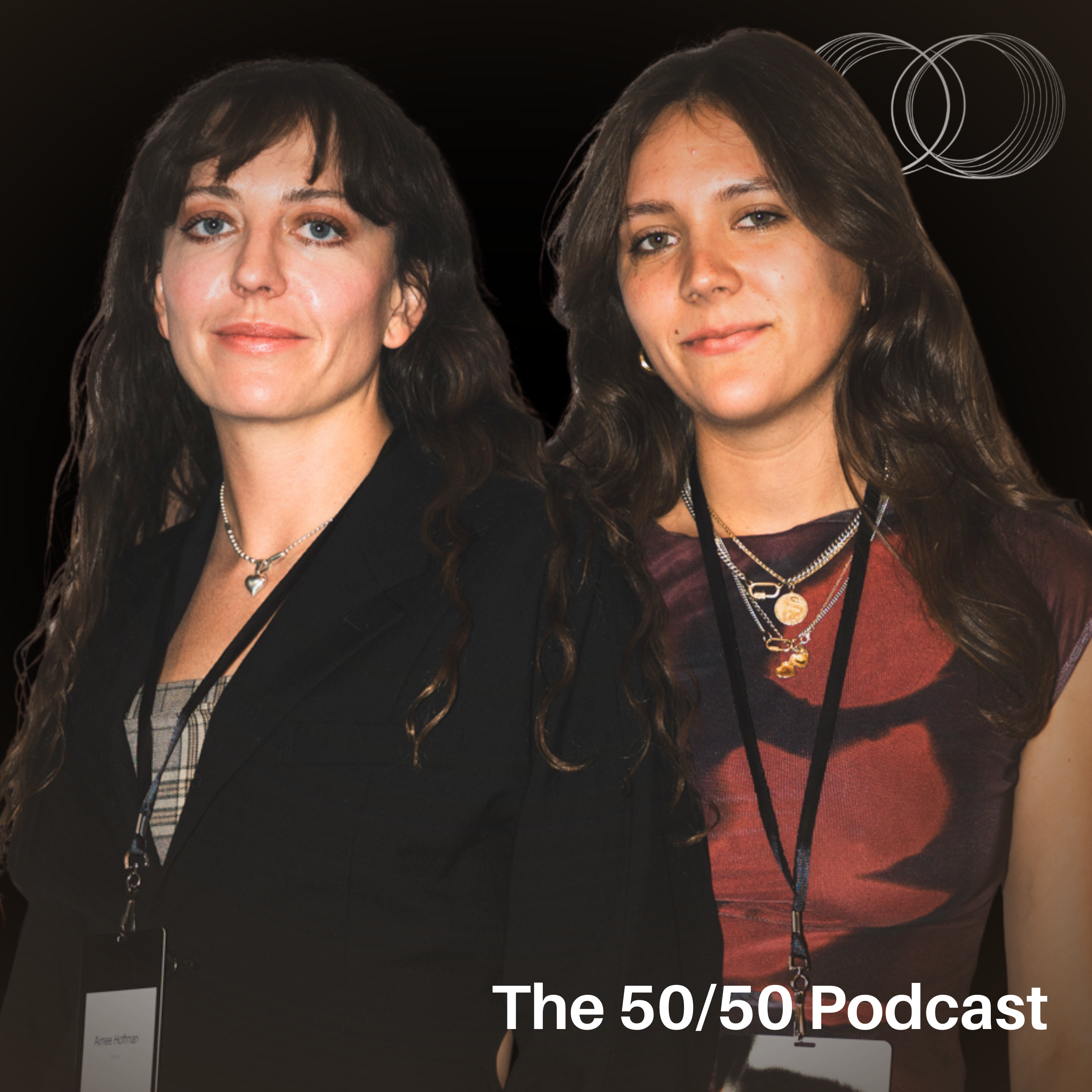
[00:01:50] Speaker B: This week, we chat with writer, director duo Eleanor Howells and Amy Hoffman. The pair made dada an official 5050 horror selection, and they hop onto the pod to discuss their partnership, how to remain active and ambitious as an artist, and their way into the manosphere. Enjoy.
[00:02:20] Speaker C: The relationship podcast.
[00:02:23] Speaker D: Yeah. All right. Yeah.
[00:02:24] Speaker A: The Christmas relationship.
[00:02:28] Speaker D: That's. That's not a bad idea, actually. We should just turn this into a relationship podcast.
[00:02:32] Speaker B: Oh, my God. I mean, it pretty much is.
[00:02:34] Speaker D: That's true already. That's all. You know, because, like, the industry. Right? Yeah.
[00:02:38] Speaker B: Because, like, there's.
[00:02:38] Speaker D: Oh, my God. Networking and really, that type of relationships.
That's interesting. Yeah. Well, thank you guys for. For coming.
[00:02:44] Speaker B: Yeah. It's good to see you guys.
[00:02:46] Speaker A: Good to see you.
[00:02:47] Speaker D: It's been a while. It's been. It's been. How many months has it been?
[00:02:51] Speaker C: Like, I don't know.
[00:02:53] Speaker D: That's crazy. Yeah. Yeah, that's crazy. That's crazy.
[00:02:58] Speaker A: Yeah, like Halloween time.
[00:03:00] Speaker D: That's true.
[00:03:00] Speaker B: Definitely Halloween.
[00:03:02] Speaker D: Definitely Halloween. For the, for the horror festival.
[00:03:04] Speaker C: Yes. Oh, yeah, yeah, it was horror.
[00:03:06] Speaker B: I really don't think of your guys' short as a horror, though. I mean, when I remember it, I'm like, I was just laughing and.
[00:03:12] Speaker C: Yeah, I mean, there's.
[00:03:13] Speaker B: There's definitely like some physical horror elements to it.
[00:03:16] Speaker C: But yeah, it is. It is a bit genre bending in that way where it's. I think it's first and foremost a satire.
[00:03:25] Speaker B: Yes.
[00:03:26] Speaker C: With like body horror elements.
[00:03:28] Speaker D: Which is what I mean, the, the body horror element is. Because you guys, I don't know if you remember, but I think it was through Eleanor, you guys had submitted for the comedy festival and I was like, yes.
And then basically after seeing the rest of the films, it was like, this is scary.
It's like body horror type thing. And I was like, wait a second. This actually is really interesting though, as we continue to bridge a gap between horror and comedy, our two festivals. But like, I think now more and more each horror festival has more comedic elements in the shorts that you see. Anyway.
[00:04:06] Speaker C: Yeah.
[00:04:07] Speaker D: And Dad, I was like, I think one of the pioneers of that. So thank you for that.
[00:04:12] Speaker B: You guys are pioneers of genre bending.
[00:04:14] Speaker A: Great.
[00:04:16] Speaker D: How is, how has it been since the festival? Like, what have you guys been up to?
[00:04:21] Speaker C: It's been. It's been really good actually. Between your festival 5050 and then we had a screening with WME. Which did you end up going?
[00:04:31] Speaker B: I did not.
[00:04:31] Speaker C: Okay, okay. Yeah, sorry. No, it's okay.
[00:04:34] Speaker A: It's.
[00:04:35] Speaker C: You. You saw it.
[00:04:35] Speaker B: But I support and I saw it. Yeah, I know all those.
[00:04:39] Speaker C: It was a great, great selection of films actually. It was, it was a lot of fun. But yeah, between that and this, we have met a lot of people.
We've been having meetings with managers, agents, and we have a feature that's ready. So that's been. I think one of the most helpful things is, like, when you have like a short film, I think it's important to have a feature because you're going to meet so many people and it's like, what are you doing next? And then if you have something that thing. Yeah, it really helps. So people are like, we're talking about getting it into development and getting introduced to production companies and stuff. So things are good.
[00:05:21] Speaker D: Was that script finished pre 5050 or were you like in the process of finishing? So when those conversations were happening, you're like, we're finishing this up, or was like, I can send this to you.
[00:05:31] Speaker A: Right now, I think we had, like, a pretty solid draft for sure by that point.
But I think that the final changes of just like, you know, the vibe, like, deepening that character, like, you know, making certain things, like, the strongest they could be happened around that time.
[00:05:52] Speaker D: Is this another, like, body horror comedy situation or what's the.
[00:05:56] Speaker A: It's definitely, you know, like, on our scale is, like, always between, like, horror and comedy. This is, like, much closer to the comedy end. But, like, there's surreal elements still, like, a lot of social satire.
[00:06:08] Speaker C: There's some. It gets gross at the end.
[00:06:10] Speaker A: Oh, yeah. There's for sure grossness.
There's never not gonna be grossness.
[00:06:14] Speaker B: Are you feeling like you are getting better at those meetings where you're meeting with a manager or meeting with a producer? And, like, how. How. How have.
How do you think you've changed throughout this? Just these past few months of, like, you know, being able to pitch your movie and, like, figuring out what. What's the best moment to say, I have this next thing, or, you know, pitching yourself to.
[00:06:35] Speaker C: Yeah, I think for me, what is.
Maybe it's like, yeah, we're getting. I think you just have so many reps of, like, talking about what your film is about that it just becomes so, like. It's not like a nervous thing where you have to go in and, like, pitch your film. You just talk about it kind of, like, casually.
[00:06:54] Speaker D: You gotta stay excited about it. You can't just be sleeping.
[00:06:57] Speaker B: Yeah, it's a delicate balance, too, because it's like an arc, right?
[00:07:01] Speaker A: Like, you can completely, like.
[00:07:03] Speaker B: Oh, you know, it could be so robotic at some point.
[00:07:06] Speaker C: Yeah, I think we are definitely excited about it. And it's, like, a lot of fun. So people are always like, whoa, sounds crazy. But also, what's been really interesting for me is, like, I've been directing for a long time. Cause I direct commercials, but I've not. And so, like, I understand how that system works with clients and producers, et cetera. But I hadn't really, like, understood how, like, making a feature really works. Like, with an agent and a manager and the production companies and the financing. And, like, all of these kind of levels in which you have to, like, build this humongous team to make a feature. And just through these conversations, I've just asked a ton of questions and learned a ton about that.
[00:07:46] Speaker D: What are the first steps? Like, of course you have the product. Like, you have the script, and now you're talking to representation.
Like, what is the first step? Starting to piece people together and package something. Or is it finding money? Or is it, hey, you know what, we're gonna self finance this. I'm sure that's not the case. But like, or maybe it is, I don't know.
And yeah, I guess talk, talk about those. Like once you have that script and you're having these conversations, what is like the. Okay, let's go and do this now.
[00:08:21] Speaker C: Yeah. So the packaging first, I think this route, the route that we're going, which is we showed our short film and people were interested and those were agents and managers. So that's the route that this one's going. And with that route, it's.
With the agents, it's okay, who can we get attached, like talent wise and start getting people interested? Like I think parallel pathing talent and financing and production. Because it's a really like chicken in the egg game. It's like if you get really good talent attached, then like it's easier to get money. But. But sometimes like if you have money, it's easier to get the talent attached. So I think it's sometimes like this. There's no like right or wrong, what comes first, but it's just kind of throwing it to all of these people having conversations with them to then see, okay, what can we get attached so that we can start like building this out even further?
I don't know if you have anything to add.
[00:09:16] Speaker A: No, that's been the experience for us so far for sure. Like, I feel like before this happened, we were. We knew we wanted to make this feature and we wanted to make a feature soon. And so before this happened, we were trying to figure out ways that it could happen and we were working on other features that maybe would be cheaper to make and that there were other ways that we could go about it. But this experience was very well timed and that we had this feature ready to go and. Yeah, that this route became available.
[00:09:50] Speaker D: When you say cheaper to make, was that like the classic first feature? We're gonna make this with our friends, with ourselves, not deal with representation or. Okay.
[00:09:59] Speaker C: Mm. Yeah. And I'm from Canada and we just had a.
Our film screen at a festival there.
And the aim of going to that festival is learning about how to fund movies there. And like it's very different system there because the government cares about art, so.
[00:10:19] Speaker B: And it helps that you're fun from there.
[00:10:21] Speaker C: Exactly. Yeah, exactly.
[00:10:22] Speaker B: It's a big deal.
[00:10:23] Speaker C: Big deal. Yeah.
So that's like another way of going about it too. Like we could, we have this feature that we think we could make for 500k and could just go to Canada and like fund it through the government and just get. You don't need that much investment because in Canada it's like they ma. They like pay about essentially like 50% of like the budget. 40 to 50% between grants and tax credits and stuff like that. Yeah, it's pretty wild.
So that's like. We're still working on that one because, like, if this film.
It's the Florida feature, that's what we're calling it. It's a project that is going to be shot in Florida. If that one, like kind of gets stuck in development for a long time, we're like, well, we could just maybe go make that one, you know. And so.
[00:11:09] Speaker D: Yeah, that's great. So you have a few things cooking, clearly.
[00:11:14] Speaker B: Yes, totally. And then in. In the meantime, are you just kind of taking meetings and stuff? Are you. I assume you're still doing commercial work and you're still writing and so is that kind of what's going on?
[00:11:27] Speaker C: Yeah, we're taking lots of meetings.
[00:11:31] Speaker A: We're still trying to, you know, like, continue writing other things. Like, I think we had received advice early on that it's like never put all your eggs in like one basket. Like, always have other features and things that you can work on.
[00:11:45] Speaker B: You can have your eggs in 60 baskets and one basket will be the one. You know, it's really that however many baskets you have.
[00:11:55] Speaker A: Yeah.
[00:11:55] Speaker B: It's crazy.
[00:11:56] Speaker C: Yeah. Because so much is up to the right timing, you know. So it's like if someone all of a sudden, like, is really interested in another idea that you have, and like, they're like, we found an investor who really wants to invest in this kind of. In this kind of film or something, then it's like, okay, well, let's just follow the money.
[00:12:14] Speaker D: Yeah. Yeah.
[00:12:15] Speaker C: So we're trying to write a lot.
[00:12:19] Speaker B: I've been thinking personally a lot about just for myself, I'm playing a small role in movies that are big budgets right now.
That's my job.
But there's also the element of I'm playing a big role in things that are small budget and things that can happen really quickly.
Do you guys have any thoughts on kind of where you eventually will want to fall in terms of like, big. Like, do you want to be doing big things that take a really long time to do? Because there are a lot of filmmakers like that.
[00:12:51] Speaker C: Right.
[00:12:51] Speaker B: Or do you want to be on the other side where you're just doing small things and can get done really quickly? Like, where are you right now? And obviously that changes.
[00:13:00] Speaker C: I think a big thing. More time. Like, I think we can do the other version, but I think some of the stuff that we write is a little more world building.
[00:13:14] Speaker D: Yeah.
[00:13:15] Speaker C: And a little more like, does have these body horror elements or has like kind of, you know, just large set pieces or moments and stuff that I think it's. It's good to kind of take more time to exact those. Those things.
But yeah, that's my.
[00:13:35] Speaker A: No, I. Yeah, I agree. I mean, yeah, I think the. The pro of like. Yeah, you obviously want to get things done quickly, especially because the things that we write tend to be so like, you know, we're trying to anticipate the zeitgeist and like, it's always very current things being explored. Like, obviously the short film was very of the time and things have.
And things have already changed, you know, since then. Like, so I feel like that's the. Obviously we are hungry and we want to make things quickly. But yeah, it's definitely bigger.
Bigger things are good.
[00:14:14] Speaker D: Can you guys talk about the co writing process?
[00:14:17] Speaker B: Yeah.
[00:14:19] Speaker D: And also I want to hear about the.
[00:14:21] Speaker B: Because I'm trying to imagine the genesis of the partnership.
I want to get into it. That's the most interesting st.
You tell.
[00:14:28] Speaker C: This well about like meeting afi.
[00:14:31] Speaker A: Super romantic.
Okay. So we went to afi, which is the grad school film program.
And the way that it works.
[00:14:43] Speaker C: Let me just talk to the camera.
[00:14:44] Speaker A: They need the plug.
But yeah, the way that it works there is in the. There's like a boot camp. The first month is a boot camp. And so in anticipation for that, they make these groups of like writers, directors, producers, and before you even get to the school, they Send out like 3 loglines from each person of short films that they would want to make. And I remember, like reading Amy's like, I remember I was like at my kitchen table with my mom and I was like, I need to work with this girl. Like, I need to write these stories with her. Like, this is why I'm going to afi.
[00:15:21] Speaker B: What was the logline?
[00:15:23] Speaker A: There was one that we ended up making called Bite. And it was like, about a little girl who was in sort of an abusive relationship with her stepdad and then befriends like a monster under her bed that teaches her to reclaim her power, but also to eat people. Eat people eat men.
[00:15:43] Speaker C: It was very fun. The monster has socks for years and it was kind of cute.
[00:15:48] Speaker B: Oh, nice.
[00:15:49] Speaker A: Yeah.
[00:15:50] Speaker C: But that was one of our AFI films.
[00:15:51] Speaker D: Yeah, I would love to see that. That sounds good.
[00:15:53] Speaker C: Yeah, we can Send it.
[00:15:54] Speaker A: Yeah.
[00:15:55] Speaker C: At afi, you do one year where you make three short films, but they don't see, like, the light of day. They just stay within the program and, like, critique within the program to, like, allow you to not be making things so much for, like, an audience, but more to, like, explore your voice. Yeah. Yeah.
[00:16:13] Speaker D: It's like, how do they, like, kind of propel that or, like, champion that in a.
Is it just simply by saying, like, don't worry, this isn't being shown to the world. It's just between us or something?
[00:16:24] Speaker A: You're not allowed to.
[00:16:25] Speaker C: Yeah.
[00:16:26] Speaker A: You're not allowed, really, anywhere. Like, you can send it to people.
[00:16:29] Speaker C: Yeah.
[00:16:30] Speaker A: But. Yeah, and. And you make them really quickly. It's, like, a pretty limited budget.
[00:16:34] Speaker D: Cool.
[00:16:35] Speaker A: And you make three in the year.
And, yeah, obviously, when we met for the first time, I was, like, really ready to, like, be like, hey, love. Love your ideas.
And, yeah, we. We clicked very quickly.
[00:16:48] Speaker B: Wait, so Amy was like, yeah, what's happening on your end?
She's basically stalking you.
[00:16:53] Speaker A: I literally. I was looking for her.
[00:16:55] Speaker B: So you're like, why is this girl, like, just staring at me across the room?
[00:17:00] Speaker C: Yes, I. I think my memory, like, is not as. As detailed as Eleanor, just in general. I'm, like, a little bit older, and so, like, my brain doesn't, like, keep things as. As much. But, yeah, I just. I just remember, like, meeting her in that workshop and also really liking her ideas and being like, oh, like, you're really interesting. And I think I remember what really stood out to me is, like, because we're giving notes on our ideas and our scripts, and I always, like, felt like she had really good notes, and I really was, like, aligned with, you know, how she was approaching things. And so it was very easy for us to know that on the first project that we did at afi, that we would team together.
And then through that, you know, just got really close. And the writing process is very easy. Like, I think because we're friends and we're very comfortable with each other. It allows us to, like, say all the crazy ideas, you know, like, throw anything against the wall and not feel, like, intimidated or, like, ashamed because, like.
[00:18:06] Speaker B: Not afraid to be bad.
[00:18:07] Speaker C: Yeah. Like, just to be as. As wild and out there as possible.
And, yeah, we've really, like, just. Just forged a very close, like, familial relationship with each other, but then also, like, you know, really push each other with our ideas and really push each other to, like, do more research, read more scripts, like, watch more films, like, just really try and like, be really good at what we're doing at the same time.
And then.
Yeah. In terms of process, I think one thing that we did that really kind of kicked us off is when AFI was, like, when we're approaching the end, we, like, just decided to go for drinks one night and share all of the ideas that, like, we've ever had. Like, I have, like, a notes app in my phone where I just, like, write stuff down and have ideas. And we're like, let's just, like, talk about features that we'd want to make. And so we went back and forth, talked about, like, things in our life or, like, different things that we, you know, wanted to explore. Basically created a list.
[00:19:15] Speaker B: Like a collective list.
[00:19:16] Speaker C: Yeah, a collective list of, like, here are some, like, ideas. And then, like, started from there and started, like, working on, you know, those. The Florida project. The Florida project was one of them. Yeah.
[00:19:28] Speaker A: Yeah.
[00:19:30] Speaker C: And then. Yeah. So then that's kind of how it starts. Like, an idea can come from one of us or together. And then we usually just start by exploring the world, talking about it, who are the characters, start giving them backstories, and then we go into, like, outline and then a scriptment. And then Eleanor will typically write the first draft because she's really fast at it. And then we just kind of get together and start editing it up.
[00:19:55] Speaker B: Are you writing the first draft and not showing her anything? Or are you like, hey, I have Act One. Let me send it.
[00:20:01] Speaker C: Florida. We did acts.
[00:20:02] Speaker A: Yeah, I think I sent you the first act. And then I just. I don't know. I really like to, like, write.
I do write quickly. And I am very. Like, my strategy of writing is that I'm not. I don't get in my head about, like, I know the first draft is not gonna be good. You know, I just know that I tell myself that. So I like to try and write the whole thing, because then you do discover things. And also, like, sometimes when you get to the end, you're like, oh, I wanna change that thing, whatever. But, yeah, but then we, like, go through it together. She, like, we'll do a pass too. And, like, that's always.
I think that that works the best. I do. We did. I did send the first act, though, and that.
[00:20:46] Speaker D: We've talked about it before, that first draft. Are you two nailing an outline?
[00:20:53] Speaker A: Yes. Yes.
[00:20:54] Speaker C: And we do a scriptment, which is like. We'll basically write the script. Yeah. Like, what happens in each scene kind of thing.
[00:21:01] Speaker A: In this case, we also, like. We wrote a script meant, like, a Pretty rough, like, loose one. And then we went to Florida and we, like, did. Yeah, we did a road trip and did a lot of research and discovered.
[00:21:17] Speaker B: It was like kind of a pseudo location scout in a way or like, we kind of.
[00:21:21] Speaker C: Well, the story is. Yeah, the. The story is about two. Two girls who.
Their pet lizard goes missing and they basically go on like, a wild odyssey across Florida. So we're like, I think we need to go on, like, an odyssey across Florida. Yeah.
[00:21:38] Speaker B: Why Florida?
[00:21:39] Speaker A: What I. When. Yeah, this is when we were at the. Talking about our ideas. Like, I. When I was in college, I went to the University of Miami.
Shout out. Shout out.
[00:21:51] Speaker B: Yeah. Every time you mentioned a school, you're.
[00:21:53] Speaker A: Like, Miami really advocating for education.
But yeah, my best friend and my roommate, we had a pet bearded dragon and this happened to us. And it was crazy. And it was on the news. It was like a whole thing.
But yeah, basically from that moment, I was like, I want to write.
[00:22:12] Speaker B: Wait, it was on the news?
[00:22:14] Speaker A: The local news, for sure. Not like the Today show.
[00:22:17] Speaker B: What was on the news that, like, the year to dragon gone missing.
[00:22:21] Speaker C: It's basically, they dropped her off at a pet shop to be babysat, and when they came back to pick her up, she was no longer there and they never found her. And it's very sad, but this film is kind of like the redemption. And then we kind of obviously concoct like, a really wild story of, like, where she ends up where she went.
[00:22:39] Speaker A: Because in real life, we obviously, like, went to war with this pet store and had a whole, like, list of conspiracy theories about what they were doing with what they had done.
Yeah, really funny. But I also. Florida is also just like, if you've been there, it's beautiful.
Exactly. Like, there's so many things happens every day.
Yeah, at least. At least. So, yeah, very, like, cinematic place. And then the idea, like, needed to be a movie. And I knew that she would, like, make it a million times better and crazier and. But yeah, we went to Florida. The two of us basically had the odyssey that the girls have in the script.
And it was so cool. Like, I'd never done anything like that. I really recommend it. Like, I have so many vivid, like, memories of moments that we just like, broke the story story like a million times and like, in a hot tub at a hotel or like, you know, like, driving through the Everglades, just like, crazy. Like, that's the moment.
[00:23:42] Speaker B: Yeah, there is really something to that. Like, as a writer especially, like, going to go in and experience things like Is really, really important.
[00:23:51] Speaker C: Yeah.
[00:23:51] Speaker D: The things that your character is going to experience.
[00:23:53] Speaker A: Yeah.
[00:23:54] Speaker B: Method writing is what we call.
[00:23:56] Speaker C: Yeah, actually, that's a good. Yeah.
[00:23:58] Speaker D: You guys act. Have you thought about acting at all or if. If you haven't already?
[00:24:04] Speaker C: I've, like, acted in very small things, like, especially with the school and whatnot.
And I would act, but I don't know if I'm particularly good at it. We are going to take an improv class.
[00:24:19] Speaker A: Yeah.
[00:24:19] Speaker C: I think soon, because we think it will.
[00:24:21] Speaker A: Writing.
[00:24:23] Speaker B: You guys are such active writers. It's great.
[00:24:26] Speaker A: Yeah. We acted out to each other.
[00:24:28] Speaker D: It seems like it's a natural. It's like, oh, let's go experience it so we can inform the writing.
[00:24:32] Speaker C: Yeah.
[00:24:33] Speaker D: How have commercials informed your filmmaking? And, like, I guess going forward into now this, like, feature space, like, do you find yourself thinking of very commercial ideas or is it like the complete opposite where you're like, I hate the commercial world and I want to make, like, crazy stuff that is gonna be super arthouse and that type of thing?
[00:24:57] Speaker C: Yeah, I think a little more the latter, more in the sense that I had been directing commercials for a number of years and was really, like. Kept being like, I just like. The reason I got into filmmaking in the first place was to make films and, like, to explore, like, you know, my life and my ideas and my perspectives of the world.
And so, yeah, a part of, like, going back to school and going to AFI was like, okay, like, let's zero in on that. And, you know. Yeah. Not. Not be making things for other people or making other people's ideas and other people's creative and et cetera.
So, you know, there's that part of it. But then I think I, you know, have so much set experience now. I've directed, you know, really big budget commercials. I, like, get to work with incredibly talented crew, and that has, like, you know, really built my network of people to work with.
And I think it's like, it's really invaluable because they have money. I get to, like, you know, work with really crazy equipment and try really crazy things. So I think what that does for my filmmaking is that I think I push it a lot more stylistically because I have that experience of, like, playing with style so much.
And I think it also just allows me to be very comfortable on set and, like, focus on the having fun part of it and not, like, being, like, afraid of what's happening every second.
[00:26:37] Speaker B: Not feeling like things are out of your control.
[00:26:39] Speaker C: Yeah.
[00:26:40] Speaker B: What is it like working with talent on a Commercial set.
[00:26:46] Speaker C: Very different than. Yeah, very different than making a film.
[00:26:50] Speaker D: Really? What is the.
[00:26:52] Speaker C: I think, like, well, it's. It's interesting. A lot of commercials I do. I seem to get really, like.
Like, I'm, like, kind of in this corner of. I work with real people a lot. Like, you know, real people.
[00:27:06] Speaker B: Oh, cool.
[00:27:07] Speaker C: So not an actor. Not. Not an actor.
Yeah, not an actor.
And. And that's really cool because.
And also athletics. Like, I'm really, like, sport. Like, I do, like, a lot of sport commercials.
And, you know, that's a very different thing when you're working with non actors, which is kind of cool also, because you're, like, learning how to work with non actors. And so that.
That's about kind of building a space around someone so that they can feel natural within it, you know, And I think that's really cool.
And then I think when you're working with, like, actual actors on a commercial, it is very. Like, you have, like, one line, you know, and it's just, like, saying that, like, one thing a lot. Like, I don't know. It's just not. You're not really, like.
[00:27:54] Speaker D: Are you, like, looking for, like. Are you, like, let's try that again, or are you just, like, cool, let's go, like, move on to the next?
[00:28:01] Speaker C: No, you definitely give, like, a lot of variation because, like, you are gonna, like, one thing, and then there's, like, an agency, and then there's, like, the brand, and, like, they're gonna want to, like, you know, do whatever they want in the end.
But, yeah, it's. And you just don't have that much time. Like, you get booked for a job, you have, like, a couple weeks to go shoot it. So you're not like, sitting with the actors, being like, okay, so, like, your character really wants to, like, get this gift for Christmas, you know, Like, So.
[00:28:27] Speaker D: Like, you're not, like, you really want this iPhone?
[00:28:29] Speaker A: Yeah. Yeah.
[00:28:30] Speaker C: You're not, like, you're not, like, building the backstory as much for it. So. Yeah, I don't know. That was, like, a very long, twisty answer about that. But it's interesting. It is different. Yeah. Yeah, totally. Yeah.
[00:28:42] Speaker D: Have you. Are you in. I know you've done music videos.
[00:28:46] Speaker C: Yes.
[00:28:47] Speaker D: Have you also dabbled in the commercial space or. Maybe. So then let's hear about your music video.
[00:28:54] Speaker A: I feel like, really the reason why I've done music videos is because I want to, like, you know, just know that it's, like, an option for me to, like, direct, like, way, way, way in the future. And I think that that involves, like, really practicing for a long time, and.
[00:29:12] Speaker B: You got to stay in shape to some extent.
[00:29:14] Speaker A: Yeah. And, like, watching her is, like, the best thing ever in the world for a variety of reasons, but also it is, like, very informative and, like, yeah, I feel, like, the comfort and the confidence and just like.
Yeah, like, set is so fun, but also, like, everybody listens and, like, respects and, like, it's so clear that she's the leader. And I feel like that's something that does not come naturally to me at all. I'm, like, the youngest child, you know, and so I feel like that's another reason why I did it. And then also, my best friend is a musician, and so she wanted me to direct her music video and was really fun, so continued to do it.
[00:29:52] Speaker B: That's awesome. So you. Your role on set is. You're just a. As far as, like, data, you were just a writer?
[00:29:59] Speaker A: Yeah, yeah. What was. Yeah, I think that was my role.
[00:30:02] Speaker D: You produced, too, though, right? Didn't. Did you have the.
[00:30:04] Speaker A: No, no. I was just chilling.
[00:30:07] Speaker B: So as. As a writer on set, I. I love the role of a writer on set. I feel like, because I.
I just love TV so much, and that in a classical sense, the writer would be on set or, like, at least a showrunner, a couple writers. It looks a little different these days. But what did. How did you sort of embody that role as a writer on set in Dada? Like, were you pitching alt lines or were you. And what were your conversations with Amy like?
[00:30:36] Speaker D: Can we. Can we give the context of data, too, as well?
[00:30:39] Speaker B: Yeah, that's helpful.
[00:30:40] Speaker C: Yeah, like the.
[00:30:41] Speaker D: Like, that would. Like the log line. Exactly.
[00:30:43] Speaker B: Just a little log line. Yeah.
[00:30:45] Speaker C: So Dada is about Dada or Dada, however you want it, because Luke and.
[00:30:49] Speaker B: I were yelling at each other.
[00:30:51] Speaker C: Dada. Dada. It's like Data. Okay, we'll call it Dada.
[00:30:55] Speaker B: You did a sort of mix at first. You're like, dada.
[00:30:59] Speaker A: She is the Canadian accent.
[00:31:01] Speaker C: Okay, yeah, try.
[00:31:02] Speaker A: My pronunciation's.
[00:31:03] Speaker B: A little tax credit. There we go.
[00:31:06] Speaker C: But, yeah, basically it's about a father who becomes really jealous of his wife's film career while his film career is kind of fading into fatherhood, and it manifests in his hands shrinking. And so he goes to kind of his band of brothers who help him re. Enlarge his hands, and chaos ensues.
So that's what that's about.
And I mean, yeah, I'll let Eleanor pick it up, but she was very much active on set, and we had to be rewriting a lot of moments and scenes because we had a very unruly child.
And so that like, wow, really made it difficult and we had to like really think about, well, okay, if he's not gonna like be in this scene, like, how can we.
[00:32:00] Speaker B: That is so interesting because right when you said that I was like, I don't remember the kid being in it that much.
[00:32:05] Speaker C: Yeah, that's fine.
[00:32:06] Speaker A: He was definitely.
[00:32:08] Speaker C: He's in the script a lot.
[00:32:09] Speaker A: Very important to the story.
[00:32:11] Speaker B: But this, it's a true testament to like adapting.
[00:32:14] Speaker A: Yeah. And then we also. He had a older brother who all his siblings were on the set actually just hanging out and eating and stuff and chilling and drawing. But one of them.
[00:32:25] Speaker B: Wait, how old were his?
[00:32:27] Speaker A: Like ranging from like seven to like one. Like. I think there was a baby. There was for sure.
[00:32:32] Speaker D: But they all just hang out together. Like no parents.
[00:32:35] Speaker C: No parents.
[00:32:37] Speaker B: I think if you have enough siblings, you don't need a legal guardian.
[00:32:40] Speaker A: Yeah, yeah. That's what, that's the rule. You don't need a set teacher. Yeah, no, no. But actually what happened was like, I think at a certain point we just realized that this, that our, that our actor was not gonna be able to do certain things. And like there's just, you know, there's some key lines that like we need. And so like I. What was really cool is I got to like go just like during a. The sound girl and the older brother and he said a bunch of the lines and we did the dialogue with the brother.
[00:33:14] Speaker B: It's great.
[00:33:15] Speaker A: Which was cool. Wow. Yeah.
[00:33:17] Speaker C: That was adapting.
[00:33:18] Speaker A: That was.
[00:33:19] Speaker D: Have you guys seen Hamnet yet?
That kid is insane.
[00:33:23] Speaker C: Amazing.
[00:33:24] Speaker D: Oh my gosh.
[00:33:24] Speaker C: Yeah.
[00:33:25] Speaker D: How old is. Do you know how old he is in Hamnet?
[00:33:27] Speaker C: Yeah, probably more in the like, like the, the 10 range, I think. Like he was a bit older.
[00:33:34] Speaker D: Supposedly. He was the kid that played Hamlet on stage, his younger brother.
[00:33:39] Speaker C: Oh, really?
[00:33:39] Speaker D: Yeah.
[00:33:40] Speaker C: Well, I, I was kind of like he could look like he was the son of the brother.
Her brother.
[00:33:48] Speaker D: Her brother.
[00:33:49] Speaker C: Yeah. Yeah. Because I was like, like in real life. That's what. Exactly. Yeah.
[00:33:54] Speaker D: Yeah.
But you guys got to see it.
[00:33:56] Speaker A: Yeah.
[00:33:57] Speaker D: Crazy.
[00:33:58] Speaker C: It's good. I cried.
[00:33:59] Speaker D: I think everyone. I don't know anyone didn't cry.
[00:34:01] Speaker C: Oh yeah, no, the theater was very.
[00:34:02] Speaker B: Like going to see.
[00:34:03] Speaker C: Yeah, I'm going to see. Yeah, yeah. They kind of like end it too, like while you're kind of peak crying.
[00:34:08] Speaker D: Yeah.
[00:34:08] Speaker C: So like then the lights come off and it's kind of awkward cuz you're Like, I'm not done crying. This also happened to me when I watched Sentimental Value. No, I did also cry. Yeah. No Sentimental Value. I saw what's Zootopia? The Jennifer Lawrence.
[00:34:23] Speaker A: Yeah.
[00:34:25] Speaker B: During that.
[00:34:26] Speaker C: Oh, my. At the very end, I started bawling when she.
[00:34:29] Speaker B: Like, the fire.
[00:34:30] Speaker C: Yeah. Yeah. So, like, I watched that Sentimental Valley and Hamnet all in a row, and I was like, damn, I'm, like, crying a lot.
[00:34:38] Speaker D: Yeah, we were crying during, like, now.
[00:34:40] Speaker B: You see me, now you don't. Yeah, that was super.
[00:34:42] Speaker A: You're a movie crier.
[00:34:43] Speaker D: Yeah, I just. That's magician. Like, magic and everything so much.
[00:34:49] Speaker C: I mean, I also cry. Like, I also cried in the new Park Chan Wook film that I always forget the title.
[00:34:56] Speaker A: No, no other choice.
[00:34:57] Speaker C: Yeah, no other choice.
[00:34:58] Speaker A: Wait, you cried? Yeah. I didn't notice you crying.
[00:35:01] Speaker C: Oh, and I was crying at the end. Oh. I also think I'm just. Because when a movie's really good, I'm like, oh, my God, this is just amazing. Like, I'm just moved. So I, like, cry just because I'm like, wow, I feel so lucky to watch this.
[00:35:13] Speaker A: Yes.
[00:35:13] Speaker D: Yes.
[00:35:14] Speaker A: Yeah.
[00:35:14] Speaker D: There's such a yearn too. I feel like, as a filmmaker watching an amazing movie where you're like, I want to make something totally that, like, that emotes this emotion. Yeah, exactly.
[00:35:25] Speaker A: Yeah. That's how I feel about Wicked Cry just thinking about it.
[00:35:29] Speaker D: You want to do musicals? Is that.
[00:35:32] Speaker A: We were, like, talking about this the other day. We're definitely gonna make Dreams.
[00:35:34] Speaker B: Oh, that's amazing.
[00:35:36] Speaker A: Well, luckily, this is, like, one of the reasons why we're soulmates. It's like, I love musicals so much, but I'm just absurdly, like, not talented with, like, the writing of music or anything like that. And she's so, like, she has made music, and so.
[00:35:51] Speaker B: Oh, my God.
[00:35:52] Speaker A: Very lucky to have found that because I love music.
[00:35:56] Speaker B: I love musicals too.
[00:35:57] Speaker A: And I'm just amazed. I feel like the reason why I cry, one of the reasons why I cry is just, like, I'm so amazed by, like, the craft and the talent and everything coming together. And with that movie specifically, I feel so, like, lucky to, like, live in a time when it's being made and, like. Yeah.
[00:36:11] Speaker D: Seen in theaters.
[00:36:12] Speaker A: Yeah.
[00:36:13] Speaker D: What music background? Were you in a band? Are you in a band?
I could see you with a guitar or something.
[00:36:19] Speaker C: Yeah, I. So nothing. Nothing crazy. Very. Like, I took business in undergrad because I had no idea what I wanted to do with my life. And I also grew up in, like, a very blue Collar environment. Whether it was like, no artists or art around me. I grew up in, like, the middle of Canada. Like, kind of middle of nowhere.
[00:36:37] Speaker D: Where in Canada?
[00:36:38] Speaker B: Yeah. What province?
[00:36:39] Speaker C: Saskatchewan. Oh, yeah? Never heard of it. It's like, above North Dakota. Yeah. No, no, it's like the Prairies. It's really, really cold in the winter. It's flat. It's just like, kind of like a. It's beautiful, but it's like a bit. It's a bit of no nowhere land.
[00:36:55] Speaker B: I was just. I was just in Toronto, but, like, we're outside of Toronto.
[00:36:58] Speaker C: Okay. Which we're in Bridge. Oxbridge. Okay.
It. Was it cold? It's probably cold.
[00:37:05] Speaker B: It was down.
[00:37:05] Speaker C: Yeah, it's freezing.
[00:37:06] Speaker A: Yeah.
[00:37:07] Speaker C: But, yeah. So anyways, that. That kind of.
[00:37:11] Speaker A: Yeah.
[00:37:11] Speaker C: Sorry.
[00:37:12] Speaker B: There's no point in me saying why were you.
[00:37:15] Speaker D: I don't want to say.
[00:37:16] Speaker C: I think it doesn't matter. Well, we can go. Let's go back to it.
But a pin in it.
[00:37:21] Speaker B: I'm trying to relate.
[00:37:24] Speaker C: Anyways.
[00:37:24] Speaker B: So you grew up on a prairie.
[00:37:26] Speaker C: All in all to say, like, I just went to undergrad. Being with parents who were like, art is not a job, so you cannot do that. But I really wanted to go to art school.
And as soon as I graduated, I was like, I'm not working in this. I had one year of a job working in economics, which was really cool. Cause it was in Japan, so that was awesome. That was really cool. But while I was in Japan, I was like, I'm gonna just buy a synth and teach myself how to make music. And then I did that, started making music.
And then I moved to the US after that. And that was my first kind of thing that I was focused on was making music. And then that's why then I started filming stuff because I was like, I'll make little, like, music videos. And then started, like, making videos with my friends. And then that evolved into, like, I'm gonna make a short film and score it. And I was doing a lot of scoring.
Some of the music in Dada I wrote as well. So I, like, now I really like doing the kind of scoring with the. With the movies.
[00:38:28] Speaker B: That is so cool.
[00:38:29] Speaker C: Yeah.
[00:38:30] Speaker B: So was. Was the visual element and like, directing and movies and all that in the back of your head when you were in Japan starting music stuff.
[00:38:38] Speaker C: Yeah, it was.
[00:38:38] Speaker D: I think, like, that was always the eventual goal.
[00:38:41] Speaker C: Yeah. Yeah. And I. I think I was like, writing music that was very, like, cinematic and like, built like a story arc and. Yeah. So that's the background of music. And where it is now, and I love karaoke. And maybe. Maybe one day I will.
[00:39:00] Speaker A: Yeah.
[00:39:01] Speaker C: Restart.
[00:39:02] Speaker D: Have you been back to Japan?
[00:39:04] Speaker C: I've been back one time, but like a while ago, I'm like, really trying to plan to go.
[00:39:09] Speaker D: You just gotta write a movie for Japan.
[00:39:11] Speaker C: I was literally just talking to a producer about this and I was like, let's just get an idea to write there and go. Because it's amazing.
[00:39:20] Speaker D: Do you have any fun passions as well?
[00:39:25] Speaker A: Do you have any fun facts?
[00:39:26] Speaker B: Did you grow up.
Was art also not allowed in your household or.
So do you strictly.
[00:39:35] Speaker A: No, I grew up in Washington, dc, Proper dc.
[00:39:40] Speaker B: Do your parents live out here, though?
[00:39:42] Speaker A: No, my mom or my parents moved here recently. Okay, got it. Or they got a house here, but my brother still lives in D.C. okay, got it.
[00:39:50] Speaker B: D.C. nice.
[00:39:52] Speaker A: Yeah. It's not that, like, art. My parents were, like, extremely supportive of my. I always wanted to be a writer for movies or television, but. And they were supportive of that. But just the environment of D.C. is like a pressure cooker.
And I went to, like, a very intense school that, like, president's children have all gone to and went to and Secret Service everywhere. Yeah, but they were cool. They, like, pushed kids on the swings, you know, like, it was very nice.
[00:40:23] Speaker B: I was like, where's that going?
[00:40:24] Speaker A: Very fond memories. They pushed kids? No, they were really nice.
[00:40:27] Speaker C: Were they just there, like, recess all the time?
[00:40:29] Speaker A: They were there at recess because they came when I was like.
[00:40:32] Speaker C: The Obama sisters.
[00:40:33] Speaker A: Yeah, the Obama sisters came when I was, like, in third grade. And I remember they came and they were coming from, like, Chicago and they had just, like, really cool style and.
[00:40:41] Speaker B: Oh, that's a great era to be in school with.
[00:40:45] Speaker A: When we were like, in third grade. Yeah, yeah. No, it was cool because recess and. Yeah, but.
Yeah, and then they were there the whole time. I think Chelsea Clinton went to that school too, like, earlier, and the Biden granddaughters went there.
[00:41:01] Speaker B: There might be a show there or something.
[00:41:04] Speaker D: Totally.
[00:41:04] Speaker A: Yeah. They're definitely.
[00:41:06] Speaker C: So only. Only Democratic children go to that school. Yeah.
[00:41:09] Speaker A: Yeah, the.
Well, I don't know if in the past, but definitely not the.
Trump's children did not. Or Trump's child did not go to that school.
He probably went. I think he. Yeah, it doesn't matter.
[00:41:21] Speaker C: Where does he go to school?
[00:41:22] Speaker A: Well, now he goes to nyu, but I think he went to his own.
I'm pretty sure. Yeah, no, cut this out. I'm pretty sure he went to, like, the one that Brett Kavanaugh went to. Like the same that D.C. private school. There's like breeding.
[00:41:34] Speaker C: Oh, boys school.
[00:41:37] Speaker A: I actually don't think that that's an all boys school, but it is. But it is a bad person. There's like D.C. it's a small town, but it is. There's a lot of elite schools. Anyway, the point is very academically rigorous.
[00:41:47] Speaker B: All those politics people, you know, politicians.
[00:41:50] Speaker A: Yeah. And like, people just know I'm going to be, you know, a lawyer, I'm going to be the speaker of the House. Like, they just know that from a young age. And everyone's parents are in politics and it's very Gossip Girl. But in West Wing, it was definitely just a really intense environment where growing up there was just not a lot of artistic outlets and so.
But I always knew that I wanted to do it. And so it was really just kind of my. I really just wanted to get through childhood. Like, I really wanted to get out of that stage of my life so that I could move here and do this and. Yeah.
[00:42:30] Speaker D: Sweet.
What are, what are a couple inspirations for you guys? Like, do you guys have. You look up to filmmakers or comedians or both or, I don't know, artists?
[00:42:41] Speaker B: Are there, Are there.
[00:42:42] Speaker D: Is there anybody that you were like.
[00:42:44] Speaker B: Oh, my God, you like that person? I love that. You know, like, between you guys, I.
[00:42:47] Speaker C: Think our mutual likes are definitely Ari Aster.
[00:42:52] Speaker A: Yeah. And you are your guest.
[00:42:54] Speaker C: Yeah, yeah, yeah.
[00:42:59] Speaker A: But no, I don't think he's somewhere in Greece.
[00:43:01] Speaker C: Yeah, yeah.
But yeah, I think Yorgos and Ari are to be.
[00:43:08] Speaker D: Gonia was so good.
[00:43:10] Speaker A: I know.
[00:43:10] Speaker C: Which.
Oh yeah. Begonia was great. Loved it. Loved it so much. Yeah. I feel like they're definitely like in. In the realm of. Of who we like together right now. And Ruben Oslin, I think is someone else that we.
[00:43:22] Speaker A: The early bonding people.
[00:43:24] Speaker C: Yeah.
[00:43:26] Speaker A: I really like Diablo Cody.
[00:43:28] Speaker D: Yeah.
[00:43:29] Speaker A: I feel like her career is inspirational to me because of the variety and the diversity and like what she writes. And I feel like she's such a good writer and the through, like, they're all so different but like the through line is very like steady and it's just like female like being at that stage, stage in your life. And I, I don't know, I'm very big fan.
[00:43:52] Speaker B: That's cool.
[00:43:53] Speaker D: Yeah.
[00:43:54] Speaker B: Yeah.
[00:43:54] Speaker D: You, you mentioned earlier about wanting to write or everything you guys write is like very timely.
Has that. I don't know because I feel like it's like you either learn to do that or you learn to like not do that. Because by the time it's like after being made it's five years later and it's like, wait, we're talking about this musician that's now gone or something?
[00:44:17] Speaker C: Yeah, I think that, like, we aren't.
It's like. I think we're reflecting, like, culture right now.
[00:44:23] Speaker B: You're inspired by the culture.
[00:44:24] Speaker C: Yeah. Which I think a lot of movies do. Like, I think Begonia is a good point, Eddington. Like, one battle after another. These are all, like, you know, kind of talking about what's happening now. But I think, like, we are also trying to be, like, conscious of that. It's not too. Of the now.
[00:44:38] Speaker B: That's not too many, like, references that'll feel flat in. Yeah.
[00:44:41] Speaker C: Like, I think if we were doing, like, a data feature, that would be hard because I think, like, we don't want to be talking about necessarily, like, that aspect of the manosphere. We do have a future version of it, but it's like, it's in San Francisco now. It's more about tech and, like, bioenhancement, anti aging, which I think is much more.
It's, like, timely but timeless.
[00:45:02] Speaker B: It's so. I mean, that concept is so just the mix of horror and comedy. Like, it is really just at that center.
[00:45:09] Speaker A: Yeah.
[00:45:10] Speaker D: Also the premise. I'm just defending why it's in the horror festival, but the premise itself was horrific. Not just because of the body horror, but, like, that, like, real primal emotion of, like, envy and jealousy of, like, of a loved one and, like, this, like, scary demon that ego can be, you know, and like, seeing that play out with, like, a kid there, too.
[00:45:35] Speaker A: Yeah.
[00:45:37] Speaker D: And obviously with the body horror as well, it's awesome. But, like, I think just the premise.
[00:45:41] Speaker B: Itself is, like, really artificial ego. It's like a real thing, you know, artificially enhancing your hands, you know, it's like.
[00:45:49] Speaker C: Yeah, yeah. You try and change.
[00:45:51] Speaker A: Have you.
[00:45:51] Speaker D: Was it. Was it a. We don't have to, like, dig, dig, but, like, was this, like, a personal thing to happen or was it like, you. You felt this in some sort of competition at AFI or something or, like.
[00:46:02] Speaker C: It wasn't a personal thing. Recently, it's become a personal thing.
[00:46:08] Speaker A: I think life imitates art.
[00:46:10] Speaker C: Yeah.
[00:46:10] Speaker D: The relationship show. We're back. Yeah.
[00:46:13] Speaker B: Dating hour.
[00:46:14] Speaker C: Yeah.
[00:46:14] Speaker A: Yeah.
[00:46:16] Speaker C: I think, like, it's both in people that we've met and know that we're like, oh, like, a lot of guys keep, you know, blaming, like, diversity in film for why they, like, can't get a film made, you know, and then it was also, I think for me, just the genesis was like, what is going on with this manosphere. Like, I think that's where we really started was like, you know, just seeing this kind of rhetoric that women and feminism and like, women having jobs and being more independent is like the downfall of masculinity. And just like, kind of, for me it was like, how do we get here? Like, how. How does someone who's like a normal kind of respectful person who like, loves their family and their wife get pilled, red pilled and like completely do a 180 and then absolutely, like hate their wife and are a misogynist?
[00:47:19] Speaker B: It's about finding empathy for that person as well.
[00:47:22] Speaker A: Right.
[00:47:23] Speaker B: Doing justice as a writer and as a filmmaker.
[00:47:25] Speaker C: Totally. Because I think for us it really was like, how does this happen? It's really like, it's not the individual who's at fault as much as the system is at fault, as much as these nefarious voices who are preying on the insecurity of people and weaponizing it. That's really who's at fault, you know? And so that's what we were trying to explore with like, you know, the friend, like, he's really the one who's pulling our protagonist deeper and deeper into this shit.
[00:47:53] Speaker B: That's really important to see that, you know.
[00:47:55] Speaker C: Yeah. Because it's not just like, yeah, I think we are always trying not to make like our characters one dimensional and kind of make everyone a villain. Like we were, especially with this subject matter. We were like, how can we make it relatable and not just like, oh, these women are like making a hate film about men or something. You know, did.
[00:48:14] Speaker D: Did clarity come at all in the way of, like, in your own lives after making something like this, are you now able to deal with a situation like that? And even for our audience too? Because we're all in this writing, directing, whatever it is, filmmaking in general or on the industry side and like having to a lot of times, like, have conversations like this and there is ego involved. Like, how would you go about.
I don't know, are there like, tips or something of like, maybe this, this film brought to life of like, do this instead of what happened in this film.
[00:48:51] Speaker C: Like, to tell a man.
[00:48:54] Speaker D: I don't, like, I think just like, I'm not. I'm not sure the, the exact wording of the question here. Like, how can you, like, if, if you're having a conversation with someone and I don't. Can you help me with this? Is that.
[00:49:06] Speaker C: And like, they're saying, like, oh, the reason I'm not getting into this thing is Because I'm not.
[00:49:11] Speaker D: Maybe if.
[00:49:12] Speaker A: Yeah.
[00:49:12] Speaker B: Wait, like, in practicality, how do you. How do you approach something like that in. In real life? Like, were there any. I guess. I guess part of it is, as I mentioned, just, like, having empathy for those people who are going through that, you know, starting with that.
Yeah.
[00:49:31] Speaker C: What do you think?
[00:49:31] Speaker A: Yeah, I mean, first of all, like, I don't have the solution to anything, you know, So I don't want to preface with that, but I do think that the way that it's influenced me is that there are times where I think when someone is having, like, an insecure reaction, the way that it would affect me would. I would feel, like, belittled a little bit, but it would. It would get to me. And I think that now it's very easy for me to understand. Like, you feel insecure. I also feel insecure. Like, you're saying that because of your own.
[00:50:07] Speaker B: You're able to see that as a.
[00:50:08] Speaker A: Whole thing, which is. Which is helpful, but it is, like, it's such a hard industry. It's like, it's hard for all of us. We're all trying really hard. And that was a way that I was able to relate to these characters, is that no matter how confident you are, I. I don't know how good you feel about yourself. It's hard sometimes to see someone getting something that you wish that you got totally. Even if you are totally 100% happy for them, there could still be that part of you that's like, ugh, I wish I got that.
[00:50:39] Speaker C: And I think it's, like, holding space for that part of you, but not shaming it, not repressing it, and also not. And then also recognizing that other people are gonna have that too. But I think probably more now than before we wrote this, like, when I do have, like, a friend or someone in my community that, like, you know, gets something, I can much more easily, like, not be jealous and be like, oh, that's like, really great. But, like. Like, other things happen, you know? So, yeah, I think maybe that. And I do think, like, by spending so much time exploring this topic, it does just help. Yeah. You become a little bit more empathetic towards, like. Like, all people, I think.
You know, especially with, like, politics right now, it's like, not blaming again, like, these people are stupid. It's like, what's happening in our system that's, like, making people feel this way, and, you know, who's. Who's kind of weaponizing their. Their insecurity and their, you know, poverty to. To make them hate others, you know, so there's like a lot more empathy there, I think.
Does that answer.
[00:51:50] Speaker B: Very well said.
[00:51:51] Speaker D: Very, very well said.
[00:51:53] Speaker B: Have you gotten any feedback from the manosphere on the short.
[00:51:56] Speaker C: No, I really want it though. Maybe that's. It can be a part of when we put it online. We can like post it on a Reddit. There's a. There's a Reddit.
[00:52:04] Speaker A: I want to get it on YouTube.
[00:52:05] Speaker C: There's a red pilled. There's a red pilled Reddit that, that I spend a lot of time on that. I think that would be actually kind of fun. Fun to do. But we definitely have gotten feedback, varying feedback that sometimes like people.
[00:52:20] Speaker A: Yeah, the letterboxd is worth checking out.
[00:52:23] Speaker B: Interesting.
[00:52:24] Speaker C: No manosphere comments on the letters.
[00:52:26] Speaker A: No, no manosphere.
[00:52:27] Speaker B: But just like people with varying people are revealing their. The level of manosphere.
[00:52:32] Speaker C: Yeah, yeah, exactly.
They get it at afi because we made this with afi.
[00:52:37] Speaker B: I was going to ask about that.
[00:52:39] Speaker C: Like, there's a lot of like. Well, okay, I shouldn't say too much, but let's just say through that process. Yeah. And like not going to say who it was or what they're a part of. But like a lot of men had like issues with us writing this in the first place because they're like, this is like not something a woman should make. And I was like, why? Like. And then I was like, no, not enough women make films about men, like hardly ever. And I think it's like actually a really important thing to do because it's like offers another perspective and men can't.
[00:53:10] Speaker B: See them themselves in a way.
[00:53:12] Speaker C: Exactly.
[00:53:13] Speaker D: Like the man cave depiction too.
I don't think that would have been portrayed as you guys did it by a man, you know?
[00:53:24] Speaker B: Yeah. And it is. What is interesting to me is that so much of it is online, you know, but you had to, as a dramatist, sort of personify that or make it into like a thing like that, that the, the huddles and stuff don't necessarily happen. It's more so on the Internet, right?
[00:53:42] Speaker C: Oh no, those do happen.
[00:53:45] Speaker B: I'm not invited.
[00:53:47] Speaker C: There's. There's a lot of, you know, little, little weekend retreats you can go on with some fellow male out in the forest.
[00:53:54] Speaker B: I've seen some ads actually for this.
[00:53:56] Speaker D: Really?
[00:53:56] Speaker C: Yeah, you just scre in the forest.
[00:54:01] Speaker B: Really tempted.
[00:54:02] Speaker A: Yeah.
[00:54:03] Speaker C: So that does. Does exist. But it was also trying to personify what was happening on the Internet was definitely the thing of it. But yeah, I think like one of the big inspirations of that film, I think tonally was American Psycho.
[00:54:20] Speaker B: And that's a female filmmaker.
[00:54:21] Speaker C: Exactly. It's a female writer and a director of the team as well.
[00:54:25] Speaker B: The business cards.
[00:54:26] Speaker C: Oh, my God, all of that.
[00:54:28] Speaker B: It's like. It's so resonant.
[00:54:29] Speaker C: I think, like, we. Because we've talked about this, like, if a man were. Had to adapt that book and make into a film, it would be such a different film. It would probably be really gory. And you probably see the women getting, like, killed instead of, like, you know, all of that gore is, like, left.
Like, there's still some in American Psycho, but it's not in the way that, like, we see, like, a slasher film, for example. And I think, again, it is two women, like, reflecting how they see, you know, this kind of man versus, like, how they would see themselves. I think it couldn't have been as honest. I think maybe. Yeah, I don't know, maybe that's controversial, but.
[00:55:06] Speaker A: No, I agree with that. I think that that's one of the many reasons why that movie works so well. And I do think that, like, we really did make it a priority to make these men in our film like real people that, you know. Yeah, yeah.
[00:55:25] Speaker B: Clearly, like, we understood why this person is going to these events, which, you.
[00:55:30] Speaker A: Know, and that was, like, even why the hands were brought in. It was like, originally. Not there weren't. There wasn't that element. And the reason why, like, she thought of that was because we were struggling with this idea of, like, we don't want this person to be a caricature. We don't want to be making fun of this person. We want to be with them on their journey.
And, like, in a short film, to go from point A to point B, you know, how do you get there? And that was why the hands were brought in, because it's. That we can sympathize with that a little bit more, that we're seeing this literally happen.
[00:56:01] Speaker B: And it is also just like that. And I don't know if. Will people be able to watch this at some point?
[00:56:07] Speaker C: Yeah, yeah, we gotta figure that out.
[00:56:09] Speaker A: Yeah, yeah.
[00:56:11] Speaker D: Well, when.
[00:56:12] Speaker C: It's probably time, we want to put.
[00:56:13] Speaker A: It on YouTube or something.
[00:56:15] Speaker D: Yeah.
[00:56:15] Speaker B: As you should. When people do see it, I just think it is such a masterclass in, like, from a writer's perspective of time passing, you know, like, you see this guy. How long is the short? Like, 10 minutes?
[00:56:28] Speaker C: No, it's.
[00:56:28] Speaker A: No, it's 19. Yeah. 18 hours.
[00:56:30] Speaker C: It's too long.
[00:56:31] Speaker B: But it's short. It's a short and it is just so good with the passing of time, because it spans how long? Like a couple months maybe, or.
[00:56:43] Speaker A: That's.
[00:56:44] Speaker C: That's up to you guys.
[00:56:46] Speaker B: Okay, interesting. But it. It just. You see. You see this guy go through his relationship and his relationship with his kid and. And professional relationships. One's going down, one's going up, and you see him at a party, and then you see him, his home life and all that, you're just. It's so fluid, you know, It's. It's so. That's just a.
It's really. Yeah, it's really, really cool.
[00:57:09] Speaker D: Wyatt watched that.
That submission. It was like, this needs to be a TV show.
[00:57:14] Speaker B: I know I told you guys that. I told you guys that on the red carpet at 50 50. And I felt like you guys didn't, like, you guys were like, huh.
[00:57:23] Speaker A: Even hearing it again, I was like, whoa. But I remember talking about it now. No, I mean, I wish that we had thought about that at the time. Just. I don't know.
[00:57:33] Speaker B: But it's probably just because I love TV and that's the way my brain works that I'm always kind of like, look.
[00:57:37] Speaker C: Do you think the hands stay in the TV version?
[00:57:39] Speaker B: Yeah, totally.
[00:57:40] Speaker C: Anything you think. See, when we're, like, writing the feature we took, we made it, like, more of a whole body thing because.
[00:57:47] Speaker D: Yeah.
[00:57:48] Speaker C: It's like. I don't know. And does that joke kind of get. Get old in, like, a TV show, or do you just. Well, I see him.
[00:57:54] Speaker B: I see him, like, you know, like, his wife makes him go to the Doctor. One episode for the hands and the Doctor, and then it turns out the Doctor is also part of the manuscript.
[00:58:03] Speaker A: Oh, cool.
[00:58:04] Speaker B: I don't know.
[00:58:04] Speaker A: Just like, it's like Rosemary's Baby, but the Doctor's his side. Yeah.
[00:58:10] Speaker D: Wait a second.
[00:58:11] Speaker C: Interesting.
[00:58:12] Speaker A: Yeah.
[00:58:12] Speaker C: Well, let's talk about that. Maybe you got something for us?
[00:58:15] Speaker D: Yeah.
[00:58:16] Speaker B: Who knows?
[00:58:16] Speaker D: Florida Project Times. Wyatt.
We. We ask everyone this at the end of the episode of the show.
And I just realized that we never introed you guys.
This is Amy, this is Eleanor.
But we ask our guests what the dream is going forward. Just the big picture.
Perhaps it's a shared dream or maybe we split it up. But I'd love to hear from both of you about that.
[00:58:49] Speaker A: Definitely. To be making features together is my dream, for sure. I feel like we have so many ideas and so many things that we want to do, and I'm really excited to see them happen. Manifest. But, yeah, that's. I think that's the dream for me, I do like TV a lot too, but I think Features.
[00:59:12] Speaker D: Features.
[00:59:13] Speaker A: Yeah.
[00:59:14] Speaker C: People have been asking us about TV and we're open.
But yeah, I think, like, the dream is to be getting to a point where, you know, we get to make the movies that we want to make and.
Yeah, I mean, it's. It's really hard to get movies made. So it's really just like wanting to. To do just that. Like, just wanna.
I don't know, I kind of say I wanna make a film before the world ends. So.
[00:59:43] Speaker A: Yeah, that is.
[00:59:44] Speaker B: That's a great.
[00:59:45] Speaker A: Yeah, that's true.
[00:59:49] Speaker D: But yeah, you got a couple months, so.
[00:59:51] Speaker C: Yeah, I know that's our. Really trying to hustle here and get. Get this one made.
Yeah, that's the dream. Just. Just be able to make movies.
[01:00:00] Speaker D: Yeah, I love it. I love it.
[01:00:02] Speaker A: What's your dream?
[01:00:04] Speaker D: What's our dream?
[01:00:05] Speaker A: Yeah.
[01:00:06] Speaker B: Oh, my God, I would love to be someday.
[01:00:10] Speaker D: Wyatt's been waiting for this. No one's ever asked. Yeah.
[01:00:12] Speaker A: Yeah.
[01:00:12] Speaker D: Okay, wait, I'm curious.
[01:00:13] Speaker B: Literally nobody has asked.
I. We talked about this actually with our.
One of our more recent episodes with my friend Karen and Luke's friend Karen, we talked about. Because she's worked at a bunch of the studios in animation specifically, and she was talking about how the animation process is so slow and rarely are you ever like, as a. Even in development or a position on an animated film, you're kind of going between films, like you do two years on X Movie and then you move off and then you're working for Sony or whatever it is.
And she was talking about how simultaneously doing that, she was producing a YouTube show which was weekly, and gaining a following very quickly, and also producing her own shorts and things like that and for other people.
And we were talking about how like, those are two different lines, like the. The micro and the macro and for those to meet in the middle somewhere and that's kind of like abstract, but I would love for those two lines to meet. Meet in the middle at some point in the next, like nine years for me or something, you know.
[01:01:18] Speaker A: Hell yeah.
[01:01:20] Speaker B: Yeah, that's. That's where I'm at.
[01:01:21] Speaker D: Cool. I just want to keep making cool stuff with 50. 50, you know. Yeah.
And I'm incredibly grateful for our community, like you guys being a part of it, seeing it grow, you know.
But yeah, I really do. I appreciate you guys coming to the studio. Yeah. Joining us for the. In person.
You're our second ever.
So.
[01:01:46] Speaker C: Cool.
[01:01:47] Speaker A: Cool.
[01:01:48] Speaker C: That's awesome.
[01:01:48] Speaker D: Pretty awesome.
[01:01:49] Speaker C: This is only the second it's the second.
[01:01:51] Speaker B: It's our second ever in person. We've done 30 something.
[01:01:54] Speaker C: Got it.
[01:01:55] Speaker A: Oh, nice.
Oh, I'm so glad that it's great.
[01:01:58] Speaker D: You guys know prep, but. So we.
[01:02:01] Speaker C: We really wanted to be a part of your Christmas podcast.
[01:02:03] Speaker B: Yeah, we love Christmas show.
[01:02:06] Speaker D: It's true. This is the first Christmas episode.
[01:02:08] Speaker A: Cool.
[01:02:08] Speaker C: Yeah, I'm really into that.
[01:02:10] Speaker D: Yeah. Merry. Merry Christmas.
[01:02:12] Speaker C: Yeah.
[01:02:12] Speaker D: So Merry Christmas. Thank you for that.
[01:02:14] Speaker A: Happy Hanukkah.
[01:02:15] Speaker D: Happy Hanukkah.
[01:02:16] Speaker A: Jewish people out there.
[01:02:18] Speaker D: Thank you for that, though. Seriously, it looks great.
[01:02:21] Speaker B: Yeah. Thank you. This was such a nice gift, you guys.
[01:02:24] Speaker C: I actually am going to go get a Christmas tree.
[01:02:26] Speaker D: Really?
[01:02:26] Speaker B: Yeah.
[01:02:28] Speaker C: I'm probably going to go to the one in Hollywood. It's like on Highland.
Franklin.
[01:02:40] Speaker D: Did you learn something? I'm like your mom. Did you learn something in this episode? I hope so. Or not. That's okay. Thanks for hanging. Make sure you follow us at the 5050fest on Instagram and give us five stars because. Why not? Why not subscribe? Why not? You know why not? Okay, bye.