Episode Transcript
[00:00:00] Speaker A: You go into this job and you're surrounded by 10, 20, 30 people. And then when you get to the assistant level, even more of just loving the industry and wanting to break in and wanting to get more exposure and everyone. It is the biggest definition, for better or for worse, of work hard, play hard. Where we're all sitting in an office from probably like 8 to 8:30am all the way until 7 to 7:30.
The best conversations I've ever had were in those 7 to 7:30 windows when everyone has left and all of us, all the assistants, crowd into our boss's office and just talk.
[00:00:40] Speaker B: I'm Luke Steinfeld.
[00:00:42] Speaker C: And I'm Wyatt Sarkisian.
[00:00:43] Speaker B: We made the 5050 podcast to support you on your filmmaking journey.
[00:00:47] Speaker C: 50% business, 50% creative.
[00:00:49] Speaker B: Every Tuesday, a new how to.
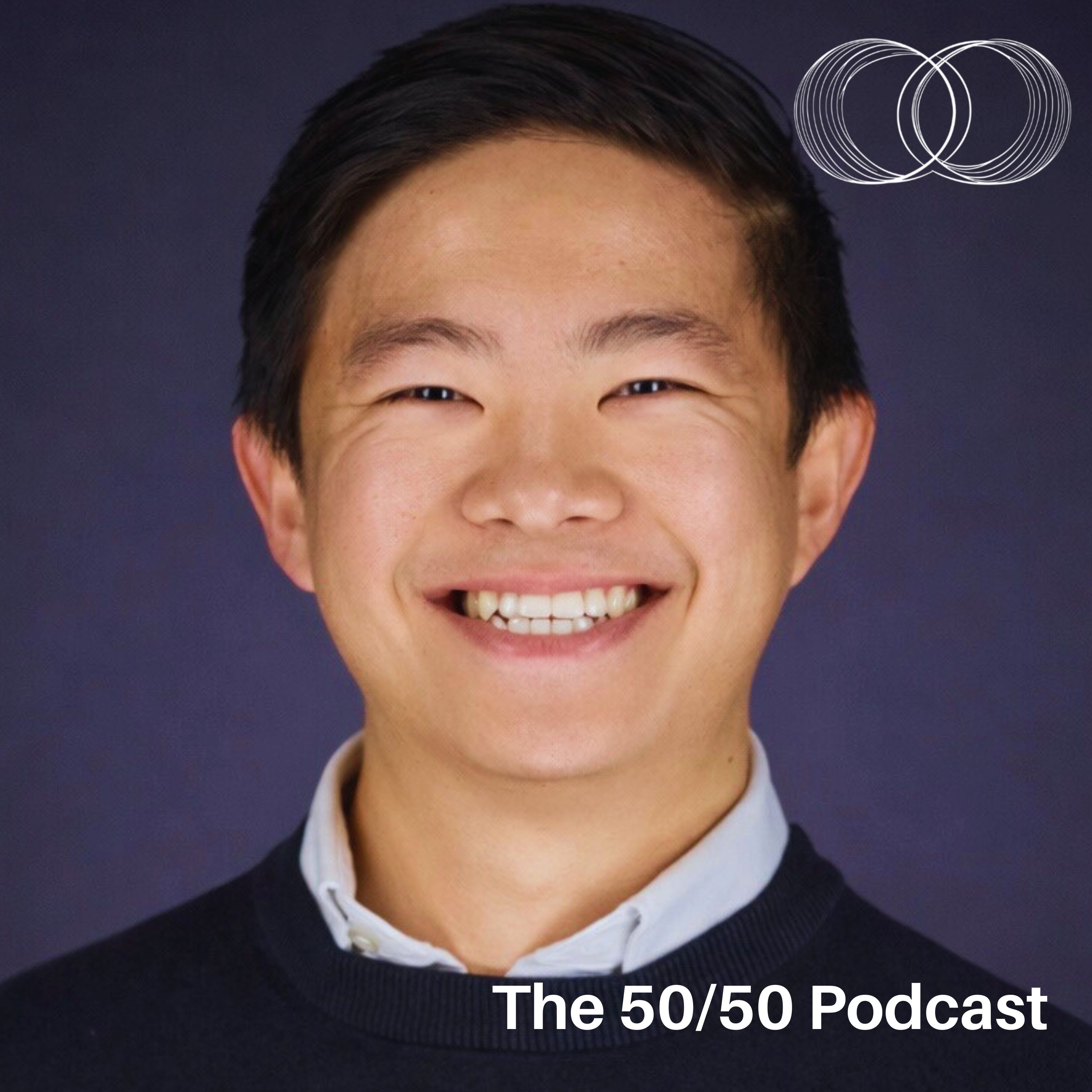
[00:00:51] Speaker C: This week, we welcome John Lee to the podcast. Within the past two years, John has soared from USC to uta, now to the development team at Amazon tv. But beyond the desk is where John really shines. If John could get drinks with every single person in Hollywood, I'm sure he would. However, do not be fooled by the niceties in this episode. If you know John, you know that his rise to the top is inevitable. So let's see what we can learn from him. Enjoy the episode.
[00:01:33] Speaker A: I. I think, like, the max I've ever hit is three and a half hours on a drinks bro.
And the lowest. I. I'm not even joking. 15 minutes in I went, this could be over now.
[00:01:45] Speaker C: Whoa.
[00:01:46] Speaker B: I'm sorry. The. The three and a half. We should probably do your intro, but the. I want to hear about this. Three and a half hours.
[00:01:52] Speaker C: Yeah, let's talk about it. It must have been great.
[00:01:55] Speaker A: It was fantastic. I think, like, inevitably, I. I think I've had like a few two and a half, like one, three and a half. And inevitably.
[00:02:03] Speaker B: I'm sorry, are you like, is it a. Is it a passion thing? Is it like we're. We're so on the same page here or is it just.
[00:02:09] Speaker A: You don't realize three and a half hours has passed? Yeah.
[00:02:13] Speaker C: If you're going that long, you don't realize that. Yeah, yeah.
[00:02:16] Speaker A: And you're like, oh, sh. Like so much time has passed.
[00:02:19] Speaker C: Yeah.
[00:02:20] Speaker A: And.
Yeah, it's. It's. I think a combo of talking through work, just inevitably, like all these drinks are then talking about, like, sort of the psychological undertone of why we got into this job.
And then, you know, when, you know, mutual people, you start talking about that. And I think, like, the whole conversation of work life balance, which we can get into later.
That, I think always, if done well, sparks into a lot of other things. Because none of us have work life balance.
I just don't believe any of us really do.
But when we talk about work life balance, it's like, what does it mean to each of us? And I think it varies from person to person. And that cracks open a whole nother can of conversations that inevitably bring us to three and a half hours.
[00:03:09] Speaker C: Absolutely. I mean, what I'm. What I'm sensing is that there are topics that you're really, really passionate about that a lot of people can relate to. When you're getting drinks with someone, you're excited about eating and everything to. To quickly just put a pin in that. I don't want to. There are so many ways this could go. And you've mentioned sort of like buzz terms that I'm actually really curious about. Like, sort of the psychological undertone. Luke, I saw you react to that too. Of like, why we're all in this. Because it is an interesting conversation just given that we're podcasting on a Saturday right now. Like, who would be doing that?
[00:03:41] Speaker A: You know, what's the work life balance in that?
[00:03:43] Speaker C: Yeah, yeah, exactly. Like, why. Why the hell would we put ourselves through this? But before we get into all of that, I want to do a little formal introduction to you.
[00:03:54] Speaker A: I.
[00:03:55] Speaker C: We met probably two years ago at this point, around then, you were working at uta. Before that, you were at usc, which I'm sure, and you and Luke are both alumni.
USC to UTA to Amazon tv. And you're working in. Correct me if I'm wrong, but the genre intent pole department of Amazon tv,
[00:04:15] Speaker A: I work across genre and world building and genre as it's now been written.
[00:04:20] Speaker C: Okay, okay. World building and genre.
[00:04:21] Speaker A: I also work in comedy and drama on the other desk. So straddling too.
[00:04:26] Speaker C: And what can we just, like, rattle off some shows that people might be familiar with that you're taking. Team has sort of put forward totally
[00:04:35] Speaker A: in terms of things that just. My team has recently released. 56 Days is one of the ones overcompensating.
And then upcoming, we have specifically ones that I'm really excited about. We have Carrie with Mike Flanagan that I'm super, super excited about and stoked for. We have Barbershop based on the movies that came out. It's kind of like a show off of that. That. That's gonna be super fun. We have Elle. I didn't work on that directly. My team did, and it's the Elle Woods Legally Blonde show. That's really exciting. So we have a few of those coming out this year that, that hopefully will, you know, people will watch and will turn out really well.
[00:05:16] Speaker C: That's awesome. Well, congrats on all the success so far and it's, it's very, very exciting to have you on the podcast because you are, I, you are not only a community builder as, as mentioned, you know, with, with your insane amounts of go on, but also you are, I have found that you are very sort of methodical in your approach towards, towards each job that you find yourself in.
And you are, you're very tactical and specific about the way that you sort of go around the industry. So I definitely want to get into that too.
[00:05:49] Speaker A: That's so kind of you to say. I think like, it's interesting to think about like how post grad has gone for everybody. Especially when, you know, you're, you know, you mentioned community building at school. You're all on a campus together. It is actually hard to not run into everybody. Yeah. And once you graduate, except for the people either that you live with or work with, it becomes an infinitely more complicated and difficult thing to do. And it really takes an effort to either see people that you already knew or meet new people. It's completely, a completely different ball game, I feel like.
[00:06:26] Speaker C: And to maintain those relationships, right. That's a whole other.
[00:06:30] Speaker A: It's easy to do with drinks and just say, oh, it was great to meet you, we should do this again. And then not see them again for actually probably like a year and a half. When you inevitably run into each other at something, you're like, oh, we should, we should catch up and then never actually.
[00:06:43] Speaker B: Yeah, yeah, yeah. Are there, are there certain traits you look for like after drinks of like, okay, I know for a fact, like this is someone I'm gonna keep in touch with. And if there are, how do you nurture those relationships after the drinks?
[00:06:58] Speaker A: I think it's you kind of in your gut first just know it's inevitably something that you just realize and through the conversation it's like, oh, was this, you know, a fun conversation to get to know somebody? And I think not necessarily. And I think it's a little bit of a two hander. Right. Because when you go into a drinks, inevitably the biggest annoyance of networking is like, o, you want something out of me and I want something out of you, right? What can you do for me and what can I do for you? And I think there is something just in the connotation of that that feels extremely negative and toxic it's like, hey, I'm meeting you and I want you to hand me X, Y and Z. And I will hand you in exchange X, Y and Z. But I think for me at least there's something about it that's like, if you can give me just a good time and I can give you a good time, we can hang and we can talk about things, we can be excited and passionate about film and T.
And even I would argue, you know, the industry, the business side of things. And like, you know, I've had drinks before where with this whole Netflix, Paramount, Warner Brothers situation, it's like we can Talk for like 45 minutes. Just about like what we think about it, what ramifications we, you know, feel it's a part of. And that's not a conversation for everybody. Not everybody wants to have that conversation.
Some people, you know, I've had fantastic conversations just about like, where we grew up and growing up in a small town, whether it's with no industry people. I grew up in Jersey, so, like, you know, we meet a lot of people in LA that grew up in this ecosystem, grew up in entertainment and have this premeditated understanding of it.
And there's something about bonding, about, you know, falling in love with the industry through a different route. How did you fall into that? And I think those are the conversations that become really fruitful. And in terms of maintaining it too, it's like when one of these conversations is great and you have a good time, I like to just like check in on people too, as exciting things. You know, when a show releases or a movie releases that I know, you know, a friend worked on, it's like, hey, I just watched the pilot of it. Hey, I just went to the theaters to watch it. It was great. I don't know how much you worked on it, but I'm sure there's a level of excitement that this thing that you have been a part of has just released out into the world. Congrats. When people change jobs, when people, you know, the unfortunate one too is like, I had a friend, you know, WME had layoffs this week. It was on deadline. And I texted a few of my WME friends, just being like, hey, thinking of you, I hope everything's okay. And it's not necessarily as a, I want something out of it, but it's just like, we had a great conversation. I care about your well being. I don't want you to be affected by it. And it's inevitably something that we see so often. I just want to check in and see how you're doing.
[00:09:45] Speaker C: Just thinking of it in the sort of, like, the frame of mind of like you are, if you lift other people up, you will go up with them. You know, that's such like, a healthy way of looking at it.
[00:09:58] Speaker A: I think it's the community element, like you were saying.
[00:10:00] Speaker B: Yeah, yeah, man. I would love to take it way back to, you know, Jersey and like, how you kind of stumbled on Hollywood or finding USC and all that, because clearly you. You have so much passion and love for this industry and what seems like the art form, too. But also we talk about, like, the art of conversation on this podcast, and networking goes hand in hand with that. And, like, there really is, like, the business side of the industry is such an art form in itself.
And I have learned that from this podcast and guests who've been on, you know, from the agency side and hearing how they talk about the business side in the industry and how they've read everything and heard every conversation from, you know, the top of the top of this. Of the business side.
But I'd love to hear about, you know, from you, where you kind of started in Jersey, you know, how did you fall in love with movies?
[00:11:00] Speaker A: Yeah, I mean, I.
Neither of my parents know anything about entertainment. They barely, I think, watch TV or movies on their own accord.
And for me, I remember growing up, so I was born here, my parents had immigrated over, and originally their plan was have me in the States and then probably move back to China and raise me there. That was, like, initially the plan.
And before I was born, the doctors realized I had this heart condition called Tetralogy Othello.
And what it means is essentially I have four simultaneous heart defects, and that affects.
That goes into one giant heart complication.
And because of that, when I was born, I can't do sports. I can't do a lot of these athletic. You know, my heart rate can't just go super high.
And because of that, as a kid in Jersey, most of the things people are doing are pee wee soccer, peewee baseball, pee wee, whatever, sport, and these athletic things that I couldn't take part in. So I think inevitably because of that, I kind of found just entertainment. Whether you want to call it watching sports, being envious, I can't play it, or watching movies or watching specifically, I think, action movies with my dad.
Language barrier. There's something about action movies that you have the. For sure. You see the, you know, caravan, the
[00:12:26] Speaker C: good guy, the bad guy.
[00:12:27] Speaker A: Yeah, probably the government and. Or villains.
You know, I think there's something. You know why? Like, the good guy is very clearly there, the bad guy clearly there. So I think that's how I first found it and through middle school and high school, realizing, oh, like, if I have a camera, I can not make movies, but I can take some photos and make some videos and convincing these, like, parents of these. These, like, athletes, student athletes, to let me film highlight reels for their kids to apply to college.
So I think, like, that was sort of my transition into it. And in watching these movies from Jersey, you see these names of, like, oh, you know, Wong Kar Wai, John M. Chu, a lot of these Asian directors. And I was like, if they could do that, I can, not knowing at all what it meant. So, you know, very early on, I was like, great, I want to go do that. I don't know what that is. I'm assuming it's writing and directing. That's the names I see. And that's, you know, the way I want to express art and be a part of this industry. That seemed so cool to me. Hollywood seemed so cool.
And inevitably with Asian parents, they were like, okay, but if you want to do and go to film school, you got to go to, like, one of the best ones, or. Or you should go do something much safer. And I was lucky enough to get into USC for film and TV production, thinking, I want to be a writer, director. But very quickly, within a week, I think lost that.
[00:13:54] Speaker B: Wow.
[00:13:55] Speaker C: Yeah. What was it that made you sort
[00:13:58] Speaker A: of switch gears every. I mean, I think all three of us, we have friends that are ingrained in writing and directing.
We know so many people who are at various stages of their careers in that. And I remember stepping onto USC campus, seeing all of these people being really excited at first and then immediately going, oh, this passion that you guys have for actually sitting down and writing, going to set and, you know, talking with these actors and directing and getting into the nitty gritty. I don't have that at all.
I love watching you guys do it.
[00:14:35] Speaker B: Yeah.
[00:14:35] Speaker C: Yeah.
[00:14:35] Speaker A: I don't want to actually be doing that. And that threw me into this existential crisis of, what do I do now?
I went from one coast all the way to the other coast here to do this thing that I thought I was meant to do. And I'm not passionate about it in the way that these people are. I see them do it, but I want to be involved somehow. And I didn't know what that meant. And that's sort of when I first found out about internships in the industry that I At the point, at that point, you know, was still so unfamiliar with what quote unquote the industry meant. And now it's such a buzzword for us, I feel like.
[00:15:15] Speaker B: Well, I mean, so that's, that's, I mean, a few, whether it's a week or a few weeks or even a month into your, like you said, you travel across the country and you have this idea, like you said, you've seen Wong Kar Wai, these names, writer, director, like this is what you want to do. And then you show up on the first day. USC is an amazing place. It's also pretty daunting. Naturally, you know, like you're looking at the statues and names on the walls of people who've been in that space.
I mean, naturally, that's going to be a pretty difficult time as freshman year already is. Like as a student, as an 18 or 19 year old, however old you were, like, what did you start producing? Because I know in that, in that, you know, in that actual production program, like you're, they're pushing you to create. So did you kind of opt out of that? Did you change schools? Like, what it, what it, what came from that?
[00:16:06] Speaker A: I think I found a dual track in it for, for myself. Not necessarily through the program, but on one hand you're absolutely right. Like, USC is a place that really wants their students to make stuff in and out of school, right through shorts, through whatever it may be.
And I think I remember I was, you know, I had moved out during, you know, around the middle slash tail end of COVID And this was, this was like end of 2020 and I did this little bubble. So the second the restrictions were lifted, all of us were like, great, we want to get out there and be on sets again. And this was, you know, when there was still very solidly Zone A and Zone Bs on productions and things like that. And I remember because of that, we were very early on to PA on a lot of these student films that re. Kick started. And I remember sitting there and listen, there's a lot of shade toward being a pa. I think it's one of the most fun things you can do. I think being in an assistant in this industry, when you're starting out at any level, whether it's a production assistant, an art assistant, a camera assistant, or, you know, someone on grip on set, all the way to being an assistant at an agency, a production company, it can be so much fun if you're in the right place, on the right set, surrounded by the right people.
[00:17:27] Speaker C: I think that that might be the first time that we've heard that on this podcast.
[00:17:30] Speaker A: Really? I think, like, listen, I like, is getting water bottles for someone glamorous? No.
But can you have a fun conversation off of like, hey, what do you need? It's kind of in a weird way, like a service industry in that way.
[00:17:43] Speaker C: Yeah, there is kind of.
Yeah. And then just from like the sort of emotional perspective, it is kind of a cool angle that you have to have everything in front of you. You know, you get a very specific perspective of like, oh, my job. Well, it feels high stakes and I want to, like, if I'm. If I'm good at it, I want to care so much and do the best job that that's possible. My job doesn't, like, whether or not I get this water bottle to this person, it doesn't necessarily matter. So it's like a little bit like, you're still.
You're in it, but you're not, you know, and you're kind of like looking on to it. Like, it's an interesting perspective.
[00:18:18] Speaker A: You know, there's something about that macro view that is so freeing and fun. And it's like, do you realize when you get to that job down the line, how much more pressure you're gonna have and hyper specific things? Why not enjoy the early jobs where you can just learn and have conversations? Right. And through that, that's when I first met a producer on, you know, one of these sets who was like, what do you want to do?
You can't. If you're, you know, doing a much, quote unquote glamorous job on that set, you don't have the time to have that side conversation.
[00:18:55] Speaker C: Totally.
[00:18:56] Speaker A: What do you want to do while they're, you know, changing the lighting or, you know, adjusting for the next setup or changing whatever it may be, even, you know, something as simple as, like, changing a lens. That extra few minutes of just like, you're not doing that. You're a pa. If they need something, you can be there, but you get to observe. And I was looking at this producer and I was like, I don't know what you're doing. Seems kind of fun. I don't know what you're doing, but it seems kind of cool. Like, it seems like what, you know, you're really just putting a lot of these pieces together. And if you did your job right, you can let the director, DP and everybody just really run. And everything was prepped in advance.
So through that, I think very early on at usc, I was like, oh, great.
I want to somehow be a producer. Don't know what that means, but that seems like such a blast, especially in the film school environment where it's a great way to get to meet a bunch of people and put the right people together. You know, if a writer has an idea but doesn't want to direct it, oh, I know a few directors who aren't necessarily writers. Let's pair them together. You know, a writer, director wants to make a short. How do we put all these pieces together? What are the work experiences from this cinematographer and this editor? And how do I, you know, put together the right pieces? That was so fun to me and I think that was kind of my gateway into development. Because that's the closest you can get to development at film school. Because, you know, a studio by a weird translation is kind of the school and you're not necessarily faculty, which would be the closest thing to development. But as a producer it's the closest thing you can get. You also have to do line producing, you have to work on the budget, you have to do a lot of the logistical things. That's slightly different, but that was, I think, my first gateway into finding the elements that I liked about development and didn't like about producing slash on set work. I think that was a big delineation for me.
[00:20:52] Speaker C: You clearly, you're such a fan first, you know, and I love kind of, I love being a fan first, but also like I see it from you, like from such like a young age. Right away you were like, I don't know if I want to write and direct, but I do want to be really close to those people and I do want to work hands on with those people, you know, so like, and that's such a producer quality to me
[00:21:16] Speaker A: and I think as a compliment to, to you and a lot of the people that when I go to drinks on, you know, it's just a longer drink session. It's that situation of like that equal, you know, desire to just see as much as possible, dip your toes into as many things just for fun. Right. There's something so innately a part of having this level of curiosity and wanting to do every single thing, see every single thing and just learn it. That I think keeps the fun in it. And we got into, you know, when we were, you know, growing up, we weren't thinking about making our days or, you know, turnarounds or getting, you know, notes on scripts in before X hour. It was just you watched something, you heard about something and you immediately had an opinion. And in this day and age, having an opinion is sort of the game changer. And what makes you knight and day?
[00:22:19] Speaker B: Was that, like, curiosity, the thing that led you into wanting to be at uta, like in the agency world? Was it, was there a piece of you that was like, okay, I could, I could go straight to a production company or I could. Because if you, if you're thinking, I want to be a producer, you know, what, what was that, that logical step for you?
[00:22:40] Speaker A: Yeah, I think like in, you know, while I was producing through college, there were a lot of parts of it that I was like, ah, this isn't for me too. You know, even like being on set, as fun as it is.
It's not.
[00:22:54] Speaker B: You got tired of the, of the water bottles, man.
[00:22:56] Speaker A: You said, I got tired of the water bottles. And no, it was just something that, like, you know, while being on set, I was just like, oh, this is fun. But this is not me. And not the, It's. Even as a producer, you are the most, in my head, macro view person on the production in any given moment, but simultaneously, you are still so granular on the larger picture of it. All right, you're worried about this one specific short, this one specific project. And I wanted to be a part of this big, massive view and the fun from it. That, and working on multiple projects at once and getting to do, you know, this, you know, kind of slate building. That was something conceptually that I found fascinating.
[00:23:40] Speaker C: So while I was. I know, I know you and I have talked about that.
[00:23:44] Speaker A: Exactly. And finding these things that, you know, yes, every project hopefully is great, but like, how do these projects fit together? How does it fit who you are and what fulfills you?
So, you know, very early on too, I remember I was sitting at the courtyard at the film school at usc and it was just like, you know, everyone's chit chatting how that courtyard works, and some kid was just like, hey, leaving my internship. Does anyone want it? And I was like, internship? Like, is that not for, you know, Morgan Stanley and any other like, business place? I didn't know there were like industry entertainment industry specific internships.
First off. I didn't know there were any second off. I have no idea what they are.
[00:24:28] Speaker B: Like, I, you know, that's, that's a, you know, UNC film school. Making sure you guys know.
[00:24:35] Speaker A: Exactly. I was like, what alarming is an internship in. In the industry? And, you know, he walked me through it and it turned out to be a three person company in unscripted. It was his CEO, his assistant, me.
[00:24:50] Speaker C: I mean, that is, that is like an age old setup, I can tell you. Even from my perspective, it's like, oh yeah, I just, I, I just got this great internship. You arrive, it's, it's one and a half people. You guys do marketing for pet shows and, and you, you know, like, it's like the most random thing ever.
[00:25:11] Speaker A: And this, this also too was like, it was a virtual internship, by the way, but it might as well have been in a we work. Like, that was the feeling that it kind of had. Which, you know, while that isn't necessarily glamorous, I could not be more grateful of that being my first experience where in a weird way it kind of felt like a startup. It was because there were three people extremely hands on.
So as an intern in Unscripted, I wasn't, you know, doing what most, what I think turns away most people from internships, which is sitting in an office and, or at home and just doing X amount of script coverage is a week. That's all you're doing. You're not talking to anybody. You read the script, send your thoughts and then it kind of goes into a void. Like that's just how the internship works. But in this first exposure, it was great. Let's design a deck off of this unscripted concept that we have that won't have a writer, right? It doesn't have these things, but it's like, hey, how do we build it from scratch? And I think that was like the closest thing to an intern development I could have ever had. And it was, I think my first experience being that was perfect. And I remember leaving that internship and just being like, okay, great.
Every single semester I want to do an internship at every single place. I want to learn everything there is and just get the exposure to it. And no shade to usc, but you know, it's very much a program built for, for physical production, directing, writing, below the line sort of crew stuff. Right. And I was like, great. While I have that education, what can I do to supplement everything else I want to get exposure into, whether it's a pod, a studio, a streamer, and then inevitably, you know, Luke, to your point, into an agency.
You know, I interned through each of these various sort of tiers both in Unscripted and then inevitably got into tv scripted.
And it was just like along the way I heard the most polarizing opinions of you have to go to an agency. An agency is a waste of your time both.
And for me, I think what that ultimately led to, and I try to keep now that level of curiosity was like, okay, if this is such a polarizing thing, what's the harm in at least trying it and just seeing how it goes? I have no idea. You know, I've never heard necessarily it being, I don't want to say a waste of time, but it's like, this is something that you'll learn from, good or bad. So I was like, great, why not try it? And I remember, you know, this was. I ended up interning at UTA before my senior year as. And it's like the most low stakes version of trying an agency.
And I remember going and shockingly having an incredible time, not necessarily of delivering mail from the mailroom to a desk, even though I think there's actually a weird parallel with that in delivering water bottles as a PA on sets.
But there's something in that that's like, oh, what can I learn about people? What can I see? And I think there's so few jobs outside of this industry or even in this industry that when you graduate, you go into this job and you're surrounded by 10, 20, 30 people. And then when you get to the assistant level, even more of just loving the industry and wanting to break in and wanting to get more exposure and everyone, it is the biggest definition, for better or for worse, of work hard, play hard. Where we're all sitting in an office from probably like 8 to 8:30am all the way until 7 to 7:30.
The best conversations I've ever had were in those 7 to 7:30 windows when everyone has left and all of us, all the assistants crowd into our boss's office and just talk.
It felt like college in a weird way socially. And then, you know, Friday is part of home.
[00:29:16] Speaker C: There's that equivalent between like the on set pa, right? Because you are like you're one foot in, one foot out and you have a really interesting perspective. And there's that social element where you do have that downtime to strike up conversation, remind each other why you're in it and why you keep pushing.
[00:29:31] Speaker B: And you definitely have those, those late night conversations when you're packing up. You know, that's, that's a very real thing. Last one.
[00:29:39] Speaker A: And it's also another place where everybody's from such a different place. You know, I think most of the people from my mailroom class, you know, because I interned there and then graduated a semester early and then immediately started at UTA and most of my friends were still in college at this point. They were, they still had one more semester to go. And I was like, great. Well, I'LL probably still meet some USC people. And in my mailroom class, I think there were maybe two USC people. And it was just everyone was from such a different place. Some people were just moving to la, some people were just, you know, this is their first exposure into the, into the industry outside of, you know, their school because their school didn't have internships in that way. So I think there's something innately exciting and like, I'll call it bright eyed and bushy tailed when you now enter this new phase. For me that I was just like, oh my God, this is the coolest thing on planet Earth. Despite what everyone said about an agency and even knowing that I wanted to use it as a launch pad into development, it's like, why, you know, not have that experience and get to know it. Inevitably, whatever part of the industry you work in, you're gonna be exposed to agents. Whether you're repped by one, work with one, whatever the case may be. So I think, I personally think for me, and I can't speak for everyone else, my career probably would have been harder down the line. And now if I hadn't started at an agency.
[00:31:07] Speaker C: Yeah.
[00:31:07] Speaker B: Can, can we dig into taking that, that full time position? And if there was even a decision of like should I or should I
[00:31:15] Speaker A: not, I would think that sign the offer the day.
[00:31:17] Speaker C: Okay.
[00:31:18] Speaker B: Like so there you go. Yeah. Yeah.
[00:31:20] Speaker A: I think like for me it was really of like, you know, I know so many of my friends and even myself at the time and you know, I hear a lot of it now where it's. You go to a very hyper focused, all things considered film school and there's so many people who either want to be a writer, want to be a director, or don't know what they want to do or want to do a below the line position.
I think if you take any of that chunk of people who know what they want to do, they want to figure out how to get there right. And getting.
And I think this is a taboo subject, but important how to get paid to do it. It's not just I'm making my short film on the side and then it gets buried forever. Right. Like, how do I make this into a career, my passion into that and then simultaneously the batch of people who don't know what they want to do in their career and that's also totally fine in my head. Then it's like great for me, what is the place that you can go to to get exposure to as many things as possible.
And I think that the answer to that is being an assistant at anywhere. And it doesn't have to be an agency necessarily, but being an assistant at a place that gets you exposure to as many things as possible. And there you can learn not only the things that you want to do, but I think, equally as important the things you don't want to do, the things that you're like, oh, that's not for me, and why. And for me, an agency just happened to be the place that sort of saw as much of a wide umbrella as I personally wanted.
[00:32:51] Speaker B: You've. You've mentioned that twice now of just like, the. The importance of figuring out what it is you don't want to do, but even more so, like, actually experiencing it to be able to cross it off the list, you know, because I feel like so many people, at least our age or on our level, like in our peer group, it's just they're. They're quick to be like, oh, I. I can't do that. I'll never do that. It's like, well, have you ever tried it? And they're like, well, no, but, you know, but you've had that. Like, you showed up to USC film school and you were on set and you were able to say, okay, I've met these other people who call themselves writer directors, as I do at this time, and I see how passionate they are. I see how they talk about writing and how they actually are in their rooms writing together until 4am and talking to actors, whatever they're doing. And you're like, okay, yeah, maybe not for me, but I think that's a really strong piece of advice too, for. For our listeners as well.
[00:33:41] Speaker A: Yeah, I think exactly to your point, Luke, especially of it, it's not for me. I think if there's like anything that I tried to, at least not only for myself, but like, I think it's a good thing to just follow is like, you are the only person that knows your experience, your preferences, what you like and don't like.
[00:34:01] Speaker B: Yes.
[00:34:02] Speaker A: No one else can tell you exactly how you feel besides, you know, so many ways.
[00:34:10] Speaker C: It's like relationship advice.
[00:34:11] Speaker B: Yeah.
[00:34:11] Speaker C: There is so much power in that because oftentimes in. In the industry, you will have so many people because that you become successful through your opinions, as you said, and your taste, and then they're. They're sort of not projecting onto you, but sort of telling you, this is the way you should do it. You know, this is the way you should do it. You got to go here, don't go here, all that stuff. But really, there is so much power in being like, okay, I'm going to half take your advice, but take it with a grain of salt. And being like, who am I? You know, because nobody else is me. There's so much power.
[00:34:44] Speaker A: I think two great examples, like you're saying in terms of, like, do you take this job? You shouldn't take this job. Right. Are at just as much as I am so against being a writer or director myself.
That doesn't mean. Oh, no one should ever be a writer director, right? I'm me and you're you.
[00:35:01] Speaker B: You're great at that.
[00:35:02] Speaker A: And you want to do it.
[00:35:04] Speaker C: Can you imagine if you came on.
You should be doing it.
[00:35:07] Speaker B: Don't do it. Don't do it. Trust me, don't.
[00:35:09] Speaker A: I have no right to say that.
[00:35:11] Speaker B: Just.
[00:35:11] Speaker A: Just like, you know, it's. I think at the same time, Wyatt, to your point, like, I think we've seen so many and. And you know, this industry of assistants working and talking about their boss is like, they're the worst person on planet Earth. And we've also heard of people saying their boss is the greatest person on planet Earth just by how human nature works. I'd be surprised if anyone who works for that person has the exact same opinion. I've had so many friends, you know, get told, don't work for that person. They are a nightmare. They go work, and it is the. There's never been a better fitting of an assistant and a boss. And it's like, well, if you listen to everybody else, you wouldn't have even gone to work for them. And the vice versa is true, too. They are the greatest boss on planet Earth. And you go. And it's like, why would I ever want to keep working for this person? It is a nightmare.
And I think the reason is because there's only one version of you and there's only one version of them.
And whether or not it's a match, only you can say for yourself whether it's who you work for, what job you do.
I think it all is applicable of just try it yourself and if you don't listen, if you don't like it, you don't like it. But I think there's no harm in seeing for yourself exactly why you do or don't like it.
[00:36:26] Speaker C: But you know what? I'll. I'll push back on a little bit. Is that one of the. The most fantastic things in my mind is. Is how you as an assistant can change the relationship with your boss during your tenure being their assistant. Because I Think there's, that's, that's like the ultimate sort of psychological thing of like, okay, you know, we're not getting along right now. Like, my, my vibes don't vibe with him. One of us is gonna have to change. And it's not this guy who's been in the industry for 35 years. Like, it's, it's, it's me, you know, it's. It's me learning how to be a great assistant, which is like catering to their needs. And obviously, and it should be mentioned that there are of course extenuating circumstances where it is like, actually not a great situation and, and those are unique and awful. But there also is power in being like, okay, this is a person who is successful for a reason and I'm going to try to learn from them while also maintaining my sense of self to some extent and figure out the way that we can work well together. And I think that's just sort of an advanced psychological thing. But there really is merit to it.
[00:37:40] Speaker B: This, this industry is built on collaboration too, you know, and I can speak to this from my on set experience as a pa, you know, at like a movie level of like working with way higher established folks than, you know, you're at the bottom of the, of the ton of poll as a pa, but like, as you're saying, Wyatt too, it's like, I'm not going to change how this person talks to me. Like how this first AD is talking to me or even how some head of a department or just the KPA is talking be. But like a lot of times it's about removing the ego and like, kind of, I don't know, feeling, feeling a bit of like, I mean, John, throughout this, it's like you're, you're so full of gratitude for everything, which is very clear. But like having that sense of gratitude and being able to remove yourself and be like, this isn't necessarily about me. Like, the AD is probably getting yelled at by producers and the director and all this stuff and like being able to say, okay, how can I remove the ego and just simply like, do the best job I can to make sure that like I'm able to provide to this and why, and I know you said too before of like how getting waters might not seem like it's the most important thing and how a set can run without that, but there is a certain level too of like you need PAs, like as you need assistance.
[00:38:51] Speaker C: Totally.
[00:38:51] Speaker B: Like if, if an assistant is doing their job well, whether it's on set or in an agency, you don't know they're there, you know, but it's when they make mistakes where it's like, okay, who are we blaming? The PAs, you know? And it's like, yeah, yeah, here we go. Like, sorry, Ad.
The walkie's on the wrong channel. It'.
[00:39:08] Speaker C: Fault.
[00:39:08] Speaker B: You know, you just got to take it. You got to take it even if it's not. But that's.
[00:39:13] Speaker C: Yeah.
[00:39:14] Speaker B: Yes.
[00:39:14] Speaker C: Yeah, that's. But that's the ideal situation is if you make a mistake, then everybody feels it. That means you've established yourself as, like, a necessary person on set. Like, that's. That's the, like, yes, I messed up, felt it. I did it. You know, like, I'm necessary, which is, like, always the goal, especially as. As an assistant, obviously. I'm sure at higher levels, it's pretty similar. Like when you're first a creative exec and then you finally have that one project that you are spearheading to some extent. If you were to leave it, it would fall apart.
That's the goal at every level, I feel like.
[00:39:52] Speaker A: Yeah, I think that's spot on. And even in terms of Luke, to your point of that code switching and knowing how to adapt to a specific boss's needs or environment, you know, I think inevitably there are certain people that are a more natural fit to insert person, whatever, you know, their personalities are. Right.
And you would have to adjust yourself a little bit less. There are other people who you inevitably just have to adjust yourself more. And I think for everyone's own sanity, it's not healthy to really compare yourself to, oh, that person barely had to change who they are, and they instantly got along. It's because you guys are different people. And learning how to adjust to the needs of a given production, a given boss, a given company, I think is something that I would be surprised if that ever goes away. Inevitably, you have to adjust to the people that you work for. And with. Just as much as you have to change who you're programming to write, the audience and trends and what people want to watch is always going to change, and you inevitably have to change with it. You're also just going to change as a person. And I think knowing how to match those together in the best way that you can is sort of the best thing you can do.
[00:41:07] Speaker B: I mean, that sounds like a pretty amazing takeaway from the agency itself, but I would love to ask if there was like, one takeaway or two.
One or two takeaways from. From the agency that come to mind.
[00:41:22] Speaker A: This might like people might agree or disagree with this and I think inevitably it's just a part of it. And I'll sort of in the most umbrella term of it. It's just that nobody knows anything. Like nobody actually knows anything.
And I think you're just sometimes right and you're sometimes wrong.
[00:41:43] Speaker C: You look at, I love that takeaway
[00:41:45] Speaker A: assistants, all of us, like we've all, all three of us. I'm sure we've made plenty of mistakes. I remember so many of them that I was just like, oh my God, it's the end of the world. I know nothing. I'm the dumbest person on this planet and I messed up. Simple email, right?
At the same time, you look at the most established directors, the most, the biggest names in this industry who have had hit after hit, billion dollar box offices, number one on streaming shows, you know, working with the biggest actors and they will still have a flop, a misstep, an actor. You know, I mean, I think if we go through history, like there's been a few that are nominated for an Oscar the same year they're nominated for a Razzie. Yeah, right. There's all of these various things we see, you know, David Zaslav acquiring Discovery and Warner Brothers now selling it. What are the, you know, thought processes on that? Everyone has decisions that are sometimes right and sometimes wrong.
And I think what the best you can do is make the best decisions with your experience.
But nobody really knows exactly what the right answer is going to be in the long run.
It's an everything is always going to change. And I think whether that helped me have more faith in myself to take a risk and be like, listen, I don't know if this is right or wrong, but here's why I think, think it's right.
And at the same time taking it as a lesson from people up above of like, they've also made mistakes, right? They are like, hey, here's why I'm doing this. I don't know what the final right answer is, but here is my thought process of why I'm getting there. I think that's also an educational process in on itself. And at the end of the day it's like no one really knows anything and we're all just trying our best. I think that's applicable to life as well. But in the industry especially, I think that's something that allows us to feel a little bit more free and remember to take risks in the art itself.
[00:43:52] Speaker C: We'll be right back.
[00:43:55] Speaker B: Are you sick and tired of spending months on short Films that get seen by just your uncle. Are you sad and bored of editing all the time and all that footage for just 10 views?
Well, now's the time to change that. Submissions for the 5050 Comedy Fest are open now. Get your work seen by professionals who can actually advance your filmmaking career. Not your uncle, unless your uncle happens to be at a top tier talent agency like caa, UTA or wme.
Check out the episode description for the submission link or head to filmfreeway.com and search for 5050 Comedy. 5050 Comedy is on May 3rd. Submitting to 5050 Comedy may lead to money, fame, fast cars, boats, planes, helicopters, cybertrucks and literature, lifelong friendships. 5050 Comedy is on May 3rd. We look forward to seeing you there at 5050 Comedy May 3rd. Your uncle is not invited unless he works at a top tier talent agency like CAA, UTA. WME May 3rd. 5050 comedy May 3rd. 5050 Comedy May 3rd. We look forward to watching your comedic short film.
We, we talk a lot about taste on here on the pod, you know, and a lot of times, like how, how many years it takes to like find that artistic voice, like through output, through creating and, and taste itself. Like, I, I'm curious for you how much of your taste because you went to film school, you took those classes where you're watching, you're studying film history, you're seeing, you know, very foundational films that like.
[00:45:20] Speaker A: Yeah.
[00:45:20] Speaker B: I mean you have a, I assume a vast knowledge of films in general. But how much of your taste is.
I, I, I'm kind of formulating this question as I go, but like, like how has your taste shifted from film school to agency to where you are now? And how much of it is personal versus like okay, audiences like this or agents like this.
[00:45:42] Speaker C: Yeah. Or, yeah. Or fitting the job or you know, you're working at a specific place now. So we can kind of ask the question maybe through that of like how, how has it changed as you've, as you've progressed in, in your career?
[00:45:55] Speaker A: I, there's an advice that I got from someone recently that I think is so, like, I at least had never thought about it this way, but he was like the thing that makes execs stand out. And I will broaden it out to not just execs, but anybody is, and I'm using the word show specifically just in the context of that conversation. But it was your, you shouldn't be as good as your shows. Your shows should be as good as you.
And I think there's something so fascinating about that in Any content where it's different places have different mandates, right. Whether it's an HBO show that's an absolute hit, might not work on Amazon, which might not work on Apple, which might work on a different platform and. But also if you take, you know, even the biggest shows that are out right now and you put it to a different streaming platform, different batch of creatives, different execs, it would probably be a very different show. Even if it's the exact same script. Right. And the same thing. At film school, I think professors inevitably have different expectations of how they want film school students to make their stuff and what direction they want to push it in. Right. Some places are more commercial, some are more, more, you know, niche, some are more whatever.
And I think a big thing is not only being able to adapt to that, but also staying true to what you think is good and meaningful. And for me, I think over time it's definitely ebbed and flowed. I think part of it matches the culture and just what people are watching right now and what people like and what I like. But at the same time I like to work on things that do have something to say about the world.
And you know, there's a huge argument to be made about having escapist content in whatever shape or form, movies or TV and whatnot. And throughout history there's been so many that are escapist. Right.
And I think the thing for me about those that are, you know, especially on the genre side, sci fi, fantasy, horror, whatever it is, when they subtly sneak in something good, I think it's just more digestible to everybody because you go into it thinking it's about, you know, something like andor it's just another Star wars show. But if you take a look at the dialogue and the political commentary in that and you want to get something more out of it, it is so applicable to modern day society and something that you can really think about. And I think there's something so fascinating about having our, that straddles both. And at the same time for me, I think there's a big difference between shows and movies and content that I like to watch versus stuff that I think I'm good at and have an opinion on to make. I categorize those very separately.
[00:48:48] Speaker B: Well, the, the job you're in right now and it's interesting to hear, you know, mention andor like you, you, you were in the world building and what, what was the genre and genre.
[00:49:02] Speaker A: Can you talk about what genre?
[00:49:05] Speaker B: Yeah. What is that? What does that mean?
[00:49:08] Speaker A: I think, oh God, I'M like, what am I even allowed to say? I think like for me at least, you know, at any company.
Yeah, right. Like that is sort of the perfect blend of escapism plus having something to say about the world. And I think that's why I fell in love with genre to begin with. Right.
I love watching and here's I think the delineation of it. Right. I have Sundance watch parties with my friends that they'll do like the, the screeners or you can just watch a bunch of the movies. And it's like, I think it's like everyone show up at their apartment at like 8:30 in the morning and we're watching it all the way to like 7pm at night or even longer and like we're all door dashing food midway through the day.
I don't know if I'm the right person to make those.
It's just like I love those movies but I just don't think I'm the right person to really tackle those.
And I think part of it comes from not only the subject matter and the overtness, but I think like for me what I really want to find is stuff that is just outside of our reality. Right. And I think what is so fascinating about genre is at the end of the day when you're making content for me is I want to make the best content. That's the most amount of people see, like that's just the broad level of it.
And there are so many audience members who have such different tastes when they go into a movie or go into a show or go into whatever they're watching. And it's like, oh, I don't want this subject matter shoehorned down, you know, my throat and like forcing me to think about it a certain way. At the same time, on the other end of the spectrum, there's people who are like, I want really overt messages and I want it to be about something. I don't want to go into it. And I think art having nothing to say is meaningless. I don't know, just doing like the exaggerated version of the two.
[00:51:06] Speaker C: Totally, totally.
[00:51:08] Speaker A: Okay, so in those people then what is the best way in my opinion to get as many of those people as possible is these world building genre, fantasy, sci fi things where it's like if you want to go into it and just view it from the.
Here is a completely different universe and we can have people fighting in the action. You know the stuff that I watched with my dad, right? The black caravans driving into town and there's A monster in it. Great, you can get that. But then you look at something even this year, like sinners. Right.
What do.
[00:51:42] Speaker C: That's like a great middle ground. Yeah, totally.
[00:51:46] Speaker A: Exactly. Like, what do the vampires symbolize? Why do they say certain things?
It's a vampire movie, but if you
[00:51:55] Speaker C: really want to, it makes the medicine go down easy.
[00:51:58] Speaker B: Yeah, yeah.
[00:51:58] Speaker A: Perfectly said. And I think those are the type of things for me that I love to make and love to watch. And, you know, finding that in between ground for me was. Was the biggest thing.
[00:52:10] Speaker C: Yeah, absolutely. There is, There is something.
And I like that. You know, genre is such a vague term, but I think it's intentionally vague.
[00:52:19] Speaker A: Right.
[00:52:19] Speaker C: Like that. That fits into a bunch of different genres. I was just listening to Paul Feig on the Town and he was talking about Housemaid and how it kind of does that.
[00:52:30] Speaker B: Right.
[00:52:30] Speaker C: Because it's, it's. It's a thriller, but it does feel very, very commercial and not like a small movie, despite the budget being, you know, relatively small to mid size. Like, I think it is. It is that thing that you can like, cuddle up with friends and watch, but also, like, there is that element of, like, oh, this tackles interesting topics that are worth noting 100%.
[00:52:53] Speaker A: And the same thing, I think applies to Marvel movies and DC movies and comic book movies that really stand out are the ones that people go in expecting one thing and you leave it like, oh, my God, I just thought about my life in so many different ways.
[00:53:07] Speaker C: Yeah. And naturally, I think IP is so huge because it sometimes comes from books or comics or things that have more time to sort of get into those, like, deep themes and world building. Right. So I'm curious, like, how much are you guys thinking about IP on a day to day basis versus, you know, accepting original pitches, things like that.
[00:53:29] Speaker A: I mean, just from my own personal view, especially of, like this landscape of IP being king. Right. Is what people, I think, says.
Like, I think as an audience member, we just want, like, good stuff.
Right.
Like something that's so fascinating about genre TV for me especially is how it's been able to make original things feel like ip. Let's take severance, for example. It is an original piece of thing.
It kind of feels like an IP now.
[00:53:59] Speaker C: Like, it feels stranger things too. Come on.
[00:54:02] Speaker A: Stranger things. It feels like an IP and even something not on the genre space necessarily. Like, I consider. I mean, you know, people might argue otherwise, but like White Lotus, that kind of feels a little bit ip, like, to me. Right. I think it's done something so incredible of taking these original concepts and making it feel bigger than it is. And you know, I feel like at the same time there's books or shows that have been rebooted or movies that have been adapted again and whatever that work and ones that don't work. And I think for an audience perspective, if it's feels authentic and genuine and there's a reason why we're doing it in a certain way, I think that's all that really matters.
And especially on the original content side, it's just like, you know, even. Even something like, I'll use heated rivalry as an example, which is off of a book.
It's like a lot of people, I think going into it didn't know that it was a book or didn't know that. You know, a lot of these things are based on books and some people do, and I think it's just a huge variety. I think Peter Rattled is based on a book like that. People might not have been familiar with the book, but the show introduced them to it.
Chicken and the egg situation, almost.
[00:55:14] Speaker C: Yeah, absolutely.
Well, we have truly covered so much.
Whether it be the more psychological elements of kind of finding your way through the industry or really fantastic advice about jobs and things like that.
We do ask one question every single episode to our guests.
What is the dream?
[00:55:41] Speaker A: Oh, God. I think the dream is just to be at a position where I can be the intersection between business and the artistic, creative side of things.
And I think for me, you know, starting off wanting to be a writer director, I was like, great, I want to do that. I want to be like hands on, on the creative and then going to somewhere that is, I would argue, pretty much on, not completely on the other side of the spectrum, but somewhere like an agency where it's all about how do you get your clients jobs.
I think there's a middle ground there. Like, I think it's like, you know, okay, why do you want to get these clients jobs? It's because they have something to say, they have an argument, artistic endeavor to it. And inevitably, hopefully that leads to a certain level of profitability.
Right. And I think there's now having been, you know, through a few internships and then working in development and then having started at an agency post grad, but also starting on set.
I think there's a lot of people on the, on the creative freelance side who are still learning more and more, more about how the business suits think. I think there's a huge, it's like, ah, the suits, they're here and they will only Ruin things and yada, yada, yada. And I like, agree and disagree to a certain extent. You know, it depends on who you're talking to. And I think on the flip side, it's like, oh, these creatives never take any notes. They only want to do it there a certain way. It's my way or the highway.
And I think a huge part of that, to our earlier point of code switching and being able to talk to different, different people, I think that's all it is. It's like, can you relay an information from one side to the other? And that's the job that I want to do. I want to be able to take what the creatives are saying and why they say it and be able to relay that over to. And I'll use a dramatic term for like, stakeholders and like the board of, like, oh, you know, here's how they feel and here's why. And here's the argument for. And also, like, I understand why they're saying it this way because they're feeling, thinking about this and then simultaneously being able to relay the reverse of that. Of like, hey, I know there's a stigma against the suits and I get it.
Here's where they're coming from and here's what, hopefully, at the end of the day, lead to a better result in the project and get more people to see the thing that you've put so many blood, sweat and tears into. Let's get it in front of the biggest stage possible and get everyone to be able to see it, hear it, understand.
[00:58:11] Speaker C: Yeah. And that's your job, to think about that audience and think about what's the best way to sort of convey the show to.
To the, to the max amount of people. Yeah, yeah.
[00:58:22] Speaker A: Well, including us.
[00:58:23] Speaker C: Thank you. Yeah, yeah, yeah, yeah. Exactly, exactly. Well, dude, we need more people like you in the industry. Seriously. I'm always thinking, fingers crossed, like, yeah, no, exactly.
But you are just so well spoken and such a good podcast guest and we appreciate coming on the show, man.
[00:58:43] Speaker B: Thank you so much, dude. Thank you so much.
[00:58:46] Speaker A: Thanks, guys. I appreciate it.
[00:58:55] Speaker C: And now it's 5050 after hours.
I guess I was having a major lighting issue. I just. Yeah, I tried to be really.
[00:59:08] Speaker B: You look.
[00:59:08] Speaker C: I know. I look. I know I looked insane. I. Believe me, I'm seeing myself the way that you are. And it was not good because you
[00:59:14] Speaker B: look at yourself the whole time.
[00:59:17] Speaker C: I do. You do too.
[00:59:18] Speaker B: No, I don't.
[00:59:19] Speaker C: What's with this, this background situation?
[00:59:25] Speaker B: I'm shocked it took you this long to say That I changed my background. I get them out. But this one I've come to really
[00:59:31] Speaker C: like, because why don't you just do natural? Because you look like you're like. Like, when you move side to side, your hair, it'll like.
[00:59:38] Speaker B: I know. It's like a ghost.
[00:59:40] Speaker C: Yeah.
[00:59:41] Speaker B: Yeah. He is an awesome guy. And like, I said, too, I've only heard, like, seriously, like, really, really awesome things about him, and he is, like, far beyond expectation. I was, like, really blown away with him from the start. I was just like, this guy's cool.
[00:59:58] Speaker C: Yeah. There have been multiple times where I've run into him when I'm getting my own drinks, and he's just, like, getting drinks a couple tables down because he is constantly.
I wrote down so many times during this episode that he is, as you mentioned, grateful, but also just, like, such a positive person.
Nobody has come onto the podcast and been like, I think being an assistant is so fun, you know, And. And it's for. It's. And then when he explains it, it's like, oh, yeah, it is fun. Like, it. It takes. It takes him to frame things for it just to be like, oh, like, there were so many, like, oh, yeah moments.
[01:00:33] Speaker B: You know, he has such a clear curiosity, like an insatiable curiosity for the industry and such a love for it. But I think he's driven by that curiosity, which allows him to be grateful and give him the perspective of, like, this is fun. Like, family pencils is fun because I get pencils and then see who walks in the room, you know, or talk to my assistant friends at the end of the night. I was like, really, really. Like, it's inspiring too, you know, like, it's fun.
[01:01:02] Speaker C: He's such a trooper because so I feel like so many people would be like, oh, I had to be at the office until 7:30, you know, and then he's like, I get to be at the office till 7:30 because we finally get to hang out in my boss's office. Chill, you know, like, go grab a drink. Like, he's just so, like, oh, great, what are we doing now?
[01:01:21] Speaker A: You know?
[01:01:21] Speaker B: Yeah.
[01:01:21] Speaker C: Yeah.
[01:01:22] Speaker B: It's so easy to commiserate, you know, and be like, oh, this sucks. This sucks. This sucks. Like, on set, that's, like, half of it. It's like, oh, man, this. Yeah.
[01:01:30] Speaker C: It's like, it's kind of the way you bond with people.
It's that. And then especially, like, as assistants, you get drinks with people and you're like, oh, guess what my boss did?
[01:01:38] Speaker B: Yeah.
[01:01:39] Speaker C: Like, it's it's all that.
[01:01:40] Speaker B: It's so easy, though, to do that, you know, and it's.
[01:01:43] Speaker C: I think it's the easy thing, you
[01:01:44] Speaker B: know, probably easy to be, or maybe it's a little harder, but to just be.
[01:01:47] Speaker C: I think it's. Well, it's harder to be positive. That's the whole thing, right? Like, it's easy to be in that state.
[01:01:52] Speaker A: And it.
[01:01:53] Speaker C: It.
You know, there. There's. It provides a release to some extent. Right? It's like how. Sometimes how you get through the day, but you just change your framework. And it's so, like, it. It's a. It's a really psychological thing, you know, because there's like a.
[01:02:07] Speaker B: There's like a deeper release, too, with this shifted. Because if. If you just, you know, oh, this sucks, this sucks, this sucks.
Literally feels good for a night of like, oh, man, I'm happy. I spoke to Wyatt, who also is doing this thing, and, like, we both feel like this, but tomorrow morning, I wake up and I'm like, oh, I have to go back. You know, this is like a.
You talk to John, and isn't he just, like.
[01:02:34] Speaker C: I mean, after the episode, we were talking about, like, how we can. You know, he was like, you know, what can I do for 50 50? Like, how. And you were like, oh, my God, like, please be involved. Like, he just seems like the type of guy who you. Whatever company you're working at, whatever part of the industry, you just, like, want
[01:02:50] Speaker B: him on your team, you know, that wasn't a joke. I. I literally wrote down this kid should run 50. 50. Yeah.
[01:02:56] Speaker C: Yeah.
[01:02:57] Speaker B: I mean, it's.
[01:02:57] Speaker A: It's.
[01:02:58] Speaker B: Yeah, I put down 5050 studio. Like, that guy should, like, he is awesome, you know, and he's so like that. I think because of that attitude, the positivity and the gratitude and just his love and a clear, like, obsession with this industry. Like, he'll really do well talking to the creative side, like, the artists.
[01:03:20] Speaker C: But then also, I know, well, everybody on the industry side knows who he is, is the thing. And then he'll just introduce himself to the artists. It'll be amazing. I. I also like the. The small things in the conversation that stuck out to me was, like, number one, when, you know, last week, like, WME had layoffs. It was in deadline. Like, we all saw it to. To see it and not just, like, send someone the deadline article and be like, ugh, like, hope blank person is okay. Like, that's still like, whatever a nice thing to do. Like, you're, like, spreading the word. But Then the next.
[01:03:53] Speaker B: Would you really send the article?
[01:03:56] Speaker C: Well, you'd, like, send it around, and you're like, how. You know? Like, do we know anybody? Like, you go through that.
But the. The better thing to do is, like, be like, text your friends who work there and be like, hey, like, what's. What's the vibe there? Like, you know, like, say, like, oh, let me go and buy you a drink. Like, just, like, things like that go such a long way. And even I wasn't.
I don't think I had even, like, put out there in any way that I was struggling or, like, having a hard time at work. But one time he just, like, texted me, hey, just checking in. That's all he did. And I was like, am I okay?
Yeah, no, I. And I was fine.
[01:04:32] Speaker B: You, like, started going on deadline. Like, am I hired?
[01:04:35] Speaker A: Like, it's like, if.
[01:04:37] Speaker C: If you're talking with someone and someone else comes up in conversation, you're like, oh, I wonder how that person is. Yeah, text that person. You know, like, it's. It's so. That's. That's what separates him, if anything in the industry. Like, he's just someone you want to be around.
[01:04:52] Speaker B: Well said, though. You nailed it. I want to say it again of, like, if you think about. If someone comes up in conversation, you have that inkling of, like, I wonder how they're doing. Pull out your phone, as you can do anyway. As you do anyway, and text, like, what's up? Yeah, you know, there's.
[01:05:06] Speaker C: There's no. Especially, like, when, you know, we talked about the other version of that, which is, like, you hear that someone gets promoted or someone switched jobs at an exciting new job. Text them. Or they worked on a show and it finally premiered, so we're like, a huge episode came out or whatever. Text them. Because one thing that my old boss used to tell me is, like, they're never getting as many congrats as you think they are, because everybody is thinking, oh, like, they're getting enough of that. They're getting enough praise. But the industry is huge, and there's. And news happens so fast, and everything's coming out all the time. So, like, to sit down for a moment and text someone actually goes a long way, and they will see that text and appreciate it, you know?
[01:05:45] Speaker B: Fantastic. I'm going to. I'm going to text you right now.
[01:05:49] Speaker C: Yeah, please text me. Congrats on this podcast episode that we just. That we just recorded.
[01:05:53] Speaker B: Honestly, I don't think I'm going to. I don't know if I'M going to text you.
[01:05:56] Speaker C: All right, I'll probably. I'll probably hang up then.
[01:05:59] Speaker B: Okay. All right.
All right. Dude, Did you learn something? I'm like your mom. Did you learn something in this episode? I hope so. Or not. That's okay. Thanks for hanging. Make sure you follow us at the 5050Fest on Instagram and give us five stars, because.
[01:06:22] Speaker A: Why not?
[01:06:23] Speaker B: Why not subscribe? Why not? You know why not. Okay, bye.