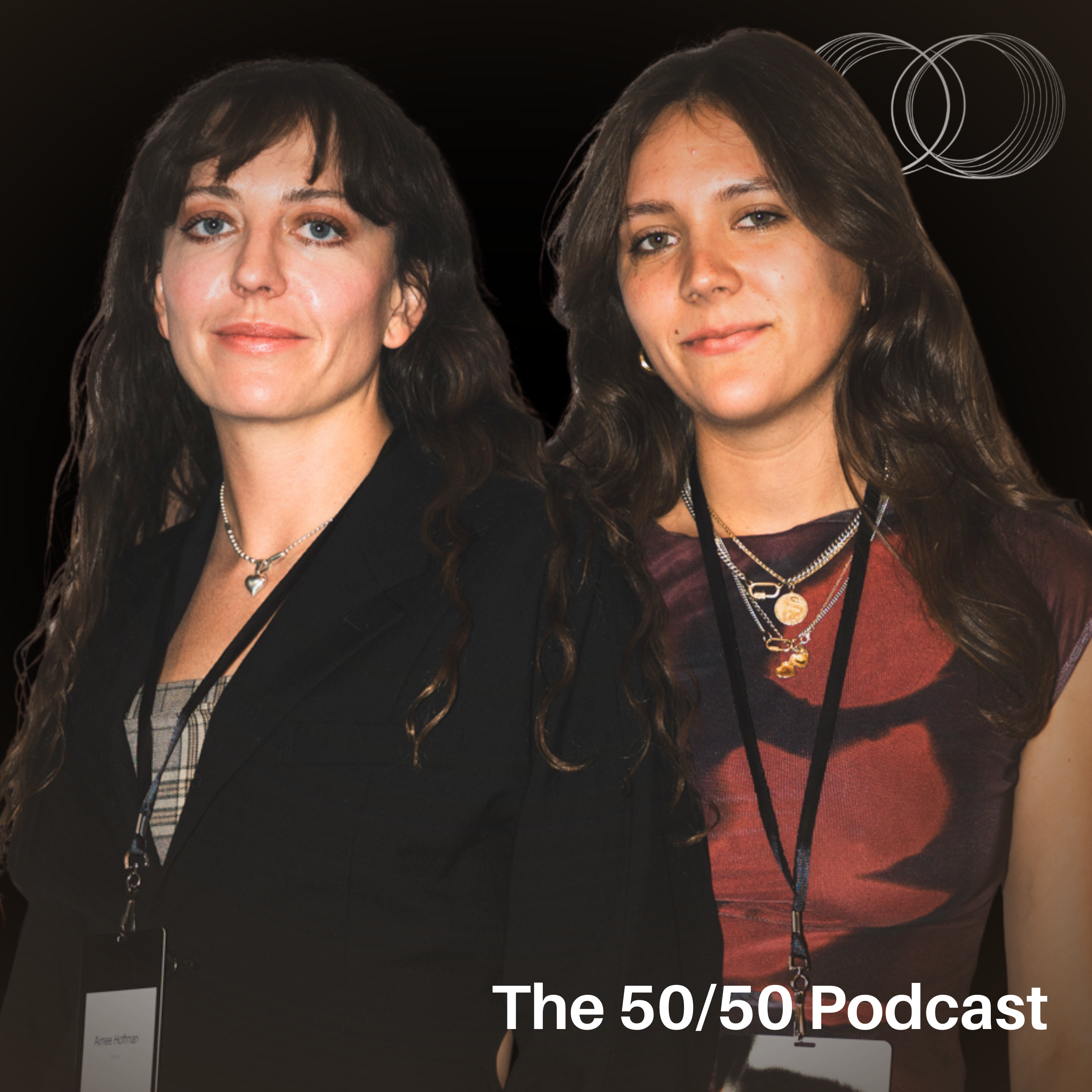
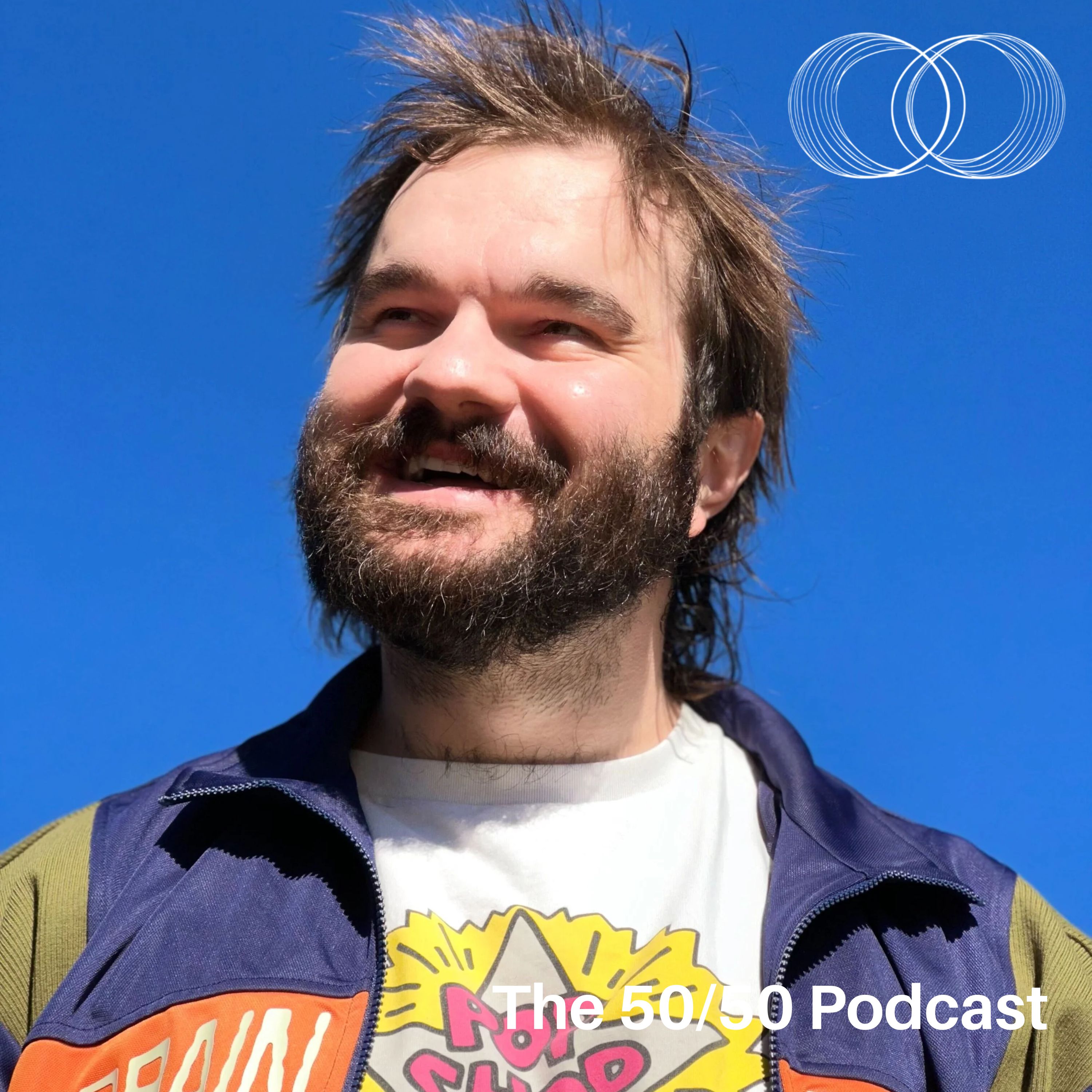
Episode Transcript
[00:00:00] Speaker A: We were living in that gray area. We were living in uncertainty. We were having faith in the process of, like, you know, the movie is constantly changing. You know, like, the movie is constantly. And we just, as the artists have to respond to what that change is. We have to, like. Our only responsibility is to, like, have the sensitivity to, you know, what the film is revealing itself and shaping itself to be and acting upon those impulses.
[00:00:27] Speaker B: Been swinging around dancing between upside downs and I don't know why I'm feeling this way Left yesterday at the broken down baggage claim where the old man's off and kneeling looking for the long lost ceiling.
[00:00:52] Speaker C: I'm Luke Steinfeld.
[00:00:53] Speaker D: And I'm Wyatt Sarkissian.
[00:00:55] Speaker C: We made the 5050 podcast to support
[00:00:56] Speaker D: you on your filmmaking 50% business, 50% creative.
[00:01:00] Speaker C: Every Tuesday, a new how to.
[00:01:02] Speaker D: This week, we talk with Nathan Schee.
We got to know Nathan through his 5050 selected film flavor of the month. But this episode spans much farther than just that short. Nathan has lived with the same six guys since early days in college. They've grown up together and blossomed as filmmakers and collaborators.
As the guys finally go their separate ways, Nathan pays homage to this unique roommate setup, allowing this episode to serve as an ode, this sense of collaboration and friendship.
[00:01:33] Speaker B: Enjoy.
[00:01:44] Speaker D: What I'll say about you, what I found is that there are a lot of versions of yourself as an artist, actor, writer, director, musician.
And I'm curious, like, what. What version are you bringing to the table today? How do you feel as an artist these days? Because we'll go into everything. Your upbringing, your sort of crafting, your artistic identity. But, like, what are you bringing us today?
[00:02:14] Speaker A: I don't know, like, a little bit of everything, I guess. It's. I think different shades come out at different points, but I don't know, I think they all kind of fuse together at different points. I mean, I think, like, that's. That's one thing that, like, as an actor and even, like, there's like, sub categories of each thing too. But, like, I just did this movie where I play, like a kind of comedic, like, degenerate kind of character. And, you know, was doing that for like four weeks on that. And, like, the producers, like, halfway through production were like, are you like, just like this, like, as a person? And I was like, I mean, like, part of me, like a shade of me, but, like, it's. That's what's necessary for this. Like, so I'm gonna be that. Like, I'm not gonna be, you know, like, that's. That's A part of me that feels appropriate for this. I don't know, character and whatnot, but I think that's how people are in general is like, no one's ever just like one dimensional. Like they're just this thing, I think, like they're 15 different things and those things are activated and triggered in different environments and situations. So I don't know, we'll see. I don't really know what I think that's.
[00:03:20] Speaker C: That's like a.
That's artists though, you know, like I think, and well rounded artists. But I feel like I say this all the time, but like output is output no matter what medium. Like if you're making music, if you're acting, if you're writing, if you're directing, if you're shooting.
[00:03:35] Speaker B: Yeah.
[00:03:35] Speaker C: Like if it's coming from you, like you are the through line, you know, like the artist behind it is the through line.
And I think there is such a real.
I connect with your work personally because I come from music and photography and so film for me was like the bridge of my two loves between music and photo.
And like you coming from music and with your film Flavor of the Month, which was at our comedy festival recently, you can feel that, you know, like with the music and I know it wasn't about a musician, but like, I think you use score in a very interesting way that makes your film stand out from other films in our peer group. Because I don't think many filmmakers our age have that relationship to music like you do, you know, So I think that's it. You feel that in your work, you know.
[00:04:32] Speaker A: Thanks, man. Yeah, no, I mean, I think like music, I have a very immense reverence for music and what it's done for me in my life and whatnot. And I think like the way that music is used for me, I think I generally like, try to be pretty light on score like throughout the stuff that I do.
And I'll always at least like for the short side of things, like I'll always hold like a song until the very end of a movie generally. And the reason for that is, I think like film is like the most powerful medium in the world. It's. It's so dope in the sense where, like, it puts you completely into an experience as an audience member. Like you are transported. Transported into like an entirely new sensory experience.
And it's the empathy machine. But I think there are limitations to film and I think where music transcends film is that film can put you in that experience and make you feel everything but Music can really effectively address a specific emotion that I think, like. And film is, like, a very emotional medium too. And, like, film can attack, like, can tackle that. But I think, like, the human experience in life is so complex. And I think sometimes in too much going on in film and, like, it telling you what to feel.
I think that's what I don't like when I see that in movies sometimes. And I think, like, sometimes, like, for example, like, worst person in the world.
My favorite scene from that movie is when Renata Renvist, she, like, leaves her partner's, like, comic book release gallery, fancy party gala thing, and she's, like, walking down from the house down to like, or the big, like, mansion down to the rest of civilization, and the sun is setting. And Yokimcher just, like, tracks with her as, like, I think, like, some. Some song is playing for, like, two minutes, and we're just, like, watching her for that entire period of time and listening to this music.
And, like, I, like, I was, like, crying my eyes out during that scene. I didn't know why, but, like, I felt so much there. And I think that, like, that's a powerful thing with music where it's like, when you pair film and music and, like, you allow the song to kind of be the driver. And the thing where it's like, you're allowing the audience to not feel like in that moment, they have to be thinking about, oh, the story and the character, what they're feeling arc and this and that. But it's just like now you're transporting your soul into the soul of the character and vice versa. And. And you're thinking about your own life rather than everything in the movie. I think that's the coolest thing. And like, music.
[00:07:09] Speaker D: Music allows you to personalize it in
[00:07:10] Speaker B: a lot of ways. Yeah.
[00:07:11] Speaker A: Like, it. It allows it to be, like, find the merge the idiosyncrasies of the movie with your own life. And I think that's the way I like to do it in my shorts at least is, like, at the end of the film, like, it's not saying, like, this is the ending. Like, this is like, you know, hitting it on the head of, like, this is the thing you should take away.
But I think a lot of times, like, life is way more complex than, like, this is the theme. This is the solution.
And so leaving my audience members with, like, a specific feeling that they can tie into their own life.
I don't know. I think music has a really powerful way of doing that.
[00:07:48] Speaker D: Totally. Your. Your way of suggesting a Sort of open endedness and. And self reflection is through putting a song at. At the end of something something or allowing you to just watch a character not say anything. But having a song paired with that is what I'm getting.
[00:08:05] Speaker C: You also get the power of music and score and so like the power and score. No, I think you're the. The first guest to take their shoes off.
[00:08:17] Speaker D: It's great.
[00:08:18] Speaker A: I just have. I have my burks.
[00:08:19] Speaker C: I think it's the lighting.
[00:08:21] Speaker A: I think the lighting just feels all intimate.
[00:08:23] Speaker D: The new lighting is really loud.
[00:08:24] Speaker C: It's changing the game. Relaxer's office, which I guess you still would take your shoes. Doctor's office.
[00:08:31] Speaker D: No, you.
[00:08:32] Speaker C: Oh, totally.
[00:08:33] Speaker D: Getting your feet exam.
[00:08:34] Speaker A: It's the first Wiki Feet 5050 podcast.
[00:08:37] Speaker C: That's true. So that's true.
But you.
[00:08:40] Speaker D: I think, dude, that would be a crazy sponsor.
[00:08:42] Speaker C: But you. Yeah, that be insane. You. You understand music in the way of like or to the degree that like understanding silence too, you know, of like not using score or not using music and being very intentional with when to use it before we keep going. I. I gotta. I gotta hear something. Are you. Are you down to play something? Yeah. Yeah. What do you.
[00:09:06] Speaker D: Let's do it.
[00:09:07] Speaker A: Do you wanna hear something like new? You wanna hear something old?
[00:09:09] Speaker B: What do you.
[00:09:10] Speaker C: I don't know.
[00:09:10] Speaker D: Feel free to put the mic down. I got you with the mic.
[00:09:12] Speaker A: Cool.
[00:09:13] Speaker C: What. What's the.
[00:09:18] Speaker D: What are you working on these days?
[00:09:20] Speaker A: I just did a song called.
Just put out a song called Fade Away.
Very inspired by. I've been living with the same six boys for the past six years and we're all going our separate ways fairly soon, actually like end of this week. So it's been like a very like nostalgic and sentimental and introspective time. So I wrote this for them.
[00:09:59] Speaker B: I'll be there for you Even when you don't even notice.
Cause I'll be there through all the times. Even if we fade out Way.
If we fade away, You can call me friend.
If I'm miles away. Just know this ain't nothing changed with my address.
Even if we fade away.
If we fade away.
You can cry on my shoulder like the times I did on your Always be your shelter.
Even if we fade away.
If we fade away.
I can be your hero.
Pick you up today if you let me.
But if you stumble, I won't let you fall. Even if we fade away.
If we fade away.
Cause I'll be there for you Even when you don't even notice.
Cause I'll be there through all the times Even if we fade away if we fade away when we fade away if we fade away.
Yeah.
[00:12:34] Speaker C: Come on, bro.
[00:12:36] Speaker D: Beautiful.
[00:12:36] Speaker C: Oh, my gosh.
[00:12:37] Speaker D: Wow.
[00:12:38] Speaker A: Thank you.
[00:12:38] Speaker D: Wow.
[00:12:39] Speaker A: Oh, my God.
[00:12:41] Speaker C: Come on.
Come on.
So do you sing for your roommates all the time? Is it like.
[00:12:48] Speaker A: No, no, it's. Oh, sometimes. Sometimes I'll force them. I'm like, listen to this thing that I. That I wrote that I threw.
[00:12:54] Speaker D: Do any of the other roommates play around with guitar? They sing.
[00:12:58] Speaker A: A lot of them are pretty musical. Yeah. I mean, Chris, like, makes his own music.
[00:13:05] Speaker C: Chris had a film.
[00:13:06] Speaker A: Yeah, Chris had a film. Jimmy Bowden, Shout Out Chris.
[00:13:09] Speaker B: Yeah, he's.
[00:13:09] Speaker A: He's great at guitar.
Makes his own music. See? Breezy beats.
And then Cole plays guitar, too. And he also plays piano.
Very instrumentally gifted. And then Jacob just got a guitar, and so he's learning. Also played at the festival, boys.
[00:13:24] Speaker D: Jacob can sing, too.
[00:13:25] Speaker C: I feel he could.
[00:13:26] Speaker B: He could do.
[00:13:27] Speaker A: He could do all sorts of things, man. He could do everything, man. That's. That's my boy. You got to get him on the podcast, dude.
He's been on the podcast.
[00:13:34] Speaker D: You should have him back. He was.
[00:13:35] Speaker C: We should.
[00:13:36] Speaker D: He was probably in, like, the 20s. Yeah, he was early.
[00:13:38] Speaker C: Yeah, he was.
[00:13:39] Speaker D: He.
[00:13:39] Speaker C: He was early in the community, too. He was like. Cuz. He was our first intro to all you guys.
[00:13:43] Speaker D: Yes.
[00:13:44] Speaker B: Oh, wow.
[00:13:44] Speaker C: Jacob was.
[00:13:45] Speaker D: Jacob Stodenmeyer.
[00:13:47] Speaker C: Nathan. But Jacob was a gayway, for sure.
[00:13:49] Speaker A: Yeah.
[00:13:51] Speaker C: I'm sorry. Nishanth from lmu, too.
[00:13:56] Speaker B: Yeah.
[00:13:56] Speaker A: Yeah.
[00:13:57] Speaker D: You guys got quite the squad. Are you went to lmu?
[00:14:00] Speaker A: Yeah.
[00:14:00] Speaker D: Okay.
[00:14:01] Speaker A: Yeah, we're all went together.
[00:14:03] Speaker D: And Nishant, were you living together in school?
[00:14:06] Speaker A: Yeah, I mean, I've been living with Chris since, like, sophomore year, 2019. And then the rest of the boys, like Jacob and the rest of the gang, we all lived together, sure. In, like, 2020, so. It's been a minute, man.
[00:14:18] Speaker D: It's cool. Getting to know, like, these pockets of people, you know?
[00:14:21] Speaker A: Yeah. Yeah.
[00:14:22] Speaker D: I feel like the really, really talented people always, like, the pockets. Yeah. You find your pocket, you flock towards other very talented people, you know, I think that's.
[00:14:32] Speaker A: I think that's part of it. But I mean, my theory on that is, I think, like, talent kind of attracts each other, but I think the bigger thing is just, like, the love of the game. You know what I mean? And, like, with these guys, because there's a lot of talented people in film school, but I think we kind of gravitated to each other because I Think one, we had a very similar passion for it.
And just, like, we're movie nerds and fans before, like, filmmakers or anything like that.
[00:14:59] Speaker D: Fan first.
[00:15:00] Speaker A: Yeah.
[00:15:00] Speaker B: And.
[00:15:01] Speaker A: And also, like, I think we had the same mentality. Like, I feel like film schools, like, kind of has this, like, you know, and from the first day of film school, I realized this. But, like, you, you know, go to class, you go to orientation, and, like, the first question that's asked is like, ok, let's go in a circle. Say your name, what you want to do in film and what your favorite movie is. And everyone's, like, just trying to come up with, like, the most obscure movie to, like, Big Dick the other person.
With these guys, it was like kind of just like, oh, yeah. Like, I like, you know, I like Boogie Nights. I like Fast Five. I like Moneyball. Like, I like movies that, like, there wasn't that need to be. Like, look at how much of a filmmaker I am and, like, how much of, like, auteur I am. But it was just, like, a. Just a simple love for it. And I was like, oh, yeah, I feel like we're gonna get along.
So. Yeah, that's kind of what, like, really brought us together. And then the, like, incubator, like, in all living together and being together and, like, working on stuff together, like, I think that kind of just like, sharpened the knife all around, and we just learned to love movies more and get better. And, like, I learned from, like, Jacob and Chris, who have played at the festival.
Like, I learned from them so much. And, like, I feel like, you know, we'll kind of steal technique and things from each other and, you know, share scripts and. And edits and drafts and this and that.
And so I think, like, that talent was developed together in the sense where it's like, we kind of had our own team. And we're like, how do we build this together and move forward together? Not even trying to. Like, let's just, like, it's like a race to the top, but let's just, like, survive in this industry and, like, keep that. That flame within alive.
[00:16:46] Speaker D: Yeah.
[00:16:48] Speaker A: And we're still here doing it, I guess, and there's a long road to go.
[00:16:51] Speaker C: Were you guys pushing forward on parallel paths or you were all on set together? Like, you were all crewing for each other or acting in projects or was it very much just, like, we're all doing our own thing, but we come home at the end of the day, we're together.
[00:17:05] Speaker A: No, we're very incestuous in the way that we Work. Especially, like, earlier in the day. I mean, we moved in together during COVID and so during that time, like, I mean, obviously you can't go out and get actors and go out and get crew and whatnot. So. We were each other's actors. We were each other's crew. We're shooting a ton of shit just at the house, like, just experimenting.
[00:17:26] Speaker C: Where was this house?
[00:17:28] Speaker A: There's. I mean, all sorts of them. We lived in Westchester, like, by this golf course.
That was like the first house we lived in. It was like a little like three bedroom that fit the six of us.
And so that was just. That was the chaos house.
[00:17:41] Speaker C: And then we said one room, bunk beds. Everyone's sleeping in there.
[00:17:44] Speaker A: Just tandem.
[00:17:45] Speaker D: Yeah, three rooms. But you're all six are in one room, right?
[00:17:48] Speaker A: Yeah, pretty much.
[00:17:49] Speaker B: We.
[00:17:49] Speaker D: Yeah, we were sort of music studios.
[00:17:51] Speaker A: Yeah, we're very confined. That. That room was. That was like. That was like, actually like a trap house. It was pretty hilarious.
And that was like deep Covid. And then as we're coming out of COVID we moved to Abbot Kenny in Venice.
So, yeah, we're living.
[00:18:03] Speaker C: Yeah, we're on the west side.
[00:18:04] Speaker A: We're on the west side.
[00:18:05] Speaker C: Yeah.
[00:18:05] Speaker A: I mean, we were on the west side, like, up until, like, this house that we're in now.
[00:18:09] Speaker B: No way.
[00:18:10] Speaker A: And so we were out there, which was really fun. And then we went back to Westchester when we went back to school on Kentwood Avenue. That was. That was a good time. And then we moved from there to now, like, the base of Griffith Observatory, Franklin Village.
[00:18:27] Speaker D: Wow.
[00:18:27] Speaker A: So, yeah, we've been all over.
Yeah, yeah, yeah. Good times.
[00:18:32] Speaker C: How was Abbot Kinney? I'm like, Venice is always.
Because we're in, like, Brown and Santa Monica here. Yeah, Abbot Kinney seems like an awesome spot, but also very, like, certain crowd is over there.
[00:18:45] Speaker D: Parking is probably awful.
[00:18:46] Speaker A: Yeah, yeah. Well, we were there during COVID so, like, no one was going anywhere. We were there at a very interesting time. And also, like, you know, unhousedness. Is that the. Politically.
[00:18:58] Speaker C: Yeah, definitely.
[00:18:59] Speaker A: Unhousedness was on the rise during then because obviously, like, no one was able to work. And, like, landlords were like, evicting people and whatnot. So, like, a lot of people were living on the streets, especially during that time, like, in Venice and whatnot. And so it was kind of like, felt like this apocalyptic kind of environment.
And we were all, like, crammed together in this, like, once again, a very small, like, the top floor of this very small townhouse.
[00:19:26] Speaker C: Sounds awesome.
[00:19:27] Speaker A: And it was pretty Epic. And, like, we would, you know, just kind of roam and walk the streets and whatnot. But, like, we're not really going anywhere because it's also still, like, deep covered. So we didn't get the real, like, Venice experience. We got like a, like a Diet Coke version of it.
[00:19:40] Speaker D: You guys should do some sort of documentary of, like, all the houses you lived. I just, I love the idea of, like, six guys, all the same guys living in like, four or five different places. And you must have. You must have.
[00:19:53] Speaker A: So, yeah, cinematography.
[00:19:54] Speaker D: Much footage of it, right?
[00:19:56] Speaker A: Yeah. I mean, I think the most interesting documentary, like, out of that would be, like, interviewing our landlords and like, the shit that they have to deal with, God bless their souls. But yeah, maybe, I don't know, a lot of archival footage.
[00:20:08] Speaker C: When in your time, like, is acting, is there a priority for you, role wise? And if there is one, when did that or where did that come from? Was there a moment where you're like, okay, I need to be an actor or I need to be what? I guess the first question to that, though is, like, when you describe yourself or define yourself, like, is there I'm a director or I'm a writer or I'm an actor. Like, is there one? And then it's like, okay, but I'm also all these other things.
[00:20:35] Speaker A: Yeah, well, I was always a filmmaker first. Like, that was like, kind of the thing that got me into all this. I mean, I. You know, in sixth grade, like, I picked up one of those flip video cameras and like, shooting, like, YouTube videos with my friends.
[00:20:47] Speaker C: And what, like prank stuff or.
[00:20:49] Speaker A: No, like, like sketches, you know, like, I loved watching, like, Ryan Higa and Kevin Jumba and, like, Wong Fu Productions. Smosh. Like Freddy W. You know what I mean? Like, yeah, the OGs. And like, that was like my film school. Like, okay, cool. How do I, like, create stuff like that and, like, you know, and in that process, like, I was the writer of it. I was a director of it. I was a cinematographer of it. I would, like, act in it because, like, sometimes, because, like, not all of your friends are gonna be around, like, being it all the time.
And then eventually, like, started transitioning more and like, you know, as in high school, I discovered, like, discovered movies and, like, started having a love for that and studying that more and then realizing that I love to write indirect and then got to go to film school where, you know, that was really, like, my concentration was like, writing, directing, writing, directing, just directing as much shit as I could.
[00:21:43] Speaker C: And like, in school, out of school, Too.
[00:21:45] Speaker A: Both, yeah.
[00:21:46] Speaker C: So short films, Music videos?
[00:21:48] Speaker A: Well, yeah. I mean, in film school, like, I mean, you have your film class assignments that you can do, but, you know, like, a lot of those, I feel like, you know, there's tons of restrictions on those and what you can and can't do. And, like, I felt like I had a lot of things that I wanted to try outside of the curriculum. And so, like, I'd always, like, challenge myself to, like, make a short film outside of class, like, once a semester.
[00:22:08] Speaker C: I love that.
[00:22:09] Speaker A: So I was, like, just grinding, like, grinding short films and, like, also trying to shoot, like, music videos for, like, you know, soundcloud rappers and random, like, indie artists and whatnot.
And then acting, like, I kind of fell into, like, by accident. I think I'd always, like, deep down, like, been infatuated by the idea of acting, but I, like, didn't think it was really a possibility. Like, there's not really that many, you know, like, throughout my life, actors that look like myself and whatnot. And so I just like, never really considered it. And also, like, I already, like, you know, give my parents a heart attack by wanting to be a filmmaker, I think, being an actor, too.
[00:22:52] Speaker B: Right.
[00:22:53] Speaker A: And then it kind of accidentally happened because, like, I would write roles. I mean, film is autobiographical, and I'd write a lot of roles for, like, East Asian characters, and then I would, like, try to cast for them in la. And I just, like, couldn't find, like,
[00:23:07] Speaker D: there's, like, not I could do this.
[00:23:08] Speaker A: Yeah, there's, like, not many people who, like, fit the description of the roles that, like, I put out. And then, like, of the people that did, like, I was like, you know, I feel like they're not doing it the way that I want it. And it's just easier if I, like, just did it myself.
It was really, like, a pragmatic thing. Like, that's what it was. Like, the first film I ever acted in was this film called Goodnight America that it did, which, like, accidentally went viral during COVID But, like, that was because I could not.
[00:23:33] Speaker C: I mean, accidentally, like, it just happened. Like, you posted, and I was like, whoa.
[00:23:36] Speaker A: This blow, it had, like, two actors from that show, Cobra Kai in it.
And this was like, when, you know, Cooper Ross. Yeah, yeah, Cooper's a homie. Shout out. Cooper. I think I met them through Cooper.
[00:23:48] Speaker C: Yeah.
[00:23:49] Speaker A: So this was Shola Maradona and Jacob Bertrand, and they.
Yeah, they graciously did my short film Goodnight America when I was, like, 19 years old. Like, I just graduated. Like, I just finished Freshman year, and it was like the summer before sophomore year. And I was like, yeah, in your
[00:24:04] Speaker D: circles or how did you end up?
[00:24:06] Speaker A: I met through Cooper.
[00:24:07] Speaker D: Okay.
[00:24:07] Speaker A: At I think it was like his senior high school graduation party.
[00:24:11] Speaker C: Dude, I knew.
[00:24:12] Speaker A: Yeah.
[00:24:13] Speaker C: Like Cooper and I See. Yeah. Cooper and I had a directing class together and we'd walk back because we live close to one another, basically neighbors. It was like a long walk.
But he would scooter and then we like befriend each other in class. He'd like walk with his scooter. We'd walk back home together after class. It was like a night class too.
[00:24:31] Speaker B: Wow.
[00:24:31] Speaker C: One of those, like film classes that end at like 10pm we're in downtown LA, so I was like, I'm.
[00:24:35] Speaker A: You're in depth.
Where are you? In downtown la.
[00:24:38] Speaker C: That's usc.
[00:24:39] Speaker A: Oh, oh, you mean the. Okay. Yeah, I thought I meant you were in like an off site campus, like in this part of like downtown.
[00:24:46] Speaker C: I mean, they.
They have little, you know.
[00:24:49] Speaker A: Yeah.
[00:24:50] Speaker C: Classes right off campus. But we're walking back and like, whatever. We developed a nice friendship. But he'd always mention there was like a span of like a few months where he's like, yeah, another roommate's leaving. Another roommate's leaving. Like, what are you talking about, bro? It's like they get booked.
He's like, if you know, roommates, like, please. Because these kids would drop out of school, huh? All of his room, they were all getting. Yes, they would drop out. And I was like, I hadn't heard of very few at like a lucky
[00:25:19] Speaker D: house to be in.
[00:25:20] Speaker C: It's crazy though, because I. I really had up until meeting Cooper, I hadn't really met kids that were dropping out like that.
[00:25:26] Speaker D: Just going full on acting.
[00:25:28] Speaker C: Yeah, yeah, yeah, yeah. But it was, yeah. Just a little side note, but continue.
[00:25:32] Speaker A: Damn.
[00:25:33] Speaker C: So you were 19?
This short happens.
[00:25:36] Speaker B: Yeah.
[00:25:36] Speaker A: Oh, yes, this short. But yeah, I acted in it because, like, I just like, it was just easier and like, I didn't have money to like hire another actor to like come down to San Diego to do it. So I like, I just was like, okay, I'll just do it. And that was my first experience ever, like, being on camera and like acting in my own thing. And then when Covid hit, how was that?
[00:25:54] Speaker C: Be on camera for the first time?
[00:25:56] Speaker A: It was, I think for me, like, I was just like seeing myself as like, not like, oh, wow, I'm an actor. I was like, okay. Just like, I was more of the director and just the director stepping in every now and then. To like, just fulfill the job. Like, that's kind of the way it sounds. Like it wasn't really real acting. Like, I was just like it. Like, just get it done so that, like, there's a body in there to do.
[00:26:18] Speaker D: I totally understand that. And you, like, don't have time to even get in your head.
[00:26:22] Speaker A: Yeah, in the.
[00:26:23] Speaker D: You know, like, I feel like you can if you. If you're just acting. Yeah, you can like get in your head a lot with character, all that. But if you're doing both, it's like, oh, I don't even have time to,
[00:26:34] Speaker C: like, there's a positive because you're not really. It's like, this is my objective. It's a very niche thing.
[00:26:38] Speaker D: But there is. There is a sort of positive. I'm curious, like, how have you. How do you feel like you've grown as an actor sort of. I assume you've like, acted in other people's stuff now and like, you know, there's been a sort of arc to it.
[00:26:49] Speaker A: Yeah. Well, I mean, then I think like from there then doing, you know, and when Covid hit, like, Jacob and I did this, we actually did a low budget feature film called Chasing Sundance, which is like a $2,000 road movie where we travel 2,000 miles through six states and it's like improv the entire way through. Like, we kind of outlined it, but we just improv the whole thing. And that was like the real introduction to acting where, like, you know, obviously it was Covid, so we couldn't hire any actors. So we were our own actors and our own writers and our own directors.
[00:27:21] Speaker C: Were you crew too?
[00:27:23] Speaker A: Chris and Owen.
Chris Pickering, Owen Markham were like the two DPs and sound mixers. And we're all doing everything, like the four of.
And that was like the real acting school where I was like, this is fucking dope.
[00:27:35] Speaker C: Like, you know, I would love to. To lean into this because just to hear. We've had. We talked to a bunch of filmmakers.
[00:27:43] Speaker A: Yes.
[00:27:43] Speaker C: And it's always interesting to hear about that first feature. And we've heard horror stories about going into your first feature thinking improv, like, movie road trip. We'll be fine. Yeah.
So how.
How was that in the moment and then in post?
[00:28:03] Speaker A: Well, we like it. This movie was Lightning in a bottle because, like, we did not give a shit if it was gonna be good or not.
[00:28:10] Speaker C: Can you take us through the whole. The genesis of it then?
[00:28:13] Speaker A: Yeah.
Covid hit.
I had projects that were ready to go. Jacob had projects that were ready to go. And got canned. And I have projects. I got canned. And we're both like. I was also just kind of, like, spiraling mentally and like, just really, you know, going down a place where I was just, like, very nihilistic about everything. And, like, just in, like, severely depressed.
And I think Jake was feeling similar sentiments and we would like. Do you remember Netflix party? Did you ever do Netflix party? We do, like, Netflix party all the time and, like, watch movies together just to, like, feel something.
And we were always talking, like, let's figure out a way to, like, make shit. Like, we're trying to, like, make films over zoom and whatnot, which is also, like, really funny. Like, we shot a couple, like, short projects, like, via zoom and, like, via, like, FaceTime and stuff.
And we're like, dude, what if we, like, did a feature? And one night we watched the Dirties, that Matt Johnson film. Then we watched Beach Bum, the Harmony Corrine film. And like, we're just kind of on this bender. We're like, dude, like, what if we just went and said fuck it and did this feature film and we just, like, outline it and we just kind of, like, go in private? We just figured out. And, like, that was, like, the genesis of it.
And we, like, set a date of, like, okay, this was, I think, in, like, April 2020. And we set a date for, like, June 2020, where we would just, like, us four roommates. And we're all, like, living in our own hometowns, too. Like, we all went home. I was. Chris and I were in San Diego. Owen was in Boston, Jacob was in Phoenix. And we all, like, converged in Phoenix.
And the month leading up to that, Jake and I were, like, kind of outlining the whole movie of, like, okay, this is what the movie is, and this is what generally kind of needs to happen. Like, here are the three acts here, the different sequences, yada, yada.
And then we met up in Phoenix. We were like, okay, like, let's just shoot it. Like, this is your character. This is my character. Like, let's just figure it out.
And, like, we both kind of acted and been in things, but not super.
And, like, I think we all went into it being, like, if this is good, like, awesome, you know, then we made, like, a good movie. And if it's like, a piece of shit, like, we at least had the opportunity to create in a time where, like, we were very depressed and, like, creatively, you know, uninspired and whatnot. So it's like a win, win either way. And it's like a cool Experience. And so we just kind of like, set out and went on the road. And, like, you know, we had an idea of, like, okay, this scene needs to happen here, and this scene needs to happen here. But, like, you know, like, as we're driving, like, we would also be kind of writing the movie of, like, I feel like this makes sense to do. And this, you know, like, this doesn't work. This doesn't work. But we could do this. And we're just kind of, like, bickering the entire time. I feel bad for Chris and Owen because we're bickering the whole time about, like, what needs to happen in the movie. But in doing that, like, the best idea would always come out of that. Come out of those conversations and debates and whatnot.
And then, like, you know, were they
[00:31:08] Speaker C: just rolling the whole time?
[00:31:10] Speaker A: No, no. We would, like, be like, oh, look, like there's, like, a herd of, like, 200 sheep just in the grass over there. Let's pull over. Let's figure out a scene to shoot for this. Oh, it would make sense if we had this argument scene where, like, Jacob takes them off.
Off the map and, you know, something here and then we'll, like, hop out and just, like, go shoot it and just figure it out. And we would shoot so much, and I think we had, like, three. Three and a half hours of movie.
And by the end of it, like, we're like. I feel like we have something pretty good.
[00:31:38] Speaker C: How long was the shoot? Like, how many days?
[00:31:41] Speaker A: 12 days.
[00:31:41] Speaker C: 12 days? Yeah.
[00:31:43] Speaker A: Yeah. So we were just rolling.
[00:31:44] Speaker C: Would you go home? Like, you guys were on the road? Would you go to, like, a hotel and, like, all sit down and watch footage and break it down?
[00:31:52] Speaker A: No, we wouldn't. I mean, sometimes we'd watch, like, playback and be like, how does this feel? Like, what's the next step for it? But generally, like, we'd have a pretty good idea of what we shot. And then at night, like, whether we're at, like, a campsite or a motel or whatnot, like, Jake and I would spend several hours, like, into the dead of the night, like, talking about, okay, what do we shoot? What needs to happen from there?
[00:32:14] Speaker C: So.
[00:32:15] Speaker A: And just kind of like.
[00:32:16] Speaker D: So on the same page during this, too, like, you're.
[00:32:19] Speaker A: We were on the same. It works.
[00:32:21] Speaker D: Feels like you're so connected and everything's about the movie.
[00:32:24] Speaker A: Yeah.
[00:32:24] Speaker D: In between shots, you're just, like, talking about what's the next step.
[00:32:27] Speaker A: Yes. And I think it worked really well because we're on the same page, but we're Very different people have very different sensibilities and very different filmmakers. And, like, I think that was, like, that was one of the most fun projects I've ever done in my life. And I think it's like, I would have an idea, and then Jake would have an idea, and we'd have to, like, debate it out of, like, what makes the most sense. And I think what worked with the collaborative process there was that there was no ego whatsoever. Like, we're both on the same page. We want the best possible movie.
[00:32:53] Speaker C: You don't have time.
[00:32:53] Speaker A: Doesn't matter if I'm right or you're right. Like, what is the best idea? And we'd have to challenge each other's idea totally to get to, like, it's like you're panning for gold, and you shake it one way and you shake it the other, and all the shit comes out until you're left with the good stuff.
[00:33:05] Speaker D: Yeah.
[00:33:06] Speaker A: And that's exactly what that creative process was like. And in doing that, like, you keep shaking the rocks around, and you're left with the best parts of it.
And I think we both pushed each other to be better filmmakers from that process.
[00:33:18] Speaker C: And how did that. Like, you're acting for 12 days.
[00:33:23] Speaker A: Yeah.
[00:33:24] Speaker C: Did you feel. Or did you go into it, like, okay, I'm gonna think about acting in this way for these 12 days? Or, like, over these 12 days, you're.
You're evolving as an actor. Or you weren't even. You're just like, I. I'm just. We're doing the scene. I'm in this. I know what I have to. You know, there's an argument. So I'm just gonna, like, be present with Jacob and.
[00:33:43] Speaker A: Yeah.
[00:33:44] Speaker C: Immerse myself in this and see what happens.
[00:33:46] Speaker A: We just hit a flow state throughout the whole thing. Honestly, like, there wasn't really any thought behind, like, oh, my God. Okay, let me get into character for this. And what. Because we don't even know what, like, is gonna happen in the scene. Like, you have to be present because
[00:33:59] Speaker C: it's kind of the perfect acting exercise.
[00:34:01] Speaker D: It is.
[00:34:01] Speaker A: It's equivalent of, like, okay, you have the camera here. We're sitting down. I don't know what I'm gonna talk to you guys about. Like, let's just see what happens. And, like, if you do something that, you know, triggers an impulse in me, like, I'll do that. And, like, there's nothing to, like, hold sacred to. And because, like, the crew is, like, our two other best friends safe, we feel so comfortable. Like, we're just responding very truthfully throughout the whole thing. So there wasn't much of, like, a jumping in and out of being an act actor, of being a director, of
[00:34:23] Speaker D: being a business, like an open landscape to just, like, exercise your creative sandbox without any.
[00:34:28] Speaker A: Oh, fully, fully. And that was, like, the thing that, like, influenced, like, everything that I do, like, you know, has.
Has Chasing Sundance to. To think at its very core. Because, like, now, like, when I went on to make Adam Song, Nao Check up and Flavor of the Month, like, that process is so seamless of, like, directing and acting at the same time. Like, people like it.
Like, you know, it looks. People will always be like, how? Like, how do you do that? Like, that. That looks so insane to juggle all these things. But, like, in having the freedom to do that for 12 days and chasing Sundance, doing both at the same time, like, you're. And that was with no script. You know what I mean? Like, you're also writing it at the same time. I'm like, if I just have to act and direct and I don't have to write at the same time, like, that's easier than what I did for Chasing Sundance and whatnot.
[00:35:14] Speaker D: We'll be right back.
[00:35:21] Speaker C: I want to play, like, a scary song from, like, a horror movie before this, but all the copyright stuff, so I can't but imagine there's, like, a scary song playing right now, and it's like, oh, the 5050 horror festival is coming up. You need to submit your short film soon by August 7th. August 7th is the deadline. You have two months. Submit your short film. You have two B. And then after that, there's another deadline.
Read it here first. First, sub it down. Sub it down. If you down.
No, but for real, we have our horror festival coming up in October.
October 18th is the actual day. Get your short in by August 7th. If you want to be a part of it. We look forward to viewing your submission on film freeway 50 slash, 50 horror. Those are the numbers. Five zero slash, five zero. Horror.
Were there, like, key pieces of knowledge or, like, lessons that you took from Chasing Sundance into your acting and directing on future projects?
Like, because unless it's just like. So I'm sure you don't. You don't, like, speak this in words. It's probably just, like, in your head of, like, okay, this is the feeling, and I have to do this, and you're not thinking about actually putting that in a sentence. But, like, if you were to. You know what. What are some of those, like, tips, basically?
[00:36:58] Speaker A: Yeah. Trust that the movie will reveal itself to you.
I think that was, like, the biggest lesson. Like, I think before Chasing Sundance, I was very, like, you know, I read all the screenwriting books, you know, the Save the Cat, the story by Robert McKee, the, you know, Hero's Journey, and all that. And, like, it was very, like. I was very, like, structured and, like, outlined, and this needs to happen, and this setup needs to happen here, and this payoff needs happen here and this and that.
And I felt like a lot of my work was very stale and it would fall flat, and I didn't know why.
And Chasing Sundance was the first time I felt like something I made was very alive.
And I was always surprised as an audience member, and it felt like there was like, a living, breathing pulse within the film. And that was because, like, at no point were we trying to find the certainty of each situation.
[00:37:46] Speaker D: You were like, well, that. You were never like, this thing needs to happen.
[00:37:49] Speaker A: Yeah, we're living in that. We were living in that gray area. We were living in uncertainty. We were having faith in the process of, like, you know, the movie is constantly changing. You know, like, the movie is constantly.
And we just, as the artists have to respond to what that change is. We have to, like, the. Our only responsibility is to, like, have the sensitivity to, you know, what the film is revealing itself and shaping itself to be and acting upon those impulses and, like, kind of letting it out. Like, I used to always, like, be really confused when, like, who's it, like, Michelangelo saying, like, when he's, like, you know, chipping away at the marble, like, when he's, like, sculpting, he's like, you know, I'm not, like, I'm not trying to sculpt anything. I'm just releasing the sculpture from the marble.
[00:38:34] Speaker C: It's in there.
[00:38:36] Speaker A: You're such a tool. Like, what are you. What are you saying? What does that even mean? And then, like, as I've gotten older, I realize I'm like, oh, yeah, like, that makes sense.
[00:38:44] Speaker D: It's a lot of trust, you know, trusting that the soul of the movie will.
[00:38:48] Speaker A: And also spiritual thing, man.
[00:38:50] Speaker D: I would assume it would have been much harder to do it without Jacob, without a partner that you can also, like, like, let's together.
Like, it's easier to, like, make a bet together than make a bet yourself. Absolutely.
[00:39:02] Speaker C: Especially at this stage.
[00:39:03] Speaker D: Yeah.
[00:39:03] Speaker A: Yeah.
[00:39:04] Speaker C: Like, you need.
[00:39:04] Speaker D: Absolutely.
[00:39:05] Speaker A: That's. I mean, that's my best friend, the whole wide world, man. And I think, like, from that process, too. And even after, like, we're like, Just creatively married in a way.
[00:39:13] Speaker C: Were those characters. Was it just Jacob and Nathan? Like, was it.
[00:39:16] Speaker A: They were named Jacob and Nathan so that we wouldn't have to forget, like, and remember our character because it was so fluid.
[00:39:25] Speaker D: It's a very unique setup.
[00:39:26] Speaker A: Yeah. And not, like, there's no, like, difference between, like, action or between, like, cut and action.
[00:39:31] Speaker C: You know what I mean?
[00:39:31] Speaker A: Like, it's. Sometimes it's like, Chris and owner. Like, should we be rolling right now? Like, are you guys in care. Are you guys in a scene right now?
[00:39:37] Speaker C: Would you guys, like, were the characters you like, what? It was you and Jacob, or was it like, okay, my character Nathan has this one goal, and, like, I'm gonna stick to that for this. Like, there was some character situation.
[00:39:53] Speaker A: There's definitely character built into it. Like, they're, like, very exaggerated versions of us. Like, it's like, early 2000s character.
Can we.
[00:40:00] Speaker D: Can we talk about, like, what the actual plot of the movie is? Like, if we want to just do a little, like.
[00:40:05] Speaker A: Yeah.
[00:40:05] Speaker D: Log line of what actually happens? Why?
[00:40:07] Speaker C: Because this is out. It's done now.
[00:40:09] Speaker A: Yeah, yeah, we finished it and we were like, this is better than we thought it would be. Like, it was actually pretty good. And then.
[00:40:15] Speaker C: When did you finish it?
[00:40:17] Speaker A: Shot it in June 2020. Did post on it for, like, a year, and then finished it in May 2021. And then premiered it for an audience in.
Let's see. I think it was around here, actually, the Lemley Santa Monica.
But I think it premiered at, like, August 2021 or September 2021. And then it released Freestyle Digital Media picked it up and released it on, like, Tubi. Amazon Prime.
[00:40:43] Speaker C: That's a quick turnaround.
[00:40:44] Speaker D: That is a quick turnaround.
[00:40:46] Speaker A: So, yeah, we.
[00:40:46] Speaker D: Especially for a three and a half hour of improv. Improv.
[00:40:49] Speaker A: Well, we had to cut it down. It was three and a half hours. No one wants to Watch us for 3 1/2 hours. So we cut it down from, like, three and a half hours of scenes, like, down to three or Megalopolis. It was. I think the final run time's like 94 minutes or something like that. Perfect.
[00:41:01] Speaker C: That's that example of the.
You know, the Michelangelo, like, the marble at the statue. Like, it's in there. It's got powers of it. You just.
[00:41:09] Speaker A: Yeah, you just kill. And then it's also.
[00:41:11] Speaker C: Did you guys edit together?
[00:41:13] Speaker A: Yeah, yeah. And that was also, like. It was during COVID so we had nothing else to do. So we're just sitting at the computer, like, so at our first house, like at like that house by the golf course. Like, we were just like, Jacob would be in one room on his computer, I would be on another and we'd be cutting scenes, like different scenes and sending them together. And then like we would sit together and just argue about what to cut and what to keep.
[00:41:32] Speaker D: And it's always good to have an argue, buddy.
[00:41:35] Speaker A: It was. That's what made the movie better. Like, I cannot deal with someone who's just like. If I'm like, yeah. I'm like, here's an idea. And you're like, oh, yeah, that's a great idea. I'm like, fuck you. Like, it's not, it wasn't a good idea. It's not a good idea.
[00:41:46] Speaker D: The best idea comes from you guys arguing for five minutes.
[00:41:50] Speaker A: Yes.
[00:41:50] Speaker C: And then finding it.
[00:41:52] Speaker D: That idea that after five minutes was neither of your ideas.
[00:41:55] Speaker A: Yeah. And I felt like I could be more creative in doing that because, like, if I say an idea and you're always going to say that's a good idea, I'm going to have to edit myself.
[00:42:03] Speaker C: Yeah.
[00:42:03] Speaker A: But if you're going to tell me if an idea is stupid, I feel freed up to be throw the craziest at you. And then it's your job as my collaborator to be like, you're an idiot. That was.
[00:42:14] Speaker C: It has to be a two way street though. And there can't be the ego involved.
[00:42:18] Speaker D: Yeah. You have to listen and like Val, you have to value the other person's idea as much as yours genuinely.
[00:42:24] Speaker A: Well, that's, that's also my boy. Like, that's like an easy thing.
[00:42:27] Speaker C: But no, it's like, it's not though. It's, it's really not.
[00:42:29] Speaker D: There's a lot of. I mean, you were in film school. You were in writers rooms.
[00:42:33] Speaker C: Even if, even if it's a close friend, man. It's not. And I know this from experience. Like, it's. I wish it was.
It's not. It's a rare thing.
[00:42:43] Speaker A: I got lucky then.
[00:42:43] Speaker C: I got really, like, that's the, the Arthur and Andrew thing too. And what we have, like, it's, it's a, it's a. We've known each other since kindergarten, like since we were four years old, five years old. We've been making stuff since then. Like, it's epic. It's the, it's a, it's a real, it's a rare thing, you know, and it's. No matter if you're friends or not, it's like, like we said, if you're Having a conversation about an idea, and you're like, that's fucking dog shit.
[00:43:12] Speaker B: Yeah.
[00:43:12] Speaker C: And I'm like, oh, my God.
You know? And you're like, what about this? And I'm like, that's terrible, too. But, like, I'm only gonna say that because you hurt my feelings. And all of a sudden, it's just like, nothing good is gonna come from that, you know? Right. Yeah.
[00:43:25] Speaker A: We had a super. Just set that aside. Because also, like, the moment ego comes into it, there's, like. There's no trust in the creative, like, synergy. You know what I mean? Like, every time Jacob was like, that is a bad fucking idea.
Like, I never. I could never take it personally. Like, I just had to be like, okay, we got the same goal. We got the same goal. I think we just have to say that. I think it was that phrase where it's like, yo, same team.
[00:43:49] Speaker C: Did you sit down at the beginning? Or. They're just hiccups throughout, and you're like, we're on the same team.
[00:43:54] Speaker A: I think. I mean, from the beginning or, you know, even the. The writing process of it, like, we were like.
I don't know. Actually, we didn't really encounter it that much, now that I think about it. Like, an issue of, like, ego shit. Yeah. Like, every now and then, you know, maybe, like, the slightest tinge, and then, like, we'd recognize, and we'd be like, we're about to fuck up our own movie if we let this get in the way. And it's also, like, there's not, like, a huge crew there where, like, your ego feels like you have to, like, impress and be the leader and be the director. Like, it's. Chris and Ellen are our boys. Like, they're the crew. You know what I mean? Like, they see us bicker and all the time. So it was, like, truly this creative sandbox where it's like, we could be as authentic and true to the process as possible. Yeah, that was a magical experience. Now that I really, like, think about it again. I haven't talked about that movie in a while.
[00:44:38] Speaker C: Was post insane.
[00:44:39] Speaker A: Yeah.
Yeah.
[00:44:42] Speaker C: And so when did you know it was done?
[00:44:45] Speaker A: When we felt like there's nothing more to cut.
Yeah, we were just slashing and burning that.
[00:44:50] Speaker C: Did you ever take five months away from it after just seeing it a million times? You're like, I cannot look at this. Like, I can't even see this anymore. I need to go away.
[00:44:58] Speaker A: We kind of just sprinted on it.
[00:45:00] Speaker C: Wow.
[00:45:00] Speaker A: Yeah, we. We picture locked pretty quick. Like, we started editing Right after we shot. So I think, like, top of July, we started editing, and we just ripped through that thing and picture locked, like, November, December.
[00:45:13] Speaker C: That's insane.
[00:45:15] Speaker D: And what is it about? I need to.
[00:45:17] Speaker A: Oh, yeah, I never. It's.
[00:45:18] Speaker B: It's a film.
[00:45:19] Speaker A: Get this.
About two filmmakers who just graduated from college, and it's their final summer before, you know, the fall, where they got to go to their jobs and they got to go work at an agency and they got to go, like, you know, support themselves, and they have this feeling that if they don't make it now, they never will.
And they got it. They got to do it. There's a sense of urgency. And so the way they're going to do that is they're gonna go on the road and they're gonna make a feature film, and they're gonna submit it to Sundance, and then it's gonna get into Sundance, and then they're gonna be the next Tarantino and PTA and Robert Rodriguez and, you know, the next hot thing.
So it's very meta in a way, because also, it's like we were two filmmakers, like, in college, but, like, feeling a little bit of this, like, pressure cooker. And, yeah, I was very, like, inspired from, like, you know, mumble core stuff, you know, the Duplass Johnson. Ryan Johnson or Matt Johnson.
[00:46:17] Speaker C: Jesus, Matt, you're good. Ryan's a also USC guy, though. But Brick. Yeah, Come on.
When, like, with a concept like that where you're shooting a movie in a movie, you know, like. And you. You mentioned you had two DPS potentially.
[00:46:34] Speaker A: Yeah.
[00:46:36] Speaker C: Were there. I haven't seen the movie, but, like, so do you guys shoot, like, bits of, like, the movie in the movie, you know, like the one that you guys are trying to make, like your characters are trying to make?
[00:46:49] Speaker A: Yeah.
[00:46:50] Speaker C: Okay.
[00:46:50] Speaker A: We have two DPs, and Chris and Owen, who, like, just hit a beautiful flow state in synergy together where they're doing, like, cross camera coverage. Coverage all the time.
[00:47:00] Speaker B: Yeah.
[00:47:01] Speaker A: They're so with each other. Yeah. They would never get in each other shot like they were. It was nuts. It was poetry in motion. And as that's. You'll never.
[00:47:10] Speaker C: You're not gonna make. How can you make anything again after
[00:47:13] Speaker D: two pairings just like you and Jacob?
[00:47:16] Speaker A: It was perfect, man. It was like. It was pretty epic. And then.
[00:47:19] Speaker D: In the hills of Arizona.
[00:47:21] Speaker A: Exactly. No.
[00:47:22] Speaker B: Oh.
[00:47:22] Speaker A: We went from Arizona to Colorado, Wyoming, Idaho, Montana, Utah, all over the place.
But. And then, like, Jacob and I would be filming the movie on, like, so they had blackmagic Pocket cinema cameras. My favorite camera of all time.
[00:47:41] Speaker C: The 4K or the 6K, I think it was.
[00:47:43] Speaker A: One was a 4, one was a 6.
[00:47:44] Speaker B: It's just, like.
[00:47:45] Speaker A: It's just the. Like, has completely democratized filmmaking. Like, that camera's fucking awesome.
And then Jacob and I would have the Sony A7s and, like, be filming each other, filming the movie, and then we would, like, cut to that footage.
[00:47:58] Speaker D: Okay, so that footage is in the. The movie.
[00:48:00] Speaker A: Yeah, it's in the movie.
[00:48:00] Speaker B: Yeah.
[00:48:00] Speaker A: So it's all sorts of stuff. So. Yeah, check it out, man. It's free on prime and tubi.
[00:48:05] Speaker C: Tubi. That's chasing Sundance.
[00:48:07] Speaker A: Chasing Sundance.
[00:48:08] Speaker C: Come on, man. So then you finish that. Yeah, you may. And we. We asked. I think we asked Jacob this, which was like, you made a movie. Like, you did it. You know, like, all of our dreams as young filmmakers is to make that first movie. Like, that's the real.
That's like, oh, man. You know, like, that's the thing I want to do. You did that at a pretty young age.
So did that kind of bug get out of the system of, like. I did it. Now I can focus on shorts and do music videos and this other stuff.
[00:48:42] Speaker A: Yeah.
[00:48:43] Speaker C: Without having this massive cloud over me of, like, I haven't done it yet. I haven't done.
[00:48:47] Speaker A: Oh, totally. I think, like, every film, bro, has us included. Right. Like, fall into. It's.
[00:48:54] Speaker B: I don't know.
[00:48:55] Speaker A: It's some masculine fucking thing where you feel like you have to, like, be as young as PTA when you make coffee and cigarettes. So you got to be like, there's, like, this, like, clock for some reason. There's this, like, this. This. This hourglass that's going that. Yeah. I don't know what you're racing against.
[00:49:10] Speaker C: Yeah.
[00:49:11] Speaker A: That you have to do this first feature at a young age.
[00:49:16] Speaker C: He made Boogie Nights right after.
[00:49:17] Speaker A: Yeah, exactly. So it's like, you know, and it's stupid to compare, but it was nice to at least, like. And, like, have it out of our system of, like, okay, we don't have to, like, rush to make that first feature. And it just gave the confidence of, like, we weren't trying to really, like, the goal of making that movie once again, wasn't like, we're gonna. Unlike her characters. It's not like we're trying to get this movie to Sundance, and we're gonna be the next hot young thing, and, like, this is gonna blow up our careers. Like, we made that movie because we were incredibly depressed during COVID and that movie was gonna Keep us from killing ourselves. Like, that was like the origin of the thing. And it did that and then some.
[00:49:56] Speaker B: Yeah.
[00:49:56] Speaker A: You know what I mean? It, like, was the thing that really helped get me in acting and learning about my directing style and sensibilities.
[00:50:02] Speaker D: And, like, there's a really pure intention in the movie.
[00:50:04] Speaker A: There's.
[00:50:05] Speaker D: It's like, let's just, like, come together with our friends and just like, go on a road trip and distract ourselves from, like, the dread going on around us in the world. Like that. It's very pure.
And as you said, everything else is extra.
[00:50:20] Speaker A: Yeah.
[00:50:20] Speaker D: You know.
[00:50:21] Speaker A: Yeah.
[00:50:21] Speaker C: So it comes from a very pure place. Intentionally.
[00:50:24] Speaker A: Yeah. Yeah, it was dope. Yeah, it was a cool one.
[00:50:27] Speaker C: So then tell us. Tell us about where you're at now.
How many years are you out of chasing Sundance?
I guess four years.
[00:50:35] Speaker B: Wow.
[00:50:36] Speaker C: Right? That was 22 or 21.
[00:50:39] Speaker A: We shot it in 2020.
So. So six years production. It's been six years.
It was June 2020. So it's. We're coming up on the six year anniversary of going out and shooting that thing, I think six years ago. We were probably like, finishing, like, touching up the outline right now.
[00:50:53] Speaker C: And you live with your roommates for six years.
[00:50:56] Speaker A: Yeah, yeah.
[00:50:56] Speaker C: Which you played us a song that's, like, about them.
[00:50:59] Speaker A: Yeah.
[00:51:00] Speaker C: And you said you're like, your final week with them.
[00:51:02] Speaker A: Yeah.
[00:51:03] Speaker C: Are. What. Why are you guys dispersing? Is it like a jobs thing? Is it just time everyone's growing up? Like, like, you don't have to, like, get into it.
[00:51:12] Speaker A: Yeah, no, it's. I mean, it's. I feel like we could probably live together indefinitely. Forever. I don't think anyone would be opposed to that. But we're like.
You have six guys all working in film. It is a bit of like this film house jungle of, like, you know, it's. It's, it's. It's like a film frat house in a way. Like, it's. People will say it like that. And we're like, no, we're more elevated than that. You look at it and you walk into it and you're like, oh, wow, this is that. And I think it's kind of this thing of like, okay, fine. It's like time to, you know, time to grow up and. And you got to move on at some point.
But that relationship is always. Is always going to be there.
[00:51:48] Speaker C: What do you mean, grow up?
[00:51:49] Speaker D: The song was. Yeah, you know.
[00:51:51] Speaker C: What do you mean by that, though? Because it seems like you guys have all. You're blossoming together.
[00:51:55] Speaker A: Yeah, no. Well, like, not, like. Like, not ever be friends and stuff, but it's just like. Like being, you know, adulting. Living in a smaller house that, you know, where there's not beer on the rug and pelican cases in the hallway and, you know, like, dirty dishes on the cat. Like. Yeah, it's. It will lend itself to. I don't know, it's kind of.
[00:52:15] Speaker D: You each are sort of craving that individually, and then together you're like, there will. If we keep living together, there will always be dirty dishes on the counter.
[00:52:22] Speaker A: Maybe. Maybe that's the recipe. Well, I'm also, like, your guys's energies
[00:52:26] Speaker D: just, like, leads to.
[00:52:27] Speaker A: Yeah, it's just me. I'm just leaving a mess everywhere. They're like, dude, we can't.
[00:52:31] Speaker C: So only you're. They're staying together.
[00:52:33] Speaker A: They're all sitting together. Yeah, they. I'm the only one who thinks that we're splitting up.
[00:52:37] Speaker C: No, they've all set up separately.
[00:52:41] Speaker A: Exactly. Well, I'm actually. I'm going to New York.
[00:52:44] Speaker C: Oh, my God. So that's.
[00:52:45] Speaker A: That's also, like, a big part of it, dude.
[00:52:47] Speaker C: What?
Wow.
[00:52:49] Speaker A: So, yeah, I'll be going out there.
[00:52:50] Speaker B: Wait, why?
[00:52:50] Speaker A: Chasing a lady out there. Oh, my girlfriend's going out there for grad school, so I'll be. I'll be. I'll be following her.
[00:52:56] Speaker C: Is she in film as well?
[00:52:58] Speaker A: No, she's a civilian.
She's a journalist, so.
[00:53:01] Speaker C: Cool.
[00:53:03] Speaker D: Journalism.
[00:53:03] Speaker A: Columbia. Yeah.
[00:53:04] Speaker C: Fantastic.
[00:53:05] Speaker A: On immediately, but yes. And I've always, like, wanted to live out there. I mean, I was born and raised in San Diego, lived there my whole life, and then came to LA for school and been good to do time there, living here ever since.
[00:53:16] Speaker C: So I've, like, spent, like, dude, you'll love it.
[00:53:19] Speaker A: Yeah, I love it. Anytime I got there, I just, like, activated.
[00:53:21] Speaker D: When are you leaving?
[00:53:23] Speaker C: I don't know.
[00:53:23] Speaker A: I mean, I think now it's, like, life's kind of in flux. Like, I'm figuring out the next steps of my career. And. Yeah, I have, like, my first feature after chasing Sundance. Like, my first individual feature that, like, I've been, like, cooking on for a while and.
[00:53:40] Speaker C: Scripted.
[00:53:41] Speaker A: Scripted. Yeah, yeah, yeah. So that makes it easier. Called Adamsong. It's a feature version of the short film.
And so we've been grinding on that for a minute. We're hoping to shoot this fall, so my crew, your LMU people, I got. I got some. I got some homies coming back for that for sure. And then we'll. Yeah, we'll be shooting that in the fall, ideally, and then going out to New York probably after that.
[00:54:05] Speaker C: Where are you gonna live? In the meet, I guess with your.
[00:54:07] Speaker D: Are you gone?
[00:54:07] Speaker A: I'm like subleasing around. I'm like, fully just bumming it. So I'm living with some buddies out in Atwater. And then. Yeah, just go from lease to least till you know where.
[00:54:16] Speaker C: Are you gonna live in the city or you think Brooklyn.
[00:54:18] Speaker A: Oh, you mean in New York?
[00:54:20] Speaker C: No, no, I mean when you're. When you're there.
[00:54:21] Speaker A: When I'm there, yeah.
Yeah, probably.
[00:54:24] Speaker B: I don't know.
[00:54:24] Speaker A: All my friends live in Brooklyn. But like, I kind of want to, like, experience, like, I know the whole art scene is like Brooklyn, but, like, I kind of want to try living in the city just for a little bit. Do it.
[00:54:34] Speaker D: Try it.
[00:54:34] Speaker A: It seems exciting.
[00:54:35] Speaker D: You seem very chill with just like, I'll go with the flow. I'll see where I'll end up.
[00:54:40] Speaker A: It's front. I'm terrified.
Well, I was terrified and then now I'm in it and I'm like. Well, like, it's. It's happening to me.
[00:54:47] Speaker C: I guess change is good, man, you know?
[00:54:49] Speaker A: Yeah.
[00:54:50] Speaker C: I think stasis is the death of creativity. Totally. I think comfort is dangerous and it's important to be uncomfortable, especially at our age.
[00:54:58] Speaker A: Yeah.
[00:54:59] Speaker C: And I think the more we grow up, the more comfortable we become and the more like, down we are to be comfortable.
[00:55:06] Speaker A: Yeah.
[00:55:06] Speaker C: You know, like, it's like, oh, I got my friends, I got my girlfriend, like, you know, and it's like, the job's good. This is good. That's good.
[00:55:14] Speaker A: Yeah.
[00:55:14] Speaker C: And it becomes harder to take risks, but, like, very good to take risks. I. I'm. I'm very excited for you for this next chapter. And I'm confident that, like, it's not like you're moving to Ohio.
[00:55:27] Speaker A: True.
[00:55:27] Speaker C: No. No shade on.
[00:55:28] Speaker A: Oh, I'm just LeBron's from.
[00:55:30] Speaker C: Yeah, maybe not.
Yeah, but, you know, New York is not like. It's completely out of this industry. If anything, it's even cooler than LA right now with that.
[00:55:41] Speaker A: So they got Zoron, they got Z. That's the big thing they got.
[00:55:45] Speaker C: Come on. Nicks in the Knicks. Yeah, man. Oh, my gosh.
Wyatt's a big New York guy.
[00:55:51] Speaker A: Really?
[00:55:51] Speaker D: I am. I thought you were gonna say Knicks fan.
[00:55:53] Speaker C: No, no.
[00:55:53] Speaker A: Are you a Knicks fan?
[00:55:54] Speaker D: I respect the Knicks fan.
[00:55:56] Speaker C: Yeah, but why? It went to nyu. He's a. He's a New York guy.
[00:56:00] Speaker A: Oh, cool.
[00:56:00] Speaker D: Yeah, I spent four years there.
[00:56:02] Speaker A: Spent some time at the KGB bar. Oh, yeah.
[00:56:04] Speaker D: It's. It's all like, I. I miss it, but I think LA is for me right now.
[00:56:09] Speaker A: Yeah.
[00:56:10] Speaker D: But I do think everybody, like Luke Hetterson in New York, you know, everybody
[00:56:13] Speaker A: needs their time there. You gotta try. Can I. Can I pee mid interview?
[00:56:17] Speaker B: Can I go.
[00:56:18] Speaker A: Can I go to the bathroom?
[00:56:20] Speaker C: In the bathroom?
[00:56:21] Speaker A: Yeah.
[00:56:22] Speaker C: Yeah.
[00:56:22] Speaker A: I'm just gonna let his drip back on my leg.
I grew up in a.
[00:56:26] Speaker D: In a field in Northern ar.
[00:56:29] Speaker A: North.
[00:56:29] Speaker D: Northern ar.
[00:56:30] Speaker B: North.
[00:56:30] Speaker D: Northern Arkansas.
[00:56:32] Speaker C: He's from northern Arkansas.
[00:56:35] Speaker D: All my friends.
[00:56:38] Speaker A: All my friends have completed my urination.
[00:56:42] Speaker C: All right. I took your guitar and.
[00:56:45] Speaker D: And it was great. It was.
[00:56:47] Speaker A: Oh yeah.
[00:56:48] Speaker D: Super clean. And there were no bumps or anything.
[00:56:51] Speaker C: Yeah, I actually.
[00:56:52] Speaker A: No bumps.
[00:56:53] Speaker C: No bumps. I've never played guitar.
[00:56:55] Speaker B: Oh, really?
[00:56:56] Speaker D: He was playing it upside down, so.
[00:56:57] Speaker C: Well, I'm a lefty US guitarist.
[00:56:59] Speaker D: Kind of know that. Oh, you're supposed to hold it a specific way.
[00:57:02] Speaker C: So you said. Adam song. This feature you're working on, you single handedly wrote this. Any collaborators on there writing wise?
[00:57:10] Speaker A: No.
[00:57:10] Speaker C: So you wrote it individually. Came from a short that you have made.
That's great.
How. How was that process, writing it and this whole, I guess like getting to where you're at now, Was it right.
[00:57:26] Speaker A: What was the writing process like?
[00:57:27] Speaker C: Yeah, like in. In it not being awful. I'm having a hard time focusing with
[00:57:33] Speaker A: that other thing doing this. It was the. With the writing process. The writing process was the writing.
Should I not. No, no.
[00:57:40] Speaker C: Do it.
[00:57:40] Speaker A: Am I distracting?
[00:57:41] Speaker D: They'll love it.
[00:57:43] Speaker C: Yeah, I can't.
[00:57:44] Speaker A: I have a little cut on my finger.
[00:57:45] Speaker C: So you don't have to put it on that seven other fingers.
[00:57:48] Speaker A: Solidarity with us, man. Index gang. Yeah, look at that.
[00:57:53] Speaker C: So tell us.
[00:57:53] Speaker A: Yeah. What the writing process was like. Dude, it was. It was crazy, man. It was a like writing is the hardest out of like all three things. You know, out of writing, directing, acting, writing is terrifying.
[00:58:04] Speaker D: It's all. It's a lot of time with yourself.
[00:58:06] Speaker A: It's so much time with yourself. And also like you're just like ripping open the band aid of like all this trauma that you like repressed for years and all these emotions and feelings.
[00:58:14] Speaker C: Is that where you stem from though? For the most part, like, when you, when you find stories, do you start there of like, where are the thorns?
[00:58:21] Speaker A: You start internal. Like, what is the thing that like is compelling? And a lot of times that can be the thorns. And I think that, you know, the flowers and the thorns oftentimes live together and in digging deep like you're always gonna. It's. It's always gonna be a. Well of the greatest inspirations in your life and whatnot.
[00:58:41] Speaker B: And so that.
[00:58:41] Speaker A: That process was really difficult and really scary and really challenging, but also, like, was like, a beautiful process. And I've learned a lot about myself from that experience. I think I've learned to become a better son and a better friend and a better person and a better artist through writing that and challenging myself in that. And I think, like, for writing to be good and for art to be good, like, you kind of have to be a good person, and you have to challenge yourself, own humanity every step of the way.
And so that was. That was kind of a crazy but very beautiful process. And I got to, you know that that script went through the blacklist project lab, which was also, like, a really dope.
[00:59:23] Speaker C: Congrats on that, man. That's amazing.
[00:59:25] Speaker A: Thank you, man.
[00:59:25] Speaker B: Yeah, that was.
[00:59:26] Speaker A: That was really cool. Like, you know, having, like, mentors then also, like, you know, me thinking, like, yeah, my script's in a pretty good place, and then them just challenging me and, like, digging deep and, like, it was just such an emotional thing where it's like, you know, you. You could sense as an artist when someone's, like, bullshitting and hiding something, and it's, like, pointing things out of, like, I feel like you're, like, not digging deep enough there. Like, I feel like you're hiding something. I'm like, God damn it.
Yeah, my own peers, too. Like, my cohort was, like, they were so incredible, and, like, you know, they're some of my closest friends now, but, like, us calling each other out on that and, like, I don't know, dude. Writing. Writing is scary, man.
It is such a scary thing. But it's so. It's one of the most brave and courageous things that you can do for your soul.
And in doing that, it's been incredibly fulfilling, like, releasing all of this, you know, emotion and life and story out.
[01:00:22] Speaker C: So, yeah, amazing.
[01:00:23] Speaker D: Well, it. It. It's really cool to hear where you're at right now and with Adam Song and with moving to New York and all that. And we do ask this question to all of our guests in the future. What is the dream for you?
[01:00:40] Speaker A: Billion dollars? I don't know, like, career wise, like, next steps, take it how you want it.
[01:00:46] Speaker D: Everybody's sort of given a different answer, so we, like.
We like to ask that question, and then, you know, we'll check in with you in 10 years when all your dreams have come true.
[01:00:55] Speaker A: I don't Know, I think the thing that I want is to have the ability and freedom to create whatever I want to create whenever I feel compelled to, whether that is a movie that I've written that I want to direct and make, or, like, whether I want to act in someone else's film and help get that off the ground.
Whether it's, you know, being in a stage where. A state where, like, I want to be writing more music and putting out more music and whatnot.
But I think in recent times, I've kind of realized that art should be a reflection of me and not vice versa.
And in growing and learning and digging deeper into my own humanity and existence, I hope that I have the means and the opportunity and the luck to be able to have the ability to create art that follows in that growth and in that journey and in that exploration of humanity.
And if I could do that, you know, that would. I would be very happy. I'd be very, very happy.
[01:02:06] Speaker C: Come on, man. Thank you for. Thank you for coming on Before. Before we go, though. Are you. Do you improv in music as well at all? Sometimes?
[01:02:14] Speaker A: Yeah, sure.
[01:02:17] Speaker C: Like a 5050 podcast song?
[01:02:19] Speaker D: Yeah.
[01:02:19] Speaker A: Can we do a 5050 podcast song?
[01:02:21] Speaker C: Yeah, you know, maybe just. Maybe just, you know, how you're feeling now.
[01:02:25] Speaker B: Yeah.
[01:02:26] Speaker A: Anything interesting?
[01:02:27] Speaker D: Yeah, we'll put it into the episode. We'll do like a little theme.
[01:02:30] Speaker C: Yeah, we'll make this.
[01:02:32] Speaker A: I play a different song.
[01:02:33] Speaker C: Okay, whatever you want.
[01:02:34] Speaker A: An older song.
[01:02:35] Speaker C: What's your favorite? If it's not 5050 podcast song, what's your favorite song to play?
[01:02:40] Speaker A: Yeah, like, of my own or cover.
[01:02:42] Speaker C: Play the one you want to play.
[01:02:44] Speaker B: I'll do.
[01:02:44] Speaker A: I'll do one on my own. Yeah, I'll do.
[01:02:46] Speaker C: Come on, do it. I'll put mine here.
[01:02:48] Speaker A: I feel this. Yeah, cool.
[01:02:50] Speaker B: This one's.
[01:02:51] Speaker C: This one.
[01:02:51] Speaker A: I, like,
[01:03:03] Speaker B: Been swinging around Dance between upside downs When I don't know why Feeling this way Left yesterday At the broken down baggage claim with the old man's off and kneeling Looking for the long lost ceiling.
Been winding down Only strangers in this old town everyone's gone.
[01:03:48] Speaker A: It's out of tune did the guitar hit the. Did the guitar hit the. The table by chance?
Is that what it was?
[01:03:57] Speaker C: It absolutely did.
[01:03:58] Speaker A: That's what it is. I was like, this. This is two sets.
[01:04:01] Speaker D: What do you have to say about that?
[01:04:03] Speaker A: We could get beyond that. I was like, huh, there's something wrong with this,
[01:04:10] Speaker C: dude. I. I feel like
[01:04:14] Speaker A: it's all good, man.
[01:04:15] Speaker B: This is.
[01:04:15] Speaker C: It is.
[01:04:15] Speaker A: It is a guitar. It is meant to be.
[01:04:17] Speaker D: Thrown around.
[01:04:17] Speaker C: It's meant to be thrown around.
[01:04:18] Speaker B: Yeah.
[01:04:19] Speaker A: Yeah.
[01:04:20] Speaker D: Yikes.
[01:04:22] Speaker C: We're getting the.
[01:04:24] Speaker A: That's what I think.
[01:04:25] Speaker D: Why don't we use. Why don't we use this? The audio of this song played over the intro sequence.
[01:04:30] Speaker C: Oh, my God.
[01:04:31] Speaker D: What?
[01:04:32] Speaker C: Needs to play the whole thing then probably.
[01:04:34] Speaker A: What song? The whole song.
[01:04:35] Speaker D: No, I. I have a way of editing this episode. It's gonna be great.
[01:04:38] Speaker C: Okay. Yeah, Cool.
[01:04:39] Speaker D: This song is gonna be playing over the intro. So the way we do the podcast is it's pulled open of you saying something like, whatever. And then as it shows, Luke and I doing the intro of the podcast. This song is gonna be.
[01:04:51] Speaker A: All right.
[01:04:52] Speaker C: Let's do it.
Fun, right?
[01:04:54] Speaker B: Great idea. Yeah.
[01:04:57] Speaker A: Welcome to the 5050 podcast.
[01:05:09] Speaker B: Been swinging around Dancing between upside downs and I don't know why I'm feeling this way Left yesterday at the broken soaking down baggage claim where the old man's off and kneeling Looking for the long lost ceiling.
Been winding down Only strangers in this old town every no one's gone home for a reason this place, the heart is great since innovation's gone astray the mind offense into treason all of my friends have stopped dreaming oh, headlights through the rain that's pouring the kids, they think of boring they don't know things that I've seen I guess some things are lost I guess most things are lost in between.
What's funny? Yesterday, today I'm not old enough? Your hair is turning gray. Well, I'm still sobering up Passed out on a Sunday afternoon that's why I go to church Only once in a blue moon she's smiling down at me I think I'm crippled with shame I may be broke right now Just wait on me. It one day ran out when you told me to stay I wish I wasn't so afraid I wish I wasn't so afraid Headlights through the rain that's pouring the kids, they think I'm boring They don't know the things that I've seen I guess something, I guess most things are most.
[01:08:02] Speaker C: Whoa.
There we go.
[01:08:05] Speaker D: There we go.
[01:08:06] Speaker C: Exclusive.
Fantastic.
[01:08:21] Speaker D: Foreign.
[01:08:27] Speaker C: Did you learn something? I'm like your mom. Did you learn something in this episode? I hope so. Or not. That's okay. Thanks for hanging. Make sure you follow us at the 5050 Fest on Instagram and give us five stars, because. Why not? Why not subscribe? Why not? You know why not. Okay, bye.