Episode Transcript
[00:00:00] Speaker A: This is the golden skill of, like, any producer is to, like, basically have your subjects ease into the idea that they're being filmed, like, so seamlessly that they never even.
It's like you're being, like, hypnotized into something and they never even, like, change out of it because, like, ultimately what you want is for the person to be the most true version of themselves. Like, nobody wants bad. Reality TV is, like, fake. It's, like, inauthentic, right? Like, it's. There's too much conceit. Like, that's. You want the all the conceit to be, like, defined. Like, yes, there is a challenge. The producers have created it here. Like, here are all the rules to the challenge. Blah, blah, blah, blah.
Let's see how these people actually react to these things. And I ultimately, like. Love island does a fantastic job at that.
[00:00:53] Speaker B: I'm Luke Steinfeld.
[00:00:54] Speaker C: And I'm Wyatt Sarkisian.
[00:00:56] Speaker B: We made the 5050 podcast to support you on your filmmaking journey.
[00:00:59] Speaker C: 50% business, 50% creative.
[00:01:02] Speaker B: Every Tuesday, a new how to.
[00:01:05] Speaker C: This week, a new bombshell entered the podcast.
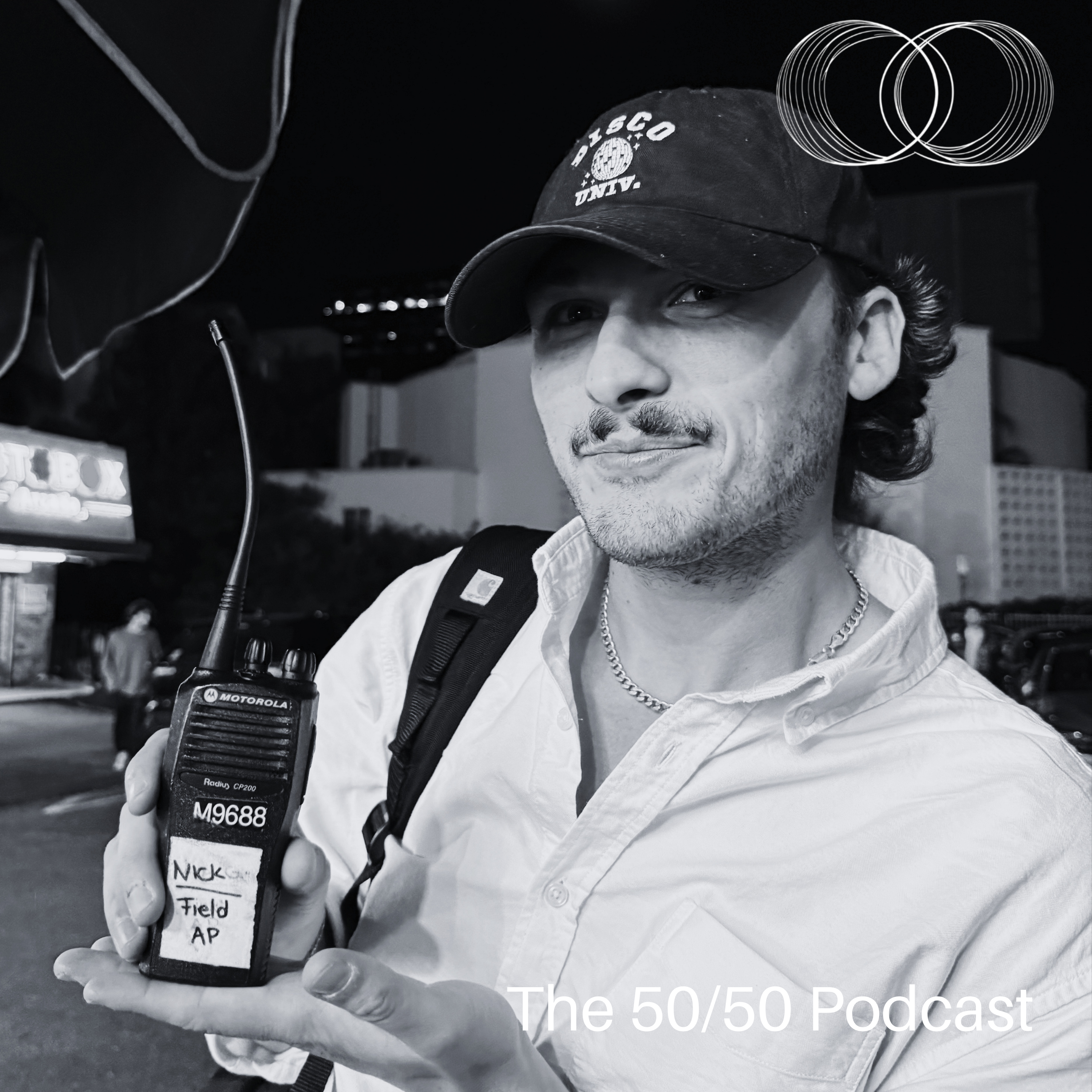
That's right, Love Island's own producer, Nicholas Gloria, joined the pod to spill the tea on what the islanders are really like.
Okay, I'll stop with the accent and spare all of your ears.
As I mentioned, Nicholas Gloria is on the show. This week. The esteemed reality TV producer gives us a true peek behind the curtain of how reality TV really works. From managing delicate personalities to crafting story, from real life to climbing up the career ladder.
But before we get into the episode, a gentle reminder that the 5050 horror festival is this week. It is one week away. Less than one week away on October. October 18th. That is Sunday, October 18th. Tickets are open now. Link in the episode description and our Instagram bio. That is at the 5050 Fest. That is the 5050 Fest on Instagram. Enjoy the episode.
So you're. You're a Boston guy.
Do you embrace that?
[00:02:15] Speaker A: I think so. I'm from a town called Newton, which has a variety of all sorts of LA people are from there. You know, you've got, unfortunately.
Well, here I'll start. I'll start with a little list. It's actually kind of crazy how many people are from. From Newton, Massachusetts.
[00:02:35] Speaker C: I mean, I've definitely heard of Newton, Mass. There's all these places that sort of circle Boston that it's always debated. Is that Boston, is it not?
[00:02:43] Speaker A: You know, no, it's on. It's on the subway line. It counts. There's a big subway Network in Boston. I'm in. Basically, if like downtown LA is like the center of Boston, I would live in Culver City. So it's like, you know what I mean? Like, it's. It's not a big place.
[00:03:05] Speaker C: Totally.
[00:03:05] Speaker A: But like the, The. The list is crazy. I feel like I. I want to claim it. You know, you got Brzinski, you got BJ Novak, you got Eli Roth. Unfortunately, Louis CK Is from Newton, Massachusetts. So some wins, some losses, you know.
[00:03:22] Speaker C: Yeah.
[00:03:23] Speaker B: You know, and they got you, man.
[00:03:24] Speaker A: They got you and they got me.
[00:03:27] Speaker C: Nicholas. Gloria.
[00:03:30] Speaker B: Okay, well, I, I kind of left for a second after you mentioned how you guys met or just the fact you live in the same building. How about that? Yeah, I know that your producer in the reality space. I'm sure Wyatt said it or maybe gave the context, but we haven't really gotten the chance to speak with folks like yourself in the actual reality space in the non scripted sense. We've definitely spoken to a bunch of documentary people, filmmakers and a couple producers. Yeah.
But really no one as esteemed as yourself and established.
I mean, you're on the hottest show on the planet, which is pretty cool, man.
And I would love to dig into that. I don't know if you can talk about anything or everything, but all I will say is I love Love island and I think a lot of our listeners do too.
Wow.
[00:04:35] Speaker A: Luke, you're very complimentary.
It.
Well, it's a pleasure to be here with you guys. I. I met Wyatt because Wyatt is my neighbor. But. Yeah, no, I. I've.
I'm back from Fiji. I worked on Love island this summer.
[00:04:52] Speaker C: Crazy.
[00:04:53] Speaker A: Absolute best.
[00:04:55] Speaker C: So crazy. I found out because.
[00:04:57] Speaker B: Okay, I. I gotta. I'm gonna ask. Shut up, Wyatt. So.
[00:05:00] Speaker C: Yeah, yeah.
[00:05:02] Speaker B: You. You were in Fiji the whole time?
[00:05:05] Speaker A: Yeah.
[00:05:05] Speaker B: Can you talk about just all of it? Give us, Give us the whole thing, man.
Go nuts. From the business and the creative.
[00:05:13] Speaker A: I'll. I'll say. I'll say what I can say.
It's obviously like. It's a show with a lot of like Internet interest while you're doing it, which is.
I don't know, there's this sort of like. You feel so removed from that because you're like the day to day. Like I'm not like concerned about like what people are saying online or like really thinking about it because you're like geographically, you're so isolated and you're not like, you know, you're. And it's. You're so busy, but like there's this weird feeling in the background. Of, like, every little thing you're doing is, like, being picked apart by, like, millions of people online.
But, like, I don't know what exactly, and I'm not really, like, interested in finding out because, like, I just wanna,
[00:06:05] Speaker C: you know, you're just, like, trying to.
[00:06:07] Speaker A: I just want to do the job every single day.
[00:06:09] Speaker C: But it's also unique because they're, like, living on set like, it's. It's complicated.
[00:06:13] Speaker A: Yeah, for sure.
[00:06:15] Speaker C: Do you like that part of it? Do you like the sort of, like, complex nature of it being, like, one of the most, like, invasive is not the right word, but one of the most, like, 247 reality shows?
[00:06:28] Speaker A: Yeah, I mean, like. I mean, it's. It's like, it's. It's the only show I've worked on that people are really immersed and, like, it's like a really, like, psychology show, you know? Like, it's. It's really deeply about, like, the psyche of the people who are on the show and how do they react to these situations?
I think.
I don't know.
[00:06:56] Speaker B: It's.
[00:06:57] Speaker A: It's really fun to shoot, like, on, you know, on the ground. You go to, like, this location in that location, and, like, and then you wrap it and then you go home or whatever it is. Like, those shows are fun, like the fall a doc style, but the immersiveness of Love island was something I really enjoyed.
[00:07:18] Speaker C: Was that completely new for you?
[00:07:21] Speaker A: Yeah. And the cast is, like, so fun to be around. And I think they really do such a great job of picking the type of person who, like, really wants to lean into the bit. Because, like, I just can't imagine ever wanting to be in a place in my life where I'd be like, yeah, I would love to, like, give up using my phone. I wouldn't be able to talk to any of my friends. And then you have to just kind of, like, do what we say for, like, you know, two months. Like, it's so crazy. And it's. And I don't mean, like, in the sense of, like, two of whatever we tell you to do on camera, because that's not what happens during the show, for the record. But it's also, like, just, you know, you have to, like, wake up at this time or, like, you know, these. These days you're on and this day you're off, you know, crazy. And it's just, like. It's a very intense experience. Like, it is really wild what they sign up for.
[00:08:20] Speaker B: I mean, as. As a producer, I mean, I'd love to dig into Your day to day in Fiji.
And like, I mean, because I. I know at least I. I believe the episodes were like, daily. Right. So you're. Are you constantly just in a. In an editing bay? Are you, like, in some control room, like, watching all the screens, being like, okay, let's make sure we remember this. Let's tag that. Like, what exactly does your day to day look like in Fiji? Not necessarily. And I think we'll get into prep and post after. Well, I guess post is there, but prep after the fact.
[00:08:58] Speaker A: Once again, I'll say what I can say, which is that the show obviously, like, the show is still very popular. Hopefully it'll go for another season. And so it would be great to return and be part of it in the future.
So I was in the team that's in the villa, so it's like, you know, there's obvious. There's like 50 producers on that show. I mean, it's like really an incredible team of people who really know what they're doing.
Like a real cream of the crop, like, type person who often is.
I find them. I mean, it's. It's like a real, like, multicultural mix to like an international mix of producers. And there's people who are editing and there's people who are doing more control room stuff. I was more hands on.
[00:09:53] Speaker C: And it's all like, in house. Like, the. Even the editors are there and everything.
[00:09:57] Speaker A: Yeah, yeah. Because the. The turnaround is so quick that, like, you really want everyone just, like, in
[00:10:03] Speaker C: the space on the same hours. All of it.
[00:10:06] Speaker A: Yeah, yeah. And I think the delay of people being on different time zones and scattered and like, you know, working remotely, it's just like, not the show for it.
And.
Yeah, I mean, you know, day to day, like, it's.
It's really a show about, like, managing cast and personalities and there's obviously a lot of, like, constructed stuff that, you know, that the producers of the show come up with. I mean, there's this whole other team that does, like, just challenges and like, there, you know, there's eliminations and there's games and challenges and, like, outside of that, is there, like, real lives that they spend with each other and, like, live in and amongst each other in the villa. And, you know, you help, like, do everything from, like, managing their needs to, you know, making sure they're, like, doing okay emotionally and, you know, making sure that, like, when they have the intention to go do something on the show that, like, it's clearly defined and they are able to, like, articulate what they mean and what they say because then they'll go and do an interview about it. So like just I think like helping like construct the like intentionality because like the otherwise this is like 20 people like running in every direction having every type of conversation.
And I think like you, you know, everything happens. It's just like in what order?
[00:11:51] Speaker B: You know.
[00:11:52] Speaker C: Totally.
[00:11:53] Speaker B: Yeah. That's crazy, man. And it sounds like such a. Because again it, it.
The UK version was live or like the voting stuff was live right back in the day or is that still they.
[00:12:06] Speaker A: So yeah, both the US and the UK version, they get episodes to a place where you can vote on it. So like the, they'll. They'll. They have an app where the like audiences can go vote and the votes will typically be to put members of the cast like in jeopardy. And then they'll do like within the cast, people will decide who to send home. Usually that's the construction of it. They don't typically do just like list your favorite people and then like the person with the least votes.
[00:12:40] Speaker B: So I mean, all I'm getting at though is just that like high stress environment. I assume just because of the agency needed of like this needs to be done. Like the deadlines are insane.
[00:12:53] Speaker A: I know. I feel bad for the editors.
[00:12:55] Speaker C: I, I like it's insane.
[00:12:57] Speaker B: So I mean, and I, and I appreciate the, the, the honesty and transparency on your end of just like, hey, I can't speak too much about this, like the nitty gritty. But then I think from where we can really, at least our listeners can like really benefit from something like this is understanding like a, A collaboration in that setting. Like what works, what doesn't work, you know?
[00:13:22] Speaker A: Yeah, yeah. I mean, it's.
I, I mean in this like particular show, because of the live nature of the editing, the. You feel like.
I mean, because I, I'm at the beginning of the assembly chain, right. Like we are there in the villa with the cast helping them like say what they need to say and making sure everyone goes to the challenge on time. And like, you know what I mean, gets the right wardrobe off.
It's a lot of people. And then yeah, down the line is the editor. And it's. No matter what, they've never had a late delivery, which is crazy.
They've literally, I mean they've delivered over a hundred episodes and they've never had a late delivery one time.
[00:14:08] Speaker C: It's insane.
[00:14:09] Speaker A: And sometimes they'll have like 24 hours to cut something and they do it in like the most amazing ways. Like they'll they have such a system. And again, I'm not like truly across this, but basically it's like, you know, the people who just do the initial string outs and then like that person will pass it off to someone else who just does scene two and then, you know, they're finishing editors that look at the whole episode and it's all this like. It's basically like, imagine like the like Model T factory and they're like building the car as it's traveling. Like, it's very impressive what they do, especially just to know that sense of like consistency between different scenes. Like how to make it all feel part of the same show and not a bunch of different.
Yeah, man,
[00:15:04] Speaker B: you got. Every episode is like all the, the different stories happen totally. And then they all kind of converge into one.
[00:15:11] Speaker C: You have to be thinking about every episode in communication with what happened before. And like, I think from the audience perspective.
[00:15:19] Speaker B: Yeah, yeah, right.
[00:15:20] Speaker C: But you kind of. I kind of do a little bit. Because it's a day behind. It's. It's complicated for sure.
[00:15:27] Speaker A: Yeah. I've got your next guest. You guys should really talk to a Love island editor.
[00:15:33] Speaker C: Fantastic.
[00:15:34] Speaker A: That should be.
Who should be chatting with you guys today, honestly.
[00:15:39] Speaker B: Well, I, I want to.
[00:15:40] Speaker C: I want to chat about something that you. You have. I think that you've mentioned that you did a lot of which is actually, you know, working with the cast head on. And I have a question specifically because you mentioned the psyche of what it means to be on like 24 hour reality show to some extent and always being filmed like the, the.
The art of performance and when people are performing versus when they are just themselves and the lines blurred there.
It's not a fully formed question, but there is like, there's something to like, how much awareness do these people have of the fact that they are being filmed? And then I'm sure eventually they just get to the point maybe where they don't care about the cameras being on them and they just like, are pretty close to who they actually are. And, and how do you sort of infuse your creativity into that process?
[00:16:34] Speaker A: I. I mean, I think that, I mean this is, this is the, like, this is the golden skill of like any producer is to like basically have your subjects ease into the idea that they're being filmed like so seamlessly that they never even.
It's like you're being like hypnotized into something. They never even like change out of it because like, ultimately what you want is for the person to be the most true version of themselves. Like, nobody wants bad. Reality TV is, like, fake. It's, like, inauthentic. Right. Like, it's too much conceit. Like, that's. You want the. All the conceit to be, like, defined. Like, yes, there is a challenge. The producers have created it here. Like, here are all the rules to the challenge. Blah, blah, blah, blah.
Let's see how these people actually react to these things. And I ultimately, like, Love island does a fantastic job at that. I mean, it's the. And I think, like, you know, the cast is.
They're in many ways, like, prepared to be themselves in the. Like, they're ushered in, like, so many ways to, like, just be their authentic selves. I mean, you know, obviously, they. They talk to so many people before they meet me. And all of these people are trying to find people who are good with, like, being on camera for 24 hours a day and can handle that sort of pressure and, like, would mentally be okay with that. So, like, that's all one step. Like, you can imagine a lot of people would not do well in that particular setting.
And then, like, the infrastructure around the show is amazing. I mean, they have an incredible number of cameras both, like, built into the villa, and people who, you know, come in and all these, like, cam ops who are shooting throughout the day. So it's like, the infrastructure is there really to capture them authentically, but they've, like, built it in a way that, like, you know, you don't really feel watched when you're. When you're in the villa.
[00:18:52] Speaker C: Yeah.
[00:18:53] Speaker A: And I think, like, you know, you.
When you're with the cast, you know, you want them to feel like everything is okay to, like, all their emotions are acceptable. Like, whatever they're feeling right now, like, that's fine. Like, that's part of the human drama of it all. Like, that's part of the experience.
[00:19:17] Speaker C: It's worse if it's worse for you and worse for everybody if you hide it, you know?
[00:19:21] Speaker A: Yes. Like, all of these emotions are above board. Like, we expect all of this, like.
[00:19:25] Speaker B: Right.
[00:19:25] Speaker A: It's like that thing where you, like, go into the therapist's office and they're like.
And you tell them this, like, really profound feeling that you've been having, and you're like, I can't imagine anyone else has ever felt this way. And they're, like, perfect. So we have a name for this syndrome. It's called this.
[00:19:40] Speaker B: Yeah, yeah.
[00:19:41] Speaker A: And, like, you know.
[00:19:42] Speaker C: Right, right.
[00:19:42] Speaker B: It's valid.
[00:19:43] Speaker A: Like.
[00:19:43] Speaker B: Yeah, yeah.
[00:19:44] Speaker A: You're, like. You think you're, like, the Only person who's ever felt like, alone in a villa on a reality television show.
[00:19:50] Speaker B: Right.
[00:19:50] Speaker A: No, that is what the shows.
[00:19:53] Speaker C: We have a word for this. It's Love Island.
[00:19:55] Speaker A: Yes.
We actually named this syndrome.
[00:19:59] Speaker C: Yeah, you're on it.
[00:20:01] Speaker A: Crazy. But yeah. I mean, a lot of the work is to, like, help them feel, like, emotionally validated, because, like, they are. It's all valid.
[00:20:13] Speaker C: Absolutely.
[00:20:14] Speaker B: How did you get into producing reality?
[00:20:20] Speaker A: Yeah, let's.
I.
So maybe I'll back up. I'll do. I'll do. Why I'm. Why I'm here.
I moved to LA in 2019.
Pre Covid, old man. That's turned 30.
Surprise.
So I moved to LA pre. Pre Covid to work in entertainment. And it was like at a time when the VC money was flowing around here and everyone was buying all these shows. I mean, it was like feral. Like the way that like, literal venture capital money was propping up streamers that it was like MGM plus might be the next big streamer, like Quibi. Like, I'm telling you, it felt.
It was so tempting to come here and felt like, oh, this could be like a totally. A career that you could just like, hold up next to like, finance or like consulting or something.
[00:21:24] Speaker C: So a lot of like, just in terms of like. There's a lot of money in it.
[00:21:28] Speaker A: There's a lot of money here. Yeah.
[00:21:30] Speaker C: Everybody's going, you know. Right, right.
[00:21:32] Speaker A: It's like the Great Gatsby and the like.
[00:21:34] Speaker C: Yeah, yeah, yeah.
[00:21:40] Speaker A: Anyway, so like, I moved out here in a certain, like, atmosphere of that. And like, I was. I moved here and I was hired immediately and it was a great paying job. I worked at this company called Scout Productions and they are the, like, best known as the creators of Queer Eye.
But it was these three principles. And, you know, of course, like many, many other execs that were there and I worked there for like five years. I was their assistant. Just like they're. I was hired basically off the street as their, like, executive assistant.
And then I worked as their development coordinator for a few of the most, like, truly, like some of the most like, fun and the lovely people I've ever met in la, in entertainment. Like, they are genuinely so talented and they were always like, so committed to being hands on and like, really full of vision, you know. And like, it's, you know. And they're the creators of Queer Eyes, so they had a lot of like, really fun, like, Runway to play with. They were always doing, like, poppy projects. They had this show called, like Legendary on hbo.
Hbo Max Rather, that was like, like, Queer Ballroom voguing dance competition.
[00:23:03] Speaker C: Like, so they were like, yeah, like,
[00:23:06] Speaker A: Kiki Palmer was a judge. Like, dude, it's just like, they did the coolest projects. They had a streetwear competition show.
They would do, like, docs. Like, they one time did a doc about a, you know, little town in Maine called, like, Turdy Works. Like, they would just do, like, really fun, like, queer stuff. Like, it was just, like, a really great place to be, and it was a very creative place to be.
And I worked for Renata Lovardo, who has been in reality television for many years, and she was their development executive.
And she is an incredible person. And she had really guided and formed the type of producer that I wanted to be because she had basically worked at every place under the sun. She was like, at the. She was at the Oprah Winfrey Network at one point. She worked for the original Chris Lee's first season.
The Chris Lee Knows Best. Like, first season in shot in Atlanta or Georgia, rather.
Like, she's just been around and she knows what she's talking about.
And I worked for her for a lot of years at Scout, and at a certain point, I kind of was like, I.
The thing I love most is when we're in production on something and I get to be on set and I get to be working with, like, the showrunners. So I was like, I think I need to go do the producer route. So, yeah, I would. Then I worked on a variety of shows, which I happy to get into, but I just, like, really felt like you can do so much development. And I was just like, I need to. It was, like, genuinely a lifestyle choice. I was like, I need to be on my feet. I need to. I need to be walking around and I need to be filming something because it's just.
It's just.
[00:25:06] Speaker C: What's that feel?
[00:25:07] Speaker B: What's that.
[00:25:07] Speaker C: How would you describe that feeling for you, of being on your feet, like, on set, being able to do that?
[00:25:14] Speaker A: I would say this is the only job I've ever had where I can, like, blink in the time goes away.
Like, I've never had. I've never had another job where I just, like, don't even know where the time goes.
And it. It's like. I don't know. I mean, it's. It's like.
It's just such a. Fun at its very best. Like, it's an atmosphere where you're, like. You're, like, playing with clay, and everyone gets to touch the clay.
[00:25:41] Speaker B: Mm.
[00:25:42] Speaker A: Like, there's, like, and, you know, I'm not. I'm not the biggest in the. In the. In this metaphor. Like, I'm.
There's so many people with much more and should have much more control over what the clay looks like. But, like, some. Every once in a while, I get to pinch the clay.
[00:25:59] Speaker C: Well, we.
[00:25:59] Speaker A: We've talked.
[00:26:00] Speaker C: We've talked with people who work in documentaries who kind of are the same way, and they. And they've used metaphor is very close to that clay metaphor, which is like, it's real life and you guys are crafting the story thereafter, you know, And I. I think it's so fun to, like, be in. In the room while it's happening.
[00:26:19] Speaker B: And.
[00:26:19] Speaker C: And then are you in the back of your head, like, thinking about, okay, what are, like, the storylines that I see and that I need to, like, focus on? Or I need to be like, okay, camera guy, like, you should be getting this, or, what is that? What does that look like?
[00:26:33] Speaker B: Yeah, and I honestly, on top of that, of, like, are you thinking about narrative structure when talking to narrative structure, but also just more like traditional screenwriting, not tactics, but just kind of like what you think about when you write a script of, like, okay, here's a character. What's their intention? And, like, how are we going to show that?
[00:26:53] Speaker A: Yeah, well, I think. I think basically it's like real life is messy, and our, like, internal selves are messy, and we have a lot of thoughts.
And what you want to do with people who are on camera is utilize your time wisely and have them express those emotions and those thoughts in a, number one, timely manner. And number two, in a way that is coherent. If you were to tell a story about it and, like, you eventually, probably, if you just pointed a camera at someone and watch them, like, you'd get somewhere. But, like, as you guys may know, reality TV is not known for its incredibly expansive budgets, except for Love island, apparently. And, you know, you have to, like, be directed about it because you, like, you want to give people on camera, like, the opportunity to explain themselves. And sometimes that involves you, the rational person in the room pointing out, hey, here is this ridiculous thing. Would you like to react to it? Like, here is this wild thing that you or another person around you has said. Like, you should probably comment on that. Like, it doesn't. You're not, like, making anything up, but, like, but you're.
[00:28:16] Speaker C: You're refined. But yeah, you need them to totally.
[00:28:20] Speaker A: To get to it. Like, because, you know, if you, like, think about, like, any show in the, like, incredible apparatus that surrounds, like, that show, like it. There's ACs and PAs and camera people and, like, locations and people need to eat in the middle of it. Like, you have to have some level of construct around it or you're going to be shooting.
It's too expensive to shoot. So you need to decide, like, a few parameters and then let other parameters be open and chosen by the cast. But you're like, we all need to be at a particular location.
These people that should be paid well for their jobs are like, need to all arrive here and we need to have these hours. Like, yeah, there's reasons.
[00:29:13] Speaker B: I get it. It's that creativity and parameters. And without that, it's going to be. And I mean, Wyatt has said it a few times, but in the documentary sense, it's the same where it's like, okay, we could be recording or spending 100 years with this person, but like an awesome documentary, probably, like, really cool,
[00:29:32] Speaker C: but like someone's whole life film.
[00:29:34] Speaker B: In some sense, though, it's like, yeah,
[00:29:36] Speaker A: we're not all making boyhood out here.
We gotta get to it. But I don't. Yeah, sorry. I just. The last. The finer point on that. And I'm sorry if that was like, a little ranty.
I just sometimes have this feeling that people.
Like, sometimes the first question people ask me about reality television is like, is it real? Which is like, in some level, like, an interesting question, I guess, to ask. But, like, but.
[00:29:59] Speaker C: But sometimes parts of me are just
[00:30:01] Speaker A: kind of like, yeah. Yes. Like, it feels like a gotcha or a little bit in the sense of. I'm just like, well, just have a little think about logistics for like, a second and you can figure out what parts are real and what parts. Like, we have to set up ahead of time. Like the. We have to get lunch. Like, we have to. People need to drive there. Like, we all live in a house now. Move forward with those parameters and you can imagine how you might.
[00:30:28] Speaker C: It's real within a. Yeah, it's real within, like, a confined environment.
Yeah, yeah,
[00:30:36] Speaker A: it's. You know, the improv troupe isn't always performing 24 hours a day. Like, right. Yeah, we got to eat and go to the bathroom and stuff. You know, that's not part of the performance, is.
[00:30:46] Speaker B: Is it? And this might be touchy, but, like, when, you know, cast is. Maybe an individual is like, man, I don't want to do this anymore.
Like, I just. And it's like halfway through, or maybe it's just like in the middle of.
Of a feud or something or even On a smaller scale, it's like, hey, you know why it said that thing about me? But like, I don't really want to respond to that. But you're like, knowing, like, but you have to. I guess you kind of probably set the parameters in prep of like. Right.
[00:31:19] Speaker C: But like fitting people crafting the story and having specific story goals when.
[00:31:24] Speaker B: Yeah.
[00:31:24] Speaker C: Someone is not acting in the way that you. That fits the story. Like, you know, what do you do and how do you create a problem solve in that. In a scenario like that.
[00:31:35] Speaker A: Right.
[00:31:36] Speaker B: Yeah.
[00:31:39] Speaker A: I, to be totally transparent, haven't worked on a ton of shows that, like, get you to that place.
I've worked on mostly shows where, like, people are for one way or another, like, incentivized naturally to like, want to be there and want to be on camera and want to be.
And like, the show is shooting things in a really, I would say, authentic way.
I would say, like, I don't know, it's like back to my point earlier, like, everyone needs a breather. You can't force everyone. And you never should, like, force everyone to be on camera at all times.
You know, just their sanity at the detriment to like, your story, you know.
But I would say, like, if people are having emotions about things, like, that's the story. Like, we're always following the authentic.
Right. Like, that's what you want to be doing is like.
[00:32:43] Speaker C: Right.
[00:32:43] Speaker A: If they're saying to you, I don't want to be on camera today, I'm like, I'm upset. Blah, blah, blah.
You know, there's probably a reason for that, and it's probably interpersonal conflict and you should ask them about that. And like, on camera, like, theoretically, right? Like, it's because it's like, this is like if. If the story, if you find yourself in a spot where you're like, I can't even tell the story that we, like where we imagine this were to be going, like, where we think all these relationships will end up. And like. Right, because like, a lot of times they think people do when they're really good producers is they see who the people are, the real selves of, like, these people that they're gonna have on camera. And they know the interpersonal dynamics between each of them. And they go like, okay, like, let's just think like five steps ahead. Like, how will this resolve?
Like, if you put all these people in a room, like, how will they eventually end up feeling about each other?
[00:33:49] Speaker B: How. How accurate are you guys with that stuff?
[00:33:51] Speaker C: Yeah. With the predictions.
[00:33:54] Speaker A: Oh, it. To. I Mean, it goes off the rails all the time. And, like, that's. That's the magic.
[00:34:00] Speaker B: That's, like.
[00:34:00] Speaker A: Because that's not one of the. If you don't make it one of the parameters that the story needs to go in a way that you need. Need it to go.
Because if that's, like, as long as they stay in the location that you want them to be, everyone can have their.
[00:34:17] Speaker B: The. The fun of, like, predicting from your guys's perspective, as in the folks who are, like, actually putting the show together is that by way of showing, you know, certain shots or certain conversations, the audience will also feel that of, like, oh, I see where this is going.
[00:34:35] Speaker A: Yeah.
[00:34:35] Speaker B: And, like, you guys being like, oh, shit, is like, us being like, oh, my God, like, what? I didn't know that was happening.
[00:34:42] Speaker A: Yeah.
I just. I think ultimately, like, to be a really good. And these are, like. I'm talking about people that, like, I work for who are, like, fabulous showrunners, and they're. They have done this for so long.
Like, I'm thinking of last year, I worked on a show that is about Stassi Schroeder. It's her. Like, it came out on Hulu a couple months ago, and the two showrunners of that show have known Stassi Schroeder for so many years that they just know who she is. Like, they know her, and they know how she'll.
[00:35:20] Speaker C: Did they know her from, like, from, like, Vanderpump. Yeah, yeah, yeah, yeah. Crazy.
[00:35:25] Speaker A: And they just know how she'll react to things, and they're just.
[00:35:29] Speaker C: It's so in tune. It's like a director and their. And their actor. Yeah. You know, like, just knowing.
[00:35:33] Speaker A: Yeah.
[00:35:33] Speaker C: How they like to work.
Yeah.
[00:35:36] Speaker A: Yeah. And like, Stassi, who, by the way, consummate professional. Incredible. Like, we were in her house all the time, and she's just such a. Like, she's just such a. She loves to be on time. Like, that is her.
[00:35:52] Speaker C: Love that.
[00:35:52] Speaker A: That's her thing.
[00:35:53] Speaker B: That's great.
[00:35:53] Speaker A: You would never, ever wants to start late.
We're in. I can't imagine how annoying. That's incredible.
[00:35:59] Speaker B: Yeah.
[00:36:00] Speaker A: A crew in your house every single day. She has little kids, and she's just like, all right, let's get to work.
[00:36:07] Speaker C: Because she wants you guys to leave at the end of the day.
[00:36:10] Speaker A: Yeah. She's excited for us to go home so she can go to bed.
[00:36:13] Speaker B: Yeah.
[00:36:13] Speaker A: She put her kids to bed, and then she can go to sleep.
[00:36:16] Speaker B: Right.
[00:36:18] Speaker A: But, yeah, I mean, you and, like, for that show, I was an ap and like the job of an AP is in many ways to like be very matter of fact about, sorry, associate producer. So. And on a follow doc set, the job of an AP is to write down what is happening and construct like
[00:36:45] Speaker C: hot sheets basically with like timestamps and stuff.
[00:36:48] Speaker A: Right. So that everyone, this big crew of people and producers and people who are shooting other things at other times can follow along as is happening literally like that hour that day, and can understand, oh, like this is what happened over here.
And we can all sort of follow in very like literal ways, like this is what this person said today.
So like on that level, like I'm in on that show was like on the lower end of the food chain, but on Love Island I was a little bit higher up on the food chain. And it, it's like, I mean all these jobs are important, but like you get your hands on a little bit more clay, you know, totally.
[00:37:33] Speaker C: In terms of, as you said, the food chain and the sort of business side of the industry, specifically with your track, the producer track, what do you have representation? What does that look like?
[00:37:47] Speaker B: Are you.
[00:37:48] Speaker C: How do you work your way up? How do you work your way through? Like, how did you. And like, you know, did you, did you learn from the people at Scout how to do it? Did you meet a bunch of people on set one time and understand what their ambitions were? Like, what, what is your view on all of that?
[00:38:07] Speaker A: So like, I guess from the top, so the, the chain of producers and like, I'm sure someone will listen to this podcast and be like this kid. That's not the real ladder. The real ladder goes like this. So I'm sure that there's many.
[00:38:23] Speaker C: I mean, as we know, there's multiple lad for everything.
[00:38:26] Speaker A: There's many ladders. Yeah, but from the, from where I'm sitting, the way I perceive it is that you start as an associate producer and you are basically like seeing something as it is and like transcribing it essentially. And then like writing a light analysis of like what happened.
Then there are like senior producers who are.
The titles will be weird if you're in like the scripted world. But like this is what the titles are. Then there are like senior producers who are like a little bit more responsibility can have like day to day on like what's happening. Maybe in the scene, they're probably talking to the cast more. There are supervising producers who are usually basically in charge of a field team.
Obviously this shows. It really depends. But like, if you're a supervising producer on Set like whatever is happening on set is like your obligation. Like you are telling the camera, like, camera's up. Nope, breaking for lunch. Cast, like, need you to take your last bathroom break, like that sort of stuff. Like you're in charge.
The co EP level will be like probably coming in and out of different shoots. Like if you're on a follow dock, like, they might be with one crew one day, they might be, you know, writing up schedules the next day. Like, you'll be toggling. And then there's the showrunners, the EPs and those. Obviously they're in charge of the whole shoot. So like bottom to top, obviously there's going to be so much other experiences in many chains. But like, in my perception, this is what I've seen.
And yeah, I mean, just when I was working at Scout, I would meet a lot of showrunners and a lot of like people who were at the very top and we were like hiring them to be in charge of our projects. And like after that then they staff the rest of the show. So it's like the production company really goes out and finds the showrunner that does the creative vision for the show. And those people you meet through agencies, you know, you call your agent. Sure, let me give you a list.
[00:40:43] Speaker C: And a scout. Does Scout provide like the physical production part of it?
[00:40:47] Speaker A: Yeah.
[00:40:47] Speaker C: Okay, got it. Because for reference and something that I've learned just by working at maximum effort is like, we don't provide physical production resources. So if we have an idea for reality show starring our talent or we pair talent with a showrunner and then we have a concept that we're working through.
Like one of the further steps is actually doing a co production with a production company that actually provides like all the physical stuff and will help. They'll really like spearhead the budget and things like that and the sort of below the line crew and all that.
[00:41:20] Speaker A: Yeah, you call Scout productions.
[00:41:22] Speaker C: Exactly.
[00:41:23] Speaker A: And they'll find you an incredible showrunner who will hire everybody else. Yeah, and like my intuition on it is like, yeah, I mean a company, a production, like a good production company will just have a point of view of the sort of person that they want to run the ship and obviously like the network will agree and like you might put thoughts for like a development exec might like then put thoughts forward on a co ep, some of the supervising producers, someone they've worked with
[00:41:56] Speaker C: in the past for another show or whatever.
[00:41:58] Speaker A: Yeah, yeah, right.
And like there'll be the same process for like a director if there's someone different who's running post. You'll have the same, like, input on post, but then, like, people like me are really just hired by the showrunner or like, the co. Ep.
[00:42:15] Speaker C: So you were able to develop those showrunner relationships when you were at scout to now?
[00:42:19] Speaker A: Yeah, it's funny because really all I care is about meeting, like, supervising producers these days. But, like, yes, I. And I've gotten jobs because of, like, emailing a showrunner who's like, oh, like, I have.
I have show ran. You know, whatever. I'm making this up. But, like, let's pretend like I'm show ran. Mythbusters. Like, I can't wait to hire a new person who basically all, yeah, that was great. That show needs. Legendary show.
[00:42:51] Speaker B: How do you like. We. We talk to a lot of, like, young filmmakers and stuff, and a lot of folks are getting ready to do their first features or have just done their first features. And like, we talk a lot about. And also, like, the. The one like a special, like a comedy special or one woman show or something. And like, we hear a lot about, like, for a feature, it's like that proof of concept. It's like kind of a. A short film that, like, plays as an introduction to a larger project, as in a feature. Or it's a pilot for a show or a teaser for a pilot. Like, there. There are all these kind of ways.
[00:43:29] Speaker C: Or a web series or something.
[00:43:31] Speaker B: Exactly.
What. What is that? Like, if you were trying to go out and make your own reality TV show, you're trying to make the next Love Island.
[00:43:39] Speaker A: Yeah.
[00:43:40] Speaker B: Like, what. What does that actually look like?
[00:43:43] Speaker A: Yeah, I honestly, this is, like, truly what I find, like, very fascinating because so obviously I've worked in development for a long time and, like, we could all day sit around and be like, what if it was a show? Like, this would be like, classically, or. I guess I'll finish my thought. We could sit around all day and come up with, like, pretty fun, probably cool ideas for a reality show. But, like, who cares? Like, you're like, you have to be in the right place at the right time and have the right perspective to show something to someone that, like, only a few people in the world get access to the, like, network executive.
And so, like, people would email us, like, show ideas. And, like, honestly, like, a lot of times, like, it would be like, that's not a terrible idea, but, like, why in the world would we ever make this with you? Or not to be, like, too negative, but sometimes it's just like, you know, everyone has an amazing Idea. And frankly, I, towards the end of working at Scout, I was kind of like, maybe every idea has been thought of already. Maybe there are no more original ideas left. Because the real, like the thing you have to remember is like reality TV had.
Was only really around for like 25 years. Like in 2020, right. Like, it's like in 1995, people started to come up with ideas for reality television.
Right. Like in like Big Brother, right. And it's like, okay, so fast forward 25ish years. It's like, okay, so that's all the time. And then I've been around for like whatever, 15 of all the time that there's been reality TV on the.
You know, on television. And like, maybe that doesn't sound like a lot, but like a lot of ideas get come up with in that time.
And like, I just, I'm not saying like no one will ever come up with another fresh idea, but like everything is sort of like a remix of old stuff.
[00:45:53] Speaker C: Sure.
[00:45:53] Speaker A: And like, you just need to have a really great perspective on like, why specifically you will nail the presentation and execution of this thing and like present.
[00:46:07] Speaker B: I don't know, for presentation, execution of. Of a pitch or more of a pitch.
[00:46:11] Speaker A: Yeah.
[00:46:12] Speaker B: And. And one of those. Because again, right, it's like there's a proof of concept, which is a short film, right? It's a very like, tangible thing. Thing.
[00:46:21] Speaker A: Yeah.
[00:46:21] Speaker B: You go out and like pitch a feature. Like there's a screenplay or not. Or it's a crazy IP or it's a book or it's a Reddit article or it's a sentence. Like, what. What are the in development? Like, let's say Wyatt wakes up tomorrow and it's like, holy.
[00:46:37] Speaker A: Yeah.
[00:46:37] Speaker B: I have such a great idea for this reality show. It's genius. Like, how does he go from nothing?
[00:46:46] Speaker C: This is a cool thing that I would like to watch because I feel like a lot of those pitches are like, oh, I'd like to see these a bu of single people go and meet, you know, the. Their potential father in laws and it's, you know, it's date your father in law. You're. You know, it's like, like there's always show premises like that. But then it's like, why are. I guess what are the sort of questions that you would ask then of like, why are. Like, what's your perspective? What are.
I'm.
[00:47:14] Speaker B: I'm talking from like the. A very foundational level of like. Yeah, why you said it of like a web series. Right. Like, I can go on I can pull my friends together and we shoot a web series and put it on YouTube and like, if it does something, I can then take that. If it does nothing, it doesn't matter. It's there.
[00:47:29] Speaker C: Exactly.
[00:47:30] Speaker B: What, what does that look like for reality? Is all I'm getting at.
[00:47:33] Speaker C: It's a good question.
[00:47:34] Speaker A: Totally. Such a fair question.
The, I would say like the. In a certain ways, the barriers to entry for reality television are like a little bit less. Because often you don't need the proof of concept in the sense of I've shot and like created a short film or shot and created a web series. Like, sometimes it starts with that, but often what it is is a production company or a producer will. Or a producer comes to a production company with an idea that can be any level of like baked. Like, maybe it's just like beginning seeds of it in a log line. Or maybe they'll like come to you with like an entire idea that is like really meticulously thought out, which you may or may not like. And what you construct is two things. One, you create like a written document that describes like the format of the show. Like, what are we going to see on television? Who are the characters?
Where will they, you know, where will they be? What is the, you know, what are the themes of the show? Like, what is the tone of the show? What is the look of the show? Like, all of these things that can like really articulate without shooting a pilot episode. Right. Like, what is the vibe? And then the other thing that you make, which is like really fun, I love doing these projects, is you make a sizzle, which I've started to think of as like basic. Yes. You are giving someone like the information of the format of the show in a certain way. Like you're like, here are the characters and here's what they look like and here's what their world looks like. But also you're giving someone the feeling that it is to watch your show.
Like, what does it feel like to, to sit down and experience an episode of this show? Here is what the audience will feel like.
And I think, like, that's super important.
[00:49:30] Speaker B: Yeah, yeah, that's great.
[00:49:31] Speaker A: And so it's like the sizzle, like they, I mean, and like, because it's reality, like, it's corny. Like, these are like corny like people and like certain networks are buying stuff that like you are like, this is not counterculture in any way. Like, this is wipeout. Like, this is right, you know, this is just like the most down the middle idea and Pitched and sold in a way that is, like, probably to all of us. Absolutely humorless, but, like. And that, like, exists. And then also, sometimes you see a deck or, like, a written material that is, like, written in an articulated in a way that, like, it shows rather than tells you the tone and, like, where the audience will meet the.
The show. Because, like, there's such a range of, like, concept level for reality. Like, there is Wipeout that is like, watch people fall off balls into mud.
And then there's like, the rehearsal, which is, like, the whole time.
Is this real? Is this a documentary? Like, what is Nathan Fielder think? Like, it's like, so, like, probably. I mean, I have no idea if Nathan Fielder even needs to write these documents these days, because some production companies don't.
[00:51:04] Speaker C: I think HBO is just like, here's $20 million.
[00:51:07] Speaker A: I think so, too. Yeah, but that's probably.
If he did, it would be as tongue in cheek as the show is.
[00:51:17] Speaker C: Totally.
[00:51:17] Speaker A: Like, it would read if. If you were to try to sell that show, you wouldn't be like, oh, well, we're gonna make, like, here are
[00:51:24] Speaker C: the things we're tackling.
[00:51:25] Speaker A: Yeah, exactly. It would be, like, really strange probably, to read or would really make you laugh. Like, the document, the feel of the text and the feel of the sizzle.
[00:51:35] Speaker C: Yes. The thing is as important as the concept and. And the actual, like, material in a sizzle. Are you using clips from other reality shows? And I would assume you're doing that. You're.
[00:51:48] Speaker A: Oh, yeah.
[00:51:49] Speaker C: What. What else do you see?
[00:51:50] Speaker B: You're not. You're not shooting original content.
[00:51:53] Speaker A: Sorry, I should probably. Sometimes people do, but the idea is to make the sizzle, like, without paying that much money. Like, the pure version of the sizzle is, like, go on YouTube. Find the exact clips that, like, help describe your show. Sometimes it's like pop stars talking about other pop stars. Sometimes it's like clips from man on the Street.
[00:52:13] Speaker C: Whatever.
[00:52:14] Speaker A: Right? Reality shows, audio clips. Hit him with a pop song. Like, get like you. None of this has to be licensed. So, like, you just kind of let it rip. Like, you just. Yeah, you go crazy.
[00:52:27] Speaker C: You're not putting it out to the public. You're just, like, using it as a component.
[00:52:30] Speaker A: Yeah, you're showing it. You're showing, like, 20 people this thing. Right. It's like, such a specific. They're like, four minutes usually.
Sometimes if, like, if you're making a doc, like, people will. And I've worked on these projects, but, like, people will pay to have someone like me. Like, I did a Project where I sat down with someone and like did an interview where I mined for particular clips that would go well in a sizzle. So it's not like a standard interview where you're like, yeah, walking broad strokes, but like, I'm like looking for sound bites.
[00:53:04] Speaker B: It's great.
[00:53:04] Speaker A: And so I'm like guiding them into it. And then like, that's more of like a doc style sizzle where. But that's expensive. Like you have to pay me to be there. You have to pay a camera crew to be there.
[00:53:15] Speaker B: But maybe worth it, Maybe good investment, you know.
[00:53:18] Speaker A: Well, exactly. Because like it's so funny. I mean it's. It's like such a.
The network executives are like, have the same attention spans as all of us. And like, it's like, yeah, show them like these ideas. Like they hear thou, like, no joke, 1000 ideas a year look more. It's crazy. And you have to make your shiny toy like really like Coco Melon. Like, it needs to be like, you can't look away from this four minute video that we've made you because.
[00:53:58] Speaker C: Because you will. They.
[00:53:59] Speaker A: They will because you will.
[00:54:00] Speaker C: Like, they have other stuff because they do.
[00:54:02] Speaker A: Like, they are.
[00:54:02] Speaker B: Right.
[00:54:02] Speaker C: Totally.
[00:54:03] Speaker A: These execs are like the most chronically overworked people. Like, they're so busy. Yes.
[00:54:08] Speaker B: Dude. Imagine they're 247 shows.
[00:54:12] Speaker A: Like, it's crazy.
[00:54:13] Speaker C: I. I had a question about social media because when Luke was talking about the sort of like proof of concept esque thing, but sort of.
[00:54:20] Speaker A: Yeah.
[00:54:20] Speaker C: Baked into reality tv, I was thinking about, I was honestly thinking about like, like early David Dobrik and like the vlog squad and all of that of like how that to me is like such no br. Like, why did he not have a. Why, why early? Did he not just get bought out by, you know, Netflix and it. Everything was just on Netflix. Because that's such like a great example of like capturing such a fun friend group. And like that's like a tonally that's so resonant, obviously given the views and everything. But like, why like, do you guys look to social media and to specific personalities to like build a show around them or concepts that are on social media? Like, and I know there are also like companies that have huge YouTube empires that do their own version of reality that isn't within the studio system. So like, where, where's your head at with social media? What does that bring up for you?
[00:55:17] Speaker A: It's. It's funny. I mean, it's like David Dobrik, probably at the height of his like, YouTube fame, like pre cancellation was making millions of dollars a year on like, yeah, for sure. Ads on his YouTube videos. And like, I mean, he would have to be like, the show that he would be on would have to be like literally bigger than the Kardashians were that time in order for him to make like anywhere close to that amount of money.
And like, ultimately, like, you know, there's some really good gigs. Like, totally get why like Ariana goes on Love island because it's like, it's a sweet gig. We only shoot for a few weeks. She loves the project. She's like really happy to be there. She loves the show. But then for the rest of the year, like, she can do whatever she wants with her time. And like, maybe that includes like making content for different companies but like, the economics of it just like don't work for the most famous of creators online.
[00:56:20] Speaker C: Sure.
[00:56:20] Speaker A: And like, if they are on reality tv, like the Alex Earl show, it is basically, I imagine what they ima. What they are basically doing at a loss because of the opportunity cost of like hours in their day to change their public image in a way that would allow them to theoretically make more money. Or maybe they just like love the idea of being a reality. Like, it's like, it's like a vanity project for the most famous or.
[00:56:52] Speaker C: Yeah. Or a sense of like legitimacy or something. Yeah.
[00:56:56] Speaker A: But it, it kind of cuts both ways because it's like the people who watch reality tv.
Yeah. Like, you know, you want to see like the most famous names in the world, but on the other end, like that audience, like, like it. The authenticity of someone who is not a multi, multi millionaire is kind of like the perfect person to be on reality television because it's like, that is really. They're very authentic people. Like, people who do the best on reality television are not like economically motivated in that type of way.
[00:57:37] Speaker C: Completely.
[00:57:38] Speaker A: I forgot if there was a second part to your question, but like, I, I mean, I was thinking about David Dobrik at that time and thinking like, shouldn't this be a reality show?
[00:57:48] Speaker C: And I think like, I think it just was, you know, like, it just was.
[00:57:52] Speaker A: Yeah, it already, it already existed. And he found a way to not pay any other person in that scheme.
[00:57:58] Speaker B: It's a great point.
[00:58:00] Speaker C: You got a way to do that. I was also like, if it was on Hulu or whatever, the big thing wouldn't have happened because of safety precautions and all that. So there, there are, you know, positives and negatives to work. Like networks have like safety guidelines. Which YouTube doesn't, you know, to some extent or like, I don't know, I
[00:58:23] Speaker A: feel like there's this funny tweet that speaks on this and I'll. I'll just read it for you guys. It's like, it's this idea about like network television that like, once there became creators that had like a certain level of power or fame and economic streams, like, basically the like, legacy methods of television, like, became much less relevant. It's this tweet that's like. It's increasingly clear that Ellen DeGeneres was environmentally significant apex predator in the media ecosystem. She'd have extracted all the entertainment value from the hawk to a girl in a three minute segment and banished her back to anonymous anonymity. Maintaining ecological balance.
[00:59:04] Speaker C: That is so funny. Right?
She. She got people, swallowed them and gave them three minutes and a couple thousand dollars and then they would never have a following or any. That's so funny, Right?
[00:59:18] Speaker B: Right.
[00:59:19] Speaker C: Apex predator Ellen DeGeneres for sure.
[00:59:22] Speaker A: Yes.
[00:59:22] Speaker C: And now.
[00:59:23] Speaker A: And we've destroyed her, her natural environment.
Like, Nick, is your.
[00:59:27] Speaker B: Is your. Is your dream to be.
And I'm. This is our final question anyway, of like, what's. What is your dream? But I, I guess guessing as you producers do and in the reality space, is your dream to create your own show?
[00:59:47] Speaker A: Yeah, I mean, totally.
You know, it's funny because it's like in certain ways, like, that's so concrete. Like, I could be writing it right now, you know, like, I could be coming up with that right now. But it's also like the like, experience that you gain on all these other projects is what allows you to do the thing that you've, you know, you're ultimately perfect for. Like, there's so many. There's so much like learning, I feel like I've been doing in the last few years that I'm like, this is so necessary to become a showrunner or become like the creator of something like real and true to like my vision, whatever quote unquote, that is that like, I just, I feel very enmeshed in like the current like, work that I'm doing. And I'm like, it would be so amazing to like come up with a show and have it, you know, be my own baby. But like, in certain ways I've become like, less. I've become like detached from that idea as like, I've spent more time in the industry because I'm like, wow, I have a lot to learn from a lot of like, very seasoned people before. Like, I need to be Going around like pitching people like yeah man, you know, I want to date my father in law or whatever it is.
Like it's like there's a lot of room between me and there before that happens. And like there's like a reason why.
Like, like I think about like the, the John Wilson like the how to docs. Like he spent like five years just like filming his daily life before ever realizing like oh my God, this is like you know, a show worthy of like hbo.
[01:01:44] Speaker B: Right.
[01:01:44] Speaker A: You know, like he's. There's so much in the practice of doing the thing comes.
[01:01:49] Speaker C: Yes, absolutely. We've, we've covered that a lot. Just like output and then you, you figure out your way through that almost.
[01:01:57] Speaker A: Yeah, yeah.
And also note, you gotta, you gotta earn a little street cred before you go run around a production companies telling them about amazing idea that they should.
[01:02:10] Speaker C: You only. You only got so many chances with those places.
[01:02:13] Speaker A: They will and they will, as Ellen DeGeneres once did, eat your idea up and In a quick 3 minute segment write up the deck and go sell that to a network and then spit you out.
And you need to, you need to come with a certain level of credibility, seniority, run around telling people your amazing ideas.
[01:02:35] Speaker C: Well, my father in law ideas out
[01:02:38] Speaker A: of the question now.
Sorry, Wyatt. That's mine now, bud.
[01:02:42] Speaker B: Great.
[01:02:43] Speaker C: Well, thank you for coming on. This is so, so exciting and we want to, we want to have you back every time, you know, a big thing happens in your career and yeah, mid season updates. Definitely. That's definitely not allowed.
[01:02:59] Speaker A: You guys are so wonderful. I. I blinked and I, I didn't even know it was on a podcast.
[01:03:03] Speaker C: Perfect.
[01:03:03] Speaker A: I didn't even know where the hour went.
[01:03:05] Speaker B: We did, we did your job.
[01:03:06] Speaker C: Yep.
[01:03:07] Speaker A: Exactly, exactly, exactly.
[01:03:10] Speaker C: Little do you know, this is a reality show and you, you've been the contestant.
[01:03:15] Speaker A: Did I win?
[01:03:16] Speaker C: Yeah.
[01:03:17] Speaker B: Yes.
[01:03:21] Speaker C: The fans are voting right now.
[01:03:22] Speaker A: We'll see exactly on the app.
[01:03:26] Speaker B: Awesome to meet you. I'm sure I'll see you next time I come to Wyatt's.
[01:03:30] Speaker A: Heck yeah.
[01:03:31] Speaker C: Yeah, for sure.
[01:03:32] Speaker B: I don't know where you live and
[01:03:33] Speaker C: hope to see you at the festival too. I know, I know potentially you might be there, but at a festival in the future.
[01:03:40] Speaker A: Yeah, the festival is so cool. You guys are doing great work out here.
[01:03:44] Speaker B: Here. Thanks, man.
[01:03:45] Speaker C: We're doing our best. We're doing our best.
[01:03:47] Speaker B: Making cool shows for us to watch.
Did you learn something? Unlike your mom? Did you learn something in this episode? I hope so. Or not. That's okay. Thanks for hanging. Make sure you follow us at the 5050Fest on Instagram and give us five stars, because. Why not? Why not subscribe? Why not? You know why not. Okay, bye.