Episode Transcript
[00:00:00] Speaker A: Very rarely. It's so hard to find the resources to make a film, especially at the scale this one was made. A lot of money was spent on this movie. So, like, someone who gets enough money together to tell a story like this normally has some kinds of checks and balances. Like they have to deal with an investor or it takes time and they have to, you know, rewrite and, like, spend time to learn to get better and make smaller projects that show and demonstrate their capabilities.
[00:00:24] Speaker B: Right.
[00:00:24] Speaker C: They've, like, proved themselves in some way.
[00:00:26] Speaker A: And Tommy and this film are this beautiful intersection of, like, he had the resources and all he had was, like, the desire and no one was in his way to keep him from just exercising that vision.
[00:00:41] Speaker D: I'm Luke Steinfeld.
[00:00:42] Speaker C: And I'm Wyatt Sarkisian.
[00:00:44] Speaker D: We made the 5050 podcast to support you on your filmmaking journey.
[00:00:47] Speaker C: 50% business, 50% creative.
[00:00:50] Speaker D: Every Tuesday, a new how to.
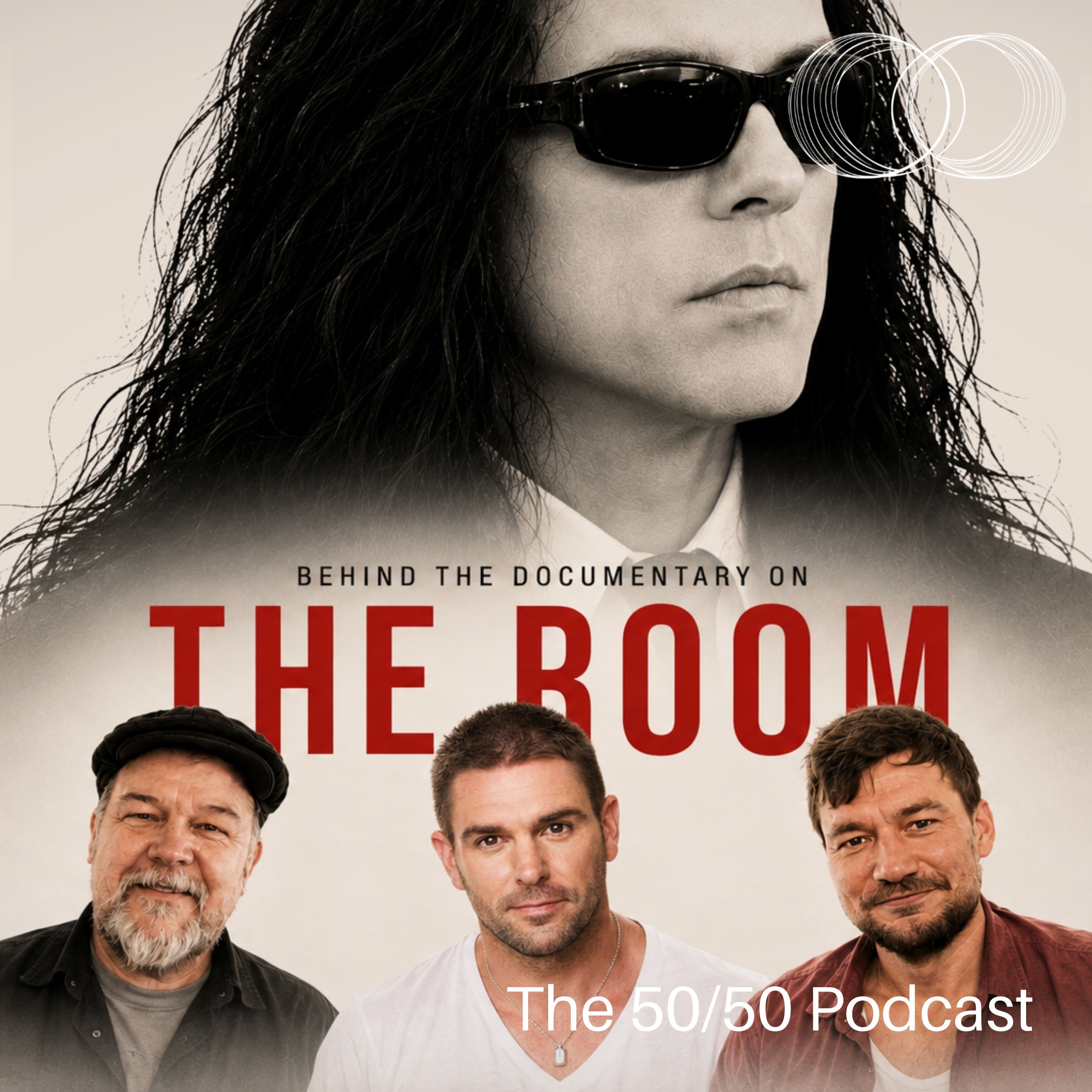
[00:00:51] Speaker C: That was the voice of our good friend Josh Folan talking about The Room, Tommy Wiseau's 2003 movie that, despite being was, well, a very bad movie, has garnered a huge cult following. In this episode, we sit down with Josh, along with two members of his filmmaking crew, Jonathan Mann and Ted Garvey, to discuss a short documentary they made called the Sound of the Room. Featuring never before seen interviews from two survivors of the set of the Room, Zolt Maigar and Tim D. Lloyd. This live action animated hybrid document is one you don't want to miss. And the way it came about is even more fascinating. Enjoy.
[00:01:34] Speaker D: It's a really cool opportunity for Wyatt and I to like, have you guys as a team here. And again, congratulations on finishing this project.
And I guess to hear it took five years and everything is like, let's get into it, you know, I want to hear what that process is.
[00:01:52] Speaker C: It's a very fun opportunity for us to be able to facilitate a decompression for you guys. It's almost like we're the mediators, you
[00:01:59] Speaker A: know, a civil service.
[00:02:01] Speaker D: How do you really feel? Yeah, how do you.
[00:02:03] Speaker A: What's really going on?
[00:02:05] Speaker E: Relief that it's got through it. But yeah, no, I mean, I guess when I signed on, I didn't really.
I kind of thought it would be like a year, maybe two year kind of process. But, you know, there were a lot of. At least, I don't know for anybody else, there was a lot of life events that happened also during the course of this.
[00:02:27] Speaker A: So as with anyone would. Over five years.
[00:02:30] Speaker E: Yeah, yeah, yeah, yeah, right.
So I don't know, I feel like a Completely different person by the time it was over. But, you know, can you.
[00:02:39] Speaker D: Can you guys give a little backstory just for the listeners of.
[00:02:43] Speaker E: Of. Sure, sure.
[00:02:44] Speaker D: The project, and then we can kind of dig into timeline.
[00:02:48] Speaker A: Yeah, absolutely. So the name of it at. At Release now is called Room Tone. The sound of the room and the, you know, the pitch of it. It's basically the sound mixer and the boom op from Tommy Wiseau's the Room, which, of course, a lot of the filmmaking community knows about already. If you haven't, God forbid, go see it and do it in the theater. Don't disclaimer for everyone. Don't go see that. Don't watch this movie on at home alone. It's a horrible idea.
Wait and watch it in a theater with a room full of people who know how to watch the room. The actual process of it, which is its own experience and its own thing. And. Yeah, I just cannot imagine how much less I would have enjoyed it had I not waited to do that and consume it that way. Anyways, it's the sound mixer and the product and the boom op from that production.
And I was the reason it came to me as a thing to make a short out of. I was reading the Disaster Artist book, Greg Sestero's book, who's the producer on the film. And basically Tommy's kind of second.
Secondhand man for the project. Even to this day. I mean, they're still touring the world with it, and Greg still goes out just as much, if not more than Tommy. So it's his book, and I'm reading it, and there's stills, photographs that Greg took during the production. And that's their. You know, their production photographer was just Greg taking pictures on a probably disposable camera. And there's a couple pictures in there of their sound mixer. And the first one, early in the book is. Is the sound mixer is in the parking lot in his tent with his head in his hands having a really bad day. And it says, like, Zoltz. Like, the caption of it was like, Z having a bad day or something. And I read this, and the. One of the first jobs I had worked on when I got to LA was Glenn Danzigs. The mother singer also makes movies, kind of, and he. I worked on his feature, and Zolt was a sound mixer on that. And I'm like. I read that caption and, like, I'm only out here a couple years. I'm just like, the name is Zsolt. Like, I read that. I'm like, how many Sound mixers in LA can be named Jolt, you know, like that is a crazy name. What a. What a coincidence.
[00:04:58] Speaker D: And.
[00:04:58] Speaker A: But you can't see his face in the picture. So I just.
[00:05:00] Speaker D: Whatever.
[00:05:01] Speaker A: Blow off, read the rest of the book. I can't leave my apartment for like two days. It's like I cannot. That's an amazing book, an amazing read if you have any connection to filmmaking.
The Back of the house of it. It's just a fascinating recounting of it is. Was just a total shit show. So I read the book and towards the end there is a picture of Jolt, their sound mixer with Tommy, Greg, and then the DP that they took up to San Francisco for the satellite shoot, which you're familiar with the project.
[00:05:26] Speaker E: They went.
[00:05:26] Speaker A: They shot a couple days in San Francisco. That's where they shot the football scene. That is like incredibly infamous and certainly featured in the disaster artist recounting of this very famous part of the production. And. But basically he went up there for that. So he was there the whole time. He saw everything. But there's a picture of him standing next to these guys and I can see his face this time and I know it's the guy I worked with. And I'm like, holy.
I'm sitting there reading the books. I'm just like, I have so many questions.
[00:05:52] Speaker C: Yeah.
[00:05:53] Speaker A: I'm immediately texting Joel on my phone like nanoseconds later, like, we have to sit down. I have to talk to you about this. I have to know more about your perspective of this project, especially seeing as you were apparently there for all of it, you know, even the. The satellite shooting, which, you know, you know, again the lore of it, so much of the crew was fired over the course of principal photography, then went through three dps and like just every department head for the most part was. Was cycled out a time or two. So, you know, he saw everything and there's just not. Other than Greg and Tommy, like in the hindsight of working through this over the years, like, other than Greg and Tommy, no one has a more comprehensive picture of how that thing went down. This incredibly infamous moment in independent filmmaking, you know, so that is kind of the genesis of it. And he was gracious enough to say yes. And he even. He was the one that suggested bringing the boom op Tim that worked with him for all the production as well. So that's how it became a two person interview. And the best part of all this, or the most interesting part of all this maybe is it was during COVID So that made even the beginning of this difficult and hard and slower and complicated than it had to be. And that is part of why it took me probably another year or so before we actually sat down or close to and sat down and did the interview.
[00:07:12] Speaker D: Right.
[00:07:12] Speaker A: So that's the essence of it.
[00:07:14] Speaker C: I love it. I mean, it's very pure in a way too. It's very coincidental. And clearly you have, as we all do, a passion for the room. And that's kind of what fuels all of these sort of component pieces to it.
I'm curious at what point you start. I mean, at what point did you think about, okay, I know I want to interview these people, but what is the sort of scope of the film gonna look like? At what point did you start thinking about the visuals? And you know, then thereafter bringing in Jonathan and Ted, who we have on this, on this call.
[00:07:47] Speaker A: The. You know, I.
It's so long ago that I don't remember if I had it in the can before I thought this, but it couldn't have been too long thereafter, even if not before that. I was like, you know, I, I mean, I went to great lengths to find some crazy ass wallpaper to put them against to at least get the talking head nature of it. Something visually interesting.
[00:08:09] Speaker C: I like the wallpaper. It was great.
[00:08:10] Speaker A: It is. It was a crazy, crazy. This one, I mean, she was fantastic. But this, this woman who had an apartment in Mid Mar Vista. And yeah, you know, obviously combing through Gigster or wherever, I would have been looking for that interview location, I saw that wallpaper. I was like, that's it.
[00:08:27] Speaker B: That's like.
[00:08:28] Speaker A: That is as interesting a wallpaper as you're going to get in an apartment for an interview here.
So, you know, I went to Links to make that interesting, but it's still not interesting. It's just two people talking on a couch. So you got to do something. And I knew I wasn't going to have archival footage to work with of any substance.
So what are you going to do? You know, And I had seen years ago, I had seen at Sundance, actually the, the one time I went to it, I saw a documentary called Montage of Heck by.
His name's Brett. What is his last name? I'm spacing. But he's a, a very accomplished music, music documentarian. And he did one on Nirvana that was.
He had got a hold of some audio tapes that Courtney had had like in a storage locker or something. And it was just tapes of Kurt sitting at home, Kurt Cobain sitting at home, just like riffing on his guitar. And like, they're very slice of life moments. So, like, it's not like, they're not purposeful recordings necessarily. It's just like a tape recorder running and him being alive. And for that reason you have him just like jamming on his guitar. And like, someone will knock at the door and he'll walk over to answer the door and like, tell them to off or something and go back to playing or like get a phone call and. And have a phone conversation and then sit back down and play. So it's like these just moments, you know, and what he did, to his credit, to make that interesting and to turn it into a film was using this really crude punk rocky animation thing. And like I said, and Jonathan probably heard this at length. No, we were discussing this project, this exact story. So this is very. Probably a road for them to hear. But yeah, the, you know, the. That was the idea there is to create something that we could do something crazy with visually and interesting because he knew the stories were going to be good, but we got to look at something to film. So show me something interesting while I hear this crazy and a. A really crude, funny. Do something crazy with the animation style was always the idea. And then to, you know, upgrade that immensely, Ted came up with the idea of the big bad wolf little three little piggies motif. And that was just like, oh, my God, that's so brilliant.
That was so good.
[00:10:43] Speaker C: Really smart.
[00:10:44] Speaker A: How many other ideas did you go through in your head before that came to you, Ted? Or was it just like you sat down and started talking about and you're like, yeah, that's it.
[00:10:50] Speaker B: Well, you know, like your job as an illustrator sometimes is just to come up with three ideas. And, you know, you do the obvious one and then you try to come up with two more. So, you know, I don't know, just because he was so angry or difficult, you know, it just seemed like everyone was sheep or pigs or something that's being slaughtered. So it just sort of came. I don't know, I just.
I can't remember how much I dwelled on it. I just remembered you liking it so quickly. And also you had a quote or something, or I guess it's the quote at the end of the film.
[00:11:26] Speaker A: Oh, shoot, this pig. Yeah, yeah, yeah.
[00:11:29] Speaker B: So it was like, oh, it was synergy or something that you felt.
[00:11:33] Speaker C: Yeah.
[00:11:34] Speaker A: Did I. When I. So, yeah, the flowchart of that did. Had. I. I had an edit right when I. When I reached out, Jonathan, I. Were you. You were on board first, right?
[00:11:45] Speaker E: Yeah. So I remember, guys, it was Covid. I was working as a media manager at this place and you gave me a call and I, as you took. You got me to read the. The Disaster Artist, which.
Okay, I should read the book. That's good. Okay, this is.
This is great.
And I think we. Do. We have like a. Do we try out another illustrator at first?
[00:12:15] Speaker A: Yeah. Well, I think. I think I. I believe. Yeah, you were on first because I think we did like some mock ups with you.
[00:12:21] Speaker E: Yeah, I mean, yeah, he has like. Oh, you can just draw. It doesn't have to be good. I'm like, I don't think you really can. I can't draw at all. Like, it's not.
[00:12:29] Speaker A: Yeah, I. Yeah, keep that.
[00:12:30] Speaker B: That's.
[00:12:31] Speaker A: That's to be said. I have no idea about anything to do with the workflow of animation. The work involved, the, you know, whatever. I have. All I know is it's moving pictures that go in the place of live action. That's the extent of my expertise, probably. I have read. I have like an interest in animation. I have read concept books and like, thought of, like, trying to teach myself to use some of the modern tools to do it or to. To create animation, but I have not gotten very far in that workflow. And just. Even the conceptual stuff about animation, kind of like the key frame motion concepts and stuff, I was like, this is way more intense than I was thinking and I don't have the time for this. And I didn't really get very far. So, yeah, I know nothing. And I. That is, I think, incredibly demonstrative in the way how flippantly I proposed to Jonathan. Let's just do it.
[00:13:23] Speaker E: Like. Yeah, so I got like, drew something Ms. Pain or like, you know, that.
And they're like, yeah, we're gonna. We're gonna find somebody else to, you know, draw this stuff.
But yeah, no, and then I think.
I think we tried somebody else for like a week or two. But then I remember when I saw Ted's like, drawings, there was like, oh, man, this is like, really cool. And it's got like, its own. He had his own vision for, you know, what it should look like. And I don't know, it really surprised me.
[00:13:55] Speaker A: Yeah, there was. I did. I remember. I found.
I don't remember how it would have been again so long ago. And it didn't get very far. But yeah, there was a woman who I think also may have been in Brooklyn, actually. The. But there was a woman that we talked to and she showed interest and I. I think it went as far as us sending her stuff, and she just didn't.
[00:14:13] Speaker E: Didn't really one thing done, but.
[00:14:16] Speaker D: Okay.
[00:14:17] Speaker A: I don't remember her sending anything, so I feel like. I feel like it was just kind of like it. I don't know, whatever.
[00:14:22] Speaker D: She.
[00:14:22] Speaker A: Once she got it wrapped her head around what was actually being asked here, she was probably like, oh, no, that I'm not doing this for basically no money.
[00:14:32] Speaker D: Yeah. Can you guys talk about the. The timeline of actual production and like, so you go from reading the book
[00:14:38] Speaker A: to them together and keep us on target here. We're just gonna ramble if you don't.
[00:14:42] Speaker D: Yeah, no, no. I mean, it's.
[00:14:44] Speaker C: It's.
[00:14:44] Speaker D: It's awesome.
[00:14:46] Speaker C: It's awesome to let you guys ramble, but also we want to, you know, try to. Try to write some stu.
[00:14:51] Speaker B: Sure.
[00:14:51] Speaker A: Yeah.
So, you know, we did that interview. I think it was. I want to say it was summer. Late summer maybe, or. No, actually, I can picture the date. My goddamn premiere project. It's all. It's November 9th or something like that. So we shot the interview in November of 2020. And like I said that this idea came to me. I was sitting at home reading the book during early Covid and had been trying to get the interview done and Jolt had actually left. You know, like, he's from Hungary. So when the really hit the fan with COVID he left and went back to Hungary.
[00:15:24] Speaker D: And he's amazing, by the way. Like, his just him on camera, his energy and everything. I don't know. Like, he's just such a positive chill guy. Yeah, yeah.
[00:15:36] Speaker A: Like you say, there's a quote, one of the things in the interview, he's like, I am a very chill.
[00:15:40] Speaker C: I. I remember that very vividly. I was like, yes, you are.
[00:15:44] Speaker E: You are.
[00:15:44] Speaker A: Yeah, great, great self awareness. Yeah.
[00:15:46] Speaker B: The.
[00:15:47] Speaker A: So, yeah, he went back there and it was really hard to nail down a time to do the interview. As a result, Tim is still based in la, fortuitously, or he probably never would have got it done.
[00:15:56] Speaker E: But the.
[00:15:58] Speaker A: He basically. So he was back in Hungary and he basically called me out of the blue. And after we had already put off the interview a couple times because of travel and stuff, and he's like, hey, I'm gonna be in LA this weekend. Do you want to do it? And I was like, yes, let's do it. And the thing about that was there's a whole tangent I can go into about. I hadn't watched the Room yet, and of course I wanted to prior to doing this interview, even Though, you know, I read the book and did my research for sure. But the, yeah, right, the, you know, and they're not doing screenings. That wasn't even an idea in my head though. I didn't know that I needed to see.
[00:16:31] Speaker C: Right.
[00:16:32] Speaker D: Anyway, did you have, did you, did you have a direction prepped going in of like, okay, I know I want to ask him about this. Or was it really just. I'm just gonna sit here and, and say, talk about the entire.
[00:16:43] Speaker A: Yeah, I mean I've done, I've done a fair amount of interview based documentary stuff before. So I've done a lot of interviews and certainly have whatever, I don't know, a workflow for that and always pushing. It's important to me when I'm doing an interview to especially someone, I mean not. They had never done anything like this, but I've interviewed a lot of like game and toy makers and stuff for all my nerdy nostalgia video game stuff and stuff like that. And you know, those guys have heard all those questions a million times that are just kind of the service level stuff. So it's very important to me to do enough research and dig down deep enough to have things to say and ask and prompt that are going to be outside the bounds of what they've heard. So yeah, I have plenty of experience doing that and I have plenty of confidence that I was going to be able to, you know, get more out of them than just whatever Greg's book might have proposed, might have, Might have shown us or whomever else. And then, you know, I also have the good fortune of knowing they've never done an interview. And what really interested me about this was there are these elements of the production, Tommy's accent and there's things about just the sound side of this film that are interesting and unique. And obviously the sound team is going to have a unique perspective on that or the only perspective on that. And that I knew was a asset as well that I was sure to work into, you know, a whole.
[00:18:04] Speaker D: That you've quite.
[00:18:05] Speaker A: I mean the interview probably lasted like two hours and some change. So it was.
[00:18:09] Speaker C: And, and the fact that this, this guy was one of the only constants throughout the whole process along with Tommy like that, that to me is fascinating. You have a whole other perspective on the production, not only with sound, but just with him. Get. Getting to see it from start to finish.
[00:18:23] Speaker E: Right, right.
[00:18:24] Speaker A: And see the other people come and go and.
[00:18:25] Speaker B: Yeah, yeah, right.
[00:18:26] Speaker A: 100%.
[00:18:27] Speaker D: Yeah.
[00:18:27] Speaker E: 100.
[00:18:28] Speaker A: And that is. It shines, I think a great deal in the end product too that you know, they are able to kind of string together things that there are pieces of out in the world. And that's what I've learned to putting this out. There is a whole, you know, a culture for this film and there are people.
[00:18:41] Speaker C: Absolutely. There's a built in audience, they are
[00:18:43] Speaker A: steep in it, you know. So I enjoy hearing those people who have this certain perspective and still I have heard enough feedback telling me, oh, that shit I haven't heard, you know. And that is of course maybe the utmost compliment you can get out of documentary about something like this that is just in the zeitgeist. So, you know, so.
[00:19:04] Speaker D: Jonathan. Ted, I'm. I'm curious what. Oh no, no, Ted, go for it, go for it.
[00:19:08] Speaker B: Oh, I was just gonna ask did you know going into the interview that he. How that story was going to wrap up with the skateboards and all? So that pure discovery with the interview.
[00:19:20] Speaker A: 100%. And honestly I, I can't even take credit for that either.
The, you know, we talked for an hour and 45 minutes or whatever it was. And then Jolt's like, I, you know, I, I have a story. I, I'm sure I asked them, do you have anything else you want?
[00:19:33] Speaker D: You know, anything.
[00:19:34] Speaker A: I didn't prompt you, so maybe I came out of that. But either way Zolt was like, I have the story that I'd love to tell. It's not about the room, but it's about Tommy. And I don't think it's ever been told before. And I would love to tell this, you know, the, the footage. I think even at one point, it may have even been in the edit before I had really got into killing babies and stuff. But there's like a moment where he asked that and I'm like, Joel, that's why we're here. Like, yes, right. We're here for you to tell me. Don't even know about. Yeah, please do. And then yeah, he tells this story that is not even about the room, but it's about him and Tommy working on this little documentary project about homeless kids in Santa, Santa Monica after the fact. And you know, it's, it's beautiful as just any ending probably, but it's extra beautiful because it juxtaposes what Tommy is thought of so much so it's such a, such an antithesis of behavior for everything he is known for of being this, you know, that's why he's the big bad wolf. Like this monster that's yelling at everyone and, and you know, a lot of that's justified. There's a lot of things about his behavior and whatever during the shooting of the Room that warrants that. So it's not to say that it's all unwarranted, but it is a just polar opposite kind of behavior and a just a really nice, I think, point about, you know, I, I, I think, I'm sure this was a very stressful time for him. Whatever, you know, doesn't justify bad behavior or doing, being a. But it was probably, it's don't, you know, he didn't know what he was doing, and he had to, at that point, by this point, by the tail end of that production, feel that immensely. So there's that. And, you know, any creative endeavor is stressful for people, for artists, especially people dealing with the entire scope of it. So there's just a million reasons why it would have been a hard time in his life too. So, you know, the idea that you could paint him in a more humanistic light by the end of this 27 minutes, I think is a really beautiful thing too, that I just could not have been more excited about. And yeah, Ted and Jonathan's expression of that visually, too, was beautiful and, and, and really was a great way to kind of finish the film out.
[00:21:42] Speaker D: So can we, can we get into that? So you, you finish this interview, you have the cut, and then you bring it to Ted and Jonathan. Can you talk about, I guess, Ted and Jonathan, if you guys want to hop in here too, of like, you, you get this footage. What was that? What were those first conversations? Like,
[00:21:59] Speaker E: so I think we, we both watched it.
I mean, so when Ted kind of sent, you know, the Big Bad Wolf and Three Little Pigs, I don't know, we started, like, I don't know, we was, we also, like, would get on Zoom and have conversations about how we wanted certain things to look, I think. But I mean, honestly, Ted was really the visionary for a lot of these.
You know, like, he kind of had a, he knew what it should look like. And then we would just kind of discuss, like, I don't know, comedic beats, I guess, like, like, how could we add a little bit of comedy here? And then, I don't know, sometimes he would send me the slides and, or the, you know, the illustrations, and we'd have a very specific plan. And then sometimes I'd be like, oh, let me try something different here.
But yeah, I mean, I think, I don't know.
Do you have anything to say, Ted, or.
[00:22:53] Speaker B: I was gonna say I would, I would storyboard something and then try to get it approved. And then I would go to illustrated and break it all down.
If the hand had to be gestured or, you know, it was just like an animatic kind of simple structured animation. So every element had to be drawn, but then it also had to be masked and cut from the thing so he could animate it. So it just took longer than I was expecting because I can draw pretty quick, but, you know, like breaking it out into elements and even like the back end of an arm that you're never going to see still has to be drawn and stuff like that. But I would have more like elaborate storyboards, sort of like trying to hit all these like comic beats or ideas or something. And then, you know, rightfully they would simplify and just get it sort of done, you know, and it's like, okay,
[00:23:45] Speaker A: yeah, I mean, I guess we talk about that. The, you know, again, having no background in animation like the.
And I'm a producer probably most prominently by trade and the.
It was important to me especially because I didn't have an understanding of the workflow necessarily. So it was important to me to create one and have something that like gave the process a backbone and allowed us to compartmentalize and hopefully, you know, obviously lists and being able to check things off and like, okay, this is something we're gonna get done.
[00:24:15] Speaker C: That's your strong suit for sure. From what I remember talking with you, it's like you are about the Google Docs. The.
[00:24:22] Speaker B: For sure.
[00:24:23] Speaker A: And I had one. It's funny, it's funny you bring up Google Docs. There was certainly one of those. And yeah, the. So like, you know, and you know, the original interview was like I said two something hours. So I mean my first cut might have been like 30.
[00:24:37] Speaker E: It was like 40, 30 or 40 minutes.
[00:24:39] Speaker A: I think it was like 37 or something was the very first cut and I got it down to 32 at one point and now it's down to 27 and. And we can talk about that as we go. But yeah, whatever the case, it was, it was obviously shorter than the original interview. And there's obviously things I'm losing by cutting that out. As much as I would love to have all of what they talked about in there.
And the way I did that was to make it kind of chapter based is to have literally, you know, we finish a topic and then we just, boom, transition to a whole new thing, you know, and I always had the idea, I mean, correct me if I'm wrong, Jonathan Ted, if this was something we Cooked up. But in the, in the document I basically made it these chapters and, and I had them kind of named. And we talked about like the moments within the chapters that I wanted to cut over to a visual and, and, and see what's happening. And originally it was probably, you know, probably a hilarious amount percentage and we probably talked about, I don't know, getting that down. And then once we got into it, that's certainly why I know at one point when we were at 32 and we're, I don't know how, three and a half years into this process and I'm like, we gotta finish this shit, guys. Yeah, we gotta finish this guys. And I literally, I. It was, I mean, probably the best possible thing for the end product, but I went into the edit and just hacked out five minutes. And most of that was animation to damn, give us let, you know, let us see a end of the tunnel light at the end of the tunnel. And you know, that cut out a lot of both content in general, but animation maybe from the last third of it because we were doing it in chronological order, you know, through the edit. So you know, that was kind of the, the workflow is to, you know, the whole time we would say, okay, we're going to get this chapter done. And that obviously starts with, with Ted and illustrating this stuff. And I would have, we would go through and have maybe a conversation about a few chapters at a time where we go, okay, this is my idea. And I would have kind of like the dialogue or I even had that originally I just had like the beat. And Ted was like, it'd be really helpful if you could put the fucking dialogue in this document. So I know what's happening in the interview while I'm supposed to be animating. That's like, that's a good idea, Ted. You got it. I went in there and did that. But basically there were these beats and we would talk about, okay, what are we going to see for this? You know, and I would have my dumb idea or half baked idea that I would think made sense to accompany it. And that would just, I think in most cases, Ted, just be inspiration. And you would go in there and actually flesh out something that would both be maybe more interesting, but also fit into this big bad wolf, little piggies motif, you know, and, and kind of make it a story. Make that cut, make those cutaways their own little story as we go, you know. And, and that I think was a really helpful thing too with the end product. But that was kind of the, the step by step workflow. And we would compartmentalize those. And, you know, once he would do his illustrations, he would send over storyboards. We would talk about if I had any ideas or things that didn't work or maybe we could, we could fiddle with a little bit. We would bounce back and forth. That was necessary. And then he would go back to the drawing board, do the actual illustrations. I'll put it all in the Photoshop, send it over to Jonathan. And then he would have a whole ton of content to sift through and turn into actual beat by beat moments that we could put into the edit.
[00:27:44] Speaker C: We'll be right back.
[00:27:50] Speaker D: I want to play like a scary song from like a horror movie before this, but all the copyright stuff, so I can't but imagine there's like a scary song playing right now. And it's like, oh, the 5050 horror festival is coming up. You need to submit your short film soon, by August 7th. August 7th is the deadline. You have two months to submit your short film. You have two months. And then after that there's another deadline.
Read it here first.
Submit now. Submit now if you. Damn.
No, but for real, we have our horror festival coming up in Octo. October. October 18th is the actual day. Get your short in by August 7th if you want to be a part of it. We look forward to viewing your submission on film. Freeway 5050 horror. Those are the numbers. 505 0. Horror.
[00:28:50] Speaker C: Was there a specific chapter or part of the short that sticks out to you as either something you remember working extra hard on or being
[00:29:02] Speaker D: a huge
[00:29:02] Speaker C: challenge, which oftentimes is the most rewarding in turn?
[00:29:08] Speaker A: I think Ted should answer that first.
[00:29:10] Speaker E: I think. Yeah.
[00:29:11] Speaker A: Oh, I don't.
[00:29:15] Speaker B: I don't know. I mean, the one that just made me laugh inside was just when Marcus is it? Marcus was the cameraman?
[00:29:24] Speaker A: Yeah, one of the DPs.
[00:29:26] Speaker B: Yeah, yeah, yeah. He was, you know, he was filming all the time and it was like you'd never see him. And we did the gag where.
[00:29:32] Speaker A: Oh, no, Marcus was the behind the scenes photographer.
[00:29:35] Speaker D: Sorry.
[00:29:35] Speaker B: Yeah, yeah, yeah, yeah. Where. So he's filming everything and that he, you know, he hides in the bush. Sort of the the Simpsons meme.
And I don't know why enjoyed doing that. Like, it was just kind of like, oh, it's like, I've watched the Simpsons. I know this joke. It's a popular meme. And it just felt like, oh, yeah, he's just gonna hide in the bush.
[00:30:00] Speaker C: And it's such a fun opportunity to like, do something that you're a fan of.
[00:30:04] Speaker B: Yeah, yeah, exactly, exactly. And you know, and deconstruct it and then figure out a way to sort of like what.
[00:30:10] Speaker A: I can see that passion, Ted. That's one of the, you know, you go through in the marketing process, festival, all that. You got to pick out your stills. And that's one of the ones that's like beautiful and ornate enough and has enough going on. That's like. That's a great demonstration of like maybe our most complex animation moment because not only do you have, you know, it's a close up of this piggy with the. The camera in his hand.
[00:30:34] Speaker E: Yeah.
[00:30:34] Speaker A: But in the lens of the camera you can see what he's shooting, which is actually, I think that's the moment where they're shooting the he's. The shed thing where he can't get the line. The one dumb line right when he's coming out of the shed. And, you know, there's the animation of like it turning from morning to night and are they ever gonna get the scene done? And that's Marcus filming that, I think in that moment, if I recall correctly, where whatever the case, you can see them in the lens of the. Reflecting out the lens of the camera. And that is just a really cool, you know, gives just, I don't know, depth and creates a world that obviously animation is. One of the ultimate goals with that is to actually make it feel like, even though it's animated, an actual moment.
[00:31:14] Speaker E: Yeah. And that's something we. I feel like we. We kind of like. Because that was something we also kind of came up with when we would, like, talk. Because we're like, oh, wouldn't it be fun if we just had Marcus kind of around the whole, you know, like, he's always kind of hiding in the background from a lot of these, like.
[00:31:30] Speaker C: Right.
[00:31:32] Speaker A: I believe at one point that was. That was an asterisk at the top of the document that said just as a reminder to all of us, every one of these moments should have some illusion to Marcus filming it. You know, it's just like in the animation too. And I don't know if this. I think this was you. Jonathan did that. The little red dot flashing, that's like out of character for the animation. But I think it's perfect, you know, of this. This flashing red dot on the camera that's always like this kind of like very stark reminder that this is all being documented at all times by someone that's not just rolling while they're supposedly rolling, you know.
[00:32:07] Speaker D: Right.
[00:32:08] Speaker A: And that's Really a fun element.
[00:32:10] Speaker D: Well, the, like, the lore around the project itself of, like, of. Of the movie is, like. It's so much more than a movie, you know, And I think you guys do a great job.
[00:32:19] Speaker C: It was never just about the movie.
[00:32:21] Speaker D: Yeah. You know, I'm. I'm curious to know, like, you know, Ted and Jonathan, your relation to the movie before this project, if there was one.
[00:32:34] Speaker E: So I had.
I. I actually. It was. It. It felt, like, weird because, like, I'd actually seen the Room, like, maybe three or four months before Josh approached me
[00:32:44] Speaker A: for the first time.
[00:32:46] Speaker E: Yeah. But then I, like, seen it, like, at least two or three times since then, just because, like, I don't know, I. I found it, like, hysterical and then.
No, actually, I don't know if that's true. I think I actually. I think I saw it after I read the book that you gave me, J. Or you had told me to read. And then, like, I was like, all right, I gotta see this movie now. Just because, like, you're reading these stories, like, Right. I don't know.
And then I kind of became obsessed with it.
I'm not gonna lie.
[00:33:21] Speaker A: You know, so weirdly fascinating.
[00:33:26] Speaker E: But, yeah, no, I mean, obviously I had known about it, but I don't think that I'd ever really engaged with it before.
But, yeah, that was my relationship with him.
[00:33:41] Speaker C: What about you, Ted?
[00:33:42] Speaker B: Well, I'm a big fan of just filmmaking in general.
When I started out in my career, I worked with a press kit company and they shot behind the scenes.
And I was able to go out and sometimes shoot behind the scenes myself and wanting to be sort of an indie filmmaker, loved films like Ed Wood, just whatever the. Whatever it takes, you know, the spirit of getting something done.
And, you know, this film is like, you know, an updated version of that.
I'm sorry. You know, the book. And the real film that they made about the book is an. You know, is. It's just the next level of that story. And it was just fun to be a part of telling that story. Just because I have that experience of, like, being on set shooting and how complicated sets can be, and they're so unintuitive, you know, from an outsider. They don't.
You know, like, my friend who is a. Who's like a lighting guy, he was like, you know, sometimes they have to make it so fake for it to look real on film. You know, it's just so unintuitive, like, you know, the way people have to stand or crunch or stand on a box or whatever it is. That they're doing the illusion of reality is just an illusion, and it's just. It's like a magic trick. So I always love that kind of thing, and that's what always draws me to these sort of things.
[00:35:03] Speaker C: It's so funny because the fans of the Room are people who love film so much, even though, like, it's objectively not a good film. So they must love the process so much. And it's like, I feel like the Room is such, like, a testament to the struggle of indie film, in a way.
[00:35:22] Speaker B: Yeah. It also says filmmaking is hard.
And, you know, you hear that adr, you see the blocking choices, right? And, you know, we all think we could make a better film. Like, oh, wow, they really effed up this great idea or whatever. And then when you see it done badly, you realize, like, no, it's actually really, really hard to make a good film that holds that illusion all the way through.
I really. I enjoy that aspect of filmmaking. And yes, I'm one of those geeks who just digs in and likes to enjoy that media. So I feel like this film about, you know, another point of view will help fans just sort of enjoy it because they're like me. They just want to dig in and find more, you know, and I think that's good.
[00:36:06] Speaker D: Have you guys been able to show this to fans yet?
Like, have you had a screening?
[00:36:12] Speaker A: I mean, I did screen it at a festival earlier this year in April back in Ohio, but I mean, yeah, I've. You know, it's. I mean, I don't even know if we have time to talk about the extent of, like, the marketing stuff that I've started since it came out at the end of last month. And, you know, it's. It's such an interesting intersection. I've made so many movies, and I do know I've made a few movies where they have a real world element to them that give it an audience and a life and a reason to be interested in it beyond just a piece of storytelling. And I know how powerful that is and how useful it is for marketing. This is like a whole nother beast, though.
[00:36:53] Speaker C: It's.
[00:36:53] Speaker A: It's. It's so interesting how, you know, there is, like, I think all the time about, like, there's a lot of little just quotes out there about, like, anyone who, like, one of the best reviews I've ever seen for it is anyone who gives this film anything other than a 10 or a 1, anything in the middle, like, you're a psychopath. Like, it's either it's either the. It's either this beautiful thing for how calamitous it is and that's a 10. Or it's just. I don't get it. It's a piece of. Get it on my face. Like anything in between. Like, you either didn't give it the right, I don't know, level of effort to. To consume it the way it should have been consumed. Whatever. There's. Whatever you want to say about that. Like, it is such a. I guess the polarizing, obviously, is the point of that. It's just. It's such a polarizing piece of media and the people who are giving it the tens are just.
[00:37:41] Speaker E: They.
[00:37:42] Speaker A: Insatiable. Insatiable. Like, you know, like Jonathan said, like, I didn't know about it and I got exposed to it and I started kind of taking it in and I. I got obsessed with it.
[00:37:51] Speaker C: It's just.
[00:37:52] Speaker A: It's. It's crazy how fascinating it is. And I think Tommy is obviously that. He's such. It's just such a. It's an intersection of, like, he has this vision that he very rarely. It's so hard to find the resources to make a film, especially at the scale this one was made. A lot of money was spent on this movie. So, like, someone who gets enough money together to tell a story like this normally has some kinds of checks and balances. Like, they have to deal with an investor or it takes time and they have to, you know, rewrite and, like, spend time to learn to get better and make smaller projects that show and demonstrate their capabilities.
[00:38:31] Speaker E: Right.
[00:38:31] Speaker C: They've, like, proved themselves in some way.
[00:38:33] Speaker A: And Tommy and this film are this beautiful intersection of, like, he had the resources and all he had was, like, the desire and no one was in his way to keep him from just exercising that vision in a completely unfettered and unchecked and balanced way. And that is why it's, I think, just a train wreck that you can't look away from because, like, he. He did not put in the time you're supposed to put in before you get the keys to this kind of storytelling vehicle. You know what I mean? And it just.
[00:39:04] Speaker E: It's.
[00:39:04] Speaker A: It's just beautiful. That's why it's so crazy to watch because he's doing. Trying to do so much and no one told him no about any of it, you know, despite not having the background. Like, that's the thing. Like, if you're. You get to a level or a level of experience where, like, you people aren't telling you no. Maybe but you've put in the, you've done the 10,000 hours and like you're
[00:39:28] Speaker C: the person, all of that, right?
[00:39:30] Speaker A: You're, you're the one telling yourself no, in those cases, like the things that suck, it's your job to, to, to see those and filter them. And like he didn't have the filter at all.
[00:39:37] Speaker E: And it just.
[00:39:38] Speaker A: Whatever he wanted and it's just beautiful. Yeah, it's absolutely beautiful.
[00:39:42] Speaker E: I have to say I feel like having read the book though, it allowed me to engage with the movie because like I was reading the book, I'm like, oh, I gotta see these scenes that he's talking about. Because it's just, it's, it feels like stranger than fiction sort of. I don't know. But it really allowed me to engage with the movie, I think a lot more. Because I don't know, you're reading all of like how they did all these scenes and whatnot and then being able to watch it, you know, I was chuckling just thinking about, you know, I
[00:40:14] Speaker A: think that's the correct order too. I agree, Jonathan. I think that is the correct order of media, of associated media consumption is to read the book first, then watch the movie again. Especially if you are a, if you are interested and, or, and or are a filmmaker. I think that is absolutely the way to read it for, or to consume it for a filmmaker. If you're just a cursory fan, maybe that shit's going to bore you and you're not going to be, it's not going to hold your attention perhaps. But if you have any idea about. Yeah, like Ted said, how difficult it is, then I think that is absolutely the order to do it in. Read the book, read Greg's book, then see the movie again, ideally in person at a theater with people.
[00:40:49] Speaker D: Did, did you guys feel like a, any sort of pressure making this? Because again, the Room has this massive cult following and like you guys have found this very specific niche way in. That is not, at least for me, I've not seen been done and you're getting these stories that have not been told. Like was there a, a sense of pressure or this? Like, I mean there's responsibility always as a filmmaker when you're making a project. Hopefully you feel that. But like, yeah, I guess was there a sense of pressure and, and I guess the follow up is how much did that project really change over those five years? You know? And was pressure a part of that initially?
[00:41:29] Speaker A: No, for sure, because again, I had no idea, you know what? I had no. I read the book. And obviously I knew they were making a film about. But I just had no idea the scope of. Of immersion that people who are fans of this take with it. So, no, initially, no, over the course of it, yes. And especially in the marketing, I'm constantly like, again, that's. I don't know if we can get to it. But, like, I'm going pretty far with how hard and unabashedly I'm pushing it in people's faces. And like, even in that, I find people, some of them are just like, oh, my God, yes, give that to me. Oh, my God, yes.
[00:42:06] Speaker E: I want more.
[00:42:07] Speaker A: I always want more.
[00:42:07] Speaker C: It's great.
[00:42:08] Speaker A: But some people are just like, we've seen the enough.
[00:42:10] Speaker E: Like, I.
[00:42:10] Speaker A: This. Another remake or like, you know, because they just. And this was not a plan of mine, but they.
[00:42:15] Speaker E: The.
[00:42:16] Speaker A: The rumor turns that Bob Odenkirk charity thing dropped the day before ours did. I had no idea that was coming. And that has been allowed a lot of, like, really coattail, intensive marketing stuff. You know, there's just a lot more chatter out there than there would have been otherwise. And the things I'm doing for marketing are very exploitative of that. And there are days where, like, it emotionally wears on me. Like, oh, God, I feel like I can. I'm waiting for the director of that to talk shit to me, actually.
[00:42:41] Speaker D: Right.
[00:42:42] Speaker A: I'm waiting for Brando to be like, dude, man.
But also, I know because the project was born out of my absolute unfettered curiosity about wanting more of this topic. So I feel that level of purity to it. I know that it was born in, like, a.
And a. Whatever and a condition that is compatible and, like, with the room fan in mind. So, like, whenever I get a little bit maybe overwhelmed by, like, maybe I'm being too in your face about this. I know that they want it. I know the person that I'm trying to get to watch this does want it. I just got to get them to look at it.
[00:43:21] Speaker E: You know what I mean?
[00:43:22] Speaker A: And that's always the. Whatever. The justification I get back to you to send some more tweets and send some more Instagram fucking comments and whatever to try to get it out there. But yes. So the first thing I did actually was sent to Greg and Tommy. I wanted them to, and I didn't even. I've learned more about that, too. There was another documentary in 2016 that came out that Tommy threw a fit about and tried to sue into oblivion and lost and had to pay them 700k. And that film's never came out. And all the Kickstarter fans or backers of that documentary project are irate that this film has not come out, especially now that the litigation has over a decade run its course and they still have the film. So they're just. There's just layers and layers of lore and whatever. And so I learned that. So I. Tommy never got back to me, but Greg did. Greg loved it. I sent Greg a Blu ray the other day. You know, like, the.
I've sent it to some of the actors as well, some of the day player actors in the film to get, again, just like, perspective on, like, I don't. I don't doubt that Zolt and Tim are giving me a honest look through their lens, but I'm certainly curious about whether their lens is reflective of. Of at least the aggregate, everybody else's lens of that production. So I'm trying to amass those. Both opinions in general, but also the endorsement from those people, you know, to. To make sure that as many of them as I can are okay with it and supportive of it. That's certainly an important thing for me and also, goes without saying, is a helpful marketing tool if they do.
[00:44:58] Speaker E: Yeah, I would say I didn't really feel any, like, the. That wasn't like, pressure because, like, you're. You're working on something, especially you're playing in a playground where, you know, you're like, this is a cool. You know, I want. I also wanted more of this movie after I finished it and finished the book.
So getting to work on this kind of like, felt a way of sort of keeping that alive.
My only concern, I guess, at one point was like, you know, are we, like, being too mean to Tommy or, you know, like. And. But I think that we also, you know, we try to remedy some of that with the ending and.
[00:45:34] Speaker D: Right.
[00:45:35] Speaker E: Being fair because again, yeah, I mean, he did do some shitty things. But, you know, it's also. You can kind of understand and like, Ted was saying, you know, like, making a movie is just a hard endeavor and you don't really understand that when you're going into it, especially the first time, you know.
[00:45:53] Speaker A: Ted, how did you feel about showing Tommy's falling off?
[00:45:56] Speaker B: Oh, you know, I had a note. I wrote it down.
[00:45:58] Speaker C: I wrote, yeah, are we gonna. I was like, are we gonna talk about that?
[00:46:03] Speaker E: That was the moment where I was like, all right, I don't know if we're going, you know, we're going too far here.
[00:46:10] Speaker B: Well, so again, we have a Google Doc and, you know, you're just going down the checklist. It's like, okay, I got some time this weekend. I'm going to work on this.
Or Jonathan's pushing. It's like, hey, I could work on this if you could just deliver something to me. So, like, okay, I'm going to work on this. And then I would go through, read it, and then I go, oh, I emailed Josh and said, all right, well, you have the whole, you know, sock on the penis thing and you want it to drop a few times, you know, so how do you want to handle the penis? Like, do you want to cleverly hide it between, you know, you know, you know, there's a gag of, like, hiding the penis behind the lamp or hiding behind the, you know, a crew member going by or something, and he said, what are you talking about? Just show it.
[00:46:54] Speaker D: Right.
[00:46:56] Speaker A: That sounds. I don't remember this moment specifically, but that sounds like something I'd say.
[00:47:02] Speaker B: Yeah, I'm just used to, like, television rules.
[00:47:04] Speaker A: No censorship ever. Right, right, right, right.
[00:47:08] Speaker B: So even. Even when I watched the. I just recently rewatched the. The.
The movie here, and that. That's. That moment sort of stood out to me. So just because it's funny to me, it's great.
[00:47:21] Speaker E: Very.
[00:47:22] Speaker D: I love that you wrote that down on your. On your little note on the side there.
[00:47:28] Speaker B: It's such a TV thing. Like, oh, we gotta blur that. You can't say that. You know, you gotta do that. And then, you know, again, we're not.
[00:47:35] Speaker A: That's crazy. The whole point of that story is. Is Tim telling us, like, you know, he's talking about, they have to shoot that scene twice. First of all, one.
And he's like, you know, it's.
It was just a brutal thing that was not handled correctly at all based on their recountings, at least, and I guess, others as well. And, you know, you want. You want the audience to feel all that, you know, the audience of this documentary. I mean. So, yeah, to me, it was bit of insane to block that because.
[00:48:05] Speaker C: Yeah, I think there's. There's, like, enough.
[00:48:07] Speaker A: Didn't get to put a lamp in front of it.
[00:48:09] Speaker C: Yeah, yeah, yeah.
[00:48:11] Speaker E: It.
[00:48:11] Speaker B: It.
[00:48:11] Speaker C: It aligns with, like, the. The point of that story, which is like, this was an uncomfortable day on set.
[00:48:17] Speaker B: Right, Right. Precisely.
Yeah, Definitely a highlight.
[00:48:22] Speaker D: That's great. That's. I love that The. The penis in the Bush, you know, the Simpsons.
But the, like. Can we talk about the.
I guess the second half of that question, which is like, how much has project really evolved and changed over the Five years.
[00:48:40] Speaker A: I mean, I think at its core probably not much. It was just a matter of either born out of necessity, like I said, in the case of just like we're never going to finish this thing, we have to cut more more, or just the urge to make it a more consumable and marketable piece of filmmaking in a consumption environment that always wants shorter, faster, you know, whatever. So I, I'm, I was constantly warring between like I want, I, you know, there are stories that I've kind of partitioned out and started using this marketing clips too that are like deleted scenes that like I 100 when I was first putting that together, I was like this, there's no way. This is not going in there. You know what I mean? But eventually over time you just go, it wears on you. And like this is clearly a lesser compared to the rest and we want it to be shorter. Fine. You know, so that, like that, that level of change, you know, occurred over, over the five year span. But I think in the core of it probably, I mean, tell me if you guys think otherwise, but the core of it, probably not.
[00:49:41] Speaker E: I mean, I think, yeah, it's because like, I don't know that Google Doc, you know, it didn't really change that much.
There's one point where we're losing all of this and you know, well, we
[00:49:53] Speaker B: were just going, Sorry, sorry, go ahead. Oh, I just said we were just working toward a first cut really, you know, like get it all built so that then we can go modify or redo parts or whatever. So it just took a long time to get to a first cut. And you know, these guys are being nice, but it was really. They're just waiting for the illustrations or the storyboards. So you know, we're all.
[00:50:15] Speaker E: The animation too. I mean, I'm not gonna let you take fall on the sword all but,
[00:50:21] Speaker B: but filmmaking, you know, it's hard in that that we're all kind of working professionals. So everyone's like on a hard show for five months or something and then they're free up again. And we're not all free to work freely at the same time per se. And I think that's a challenge. That was the biggest challenge. And I think keeping keeping morale and motivation to get it done was, you know, mostly on, on Josh. And you know, they would talk together,
[00:50:50] Speaker A: just me like doing the most delicate job I can of being like guys. Because that's the thing, I'm contributing nothing other than some dumb opinions in the worksheet. I'm contributing nothing to the back and forth of them. And I am constantly just like, guys, I know, but like, what do you think the timeline is for either this?
[00:51:12] Speaker C: It's a delicate balance, for sure.
[00:51:14] Speaker D: Yeah.
[00:51:15] Speaker A: It's great to hear you word it as morale boosting, Ted.
[00:51:21] Speaker B: So to answer your question, it didn't really change as much as that. We were just trying to get that first execution done. And often the first execution was the final piece, but it was designed to be crude. It was designed to be an animatic that was just kind of like a crude animatic. So it didn't have to be overly refined and overly detailed, you know, so just getting that first pass done and I, you know, watching the edit too, I. I see it trimmed down. I see it in Titans and stuff like that too. So, you know, he just needed to get that first cut so he could then make the final cut. And it just took a long time to get those shots.
[00:51:56] Speaker A: Yeah, there wasn't. I mean, again, correct me if I'm wrong, but, like, I don't feel like there were ever more than maybe, you know, two revision rounds. And even then it would be like we had. We had the beat figured out. It was just a matter of like, little moments of intricacy of execution of it. But I don't think there was ever more than a round or two of like, no, let's actually make a change, bounce it back to Ted before it gets to Jonathan. Or there may have been a time or two where, like, it went to Jonathan and maybe it didn't work, or there was something where, you know, it needed to go back to the drawing board a little bit on illustration. But there wasn't a ton of like, oh, this doesn't work trash that. Let's do something completely different.
Maybe again, partly out of necessity, if nothing else, but. But also just, I mean, Ted got it. It was his idea and it was all. He was just flush with interesting implementations
[00:52:50] Speaker E: of that motif that, that he cooked up.
[00:52:52] Speaker A: So I was always. Because, you know, he would send me the storyboards and I'd be laughing at still images of it.
So it was easy for me to just, this is great, let's just go.
[00:53:04] Speaker D: Jonathan. Ted, I have a. I have a question. How.
Because a lot of our listeners are young filmmakers, people that are just kind of scratching at the industry and interested in getting their first projects really started.
Is there a way that Josh approached you guys regarding keeping the project going and like, the momentum sense that you really appreciated where it was, like, because why didn't I both. We're also creatives. And, like, we understand, you know, if there's someone breathing down your neck, it's like, all right. Like, I. If you do this too many times, like, I don't want to do this, you know, and, like, there's the. The poking thing and kind of retrieving into the shell or whatever. But, like, was there something that he was doing or saying that actually made it, like, it kept you excited about the project?
[00:53:56] Speaker E: Yeah, I mean, I'll say. Well, one. Yeah, it wasn't as much like, you know, he just kind of like, hey, what's going on? Is everything okay? Like, you know, like, it was more, you know, what's.
[00:54:10] Speaker D: Hello?
[00:54:12] Speaker E: I don't know. Yeah, it wasn't like, I don't know. Yeah, I feel like, yeah, he did a very good job in the sense of just like. I don't know. I never felt like.
Like he was chastising me, I guess, or, you know, but I just felt like also, like I. I was also cognizant of, you know, how much time had passed between one thing and the next. I'm like, yeah, like, you know, we need to get this done. And I don't know, I. I feel like he kept me going in a sense where you just, like, you also, like, like, hey, can I get you more money? Or, you know, like, is there. What can we do to, like, keep this, like, afloat and keep this going?
And I don't know. I always really appreciated that.
[00:54:55] Speaker B: I'd say there's, like, two things, and it's delicate. There's no real answer, but, like, Jonathan would reach out and just say, I'm going to have some time this weekend to work on something.
If you can get me something, I will work on it, you know, kind of thing. And, you know, it's not like, oh, there's a lot of pressure, but it's like, hey, it's an opportunity that I have. If you can deliver something, then, yeah, you know, he can take advantage of it. So then. Then the motivation of, like, oh, okay, yeah, that's a great opportunity. Let me see what I can muster up, and maybe I'll stay up late on a particular night to just try to canonize that bit and then do a turnover delivery. The other part,
[00:55:40] Speaker C: it's like, not an ask almost. It's like giving you an opportunity in a way. Like, it's an interesting framing.
[00:55:46] Speaker B: If you can do it, then I'm available to do my part. If you can deliver me your part. And.
But there was no overtly pressure. It was Just like, man, we're all on this for a long time and it's, you know, we're all working professionals, you know, and then, and then Josh being clear of like, well, maybe if we cut these parts we can then now instead of X amount of shots, it's, you know, this shorter amount of shots. And that seems morale wise, more doable and, and then, and then that builds up morale and as we get closer and closer. Plus, I was looking forward to drawing the end scene, the skateboard and Tommy buying skateboards and all that stuff. So I was motivated to want to get to that scene because it was something in my head that I knew it was special and I wanted just to put more time in that, to get the expressions of the sincerity of the children or just make it fun.
So that was a morale too. Just be like, I was always looking forward to doing that scene. So I don't know if I answered your question, but, you know, absolutely hard. I mean, I would feel strangely guilty because we would have no communication for maybe three months, four months, and then we talk again. But even talking after four months didn't mean suddenly new content was coming. It was like, oh, let's keep this alive, guys.
[00:57:13] Speaker C: Right, Right.
[00:57:14] Speaker E: Yeah. It's like when you're a year into the process and like you're maybe 15% through the project, you're like, oh, man. Like, you know, like this is, you know, you have this, like, this is going to be a lot longer than
[00:57:26] Speaker A: I thought it was originally a visit
[00:57:27] Speaker E: and becomes a little more daunting.
[00:57:29] Speaker C: But luckily the room will always be relevant, so it wasn't, you know, a rush.
[00:57:34] Speaker A: Yeah, I don't want to put you guys too on the spot, but let's just say over under 10.
How many times did you think, we're not going to finish this?
[00:57:46] Speaker E: I mean, I never thought we weren't gonna finish it. I just, I just remember thinking like, oh, man. Like, you know, I just want, you know, at a certain point you want something off your docket, so it's not like resting on your mind so much when you go to sleep and, you know, but I don't know, at a certain point you just learn to deal with it. And, you know, it's also like we got to, I think near the end of the process of the five years, we got to like a point where, I don't know, we got through, I would say 30 to 40% of the movie done, you know, and like, yeah,
[00:58:18] Speaker A: we did cook at the end. I agree, I agree.
[00:58:21] Speaker E: I think we were all comparatively.
[00:58:26] Speaker B: Yeah, the morale was like, like oh, I would see because we would list like if storyboards were done and then the date and then you know, like, like storyboards were done but the illustrations weren't done.
And then you just see like that was. That must be a typo, right?
[00:58:43] Speaker E: It was.
[00:58:43] Speaker A: That was a very specific thing. I remember 2022.
[00:58:46] Speaker D: Like wait, what?
[00:58:48] Speaker A: Yeah, I remember very specifically the start of doing that. That was not an original component of the Google sheet or element. Rather it was something that happened over the course of it where I was like, okay guys, let's talk specific things.
[00:59:00] Speaker E: Things.
[00:59:01] Speaker A: Let's talk a specific date for this, for the illustration delivery. And then Jonathan, how long do you need after you have these elements to output the at least a draft of the animation itself and like putting those dates in the sheet. So there was something finite to even for me, for the whatever the rah rah guy to be like, I know when I at least have an on paper reason to be annoying.
[00:59:26] Speaker D: Right.
[00:59:28] Speaker C: We've talked a lot about your guys sort of process and sense of collaboration. We have gotten little teasers of what the actual short is about which we'll link how people can access that in the description. But I'm curious. There's a story of the film and then there's the story of the filmmakers and each filmmaker that works on the film.
And I'm curious for each of you and we can kind of. This can allow us to get a sense of you guys as individual filmmakers. Where does this project fit into you as an artist?
If that makes sense. Like where does this project fit into your individual filmographies? And ideally we can kind of get a sense of you guys as, as artists from there. So we can, we can start with Josh since we, we know Josh a little bit from, from previous episodes and everything.
[01:00:19] Speaker A: Sure. Yeah. The, you know, I don't do nearly enough. I would love to do probably all documentary, I think documentary for a lot of reasons. Stranger than fiction is one of the reasons. It's inherently built out of.
From a business perspective, it inherently has an audience. It's about something that actually exists that at least optimally people already care about. So there's a lot of just like very functional reasons why documentary I think would be easier. You know, so there's that motivation of I would just love to do it. I personally, as I get older, I think maybe this is, I don't know. I remember as a young person as a kid thinking like who the wants to watch a documentary?
[01:01:00] Speaker E: What do you mean?
[01:01:01] Speaker A: You know, so like, it's funny as you get older how the real world and analyzing it, exploring it, hearing stories about it become more interesting to you.
[01:01:10] Speaker B: I.
[01:01:10] Speaker A: Maybe that's just a natural thing for everyone's aging process.
So the point being, I consume probably at least as much as, if not more documentary as I do narrative stuff myself. So I have an interest in it inherently, making it in turn, you know, so there's that element of it. But I, in a general sense, I love making crazy weird shit. And this is like an, an analysis of. An exploration of the weirdest, craziest thing that's ever happened on film sets probably. You know, and like the idea that I was presented the opportunity just serendipitously to be the one exploring it. Like, I don't know, I'm not sure there's something I've been more excited about. You know, it's like a 27 minute short too, and I've made 40 features. And like I've done all this, whatever. I've been working on this, doing this for 20 years and had plenty of good fortune and luck and cool ass projects. But like a weird little 27 minute short that we had no money for. It was just the three of us just banging our heads against the wall for five years. It's funny to me how excited I am about it and how excited I am for other people who care about this to see it, you know, and that is a beautiful thing that. Yeah, I don't know. I don't know how it fits in my filmography necessarily, but it's certainly something that I'm one of the things I'm most excited about just because I love that it's the easiest thing to curate an audience for that I've ever had. Probably. Probably.
[01:02:32] Speaker C: Perfect. Perfect answer.
[01:02:33] Speaker E: Yeah, I would say.
I don't know. So, you know, I was, I was a film major and then you get out of school and there's not a lot of film jobs, especially in New York.
So I ended up working in reality television. And you know, like that can be kind of soul sucking in of itself.
But like, at some point I, I kind of shifted over to graphics.
Um, and I worked on a few like credits post scenes. I think with the bar talks. It's probably how Josh and I got.
[01:03:05] Speaker A: Right. Yeah. Jace Bartok. Him and his wife have a production company, Vinyl Foot. They do amazing documentary work actually, and amazing narrative work. And he's actually the lead in this poster behind me, a feature I directed back in New York in like 2016. Or something. He was the lead in that and also a filmmaker. And he was one of the people I reached out to when I was trying to figure out how to find a human being who'd be willing to do all this work for no money, basically.
And Jonathan was, was the suggestion and that was where the relationship was born.
[01:03:34] Speaker E: So and so yeah, it's like. But this is. Was kind of an outlet to, I don't know, like, not just be able to like put your own stamp on something. And like also, I don't know, there's not a lot of, I guess, creative freedom that you. I have in my day to day work because you're one. You're dealing with network notes, you're dealing with production studio notes like, or production company notes. So it's like you're doing what people are telling to. You're essentially a button presser.
It's like an opportunity where, I don't know, I could just have fun with it and like also just collaborate like you're talking with people and like, I don't know, like we would bounce ideas off each other and I don't know, it just, it felt invigorating and it's why I wanted to do this in the first, first place. And I don't know, it was very reaffirming, I guess.
[01:04:22] Speaker C: Beautiful.
[01:04:24] Speaker B: Oh, I should comment.
I.
I just, I'm an artist not doing art, so, you know, any opportunity to work with, you know, people that puts pressure on doing the thing that you love because it's so easy to get wrapped up in. I work in post production, so I'm like, you know, a post producer, post manager, you know, working with editors, getting content in and out and working with graphic artists and all that kind of thing, just. But I don't sit there and draw on a regular basis as much as I want to, you know, and I'm relatively good at it. But if you don't keep at it, you just kind of lose your.
You lose your talent or you lose your way or you lose your confidence to be able to solve the problems as quickly as you want to. And that was a lot of what I discovered when we worked on the show was like, oh, I had this feeling of how quickly we could.
I could bang out a couple of those. I mean, I can storyboard 30 panels in a day, just drawing them, not breaking them apart and isolating and masking and thinking of story beats or the backgrounds and all that kind of thing. Just kind of drawing what you want. But when it comes to really executing you know, it just takes longer than you think, either by problem solving or you want it a little better, or it just isn't working for whatever reason, you know, or there's just these little exploratory things that you just want to do. I think there's a shot in the film where we spin around Tommy's head. I just wanted to do it. I didn't even know if it was appropriate for the storytelling. It's just like, I just wanted to do it, and Josh liked it, but it's more like it was fun. It was fun to do some of the stuff. Some of it was just work because we just had to check it off on the list and get through it. But the ones that were fun were fun to do.
And if I'm going to be an artist, I need to be doing art. And the pressure to keep up with these guys and keep doing it was the gift for me.
[01:06:31] Speaker C: That's awesome.
[01:06:32] Speaker D: It's amazing.
[01:06:33] Speaker E: Yeah. I think the challenge was, like, you know, sometimes, like, you know, each news, you know, chapter or whatever, it would introduce a new set of, like, issues that you hadn't really thought about, and then you'd have to, like, again. It was, like a constant sort of troubleshooting process. So that can get a bit daunting, you know, when you're in the thick of it and you've got so much more to go. Go. But I think overall, we figured out a way around it.
[01:07:02] Speaker C: It's so fun. I mean, obviously, it was. It was quite the process, but it seems like each of you had moments where you're like, let me just try something. Like, there was. There was a lot of, like, creative freedom as. As a part of the process.
[01:07:16] Speaker B: Yeah, there was some. I would draw something didn't have a good.
Like, again, maybe it was a.
A moment where you just. I'm just drawing something and I'm handing it over, and it's doing the job, you know, just like Josh said. First I. I just wrote something that might make sense, then I kind of draw something that might make sense. And then now it's. It's on Jonathan's, and he comes up with something different, or, you know, they, as a team, came up with something different with it and made it better. And that was great because, like, you know, sometimes it's late at night, you're just getting, you know, the shot done or, you know, the illustration package done so that he can animate it, and then they animate it differently than you expected, and it's better.
But again, these are really crude. And we don't want it. We didn't want it good. We wanted to be kind of messy, and you know what I mean? But there was a natural progression of wanting to sort of like, oh, we could dial this in and make it even better. But it's like, no, no, back up. You know, we don't need fingers. We don't need.
[01:08:08] Speaker A: I probably said many times, like, it's supposed to be shitty.
[01:08:11] Speaker C: Yeah, right, right.
[01:08:12] Speaker D: That's a. That's a really. That's a really fun place to work in, though. And Wyatt and I have spoken about this, but of just like, pushing yourself to. To kind of have fun with it, you know, because it's really easy to. To fall into.
This has to be perfect, and. And every frame needs to be this and that and, And. And then a lot of times it's like, especially with the tone of this project, it's like, fun and breaking rules and, like, you guys have all mentioned, like, is integral. You know, like, that's. That's like the backbone of this thing, and you guys succeeded at that. So, again, congratulations on that and on this project.
[01:08:48] Speaker C: Yeah, well, I want to be wary of time. And we do ask one final question to all of our guests before we say goodbye. And it's an intentionally vague question, and you all can, you know, answer it how you see fit. But what is the dream?
[01:09:08] Speaker E: I mean, first, last time.
[01:09:09] Speaker D: Yeah.
[01:09:11] Speaker E: To do more stuff. Like, the dream is to just, I don't know, be able to create in a way that feels like, I don't know, you can explore things and.
I don't know, I just. I enjoy creative freedom and I enjoy the bouncing back. You know, it's. This is a team sport and, you know, being able to work with people and, you know, someone else has a different perspective that you didn't even think of, and then you just make something better as a result. Result of just working together.
I mean, I don't know, just doing what you love, like, or, you know, I guess that's kind of the dream for me.
But that's really. Vague answer, but for a vague question.
[01:09:52] Speaker D: Yeah.
[01:09:53] Speaker B: I'll harp back to, like, when I was eight years old, my best friend and I would make Super 8 movies in the backyard. And making movies we. We had beginning, middle, and ends, and we could tell the story and we could do it, and it wasn't hard. It was fun.
And that's all I'm trying to get back to. And the more I got professional in TV and filmmaking, it just got harder and Harder. And I think you have to sort of step outside of it a little bit to just, you're doing it for fun and if you can.
I'm just trying to get back to that, you know, 8 to 11 year old kid who made Super 8 movies in the backyard.
[01:10:30] Speaker E: What better answer?
[01:10:35] Speaker A: Yeah, I mean I, you know, I also have the good fortune of. I, you know, I don't really.
Whatever I can keep the lights on without making a movie.
I've been working since I was 14, so I have that good fortune and it allows me to kind of do this. I still will do movies maybe that I don't, that I'm not excited about. But the core thing is to make things that I actually, as I've kind of talked about with this, like actually want to show to whatever the audience is. Like I actually would love to get up and talk to the people after it's shown to them, after I show it to them, you know. And that is the kind of thing that I would love to make and want to make more of. And that is so hard to do because especially the things that I want to do that with and the people I want to talk to about it after the case are into things that have no monetary value whatsoever for the most part. And that is constantly leaving me in an intersection of like bad business decision making and actually enjoying my life.
But this is a beautiful instance of there being enough of a community that's into this weird little fucking thing to maybe actually make it worth having made fiscally to at least make the money I spent on it back, you know, or that rather. So that is what I'd love to do more of. That's really hard to do though. Near impossible I would say, you know,
[01:12:02] Speaker C: it's fun, you can do it.
Yeah, you're towing it.
[01:12:05] Speaker D: Well, come on.
[01:12:06] Speaker C: Walking that tightrope.
[01:12:08] Speaker D: Before we hop off, I have one final final question which is if it's, it's so cliche and classic, but I feel like this is a really kind of fun group to do it with because we're kind of having this like postmortem conversation a little bit like post project.
And again, like with our listeners in mind, if you guys were Talking to your 25 year old selves, like what would you say?
[01:12:38] Speaker A: No other leading component to that question? No, no, there no other aspect of it. Just in general, stop watching Buffalo. Stop watching Buffalo Bills football. That's what I would tell myself.
[01:12:52] Speaker B: I have an answer I can share. I would say pay attention to the people that are successful. The way you think you want to be and get a mentor and get real people who know the industry that you're in to guide you and make them your friend for life and consult with them as you're going through the process.
Tv, film changes a lot, technology keeps changing.
Roles and rates and positions are all kind of changing all the time. I think if I could talk to myself, I'd say get a mentor, get a bunch of mentors and really dig in and really listen to them and don't do it alone, you know, like, you know, you're not that good. You gotta, you need help. And you know, that's what I would, that's what I tell my 25 year old self.
[01:13:51] Speaker E: Yeah, I would say just, just do it for lack of a better term. But like, you know, I think perfect is the enemy of good. And I think that when you're younger you think that you, I don't know, you have this vision of how it should be and it will never, you know, when you're first doing something, it'll never end up looking and sounding or feeling like you wanted to feel. But like there is an insight you gain from the process and you get better every time you do it. So I would just say, you know, don't make excuses or don't like hesitate. Just, just do it because you know, you get better with execution every time. And, and yeah, yeah, yeah.
[01:14:34] Speaker D: Thank you guys. Yeah.
[01:14:35] Speaker A: Well, do you want me to give an actual answer or. Sure, you know, I'll keep it short and reiterate it.
I think I said this during the tricks interview as well, but and this is a piggyback off, Ted's idea is relationships. This is there. I don't know if there is a better example of an industry where things happen, wheels get greased, projects exist, progress is made more based on the community that you curate around you and your ability to find solutions, generate things, whatever it might be, by way of another human being being in your life and helping you do it. And yeah, I was horrible at it early on. I still am actually. It's easily my biggest weakness as a producer is it exhausts me to think to keep relationships going. Even though once I'm in the like, if I actually pick up the phone and call someone, I enjoy every second of it. So at least I have that going for me. But the act of picking up the phone and making that call makes me want to jump off the roof and I'd rather just sit in my room alone because I have some weird ass psychological introspective thing going on. So, like, overcome that if you have it, and create and curate those relationships, because you never know where they're going to be just from a very. That's kind of a grimy way to put it, but you never know where someone else is going to be ten years from now. And more importantly, you never know how you can help each other 10 years from now. So as many people as you can actually enjoy the company of to want to urge you to keep it going and do so form and curate those relationships, because they're how you get anywhere in this business for sure.
[01:16:03] Speaker C: That's great. I mean, we. We definitely.
Part of this podcast is curating that community and part of the, you know, the mission of 5050 and everything. So we really appreciate you guys coming on.
I feel like Luke asked that question very selfishly because we're both trying to figure out ourselves, and a lot of. A lot of the podcast is us just, like, wanting to take different parts of the artistic process from people and steal and use it for ourselves. So we. We appreciate the. The selflessness and the willingness to come on and have this sort of postmortem debrief. It was fun, and it. It felt like it was a. A really fun interview. So we. We appreciate you guys.
[01:16:42] Speaker E: Thanks for having us.
[01:16:43] Speaker A: Yeah, absolutely. Thank you, guys.
[01:16:50] Speaker C: And now it's 50.
50 of information. You know, it comes from Josh, and, you know, it either goes to Ted or Jonathan. Then if it's. If it's, you know, Jonathan, he's asking for stuff from Ted. Like, it was like a fun triangle to try and, like, you know, draw out throughout the interview.
[01:17:19] Speaker D: It's a great doc, and it's. It's such a cool. Such a cool angle.
[01:17:23] Speaker C: You don't really see a lot of docs with, like, so much added animation, you know, Like, I feel like it's true. It's a cool, like, blend of. Of forms, and it was a very,
[01:17:31] Speaker D: like, punk rock anime. The whole thing felt very that. Which, again, you said the Stranger Than Fiction is the. The main. Right. Right inspo there, which makes sense. But you ever. You know, the. Oh, hi. Oh, high. Mark.
[01:17:44] Speaker C: I. Dude, I literally. I paused the documentary and just looked up Ojai Mark and I watched. I rewatched that scene.
[01:17:50] Speaker D: Can you do it?
[01:17:50] Speaker C: Kind of, like, you kind of learn. Learn a little something more. Every time you watch that scene, you know, you're like, oh, they really are, like, fully off sync, you know?
[01:18:01] Speaker D: Dude, do that.
[01:18:01] Speaker C: Oh, you want me to do it?
[01:18:03] Speaker D: Yeah. Oh, Hamak, that's Pretty good.
[01:18:07] Speaker C: Now you do it.
[01:18:08] Speaker D: I can't.
I gotta hear it. Yeah.
[01:18:12] Speaker C: Did you have breakfast right now?
[01:18:15] Speaker D: No, I haven't. I actually. I had a little muffin, though. It was pretty good.
[01:18:20] Speaker C: I mean, that counts as I gotta have like a bagel and maybe some eggs or something.
[01:18:24] Speaker D: How do you say bagel again? What was that?
Bagel. Bagel. Bagel.
[01:18:30] Speaker C: I did not say that.
[01:18:31] Speaker D: Yeah, you said bagel.
[01:18:32] Speaker C: You know what? I don't need to stand for all this bs.
[01:18:36] Speaker D: That was great, though. Those guys are awesome. Josh is awesome.
Yeah.
[01:18:41] Speaker C: I mean, he open invite to come back whenever he wants. Always, you know, literally, like whenever he's got a new thing that he's really excited about. Like, I love. I love that he's. He's become like a constant, you know, in the. Yeah, it's fun.
[01:18:56] Speaker D: He.
When he was talking about the marketing of it, but then also, like, of this specific project and then also with just the success of the movie itself and how they still tore. Because they tore that around constantly, man.
[01:19:08] Speaker C: Oh, yeah.
[01:19:09] Speaker D: Theaters impact the place. Like, I feel like there's got to be a way for them to the. You know, with the doc and somehow also traveling and.
[01:19:19] Speaker C: But also not get sued by Tommy Wiseau, you know, like, it's a delicate balance.
[01:19:24] Speaker D: That's a good point.
[01:19:25] Speaker C: You know, if anybody can walk that tightrope, it's Josh. Like, it's Josh.
[01:19:29] Speaker D: Come on.
[01:19:30] Speaker C: It's crazy. He's.
It's.
[01:19:33] Speaker D: I think he. He.
[01:19:34] Speaker C: As he said, he's at the point where, like, he has produced so many films and like, made a good living and can now, like, just. Just really think about creatively what he wants to do, you know.
[01:19:45] Speaker D: So cool. Yeah.
[01:19:46] Speaker C: And all like, he's. He's really had, right, like, a really
[01:19:50] Speaker D: wonderful angle into the project, you know, of like, that
[01:19:54] Speaker C: I loved. I loved hearing about their sort of.
[01:19:58] Speaker E: Their.
[01:19:58] Speaker C: Each individual path. You know, we could. We could do an individual podcast with each of them, you know, like, their path. Like, they all seem to have different paths and work. Like, you know, Ted and Jonathan specifically are like, working, it seems like, in like, mainstream entertainment and part of the post process and like taking network notes and all these things that are like, you know, contrary to the indie world. And for them to, like, hop in with Josh and just do this project over five years and get lots of creative freedom. Like, it's different. And you could tell that they're like their eyes were lighting up when they were able to talk about that sense of freedom.
[01:20:32] Speaker D: It's a really cool little creative outlet, you know?
[01:20:35] Speaker C: Yeah.
[01:20:36] Speaker D: Awesome to see.
[01:20:38] Speaker C: Yep.
All right, dude. Good stuff. I'll see you at 2pm Here we go.
[01:20:46] Speaker D: All right.
[01:20:46] Speaker C: Happy Sunday. All right, Sunday.
[01:20:55] Speaker D: Did you learn something? I'm like your mom. Did you learn something in this episode? I hope so. Or not. That's okay. Thanks for hanging. Make sure you follow us at the 5050Fest on Instagram and give us five stars, because. Why not? Why not subscribe? Why not? You know why not. Okay, bye.