Episode Transcript
[00:00:00] Speaker A: I'm curious because obviously, a short film like that that evokes so much emotion, obviously, is personal to some extent. And you wrote it with a partner. Right.
How is it navigating these sort of personal topics when you're writing it with someone else?
[00:00:19] Speaker B: I think because I had come up with the idea initially. There was clearly all this setup of, like, we knew what it was about. And thematically, I find myself, like, I find that I'm very strong in terms of the overall thematic and, like, the overall big picture aspect of writing. Like, I know every scene, what it needs to achieve, and then ultimately, where that fits in the overall arc of the story and of the character.
What a writing partner really helps me with is just those little details within a scene and, like, really clarifying and dialogue and all these things that I find are not my strong suits.
[00:01:07] Speaker C: I'm Luke Steinfeld.
[00:01:08] Speaker A: And I'm Wyatt Sarkisian.
[00:01:10] Speaker C: We made the 5050 podcast to support you on your filmmaking journey.
[00:01:13] Speaker A: 50% business, 50% creative.
[00:01:15] Speaker C: Every Tuesday, a new how to.
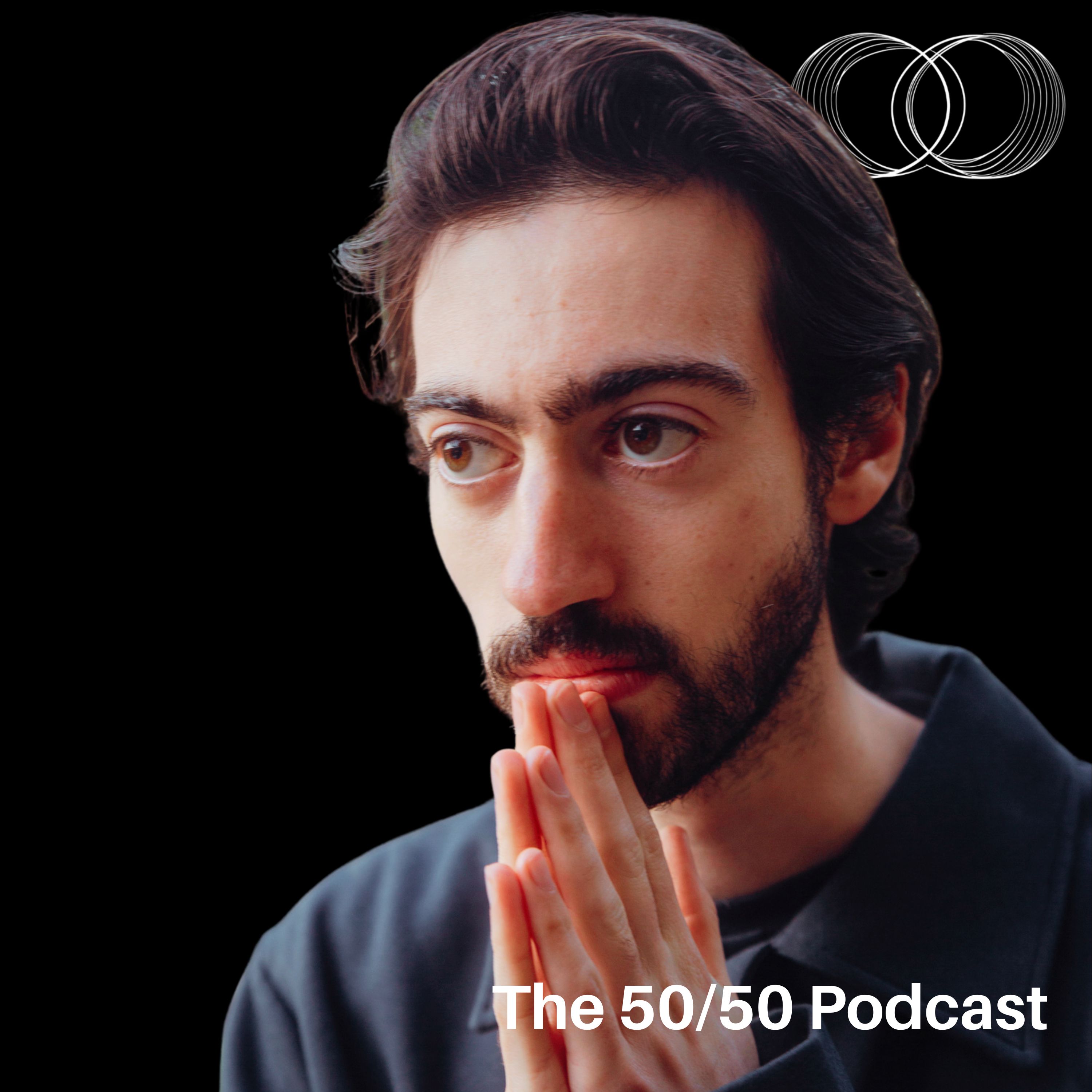
[00:01:17] Speaker A: This week, we talk with Nishanth R.
Nishanth not only proves to be a force to be reckoned with behind the camera, but also happens to be the winner of this year's 5050 horror festival. In this episode, we tap into how to get your reps in as a filmmaker, why horror satire is such a fantastic genre to play around in, and.
[00:01:37] Speaker C: How to fight against burnout.
Well, welcome to the 5050 studio, man. This is the first ever live recording of a podcast.
[00:01:51] Speaker A: It's very, very exciting.
[00:01:52] Speaker B: Thank you for having me. This is an impressive set that you've built here. We want to.
[00:01:57] Speaker A: We want to make it feel homey, but also professional in a way. You know, we keep our shoes on, but we also want to be on a couch, you know, absolutely relaxed. It's.
[00:02:07] Speaker B: And I think people can tell these are all, like, flats that you've built. This isn't an actual.
[00:02:11] Speaker A: Yeah, no, it's completely real.
[00:02:13] Speaker C: If the camera were to point literally right over here, you can see this.
[00:02:16] Speaker A: It's a very crew that you have. Yeah, there's, like, old props.
[00:02:20] Speaker C: Yeah.
[00:02:21] Speaker A: Old Howard Stern.
[00:02:22] Speaker C: They did. They shot Howard Stern. Yeah. Wow.
[00:02:24] Speaker B: That's crazy.
[00:02:25] Speaker C: Yes. Yeah.
[00:02:26] Speaker B: Yeah.
[00:02:26] Speaker C: Years of it.
[00:02:28] Speaker A: It's sad.
[00:02:29] Speaker C: Well, Niche, welcome to the. You first of all, Niche or Nishant.
[00:02:33] Speaker B: What is the Nishant? But many people.
Yeah.
[00:02:37] Speaker C: Thank you so much for coming on.
[00:02:38] Speaker B: Thank you so much.
[00:02:39] Speaker C: You were. Are a 5050 filmmaker.
[00:02:41] Speaker B: Thank you.
[00:02:42] Speaker C: The winner of the audience award. Very impressive. The 20255050 horror fest. Because congratulations again. Thank you so much for your film Indian in a Box, which we can definitely dive into. We actually spoke to a fellow alum from Horror, Eli Staub, yesterday.
[00:02:58] Speaker B: Incredible. Film moderator.
[00:03:00] Speaker C: Moderator.
I know you guys have befriended one another post festival, but. Yeah, man. Just wanted to say thank you so much for coming on and for being open to join us for the first ever live.
[00:03:13] Speaker B: Absolutely, yeah. It's very.
[00:03:18] Speaker A: If we're going to dive into your experience with 5050 and Indiana box right away, I would love to just talk about your sort of experience with that film where you're at right now. And then if you want to give like a couple sentences about like what it's actually about, I think that could be helpful.
[00:03:36] Speaker B: Yes. So in terms of where we're at. Yes. We premiered at Fantasia in Montreal, which was amazing.
That was a great place to start. And then we've had a couple of screenings since then. Screamfest 50 50.
So yeah, it's definitely. We're in the, in the upswing on the festival circuit. So that's been, that's been really fun and grateful to see that people are responding to the film. So happy with that. The film itself, it's a horror satire, I would say, about an Indian man trapped in a box. The title is very self explanatory.
When you hear it, you might think, oh, is this like a more intellectual, like, oh, it's about like an Indian guy struggling to survive in la. And that's kind of the Indian in a Box idea. Right.
[00:04:22] Speaker A: Even when you hear the title, you're like, okay, it's a metaphor for something.
[00:04:25] Speaker B: Yes, yes. And then I think the magic trick really is hopefully when you watch it you go, oh, it's not a metaphor, it's subverting your expectation. And then hopefully at the end you go, oh, it is a metaphor. Still. Still for something else.
[00:04:39] Speaker C: Yeah, yeah, you achieved that for sure. You know.
[00:04:42] Speaker B: Thank you.
[00:04:43] Speaker C: Can you talk about kind of maintaining tone throughout and balancing a line of horror and satire?
[00:04:51] Speaker A: It's an interesting like sub genre, right?
[00:04:53] Speaker B: Yes. And it's interesting. When we came up, I came up with the idea and then pitched it to my friend Nathan and we co wrote the script together. And when we wrote it, it was much more. It was leaning the satire direction basically throughout.
[00:05:06] Speaker A: Interesting.
[00:05:06] Speaker B: Like we knew there was a horror element just in the premise, but we were just laughing while writing it and we thought it was really funny. And then it was really in the process of rehearsing with the actor and then Anish and then watching him do his thing on set that I was like, oh, this is genuinely disturbing. Like distressing to watch this man.
[00:05:25] Speaker A: What was funny about it when you were writing, like, take us through that, that moment. Are you at the computer together and you're like, okay, this would be crazy, crazy if this happened. Like, what is. What does that look like?
[00:05:34] Speaker B: Yes. Because the premise came from the ending, which I don't want to give away necessarily, but that, that was kind of the inception of the idea.
[00:05:41] Speaker A: Oh, interesting.
[00:05:42] Speaker B: That made it so everything working backwards became more horror as we did it.
[00:05:48] Speaker A: Totally.
[00:05:49] Speaker B: But the initial idea is absurd. And so that was kind of. Our North Star was like, we knew it was going to end on this punchline of what the box is.
[00:05:57] Speaker A: Yeah.
[00:05:59] Speaker B: So it really is structured like a comedy more than a horror film. Like I'd never made a horror film before this, so this was kind of my dipping my toe into that.
[00:06:06] Speaker C: It really is just one long lead up to a punchline.
[00:06:09] Speaker A: Yeah.
[00:06:10] Speaker C: Oh, so interesting.
[00:06:11] Speaker B: But then in the writing we realize like the part before the punchline kind of needs to work as its own self contained short. And the punchline is all punchlines.
Yeah.
[00:06:20] Speaker C: Right.
[00:06:21] Speaker A: You have to find that arc before. You can't let that the punchline be like this satisfying part of the catharsis. Fully.
[00:06:28] Speaker B: Yes. Like, yeah, he needs to go through his whole arc and everything before that.
[00:06:32] Speaker C: Hearing that this is your first horror, which is shocking.
It doesn't seem like.
Just pardon my assumption here, but like you coming from like a sketch background simply because of this film, if people have seen it or you will see it. Like it's shot beautifully.
[00:06:50] Speaker B: Thank you.
[00:06:50] Speaker C: A ton of references to cinema and like clearly a filmmaker who knows cinema and film and has a vast kind of knowledge of not only the history, but also like how to shoot in production.
Was that just getting a great team around you or do you have. Are you a filmmaker that loves cinema and wants to create great looking stuff?
[00:07:12] Speaker B: Definitely a film buff. Like I and I. It's weird. I came into my undergrad and kind of went through college, like really thinking I was gonna do more dramatic stuff and like really indie drama stuff.
And I think my career has kind of shifted more. Like it first shifted into comedy and then now it's gone more in the genre direction. So that's. That's been a fun evolution. But yeah, throughout, like have a fantastic team that knows, really knows what they're doing in terms of just making everything look like a million bucks, even if it was 1,000 bucks.
So yeah, that, that been super humbled but also every time there's a project. Yes. Diving into like, what are we referencing?
What's the history of this, like for this movie? Like, what's the history of self contained kind of box movies? And there is a rich tapestry of those to draw from. So yeah, really looking for those for inspiration, but also just generally horror movies.
[00:08:09] Speaker A: The way to project that sort of claustrophobia.
[00:08:12] Speaker B: Yes.
[00:08:14] Speaker A: I think there's a lot of filmmakers out there who are looking to make their first short or second short and they are struggling, like all of us struggling with budget and finance and things like that.
I'm curious because you made it from my understanding, very economically and you really conveyed all these emotions through a very finite sort of set.
[00:08:40] Speaker B: And.
[00:08:40] Speaker A: And it seems like it was obviously you're conveying that claustrophobia and everything. How did you balance visual style with economics?
[00:08:48] Speaker B: Yes.
Yeah. When the inception of the idea part of it was, oh, this will be easy to shoot cause it's one location.
[00:08:55] Speaker A: Sure.
[00:08:55] Speaker B: And then that posed its own set of challenges. A for the creative side of like, how do we make one location interesting for that amount of time. But also it was just a more elaborate set than we had anticipated because we quickly realized, oh, it's a box, there's moving walls and there's all this totally.
There's many components to it that yeah, did raise the budget on that front.
But we had a fantastic production designer, Jeannie, who I have to shout out and she really made use of the limited budget we had to make something that looks really fantastic. And yeah, utilizing literally PA is pushing the walls and like. Yeah. Off screen it's like this set, if you turn the camera slightly there you go slightly to the right, you'll see three people pushing a wall and crushing our main actor.
[00:09:49] Speaker C: Dude.
That scene of when all of a sudden it gets incredibly like emotional and touching is I watch a lot of short films a year at this point and that was so unique and so real. And like, I mean we've spoken about this of like the films that make you feel something are the ones that really stand out. And that moment, like, yes, your film as a whole made me laugh in the end. But like that moment is really why I picked it for this festival was simply because of like, oh, this is a filmmaker. Like this kid knows how to mega movie.
[00:10:27] Speaker B: Yeah. Which is interesting because that was also not part of the initial idea because it was very much structured like a joke. And then as we were writing it, we were like, oh, it needs to work in a self contained way. Before that. And so we need, like, the catharsis before. Before the punchline.
[00:10:43] Speaker C: How did you. How did you go about achieving catharsis in a short film?
[00:10:47] Speaker B: I think the trick for me with a short is you. You have to allude to wider. Like, the wider world beyond the short. But it needs to work in and of itself, like.
And so just dropping a man in a trap situation, like a saw situation, we would call it Indian Saw a lot.
But that immediately, you know, you feel for him just instantly like that. And then in that final monologue that he gives, like, you allude to so many things and you allude to, like, his parents and all. All these things that you don't need to show. But just by the mention of it, I think you can evoke so many emotions.
So I think its restraint is often better than, yeah, trying to fit a bunch of backstory and.
Yeah, trying to really. Trying to make you feel for someone often can backfire.
[00:11:43] Speaker A: That evokes so much emotion, obviously, is personal to some extent. And you wrote it with a partner.
How is it navigating these sort of personal topics when you're writing it with someone else?
[00:11:57] Speaker B: Right. I think because I had come up with the idea initially. There was clearly, like, all this setup of, like, we knew what it was about. And thematically, I find myself, like, I find that I'm very strong in terms of the overall thematic and, like, the overall big picture aspect of writing. Like, I know every scene, what it needs to achieve, and then ultimately, where that fits in the overall arc of the story and of the character.
What a writing partner really helps me with is just those little details within a scene and, like, really clarifying and dialogue and all these things that I find are not my strong suits. A writing partner is fantastic for. Yeah, deal with that. So in. And usually in a project, when I write with someone, there is usually someone who takes the lead in terms of, like, oh, this was the. I was. I had the initial idea, and so I'm kind of shaping it, and then the other person is filling in the gaps and is really putting in those finer details. And I've been on both sides of that. So that I think can really help when one person is steering the ship emotionally. Like, you're saying with something that's personal, but the other person provides that clarity of perspective that.
[00:13:13] Speaker A: Yeah, you.
[00:13:14] Speaker B: Yeah, you. Sometimes you don't see the forest for the trees, and the other person can really.
[00:13:19] Speaker A: I don't know which part is harder. You know, like, being the one who's, like, pouring their heart out. Or the one who has to, like, you know, shape.
[00:13:26] Speaker B: Shape.
[00:13:26] Speaker C: I was about to say, like, with Jacob Stoudemire. I know you helped him with his show.
[00:13:32] Speaker B: Yep.
[00:13:33] Speaker C: Writing the Jack Harris show, which is a live show, and it's much more of a play theatrical type than a short film or a movie.
Can you talk about being the collaborator with that compared to being the one in the driver's seat?
[00:13:50] Speaker B: Yes. That situation is slightly different. I helped him.
We had a writer's room for the very first show that he put on, which was mostly to write the monologue section at the beginning and then some of the interstitial jokes between the bits. But then as they've gotten more narrative focused, Jacob has kind of taken the lead on writing everything. And then I just. I find that I'm a good, like, notes giver at that section. Like, helping him.
Yeah. Clarify. Make sure that people remember things that were set up in previous shows that need to be.
That need to be reminded.
And. Yeah. Punch ups on jokes and then just making sure that the story works and then sometimes just helping with picking the guests and things like that, which is a whole different section. So. Yeah, that.
Yeah, that's an admirable feat that he manages to pull off.
[00:14:43] Speaker A: Did you guys film that? The Jack Harris Show?
[00:14:45] Speaker B: Yeah. They usually have videographers that calls him and he puts them up online at some point.
[00:14:51] Speaker A: That's so cool.
[00:14:52] Speaker B: Yeah.
[00:14:53] Speaker A: You really have a crew going with Jacob. Like, it's a good situation.
[00:14:58] Speaker B: Yeah. I'm very grateful that lmu. I went to undergrad at LMU with Jacob and Nathan and that whole crew, and we've kind of stuck together in the many years since.
And it's a good. Like, to your point about how to keep the budget slow, it's just kind of. We work on each other's things. I buy script soup for people.
They work on my projects.
[00:15:20] Speaker A: And it only benefits you, you know, if it's a couple hours here, a couple hours there. But it's like, really, it's important to maintain that community. Luke and I try to do that.
[00:15:29] Speaker C: Absolutely.
[00:15:30] Speaker B: Yeah. And I think you've succeeded very much.
[00:15:33] Speaker A: And now we're. And now we're melding our communities.
[00:15:35] Speaker C: It's fun to have the LMU group because 5050 started at USC, so being very biased. Like, the majority of our community was usc, and so it definitely took a couple years to kind of blossom out of that.
Um, but what's awesome is post grad, a lot of these film school graduates all kind of end up meshing together. Whether through commercials or verticals now, which are very.
I know LMU is pretty tapped into verticals.
[00:16:07] Speaker B: Yes, I do. You do that?
I personally don't, but I know I'm so connected to it.
[00:16:12] Speaker A: We need to, we need to like have someone on to talk about this. I know because I just, I hear it just tangentially, but I don't. I'm so uninvolved in it.
[00:16:20] Speaker C: I honestly think I. There's a. This DP I met on set, we were peeing together on a movie and he's had just come off his 30th vertical and their feature films.
[00:16:32] Speaker B: Yeah.
[00:16:33] Speaker A: What? Like they shoot them in like he's filming the vertical.
[00:16:36] Speaker C: He's. He's like.
He doesn't dp. He does he like grips for.
Yeah, but it's. Yeah, he shot 30 features that are end up being verticals and they chop them in like a minute, two minute clips. Yeah.
[00:16:50] Speaker B: My DP for Indiana Box Oscar is also a DP for verticals now.
[00:16:55] Speaker C: What does he say?
It can't hurt. And I remember talking to this kid on set and he was just like, I'm not the most passionate about it, but you're making 30 feature films and it's just reps, you know?
[00:17:07] Speaker B: Yes. No, that's exactly what I was gonna say. It is just like being at the gym and doing. Yeah, it's. It flexes the muscle, even if it's not the most creative you can be. My friend who edits verticals, he always talks about on the directing side, like he can tell when a director of a vertical is a good director versus a bad director, even if the product doesn't necessarily reflect it. But just in terms of the efficiency, like the takes they got, how easy it was for him to shape that into.
Into a product.
[00:17:36] Speaker A: Like the, the efficiency factor is insane. It reminds me of like a soap oper or something.
[00:17:41] Speaker B: Totally.
[00:17:41] Speaker C: That's, that's the, that's the tone of.
[00:17:43] Speaker A: These where you like get a script the day before you film tons of scenes in a day. Like it's like that. From my understanding.
[00:17:50] Speaker B: Yes. I think that it's like a week that they shoot essentially a feature.
[00:17:54] Speaker C: Right.
[00:17:55] Speaker A: Feature length script and people love it, you know?
[00:17:57] Speaker B: Yeah.
[00:17:58] Speaker C: Well, it's very international right now.
[00:18:00] Speaker B: Right.
[00:18:01] Speaker C: Those are. That's where the money's coming from.
I mean, Quibi, it was just ahead of its time.
[00:18:07] Speaker B: Yeah. Well, I think the issue is Quibi was trying to do it at an A list level, like with a list talent, which it will get.
[00:18:14] Speaker C: I mean, I assume It'll get there.
[00:18:15] Speaker B: But I think part of the reason they're profitable is because they keep the cost so low and such a.
[00:18:20] Speaker A: When you have a list talent, you're paying them what you would be paying them for a streaming show or something relatively important.
[00:18:25] Speaker B: It's the cost of a movie. But yeah. Right.
[00:18:29] Speaker A: So that's where their mistake was. And also it being on a separate platform.
[00:18:33] Speaker C: Right.
[00:18:33] Speaker A: I assume that was not to get people to download an app and watch something only on that app.
[00:18:38] Speaker B: Well, a bunch of the verticals are their own apps.
[00:18:41] Speaker A: Oh, do they have their own apps?
[00:18:42] Speaker B: And it's like microtransactions. It's like you're paying per, per episode. Per episode that you're watching with like in app currency. Wow.
[00:18:50] Speaker C: Wow. I heard an actor, he was talking about wanting to pull some footage from one of these verticals to put on his reel.
And they're like great. Like just here's the, here's the link.
And he's like, well, I'm in episode 47.
That's like 100 bucks. Like to go and like pay for every single episode.
[00:19:09] Speaker A: That's so funny.
[00:19:10] Speaker C: Yeah. Because he's like, like at a small role. I'm like a waiter in a scene. But like I have to. They're making me.
[00:19:16] Speaker A: You have to spend 100 bucks?
[00:19:17] Speaker C: Everything. Yeah. It's like, that's horrible. Do you have any interest in directing or writing or texting, tapping into that?
[00:19:24] Speaker B: It's been offered to me in the past and I have kind of skirted around it. Like I, I think at some point it might be fun just to have that experience and to try it out. But at the moment I'm not like seeking it out necessarily.
[00:19:38] Speaker A: Sure, sure. Is it a pride thing at all where you're like, oh, this is like, I don't know, it's just an awesome.
[00:19:45] Speaker B: I think there's a part, there's an egotistical part of every director that's like, maybe I could make it. Make it. I could make it really good.
[00:19:52] Speaker C: It's true.
[00:19:53] Speaker A: Sure.
[00:19:54] Speaker B: Which is folly. That's true. Yeah.
[00:19:57] Speaker A: I was going to say, cuz I have some actor friends who like will.
They will be like, oh, I would never do verticals. It's like doing porn or something.
But it's like.
[00:20:08] Speaker C: But is it down that level? Is it.
[00:20:10] Speaker A: No, but like it feels or it.
[00:20:11] Speaker B: Feels equivalent of like Hallmark or something. Like you're trying to.
[00:20:14] Speaker A: Yeah, sure.
[00:20:14] Speaker B: It's a very special.
[00:20:16] Speaker A: You're a well known act. I've. I feel like as you Said getting your reps in is really important and finding ways to do that is really important.
[00:20:22] Speaker B: Yes.
[00:20:24] Speaker A: Speaking of that, like, how do you get your reps in? Like, what are. What are you doing day to day?
[00:20:29] Speaker B: Like, I definitely. I write way more than I direct, but I think I've gotten in this mindset, especially with Indian Box, where I'm like, I can just. I should be less precious about what I'm making. Like, I should just make a short for the hell of it and not necessarily try to make every short like the one that's gonna get me places, because often it's not gonna be that. The one that you spend a year of your life doing.
[00:20:55] Speaker A: I love that. I think there's really something to that. Getting your reps and sort of losing that perfectionist quality to it is really important.
[00:21:05] Speaker B: I also do commercial work on the marketing side, which is my day job.
So that also helps with, like, it's creative enough that I, like, I'm exercising that part of my brain, but it's also not so film focused that it exhausts me creatively.
[00:21:22] Speaker A: It's not a burnout situation, really.
[00:21:23] Speaker B: Exactly.
[00:21:24] Speaker A: Yeah.
It's that line, you know, balance.
[00:21:28] Speaker B: But I do admire the folks like Jacob who could just like make a music video on the. On a whim. And that feels like that. Yeah, that's kind of. I'm trying to be more in that.
[00:21:38] Speaker A: Line of sort of run and gun situation. You're just like, let's shoot something.
[00:21:41] Speaker B: Because again, with the community, like, that's the advantage of it. Like, you can pull together a crew really quickly and shoot something.
[00:21:47] Speaker A: That's the goal. That's kind of what we're doing, you know, what are.
[00:21:50] Speaker C: What are you interested? Like, what's. What's exciting or interesting or you're feeling passionate. He's going for the water.
[00:21:57] Speaker A: I went for it.
[00:21:58] Speaker C: What do you like? What's. What's exciting to you right now, if anything?
[00:22:03] Speaker B: I think I am working on another short that I'm excited by that's is also leaning into the horror idea. Like, I feel like I'm trending in that direction.
So that's exciting to me. And then there's a feature that I'm working on that I would like to shoot in my hometown in India.
[00:22:19] Speaker C: Is that a genre? Is it a horror?
[00:22:21] Speaker B: It's like a thriller. Like an uncut gems type thriller.
So, yeah, trying to make that happen.
[00:22:28] Speaker C: Where would you want to shoot?
[00:22:29] Speaker B: In my hometown, Chennai in India.
[00:22:31] Speaker C: Cool.
[00:22:31] Speaker A: So that's really cool.
[00:22:32] Speaker B: That would be the goal.
[00:22:33] Speaker C: Do you go Back often I go.
[00:22:36] Speaker B: Back once a year. Usually I'm going back in December for a wedding. But yeah.
[00:22:40] Speaker C: And scouting.
[00:22:41] Speaker B: Location scouting hopefully or at least trying to get the project off the ground.
[00:22:44] Speaker A: The wedding doesn't take up the whole time.
[00:22:46] Speaker B: You know, the seven day. Yeah, yeah, yeah.
But yeah, so I try to keep the connection because my family is back there. So I ideally would like to cross over and.
[00:22:57] Speaker C: Have you shot anything out there before?
[00:22:59] Speaker B: I've done a short out there and then I've worked on some sets back home.
But yeah, now that I feel like my network is. Is here and so I'm trying to. Yeah, I'm trying to find some way to bridge the. Bridge the gap and hopefully get some crew over there and shoot something.
[00:23:15] Speaker A: Totally.
[00:23:15] Speaker B: Do you.
[00:23:16] Speaker A: Because work I've worked in, you know, at a professional level in entertainment for a couple years now. And there's always conversations around India and the Indian market and everything.
Conversations sometimes weird of like, there's so many people there. How do we, how do we get them to see our stuff? You know, it's like a little like.
I don't love the vibes of that necessarily, but I'm curious and you were born there, right?
[00:23:40] Speaker B: Yep.
[00:23:41] Speaker A: How, you know, what is your read on the sort of the, the cinema scene in India and, and the potential overlap between the states and India and all that?
[00:23:54] Speaker B: It's interesting, like Indian movies for the longest time have taken inspiration from Hollywood and like to the point that there are straight up ripoff movies, like no licensing whatsoever, just like we will remake an American movie in Indian languages.
So that inspiration has always. And Hollywood exports have always been popular in India. But like the specifically. And part of the trick is, or the tricky part is that there are many industries in India. So people think about Bollywood, but that's only one of several film industries.
[00:24:28] Speaker C: Right.
[00:24:29] Speaker B: Because essentially for every major language in India, of which there are many, there is a film industry dedicated to that language.
And each of those industries have their own kind of flavor and style.
Like the Bollywood musical is a specific kind of trademark of that industry. But then where I come from, the language is Tamil and that film industry is much more like rough and tumble working class, like more action Y like so there, there's different flavors and, and.
[00:24:59] Speaker A: These films sort of align with the values and the vibes of the people who speak that language.
[00:25:05] Speaker B: Yes, exactly. So I think it's, it's difficult when talking about like, oh, how do we make something that appeals to the entire Indian market? Because it is many, many sub market.
But I Do think there's crossover potential? Like there are now I'm seeing more Indian movies do well here and so I do think there is like the tastes are aligning in some way.
[00:25:27] Speaker A: I think you see that with a lot of Asian and international markets, like anime is just doing so well at the box office these days because people are seeing, I think probably through social media. Right. People are seeing it and getting more exposed to it.
[00:25:40] Speaker B: Yeah.
[00:25:40] Speaker A: So they're. That their fan bases are created in LA and all these places, you know, for specific, more quote unquote niche brands of film.
[00:25:52] Speaker B: Yes. Oh my God, that's great. Like production company. I don't know, I'm just trying to think of it. There we go.
[00:25:58] Speaker A: Right here.
[00:26:00] Speaker C: Yeah, 50%.
[00:26:04] Speaker B: But yeah, I know from conversations with like Netflix and Amazon and stuff in India that they're. They're also trying to look at like the US and like how do we make something that does the squid game thing where it catches on right where it ca.
[00:26:18] Speaker C: Was it rr. Was that the. The one that really. Yeah, yeah, that was a great movie.
[00:26:22] Speaker B: That was a very fun movie.
So, yeah, just trying to do something that, that bridges that gap, but it's so elusive. Again, it's the thing that you never think is going to catch on that ends up appealing to.
[00:26:34] Speaker A: It's hard.
[00:26:34] Speaker B: It's hard to reverse engineer it from like, oh, I'm imagining something that will be successful.
[00:26:39] Speaker A: Are you.
Who are you inspired by in terms of filmmakers, whether Indian or American or anything?
[00:26:48] Speaker B: So I think in terms of the genre and satire I'm trying to do, Jordan Peele is like a big influence.
[00:26:55] Speaker A: Like get out and horror satire. Like he's done that so. So well.
[00:26:59] Speaker B: Absolutely.
So that's huge.
But then in terms of like the scrappy. Let's just make something like. I think I talked to you about this at 50 50. But Danny Boyle is really an inspiration just in terms of like how creative he is with shooting and even at like big budgets doing innovative and kind of. Yeah. Out of the, out of the beaten path kind of projects and just like choices.
So that is a really big like. Okay, if I'm thinking about how to shoot something, like how would Danny Boyle approach this? Like, not necessarily how he would shoot it, but how would he think about it?
[00:27:37] Speaker A: Well, we talk about finding your own creative voice on this podcast a lot and how that's a lifelong journey, you know, and to really embrace your. Your influences.
[00:27:46] Speaker B: Yes.
[00:27:47] Speaker A: So doing the. How would Danny Boyle treat the shot or the scene or whatever is. Is. It's definitely Beneficial, like it's not something to shy away from.
[00:27:55] Speaker B: Yeah. You know, it's tricky because I think film students, it's always. It starts with just aping your influences, just shot for shot, and then kind of.
Yeah. Finding your own creative, like what drives you. Creatively melding those two things. Right, right.
[00:28:11] Speaker C: That's where you start though. You know, it's like you, you. I think no matter what writing or production or any, like you're just. By spending time on something, your voice is going to come through.
[00:28:22] Speaker B: Yeah.
[00:28:22] Speaker C: You know, like, even if it feels like someone else's idea or an idea that's been said or done before, you're still going to find a way to apply your own experiences or specific voice to that.
[00:28:34] Speaker B: Yes. My favorite filmmaker is David lynch. And like, there's no way there's that. No, that's a huge inspiration. But. But I can't point to it as like, this is an influence just because I. I know it's in the back of my mind, but I can never like, think of it like, how would David lynch make this?
[00:28:53] Speaker A: Because it's just shows up in various psychological ways.
[00:28:56] Speaker B: Exactly.
[00:28:56] Speaker A: It doesn't show up in the normal way.
[00:28:59] Speaker B: Yeah. And I think trying to imitate that is. Is really difficult and often backfires.
[00:29:05] Speaker C: Right.
[00:29:05] Speaker A: It would feel like a complete ripoff or something.
[00:29:07] Speaker B: Exactly.
[00:29:07] Speaker A: Would not.
[00:29:08] Speaker B: Like, you can tell when someone is.
[00:29:09] Speaker A: Inauthentically trying to insert your voice into something that's Exactly. Notably Lynchian.
[00:29:15] Speaker B: Exactly.
And I think I. I have friends that I think are more Lynchy, like genuinely Lynchian, that I am in their actual work. So I can never claim, like, oh, my work is influenced by David lynch in any way.
[00:29:29] Speaker A: Totally.
[00:29:30] Speaker C: What.
Do you have siblings? Like, are they also in film or your parents?
[00:29:34] Speaker B: I have one older sister. She's eight years older than me. She is not into film.
[00:29:39] Speaker C: What did she think? Did she like any in a box?
[00:29:41] Speaker B: She liked it, I think.
Well, she's obligated to like it.
Being your sister. Being my sister.
But she's a doctor and so it's like a completely different.
[00:29:52] Speaker C: Is she in the States or. She's back home.
[00:29:54] Speaker B: She's in the uk.
[00:29:55] Speaker C: Cool.
[00:29:56] Speaker B: With her husband. So that. Yeah.
[00:29:58] Speaker C: So again, does he like Indian in a box?
[00:30:01] Speaker B: Yeah. Just going to keep going. Yeah, it's going. At some point you'll find the person who hates.
[00:30:05] Speaker A: Yeah. What is. What are his thoughts?
[00:30:07] Speaker B: I think if I remember correctly, she said we were impressed by the production value or something like that. Which feels like a.
[00:30:16] Speaker C: That's like the. Oh. Like it Looks. It looks really good.
[00:30:19] Speaker B: It's like, that's not good effort. I don't like it.
[00:30:22] Speaker C: I don't want to hear.
[00:30:22] Speaker A: It's good. It's better than. I don't know. I mean, people make stuff that doesn't look good all the time.
[00:30:27] Speaker B: That's true.
[00:30:28] Speaker C: Yeah.
[00:30:32] Speaker B: Yeah, yeah.
[00:30:33] Speaker C: Well, it's. That it's a compliment where it's. It's like, it's like being a photographer and you show photos and they're like, what was this shot on? Like, oh, my gosh, that's such a nice camera.
You know?
[00:30:45] Speaker B: Yeah, it sounded really good.
[00:30:46] Speaker C: It sounded.
[00:30:47] Speaker A: I mean, you're also asking a doctor's husband who's also not your old professor, taught you what.
[00:30:53] Speaker B: You know, that's a good.
[00:30:53] Speaker A: You know, that's a good.
[00:30:54] Speaker C: That's a good.
[00:30:55] Speaker A: Just take the compliment.
[00:30:59] Speaker B: I'll take what I can.
[00:31:00] Speaker A: Like, I love just that, you know, what was the aspect ratio on that? You know, like, how are we going to.
[00:31:06] Speaker B: It's really tough showing shorts to people who aren't into film necessarily, because I think people who aren't into film consume content, which is horrible, but in a very.
In a very story focused way. It's just like, oh, what was the story? And they're like, was it. Did it have twists and turns and that kind of thing?
So when you show something that's more esoteric or abstract, it's hard to get people to connect with it necessarily.
[00:31:33] Speaker A: That's a, That's a good. That's a good point. I would say.
[00:31:35] Speaker C: How hyper aware are you of the audience when you are writing?
[00:31:39] Speaker B: I think it depends on the project. I think for something. Something like this, it was, it was just like, oh, it came to us. And then we, we followed what was funny or interesting to us in the writing process. But then I recently finished writing a script with Jacob that was a. That's a murder mystery.
And for that, like, it's hyper like we're thinking about what the audience is gonna think.
[00:32:04] Speaker A: All about information when you're putting it out there.
[00:32:08] Speaker B: And that one, it's like we almost had to imagine two different hypothetical audience members. One that's just like following the story or like being taken along for the ride and not really trying to figure it out. And then the other audience member, that's like trying to get ahead.
[00:32:23] Speaker A: Yeah, yeah.
[00:32:24] Speaker B: And then you have to write something that satisfies both of those.
[00:32:27] Speaker A: Oh, my God.
Yeah. I guess when you're writing a murder mystery, you are really thinking. I mean, you.
[00:32:33] Speaker B: Yeah, you're Trying to fool them, essentially, you know, but fool them in a way that's fair. That makes it feel like, oh, I could have figured it out, but I didn't notice this thing or I didn't think about it this way. Yeah. So, yeah, I think it depends on the project.
[00:32:47] Speaker A: Do you have to. Do you have to. When you're writing something like that, you have to, like, backtrack, right?
[00:32:51] Speaker B: Yes, it's. Yeah. You have to start with, I think, like a normal movie, just like, structure it. Like a character level, like thematic level. And then. Yeah. Who did it? And then backtrack of like, what can we plant?
[00:33:03] Speaker C: And so you gotta reverse engineer that for sure.
[00:33:05] Speaker B: Yes.
[00:33:06] Speaker C: Start from the end.
[00:33:06] Speaker A: The knives out situation.
[00:33:08] Speaker C: Start pulling too much away, that situation.
[00:33:09] Speaker B: Which is another influence that I could have.
[00:33:11] Speaker C: Yeah.
[00:33:12] Speaker B: On specific things.
[00:33:13] Speaker C: That new one's coming out. Are you. Are you pumped about that?
[00:33:16] Speaker B: I've seen it and it's very good.
[00:33:17] Speaker C: It's very good.
[00:33:18] Speaker B: Little.
Little early. Early screen. Wow.
[00:33:22] Speaker A: Is that gonna be in theaters at all?
[00:33:24] Speaker B: No.
[00:33:24] Speaker C: Yes.
[00:33:24] Speaker B: I would hope for like, two weeks, like a limited release. I don't know.
[00:33:28] Speaker A: It's Netflix, Right?
[00:33:29] Speaker C: That's true. That's true. What about recent films? Any that you've seen, maybe this. This year that you're pumped about?
[00:33:35] Speaker B: One battle after another, which is amazing.
The movie. If I had Legs, I'd kick you. I saw it recently and I was. It's a stress nightmare of a movie. It's a panic attack, but in a very uncut gems way.
[00:33:51] Speaker A: I like. I like that, though. Is it horror or is it more so, like, thriller?
[00:33:54] Speaker B: Like, it's literally just like, about being a mom and it's like everything horrible is happening and it's like. It is absurd. Like, it's very funny.
[00:34:04] Speaker C: You see Die My Love also kind of.
[00:34:05] Speaker B: I haven't seen that, but I. I've heard it is.
[00:34:08] Speaker A: Yeah, it's very postpartum metaphor situation we.
[00:34:11] Speaker C: Could talk about, but.
[00:34:12] Speaker B: Yeah.
[00:34:12] Speaker C: Is he. Exactly.
[00:34:13] Speaker B: Yeah.
[00:34:13] Speaker A: We should talk about Die.
[00:34:14] Speaker B: Yeah.
[00:34:16] Speaker C: Yeah, it was.
[00:34:17] Speaker A: I don't know if I want to say it on camera.
[00:34:19] Speaker B: Yeah, no, I. I'll talk about. If I had legs, I'd kick you.
[00:34:22] Speaker A: Just talk to the pillow over there.
[00:34:25] Speaker C: Yeah, you could talk. You could talk to Tom over there.
[00:34:27] Speaker A: But why is it called. I guess we shouldn't get into it.
[00:34:30] Speaker B: I actually don't know. It's. It's. Yeah, it's a great title.
[00:34:33] Speaker C: But I would say you're. You're a big title guy for sure, though, you know, like. Like the titles are so important, you know?
[00:34:40] Speaker B: And if.
[00:34:41] Speaker A: If you figure that out after you write it, probably. Or what?
[00:34:44] Speaker B: No, this one, I pitched it to Nathan, and he was just like, yeah, it got to be called Indianapolis. I was like, yeah, that. That makes sense.
[00:34:53] Speaker C: Makes a lot of sense.
[00:34:54] Speaker B: Sometimes there are projects where I have the title first of them. Like, what. What.
What does that mean? And what can I get from that? Like, what does my friend and I have? There's an elusive movie that we keep trying to write called Bird Feeder, and we just came up with the title first, and then we're like, what could that even.
[00:35:11] Speaker A: Ooh, I like that.
[00:35:12] Speaker B: What could that be?
[00:35:13] Speaker A: It's a fun exercise, at least.
[00:35:14] Speaker B: Yeah. Like, you can come up with, like, five different ideas just based off.
[00:35:18] Speaker A: You're given a title, and you have to write a short film in a day.
[00:35:21] Speaker B: Yeah.
[00:35:21] Speaker A: Of that title.
[00:35:22] Speaker C: There you go.
[00:35:23] Speaker A: It's a fun.
[00:35:25] Speaker C: Have you done improv at all or anything?
[00:35:27] Speaker B: No, I've been told by people that I should try it, but I'm so terrified of speaking in front of a. Of a crowd you're good at.
[00:35:35] Speaker C: You're gonna say you've been pretty.
[00:35:37] Speaker B: Oh, yeah. The big studio audience that we have has been kind to me.
[00:35:41] Speaker A: They're very well behaved, by the way.
[00:35:43] Speaker C: Yeah.
[00:35:44] Speaker B: Not a peep from them this whole episode.
[00:35:48] Speaker A: We get a stadium to watch, a.
[00:35:50] Speaker C: Podcast silent no one makes.
[00:35:52] Speaker A: That's the way the world's going now. That's pretty scary.
Here's a free marketing idea for Indian in a Box. Do you know where I'm going with it?
[00:36:01] Speaker B: No.
[00:36:01] Speaker A: Okay.
You get, like, action figures, figurines, and you put them in little boxes.
[00:36:07] Speaker B: Whoa.
[00:36:07] Speaker A: Right?
[00:36:08] Speaker B: That's a good.
[00:36:09] Speaker A: It's not a bad idea. I was thinking, like, Barbies, but they're just like, the Indian.
[00:36:13] Speaker B: Yeah.
[00:36:14] Speaker C: I thought you were gonna pitch the.
You know, go to the train station and have the glass box.
[00:36:22] Speaker B: Yeah. Some kind of performance art.
[00:36:23] Speaker A: Oh, like the severance thing. Yeah, Yeah, a little.
[00:36:27] Speaker B: I. I had to do. We did a crowdfunding campaign for a day in a box, and that was the.
[00:36:31] Speaker C: You did that?
[00:36:32] Speaker B: Like, I. Yeah, we got a cardboard box, and then I got in, and. Yeah. The whole video is like, me.
[00:36:38] Speaker A: You actually did this?
[00:36:40] Speaker B: Not in public, but that was the video. That was the video.
[00:36:43] Speaker C: There is something really fun about this, like, stunty. Stunty about the indie film, like, Luke's film, and all the marketing they did and how they are really tapping into, like, live performance.
[00:36:58] Speaker B: Yeah.
[00:37:00] Speaker C: I don't know. There is something fun about market. I mean, you're in marketing.
[00:37:04] Speaker B: Yeah.
[00:37:04] Speaker A: What side of what sort of marketing do you do?
[00:37:07] Speaker B: It's for clients, and it kind of spans, like, lifestyle and tech and.
[00:37:12] Speaker C: But are you thinking about. We asked about the audience, but are you thinking about marketing when you're writing or ideating?
[00:37:19] Speaker B: Yes. I think there's definitely a part of you. It's inescapable that. Yeah. In an ideal world, you want to just chase whatever idea you have, but then you have to, in the world we live in, like, budget your time accordingly and go, okay, this one seems achievable. Or it seems like it could strike a nerve with people. And so that's the idea that you end up going with.
The marketing thing is interesting. Like, with the murder mystery that Jacob and I just wrote, we have kind of been like, maybe we should, like, rent out a theater and do just like a live read. Like, get actors and just make it kind of like a fun.
[00:37:55] Speaker A: I love the way you're thinking, table them. It's so important to do series for everything.
[00:38:00] Speaker B: I think so, yeah. Things like that that are achievable, that aren't crazy, but also could hopefully catch the attention of people.
We've often talked about buying a billboard or, like, renting a billboard and just, like, what silly things.
[00:38:17] Speaker C: Going nuts with Marty. Some cream.
[00:38:20] Speaker A: Yeah, it's about that you just. And I think the reason why you, like, posted that zoom call, too. He's. You have to. It's all about authenticity. Right?
[00:38:28] Speaker C: Yeah. And he.
[00:38:29] Speaker A: He's going to such a level of being like, I am showing that I want to market this film so much. Like, I am going to be fully honest about the fact that I want Marty supreme on every single thing.
[00:38:42] Speaker B: Yeah.
[00:38:43] Speaker A: I want to be every sentence. Marty Supreme. You know what I mean?
[00:38:45] Speaker C: I'm turning into him, but it's.
[00:38:48] Speaker A: But I'm turning into him because it's like, it's enthusiastic.
[00:38:51] Speaker B: Yeah.
[00:38:52] Speaker A: It really works. And he's been. He's being fully. We're at the point where you shouldn't hide marketing and you should have. And I think there's also another element that it was, you know, it was reminding me of when you and Jacob were.
When you're talking about your collaboration with Jacob of, like, making it almost part of the project. Like. Like, instead of like, oh, I completed the film, you're in post, then you do the festival run, and you're like, well, how do I gain an audience? And I'm gonna strategize it. Instead of that, you're making it almost like it's Part of the actual project.
[00:39:24] Speaker B: Yeah.
[00:39:25] Speaker A: It's like a. It's a holistic thing.
[00:39:27] Speaker B: Yes.
[00:39:27] Speaker A: You know, for sure.
That was.
[00:39:30] Speaker B: Yeah, yeah. We.
That reminded me of.
We had this idea of like, what if we rent a billboard and it just has like a Google Drive link on it? Just like a URL to a script.
[00:39:44] Speaker A: Not even like a QR code.
[00:39:45] Speaker B: Not even a QR code. Like someone has to manually type it in.
[00:39:49] Speaker C: Yeah. You should do it. Like a really busy intersection. Like no stop sign, nothing.
[00:39:54] Speaker B: Yeah. We've had many silly ideas like that.
[00:39:58] Speaker A: Right.
Yeah. So many accidents on that intersection that.
[00:40:03] Speaker C: People stopping for those crash lawyers, you know.
[00:40:06] Speaker A: Oh, my God, can you imagine? They have a whole cycle of their creation.
[00:40:10] Speaker B: Yeah.
[00:40:10] Speaker C: Like the first billboard is like a link.
[00:40:12] Speaker A: That's probably so illegal.
[00:40:13] Speaker C: Yeah.
[00:40:14] Speaker A: As a lawyer, like creator creating injuries, that's not a bad idea for like.
[00:40:20] Speaker B: That's a good. That's like a Nightcrawler type.
[00:40:22] Speaker A: Yeah, yeah, totally.
You're the lawyer causing the.
[00:40:26] Speaker C: Yeah. Crazy. That's dark.
[00:40:28] Speaker B: That is dark. Yeah. Did we just come up with a. What are you.
[00:40:32] Speaker C: What are you doing for Christmas? We got the tree behind you.
[00:40:35] Speaker B: Yeah.
[00:40:36] Speaker A: You brought your own tree.
[00:40:37] Speaker B: I brought you.
[00:40:37] Speaker C: Thank you.
[00:40:38] Speaker B: Yeah. I'm glad you allowed me to bring.
[00:40:40] Speaker C: I mean, it looks great.
[00:40:41] Speaker B: The studio.
What am I doing for Christmas? I'm going back home for a wedding.
[00:40:47] Speaker C: That's the wedding.
[00:40:47] Speaker B: That's the wedding.
[00:40:48] Speaker A: Okay, nice. I had a question that has to do with everything.
[00:40:54] Speaker B: All right, we'll prioritize that one.
[00:40:56] Speaker A: But I'm curious. We're talking about marketing. We're talking about Indian in a box. Like the time. How long is the timeline on that? Like from like conception to actual, like now?
[00:41:07] Speaker B: I.
I would say it took a year for. From conception to the film being done.
[00:41:12] Speaker A: Okay.
[00:41:13] Speaker B: Yeah. I think it was like last March or so that we came up with the idea and wrote it and then we shot it in August.
And I think what took us.
What took us by surprise was how much longer the post process was than we had expected.
Mainly because of the vfx, like the fairly invisible VFX in it and sound design.
[00:41:36] Speaker A: Good VFX if it's fairly invisible, you know.
[00:41:38] Speaker B: Yeah. A lot of it was just like cleaning up and making the set look not like a bunch of flats being pushed by, you know.
[00:41:47] Speaker C: Yeah.
[00:41:47] Speaker B: Well, this looks very convincing and there's a lot of real time VFX happening that people are noticing.
[00:41:54] Speaker A: But I think the greater question for me is like, energy wise, it's a multi year process.
[00:41:59] Speaker B: Yeah.
[00:42:00] Speaker A: For A short film.
[00:42:01] Speaker B: Yeah.
[00:42:01] Speaker C: Right.
[00:42:01] Speaker A: For. For a five to ten minute short.
[00:42:04] Speaker C: Right.
[00:42:04] Speaker A: And then people are maintain energy throughout it, even with the marketing, all that. Like how do you continue to be inspired by this like five minute thing and like the people around it and all that? How do you. Because you're leading the charge, right?
[00:42:17] Speaker B: Yes. And. And people are not. This is not their full time job at all. Like this is just how you're doing it. It's not my.
[00:42:23] Speaker A: Yeah, it's Burnout's real. You know.
[00:42:25] Speaker B: Yes.
I think with. You have to find little like milestones that you're encouraged by and that you find. Like you have to a be actually happy with the movie which really. Which helps and feel proud of it.
But then. Yeah, little things like going to a festival and seeing the audience actually react to it like that can fuel like months old. Fuel months of marketing drudgery too. Yeah. Yeah.
So yeah, I think it's like finding it's. It goes in waves. Like you get burnt out by it and then find something that reignites the passion for it and then you apply to a bunch of festivals and then.
[00:43:07] Speaker A: Yeah.
[00:43:08] Speaker B: Don't hear anything for months and then you.
Yeah. And then the one acceptance will get you to.
Yeah. Lead the charge again.
[00:43:16] Speaker C: There is something great about.
I was gonna say about Burnout, but Burnout is horrible.
[00:43:22] Speaker B: Yeah.
[00:43:22] Speaker C: But there is something about Burnout in a. In an interesting way where it's like it kind of forces you to remove yourself and take a pause. Ideally you're doing that. Some people fight through it and that's not great. Maybe that works for them. But I found for me, when I get burnt out, I really just make it a point to like remove myself.
[00:43:42] Speaker B: Yeah.
[00:43:43] Speaker C: From whatever the project is and then go do something else.
And then all of a sudden I'm thinking about that old project again and you go back to it with fresh eyes and it's a completely different. Not completely different but like there's much more clarity there. And like we were talking about the message and tone and everything and like that I feel like really comes through when you're able to. To work on something for so long and become such a master of it. And like you know, all of the takes because you've been in the edit, like you know exactly what you're dealing with and like something about putting in the back of your mind and then coming back to it. All of a sudden it's like, oh, this is what this is about, you know? Or this is what this is missing.
[00:44:25] Speaker B: Yeah. I think I make A point of that, even, like, after filming, I'll usually just let my editor go crazy with the first cut and not even touch it. And then once I see the cut, it's you a. You get another person's perspective on the movie. Like, you get.
Yeah. Unmoored by what I'm trying to do. Just like, what did they make of the footage and the script? But then when you see that cut with fresh eyes, you go like, oh, that's actually a good idea. And I didn't think about that. And we could cut it like this.
[00:44:56] Speaker A: Allowing someone to get their perspective.
[00:44:58] Speaker B: Yeah. And with this one, I did the same thing with the sound design. Like our sound designer, Colby, who did a fantastic job. Like, it's such abstract visuals that really any sound design technically works. Like, it's not trying to be realistic, so it's not like beholden to anything that's like, oh, that is right, or that's wrong.
But that makes it so, like, there's so many possibilities of what it could sound like. And I had the initial thought that it was gonna be more like factory, sounding like really industrial and that kind of thing. And then Colby came in and did a pass. And it was much. It was a melding of that. It was a melding of that with like sci fi elements. And then he, like, recorded some of the sounds of what the box actually is, which I'm not going to give away, but, like, he recorded some of those sounds and morphed them and put them in and like all that stuff that I wouldn't have thought about, but being away from it and then going in and seeing that was like, okay, that again, that reignited the passion for it.
[00:45:59] Speaker C: It is. It is one of those films. And again, very rare for a short film, but like. Or unique is that it's a short film that you want to watch a second time and a third time. And the more you watch it after the first time, you start picking up on things and you're laughing because you know the button at the end and.
[00:46:15] Speaker B: It'S like, yeah, which part of it was. Because we reverse engineered from that button. So it's like the murder mystery thing. Like, you have to. You plant things that hopefully on a second watch, people catch.
[00:46:26] Speaker A: The formula that you used was also, I'm thinking about the past 50, 50 horrors. And the one, the Night Train one, remember that one? It's a very similar formula format of starting with a very clear premise of guy stuck in box, you know, and then he goes through all these things that sort of Raise the stakes throughout it. And then it goes up to a building point and then finally it's like a punch to end it, you know. And I think that's very similar to the one that won the audience award the year before too.
[00:46:58] Speaker C: Audiences like, like the.
[00:47:00] Speaker B: Contain.
[00:47:00] Speaker A: Yeah.
[00:47:01] Speaker B: Contained but.
[00:47:02] Speaker A: But simple.
[00:47:03] Speaker B: Yeah.
[00:47:03] Speaker A: Like, and not, not doing something that feels long where it loses energy and then picks it up, you know, it's. It's hard with a short or it's easy to overcomplicate it, you know.
[00:47:15] Speaker B: Yes. And it, it also doesn't help if the short is like a proof of concept. Like there are very good proofs of concepts. But yes, that makes it harder when you're trying to absolutely like a feature.
[00:47:25] Speaker A: Tease the feature in so many ways.
[00:47:27] Speaker C: Yeah, yeah.
[00:47:29] Speaker B: So it helped with that with this one. Like I made a proof of concept before and it definitely fell to that thing of like, this feels like a scene that should be part of a longer thing.
But with this one it was just like, no, there's literally no more runtime I could devote to this idea.
So it was never thought to be.
[00:47:46] Speaker C: Like, was the proof of concept really just a scene you pulled from a feature you had written?
[00:47:51] Speaker B: It wasn't a scene from the feature, but it essentially. And it was a different situation because we were. This was the movie I shot in India and it was trying to be a proof of concept for, for a longer feature that I wanted to shoot in India and specifically to submit to like Netflix and Amazon. Like they wanted something to see.
So there was an intent behind it and it was more of like a prologue to the feature in some ways, like setting up the dynamics and things. So from. It was never going to be a self contained short.
So that alleviated some of the sense.
[00:48:24] Speaker A: Of like totally different purpose. Yeah, it wasn't to screen at festival.
[00:48:28] Speaker B: But then once that happened and then the feature didn't or hasn't panned out yet, it's just kind of like, okay, I can't really do anything with that. Like it is kind of. It lives in, in the ether.
[00:48:39] Speaker C: Is there a, a piece of you that wants to explore the idea? Because a proof of concept and a short film are very different projects. Especially when you're talking about, you know, if one is meant to be self contained and the other is meant to be a real or something to prove that you can direct this or the tone of something. You get money, attach, whatever.
Then you also see the whiplashes or the bottle rockets of the world. And it's like this is a Proven, A proven track. Does that interest you at all? To try to make something self contained but also a proof of concept that acts as a proof of concept.
[00:49:18] Speaker B: Yeah. The next short I'm trying to make, it's interesting because the moment I think about what a feature looks like that I get in my head about like, oh, how can we set that up in the, in the short or do anything.
[00:49:28] Speaker A: Yeah. It almost does more harm than good.
[00:49:30] Speaker B: To think about the future.
So it kind of helps to be like, okay, no, it starts as a short and it is, that's what it is. But then, yeah, hypothetically, that is interesting.
[00:49:39] Speaker A: About it a little bit. That it's.
[00:49:41] Speaker B: Yeah. You know, or yeah, not even like with no level of detail, just be like, that's an interesting premise that you could make a feature out of. And that's the extent of how much I want to think about it.
[00:49:50] Speaker C: Right.
[00:49:52] Speaker B: Yeah. Because again it's, it's the short that you don't think about as much that's gonna somehow catch on and turn into something. So it's hard, especially with horror. I feel like so many horror shorts that even ended up being features are just like one jump scare and that, you know, somehow gave them fodder for a feature.
[00:50:12] Speaker C: But that there is a real hunger for directors making horror shorts to be seen as proof of concepts.
I mean just from hearing it at 50, 50 from production companies and folks who work on the horror side of things are looking for these young directors and of course they're looking for short films to be seen as proof of concepts.
[00:50:34] Speaker B: Yeah. Because horror too, it's the same thing with comedy. Like a really good comedy short can really prove that you have the chops.
[00:50:41] Speaker C: Absolutely.
[00:50:41] Speaker B: And it's all about like tone and yeah. Mastering just like the one scare or the one joke.
[00:50:47] Speaker A: It allows people who are going to invest you to have trust in you before they fully make the gamble.
[00:50:53] Speaker B: Yeah. And comedy and horror, the things that like you can really prove that it.
[00:50:57] Speaker A: All comes back to that. That's the 50.
[00:51:00] Speaker C: What is what, what is the perfect horror short in your mind? Maybe, maybe it's Indian box, but yeah, the perfect, like what does it consist of if you don't have to give it the equation?
[00:51:15] Speaker B: We talk a lot in my, in the group of filmmakers about like there's two types of shorts. There's the set up punchline short, which is kind of what I try to do, but then there's the vignette, like kind of slice of life short, which can be really good. But I do not have the skill set to pull that off.
And it's a gamble to try to try that.
But horror, I think, can also fit in those two moods. Like, there's the kind of unsettling short like Colby's one at 50.
[00:51:50] Speaker A: 50, yes. Very, very well done.
[00:51:53] Speaker B: Which is a very well done version of that, which is like, it's a mood and it's an atmosphere. And that one, I was genuinely worried there was gonna be a jump scare at the end. That was. That one I was white knuckling and it's really creepy. Fantastic. Yeah. But then there's the setup punchline one. So I think that either of those could be a successful horror short. But again, a lot of them, it's like one drawn out setup to a jump scare usually, or just like an entity or something that shows up.
So that's definitely. I think that's the formula for, like, if you want the feature, like, come up with a cool creature or character.
[00:52:34] Speaker A: Yeah. Luke, in your experience, like, watching all these shorts and curating the festival, are you trying to.
Are you trying to find a balance between those two types of shorts? And do you agree with.
[00:52:44] Speaker C: Absolutely, yeah.
[00:52:45] Speaker A: Those are the two types.
[00:52:46] Speaker B: Absolutely.
[00:52:47] Speaker C: I mean, you said it too, of like, your film is that setup punchline. And Colby's is a little bit on the contrary. And like, there is space for both of those. And when done properly, they're fantastic.
[00:52:57] Speaker B: Yeah.
[00:52:58] Speaker C: But I will say track record wise, audiences seem to lean towards the setup punchline in a short film environment. And I think that might apply more towards a broader audience.
[00:53:11] Speaker B: Yeah.
[00:53:11] Speaker C: Appetite wise.
[00:53:12] Speaker A: Yeah, totally.
[00:53:13] Speaker B: Because I think if there's a punchline, there's the release and then there's the feeling of like, oh, I got it. Like, I. There's a sense. And to some extent, I do admire the.
The drawn out, like, vignette one more in the sense that, like, it leaves you with more to think about.
[00:53:29] Speaker A: Yeah.
[00:53:31] Speaker B: Unless you do, like, the punchline that is hopefully, like Indiana boxes, like, suggests deeper meaning that can hopefully lead people thinking about issues.
[00:53:43] Speaker C: I do feel like just great short films in general should have some sense of closure.
[00:53:49] Speaker B: Yeah.
[00:53:49] Speaker C: Period.
[00:53:50] Speaker B: Yeah.
[00:53:50] Speaker C: You know, and I think Colby's absolutely has that, you know, which is more of that vignette type.
[00:53:55] Speaker B: Yes. Yeah. It's a good balance. Yeah. But there are.
[00:53:59] Speaker C: There are definitely a lot of short films that draw on and kind of get lost in the sauce, but Indian in the vox did not. You know, it was absolute closure.
[00:54:10] Speaker A: And I think that closure can come from plot closure or, like emotional arc closure. Just like A TV episode or whatever.
[00:54:16] Speaker B: Absolutely. Yeah. TV is a good comparison for that. Like, the feeling of this needs to wrap up the episode.
[00:54:25] Speaker C: Yeah.
[00:54:25] Speaker B: But then suggest more to leave people.
[00:54:27] Speaker C: Yeah, absolutely.
[00:54:29] Speaker A: Yeah.
[00:54:30] Speaker B: Yeah. Pilot.
[00:54:31] Speaker A: A pilot?
[00:54:31] Speaker B: Yeah, like a pilot.
[00:54:32] Speaker C: What's. What's next for you? What are you. What are you thinking about? Obviously you said this. This short film and you're writing a feature.
[00:54:38] Speaker B: Yes, I guess.
[00:54:40] Speaker C: What are the immediate steps?
[00:54:42] Speaker B: Yeah, the short film I want to shoot in January, so very soon, hopefully.
[00:54:47] Speaker C: So we're getting the script for that with evidence cameras.
[00:54:51] Speaker B: Hopefully. Yes. That's the.
That's what's in the works. I'm trying to balance, like, what's an ambitious project that is worth. Like, that justifies me pulling the trigger on that.
[00:55:05] Speaker C: And I completely understand where you're coming from.
[00:55:07] Speaker B: Yeah.
[00:55:07] Speaker C: If you have something that you're wanting to shoot, work with them, period. Like, don't. Don't put the pressure on it, because I did that same thing and I'm still stuck in a rut with that of, like, what's going to be the thing that I use this for? Just do it.
[00:55:20] Speaker B: Cool.
[00:55:20] Speaker C: You know, Good to know. And Joel and the team are great and they will take care.
[00:55:24] Speaker B: They seem Amazing. Yeah.
[00:55:25] Speaker C: 100% continue to support you. So, yeah, I say use evidence with this next one.
[00:55:30] Speaker B: For sure. Will do.
Yeah. So thinking about that and then many plates spinning in terms of the project after that, I think in an ideal world, I could get this feature ready to go sometime, like, late next year, if possible.
But that's. I've said that before. Yeah.
[00:55:50] Speaker A: Do you like having a lot of plates spinning? Like, I feel like I'm the type of person who. I like having my fingers in a bunch of different things, you know, and like, I. It helps with burnout for me, too.
[00:56:00] Speaker B: Yeah. You know, because I. And I like having the plate spinning with different collaborators, so I can also, like, seep energy from them.
But it helps me compartmentalize because I'm like, oh, when I'm meeting with this person, I'm thinking about this project, but then I'm not. I don't feel the pressure of, like, having to figure that out on my own.
[00:56:20] Speaker A: Yeah.
[00:56:20] Speaker B: Yeah, of course. Always getting inspired by things, but in terms of, like, oh, we're sitting down and thinking about the plot for this.
[00:56:28] Speaker A: Yeah. Awesome.
[00:56:29] Speaker B: So, yeah, I'm definitely say yes to a lot of things and then try to. To balance, and then that just increases the chances of, like, one of those things will stick. Something will stick. Yeah.
So, yeah.
[00:56:42] Speaker A: Well, what is the what's the dream for you? What's what in, you know, 10, 15 years? Like where, where's. What's the goal of like where are you in life and what are you doing?
[00:56:53] Speaker B: I think, yes, indie horror directing is kind of the, the dream. Like I would love to be making a bunch of lower budget horror features and then hopefully trying again. Like I was talking about bridging the gap of shooting things here and then shooting things back home.
[00:57:09] Speaker A: Awesome.
[00:57:10] Speaker B: And being this kind of cross cultural director. So many of my projects explore that intersection. So in a meta way, I would like to do that in my own life.
[00:57:20] Speaker C: I'm chuckling because.
[00:57:21] Speaker A: Yeah.
[00:57:22] Speaker C: One. That's. That's awesome. We spoke to Eli yesterday as mentioned.
[00:57:27] Speaker A: Eli Stob.
[00:57:28] Speaker C: Eli Sta.
Moderator made moderator. And he.
We asked. Because we asked this question to everyone who comes on. It's kind of the final question.
And he goes, yeah, you know, my, like, I just want to have like a wife and kids.
And he wasn't, he wasn't that good. But I cut him off and I was like, you realize you're the first person we've ever had on here to like actually say that.
[00:57:53] Speaker B: Yeah.
[00:57:54] Speaker A: Like what a normal person. That's immediately though.
[00:57:57] Speaker C: Immediately I was like, well, no, no, like. Well, also like I want to like this and that, which.
[00:58:01] Speaker B: But that shows that he's an adjusted human being.
[00:58:05] Speaker A: Why did usually just three psychopaths talking about like only work for an hour?
[00:58:11] Speaker B: Yeah.
But yes, I would love that as well. Oh yeah.
[00:58:16] Speaker C: Well, awesome, man. Thank you so much for. For being again open to. To this format in person.
How was it? Did you. What do you think, man?
[00:58:24] Speaker B: It's great. This is a very comfortable couch. Good.
I've been.
It's great water. These are all things you couldn't get on a Zoom call.
[00:58:32] Speaker C: Yeah.
[00:58:32] Speaker B: Yeah.
[00:58:33] Speaker C: Expensive couch.
[00:58:33] Speaker A: Really expensive.
[00:58:35] Speaker C: Well, thank you so much, man.
[00:58:36] Speaker B: Thank you.
[00:58:36] Speaker A: Really appreciate it.
[00:58:37] Speaker B: Yep. Great talking to you.
[00:58:38] Speaker A: Cheers.
[00:58:39] Speaker C: Cheers.
[00:58:39] Speaker B: Cheers.
[00:58:39] Speaker C: Nice.
[00:58:40] Speaker A: Yeah, we did it.
[00:58:53] Speaker C: Did you learn something? I'm like your mom. Did you learn something in this episode? I hope so. Or not. That's okay. Thanks for hanging. Make sure you follow us at the 5050 Fest on Instagram and give us five stars because why not? Why not subscribe? Why not? You know, why not? Okay, bye.